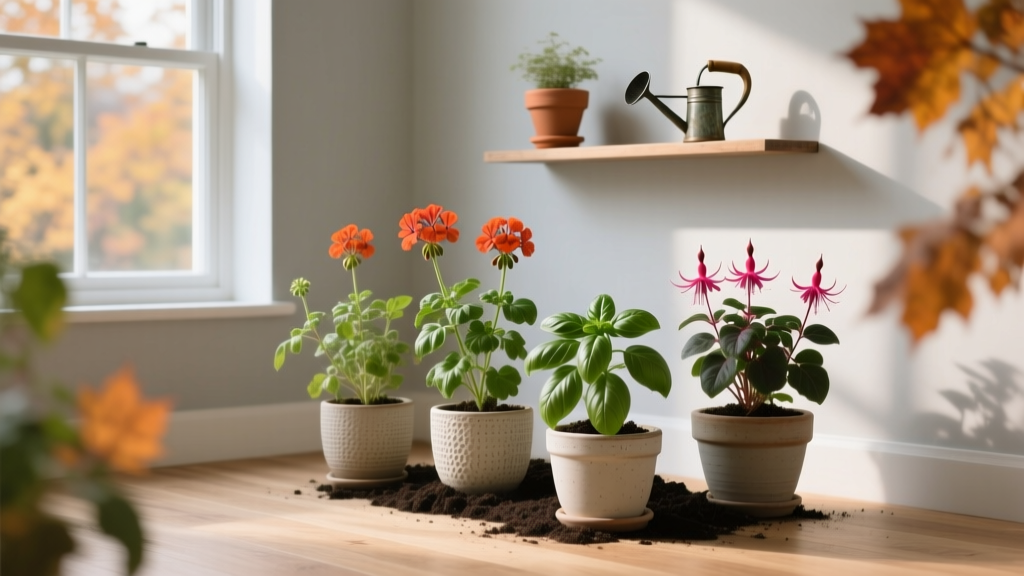
Fall Garden: Moving Tender Plants Indoors
The clock starts ticking the moment night temperatures begin dropping into the 40s°F. One cold snap can turn thriving tropicals into mush, and one overlooked pot can carry pests indoors for the entire winter. The upside: a focused, two-week push now can save your favorite plants, give you healthier houseplants all winter, and set you up for an easier spring. Use this guide as a work plan—prioritized, timed, and tied to real temperature thresholds and frost dates.
Keep a simple rule in mind: most tender plants are stressed more by cold nights than by daytime highs. For many common tropicals, the “move indoors” trigger is below 50°F at night; for very sensitive plants (hibiscus, croton), below 55°F is enough to cause leaf drop. Plan to have plants indoors 7–10 days before your average first frost date so you’re not scrambling on the first hard freeze.
Priority #1: What to Protect (Move Indoors First)
Start with plants that will suffer permanent damage from a single chilly night, then move to the plants that can handle brief cool spells. If you only have one afternoon, prioritize the “can’t take 45°F” group.
Move indoors when nights hit 55–50°F
- Croton, cordyline, ti plant (often defoliate below 55°F)
- Hibiscus (buds drop with cool stress; move at 55°F)
- Orchids (many common Phalaenopsis prefer 60–80°F; don’t risk 50°F)
- Begonias (tuberous and rex types) (leaf damage in cool, damp weather)
- Boston fern (fronds brown quickly after cold nights)
- Angel wing/dragon wing begonia baskets
Move indoors when nights hit 50–45°F
- Geraniums (Pelargonium) (can tolerate brief dips, but quality drops below 45°F)
- Coleus (cold-sensitive; often collapses after 45°F)
- Caladium (dig before 50°F nights if you want firm tubers)
- Rubber plant, fiddle-leaf fig, pothos (avoid chilling injury)
- Citrus in pots (especially calamondin, lime, lemon; bring in before 45°F)
Can often wait until 40°F (but don’t push it)
- Rosemary (in pots) (more about wet + cold than cold alone; still safer indoors in Zones 5–7)
- Aloe and many succulents (brief 40s°F ok if dry; risk rises fast with damp soil)
- Some cacti (species-dependent; avoid cold + wet)
Timing numbers to work from: If your average first frost is Oct 10 (common in USDA Zone 5), aim to start transitions by Sept 25–Oct 1. If your average first frost is Nov 15 (many Zone 8 areas), begin by Nov 1. If a forecast calls for 36°F overnight—even without a “frost warning”—treat it as your final deadline for tropicals.
Quick decision checklist (15 minutes)
- Check the 10-day forecast: any lows under 50°F?
- Find your average first frost date (local extension, almanac, or weather service).
- Sort pots into three groups: “inside now,” “inside soon,” “can wait.”
- Confirm indoor space: brightest windows, plant stands, spare room, garage window.
Priority #2: What to Prepare (Before a Single Pot Crosses the Threshold)
Moving tender plants indoors is not just relocating them—it’s changing their light, humidity, airflow, and pest ecosystem. Prepare the landing zone first so plants don’t crash from the transition.
Build a clean indoor “quarantine zone” for 7–14 days
Most indoor infestations start because one plant came in with hidden hitchhikers. A simple quarantine corner protects everything else.
- Choose a spot away from houseplants: laundry room, spare bathroom, or a corner with a shop light.
- Put down a waterproof tray or plastic to catch runoff.
- Set a small fan on low for airflow (helps reduce fungus gnats and mildew).
- Keep a flashlight and yellow sticky traps nearby for inspections.
University extension programs consistently recommend inspecting and cleaning plants before bringing them inside to reduce pests. For example, University of Minnesota Extension advises checking plants carefully for insects and washing plants to avoid bringing pests indoors (2020).
Clean pots, saucers, and supports
- Scrub saucers (salt buildup and algae harbor fungus gnat larvae).
- Remove dead leaves from soil surfaces (reduces mold and shore flies).
- Wash stakes/trellises before they come inside.
Light planning: match plants to indoor reality
Outdoor sun is far stronger than window light. If you bring in a sun-loving plant and keep it in “bright shade” indoors, leaf drop is likely.
- South/west window: best for citrus, hibiscus, rosemary, succulents.
- East window: good for many foliage plants, begonias, some orchids.
- Grow lights: aim for 12–14 hours/day for flowering plants; keep LEDs 8–18 inches above leaves depending on output.
Humidity and watering reset (avoid root rot)
Indoors, evaporation slows. Many plants need less water immediately after the move.
- Plan to reduce watering by 25–50% during the first two weeks indoors.
- Empty saucers after watering—standing water indoors is an invitation to fungus gnats.
- Group plants to raise humidity, or use a humidifier if your home runs below 35–40% humidity.
“Most houseplant problems in winter trace back to low light and overwatering after plants are brought indoors.” — General guidance echoed across extension houseplant troubleshooting resources; see e.g., Clemson Cooperative Extension houseplant care publications (2019).
Priority #3: Pest & Disease Prevention (Your Fall Insurance Policy)
Fall is prime time for pests to hitch a ride indoors: aphids crowd tender tips, spider mites thrive in dry indoor air, and fungus gnats explode when soil stays damp. A short, deliberate prevention routine now saves weeks of frustration later.
Inspect like a pro (5-minute method per plant)
- Look under leaves with a flashlight: check for stippling (mites), sticky honeydew (aphids/whiteflies), cottony clusters (mealybugs).
- Check leaf joints and stems (scale insects often hide there).
- Tap foliage over white paper to reveal tiny moving specks (mites, thrips).
- Smell the soil: sour/rotten odor suggests overwatering or root issues—fix before moving indoors.
Wash and treat: a practical protocol
Use the least aggressive method that works. Avoid harsh chemicals indoors unless you can ventilate well and follow labels exactly.
- Step 1: Rinse foliage with a firm spray of water (shower or hose on gentle) to remove pests and dust.
- Step 2: Wipe large leaves (rubber plant, citrus) with a damp cloth; include undersides.
- Step 3: If pests are present, apply insecticidal soap or horticultural oil per label directions. Repeat in 7–10 days to catch hatchlings.
- Step 4: Place yellow sticky cards at soil level for fungus gnats and flying pests.
Extension guidance commonly emphasizes cleaning and pest checks before moving plants indoors. University of Minnesota Extension specifically recommends washing plants and examining them for insects and eggs before indoor move-in (2020). If you’re dealing with recurring indoor pests, consult your state extension’s houseplant IPM pages for product options appropriate to your area.
Fungus gnats: stop them before they start
- Let the top 1–2 inches of soil dry between waterings.
- Bottom-water when possible to keep the surface drier.
- Remove leaf litter from soil surface.
- If gnats persist, use BTI (Bacillus thuringiensis israelensis) drenches per product label.
What to Plant (Fall Moves That Pair Well With Bringing Plants In)
While you’re clearing patio space and emptying containers, it’s an ideal moment to plant cool-season crops and set up spring color. Think of this as trading tender summer plants for fall and spring wins.
Plant garlic and spring bulbs on the same weekend
- Garlic: plant 2–4 weeks before the ground freezes. In many areas that’s mid-October to early November. Separate cloves and plant 2–3 inches deep.
- Tulips/daffodils/crocus: plant when soil is cooling, typically 45–55°F soil temperature. If you plant too early in warm soil, disease risk increases.
Sow quick fall greens as containers come indoors
- In Zones 6–8, use freed-up pots for spinach, arugula, lettuce, and mustard greens.
- Use row cover when nights drop near 32°F.
What to Prune (And What Not to Touch Yet)
Fall pruning mistakes can cause winter dieback or reduce next year’s blooms. Keep pruning tactical: remove problems, reduce pest habitat, and shape only where necessary for indoor space.
Do now: prune for sanitation and indoor fit
- Remove dead, damaged, or diseased leaves and stems before moving indoors.
- Lightly reduce leggy growth on geraniums and fuchsias so they fit windows and won’t snap during transport.
- Pinch back coleus cuttings you’re rooting indoors.
Wait: avoid heavy fall pruning on woody shrubs outdoors
- Avoid hard pruning roses, hydrangeas (many types), and other woody ornamentals in fall in cold zones; it can stimulate tender growth that winter-kills.
- Instead, clean up leaf litter and remove obviously diseased material to reduce overwintering pests and spores.
Priority Timeline: Your 4-Week Schedule (Use This Like a Seasonal Almanac)
Adjust dates around your local first frost. The key is to tie tasks to temperature triggers (55°F, 50°F, 45°F, 36°F, 32°F) rather than the calendar alone.
| Timing | Outdoor Trigger | Top Actions | Plants to Prioritize |
|---|---|---|---|
| Week -4 to -3 before avg. first frost | Nights consistently 55–50°F | Set up quarantine area; inspect and rinse plants; take cuttings | Croton, hibiscus, orchids, begonias, ferns |
| Week -2 | Forecast lows ≤ 50°F | Move sensitive plants indoors; reduce watering; start sticky traps | Coleus, caladium, tropical foliage plants |
| Week -1 | Forecast lows ≤ 45°F | Move citrus and geraniums; clean pots and saucers; adjust lighting | Citrus, geraniums, succulents (if wet weather) |
| Frost week | Forecast 36°F (warning-level chill) or 32°F (frost) | Final sweep; cover what stays out; drain hoses; store tools | Anything still on patios; borderline tender perennials in pots |
Three Real-World Scenarios (Regional Variations That Change the Plan)
Your fall move-in strategy depends on how fast temperatures drop, how wet the season is, and whether you get sudden radiational frosts. Use the scenario closest to your conditions.
Scenario 1: Upper Midwest / Interior Northeast (USDA Zones 3–5) — fast frosts, sharp drops
In these regions, you can go from mild to freezing in a week. Plan to move tender plants indoors by the time nights reach 50°F, not when frost is forecast. If your average first frost is around Sept 20–Oct 10, start preparations in late August to mid-September.
- Prioritize fast moves: hibiscus, coleus, begonias, citrus.
- Expect indoor shock from low light—use grow lights earlier.
- Do not leave pots on cold concrete; root zones chill faster than air.
Scenario 2: Pacific Northwest / Coastal (USDA Zones 7–9) — cool and damp, fewer hard freezes
Here, the bigger risk is prolonged dampness and low light rather than a sudden deep freeze. Many tender plants rot before they freeze. As soon as rain becomes routine and nights sit in the 40s°F, protect succulents and anything in water-retentive mixes.
- Move succulents and cacti under cover early; keep them drier.
- Watch for powdery mildew on begonias and geraniums—improve airflow and remove infected leaves.
- Consider a bright, cool indoor space (50–60°F) for overwintering geraniums with less growth.
Scenario 3: Southeast / Gulf Coast (USDA Zones 8–10) — long fall, surprise cold snaps
Warm spells can lull you into waiting—then an early front drops temperatures quickly. Your plants may still be actively growing and full of soft new growth, which is more cold-sensitive. When a forecast shows an overnight low under 45°F, treat it seriously even if daytime highs are 75°F.
- Pre-stage: group pots near a door a few days ahead of a front.
- Harden indoor transitions by moving plants into bright shade outdoors for 3–5 days before bringing them into window light.
- Watch for whiteflies and scale on citrus—common in warm climates and easy to carry indoors.
How to Move Plants Indoors Without Shock (Step-by-Step)
This sequence minimizes leaf drop and pest outbreaks while keeping your workflow efficient.
1) Take cuttings as a backup (same day you start inspections)
If you love a plant and it’s hard to overwinter, take cuttings now. Coleus, begonias, impatiens, and many tender ornamentals root easily.
- Take 4–6 inch cuttings, remove lower leaves, and root in water or a sterile mix.
- Label varieties immediately.
2) Reduce light gradually (3–7 days)
Plants moving from full sun to indoors benefit from a short transition.
- Move full-sun pots to bright shade for 3–5 days.
- Then move into the quarantine zone under bright window light or grow lights.
3) Repot only if necessary
Fall repotting can help if soil is exhausted or you have a pest issue, but repotting also adds stress. If the plant is healthy, wait until spring for major repots.
- Do repot if soil drains poorly, smells sour, or is full of roots circling tightly.
- Use a faster-draining mix indoors to reduce fungus gnats and root rot.
4) Place, then stop fussing
After move-in, avoid constant repositioning. Give plants 10–14 days to settle, water lightly, and monitor pests.
What to Protect Outdoors (While You’re Focused on Indoor Moves)
As pots come in, your garden beds still need a few fall protections that prevent disease and reduce spring workload.
Mulch strategically after a freeze, not before
- Wait until after the first light freeze (around 32°F) to mulch tender perennials in colder zones; mulching too early can keep soil warm and delay dormancy.
- Use 2–3 inches of shredded leaves or bark around perennials (keep mulch off crowns to prevent rot).
Clean up disease pressure (targeted, not obsessive)
- Remove tomato, squash, and mildew-prone plant debris to reduce overwintering spores and pests.
- Do not compost diseased foliage if you’re unsure your pile heats adequately.
- Sanitize pruners between suspect plants (70% isopropyl alcohol works quickly).
Protect container perennials by zone
Roots in pots experience colder conditions than roots in the ground. A general rule is that a plant hardy to Zone X in-ground may need Zone X+1 or X+2 protection in a container.
- Zones 3–5: move borderline-hardy container perennials into an unheated garage after dormancy, or bury pots in the ground.
- Zones 6–7: cluster pots against a sheltered wall and mulch around them; wrap pots on exposed patios.
- Zones 8–10: protect during rare freezes—cover and move pots under eaves when forecasts hit 32–28°F.
What to Prepare for Winter (So Next Spring Is Easier)
Once the tender plants are inside, use the cleared space and momentum to lock in a few high-payoff tasks.
Tool and watering system shutdown (one hour well spent)
- Drain and store hoses before a 32°F night to prevent cracks.
- Empty and clean watering cans used outdoors (algae and debris build up over winter).
- Clean shears and oil moving parts; sharpen now rather than in spring rush.
Soil and potting inventory
- Store potting mix sealed and dry to reduce fungus gnat breeding and mold.
- Label empty pots and note what you want to change next year (better drainage mix, bigger size, different location).
Indoor plant care reset checklist (first 2 weeks inside)
- Place sticky traps and check them every 3–4 days.
- Water only when the top layer dries; avoid “scheduled watering.”
- Rotate plants weekly for even growth if light is one-sided.
- Hold fertilizer for 4–6 weeks unless you’re providing strong grow light and active growth continues.
For frost-date planning and local nuances, your state extension’s resources are often the most precise. Also, remember that fall indoor moves are a proven pest pathway—extensions routinely emphasize inspection and cleaning before bringing plants in (e.g., University of Minnesota Extension, 2020; Clemson Cooperative Extension, 2019). Treat that step as non-negotiable.
If you do the move in a controlled way—inspect, rinse, quarantine, then place—you’ll keep the best of summer alive through winter without importing pests or creating a living-room jungle of struggling plants. Aim to have your most sensitive plants inside by the first run of 50°F nights, finish your main moves by 45°F, and treat 36°F forecasts as your last call. Then enjoy the calmer phase of fall: clean beds, planted bulbs, organized tools, and healthy plants settling in for the season ahead.