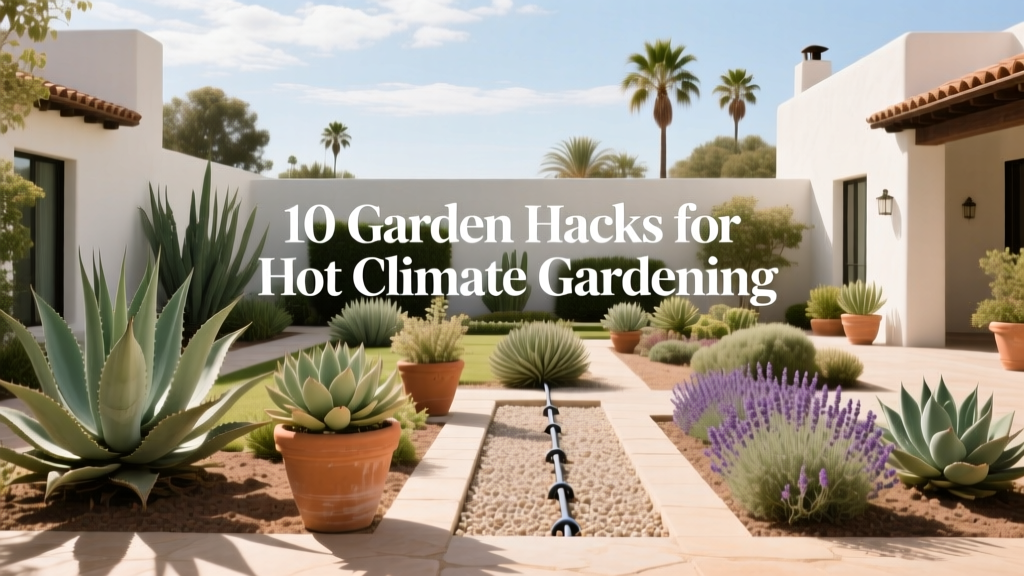
10 Garden Hacks for Hot Climate Gardening
Most hot-climate gardens don’t fail because the gardener “forgets to water.” They fail because the timing and method of watering (plus bare soil) basically turns the bed into a solar oven—then we try to fix it with more water, which often makes plants weaker and the soil crustier. The good news: a handful of low-effort hacks can drop soil temperatures, cut water use, and keep plants producing even when afternoons are brutal.
I garden in heat too, and I’ve watched the same pattern play out in real yards: a few small changes (shade timing, mulch thickness, irrigation placement) turn “crispy and sad” into “still harvesting at 5 pm.” Let’s get into the shortcuts that actually move the needle.
Group 1: Beat the Heat at the Soil Surface (Where the Damage Starts)
1) Mulch Like You Mean It: 3–4 Inches, Not a Dusting
If you can still see soil, your mulch is too thin for hot climates. Aim for 3–4 inches of organic mulch (wood chips, shredded leaves, straw) to slow evaporation and keep the top layer from baking into a crust. Keep mulch 2–3 inches away from plant stems to prevent rot and pests.
Real-world example: In a Phoenix-area front yard conversion, switching from 1 inch of bark to a consistent 3–4 inches reduced how fast the soil dried out—beds that needed water every other day in June shifted closer to twice a week once plants were established.
2) “Cool Roof” Your Garden Bed with Light Mulch or Shade Cloth
Dark soil absorbs heat like asphalt. In the hottest weeks, top-dress with a thin (1/2-inch) layer of light-colored mulch (straw or dried grass clippings) over your regular mulch, or add 30–40% shade cloth over sensitive crops. This drops leaf scorch dramatically without stalling growth the way heavy shade can.
DIY alternative: Stretch an old white sheet or painter’s drop cloth on a simple PVC frame for a quick heatwave “umbrella.” Use clamps so you can pull it off when temps drop.
3) Bury a Soaker Line Under Mulch (Not on Top of It)
If your soaker hose sits on top of mulch, much of that water evaporates before it gets to roots. Lay drip tubing or soaker hose on the soil, then cover it with mulch so water moves downward, not sideways into the air. For vegetables, a simple layout is one line per row or two lines for wide beds (one near each edge).
Specific win: This setup can reduce surface evaporation and also prevents the “hard crust ring” you get when water repeatedly hits bare soil in the same spots.
Group 2: Water Smarter (Without Babying the Garden)
4) Water at Dawn, But Time It to the Root Zone: 20–40 Minutes, Then Stop
Hot-climate watering isn’t about “more,” it’s about depth. Water at 4–7 a.m. so foliage dries quickly, then run drip long enough to wet the root zone—often 20–40 minutes depending on emitter flow and soil type. Use a $10 soil probe or a long screwdriver: it should slide in 6–8 inches after watering for most vegetables.
Case example: A Las Vegas container gardener was running drip twice a day for 10 minutes; switching to one deeper morning cycle plus mulch stopped mid-day wilting and actually improved tomato fruit set.
5) Put a Cheap Catch-Cup Test on Your Sprinklers Once a Season
If you use sprinklers anywhere (lawns, fruit trees, mixed beds), do a quick uniformity check. Place 6–10 identical cups around the zone, run sprinklers for 15 minutes, then measure. If one cup has half the water of another, you’re overwatering one area to keep another alive—wasting money and inviting disease.
Money saver: Fixing a single clogged nozzle or swapping a mismatched head (often $3–$8) can cut water use more than buying another “water-saving” gadget.
6) Use Ollas (or DIY “Buried Bottle Drip”) for Heatwaves and Vacations
Unglazed clay ollas slowly seep water right at the roots, which is ideal when evaporation is extreme. Bury the olla so the neck is above soil, fill it, and cap it; in peak heat you might refill every 2–5 days depending on size and plant demand. If you don’t want to buy one, bury a 2-liter bottle with tiny pinholes near the bottom and fill it as a temporary heatwave hack.
Cost note: A medium olla often runs $25–$45, but the DIY bottle version costs basically nothing and can save a container garden during a long weekend.
Group 3: Shade and Microclimates (Your Secret Weapon)
7) Give Afternoon Shade on Purpose (It’s Not Cheating)
In hot climates, morning sun is gold and afternoon sun can be punishment. Place heat-sensitive crops (lettuce, cilantro, spinach, many peppers when small) where they get sun until 11 a.m.–1 p.m. and then shade from a wall, fence, or shade cloth. Even a few hours of relief can prevent bolting and blossom drop.
Real-world scenario: In a Texas backyard with relentless west sun, moving peppers to the east side of a 6-foot fence (bright light, less blast-furnace afternoon heat) increased production and reduced sunscald on fruit.
8) Use “Living Shade” with Tall Crops as a Heat Shield
Instead of building structures, plant tall crops to protect shorter ones. A row of okra, corn, or sunflowers on the west side creates filtered shade during the hottest part of the day. Keep spacing generous—okra, for example, often does well at 12–18 inches apart—so airflow stays decent.
Example layout: Put basil and young peppers on the east side of okra; they’ll still get plenty of light, but their leaves won’t fry at 4 p.m.
Group 4: Planting and Soil Tricks That Change the Game
9) Plant “High and Wide” in Clay, “Slightly Sunken” in Sand
Hot-climate soils vary wildly, and the wrong bed shape makes heat stress worse. In heavy clay, build beds 6–10 inches high to improve drainage and root oxygen; in sandy soil, a 2–4 inch shallow basin can help hold water near roots. This one tweak can mean the difference between roots cooking in soggy clay or drying out in sand.
Extension-backed idea: University extension guidance commonly recommends raised beds to improve drainage and rooting in heavy soils, which also supports deeper, more resilient root systems during heat (e.g., University of California Agriculture & Natural Resources, 2019).
10) Feed the Soil Biology, Not Just the Plant: Compost + Wood Chips in Layers
In extreme heat, soil life crashes when the surface gets too hot and dry. Try a simple layering hack: add 1 inch of compost around plants, then top with 3 inches of wood chips (or shredded leaves) to keep that compost zone moist. The goal is a cool, biologically active layer where roots can keep mining nutrients even in midsummer.
Case example: A Southern California gardener battling hydrophobic (water-repelling) soil saw better infiltration after a month of consistent deep watering plus compost-under-mulch layering—water stopped beading and started soaking in evenly.
“Mulches…reduce water loss from the soil surface and moderate soil temperatures.” — Washington State University Extension, 2020
Quick Comparison Table: Pick the Right Cooling + Watering Combo
| Method | Best For | Typical Cost | What to Watch |
|---|---|---|---|
| 3–4 inch organic mulch (wood chips/straw) | All beds; long-term cooling and moisture savings | $0–$6 per bag (DIY leaves = free) | Keep 2–3 inches off stems; replenish as it breaks down |
| 30–40% shade cloth | Lettuce, herbs, seedlings, peppers during heatwaves | $15–$40 for a small panel | Too much shade can reduce flowering/fruiting |
| Drip lines under mulch | Vegetables, shrubs, hedges; efficient watering | $20–$60 to set up a small bed | Check for clogged emitters; flush lines monthly in hard water areas |
| Olla irrigation | Containers, raised beds, vacation insurance | $25–$45 each (DIY bottle = free) | Limited radius; best for clustered plantings |
Bonus “Hot-Weather Triage” Scenarios (What I’d Do This Week)
Scenario 1: Tomato leaves curl every afternoon, but perk up at night. That’s usually heat stress, not necessarily underwatering. I’d add 30–40% shade cloth on the west side first, then confirm soil moisture 6–8 inches down before increasing irrigation. If fruit is getting pale patches, add shade faster—sunscald doesn’t reverse.
Scenario 2: Basil bolts and cilantro collapses by early summer. Treat these as cool-season crops in hot climates. Plant them where they get morning sun only, and reseed every 2–3 weeks in partial shade for a steady supply. A cheap trick is to sow them under taller crops (like okra) so they live longer into the heat.
Scenario 3: You’re leaving town for 4 days during a heatwave. Don’t “water extra” the night before and hope. Add a temporary olla or buried bottle near your thirstiest containers, move pots into bright shade, and mulch the pot surface with 1–2 inches of straw or shredded leaves. If you have drip, put it on a battery timer and run an early morning cycle rather than evening.
Two Small Habit Shifts That Make the Hacks Work Better
Stop fertilizing heavily during extreme heat. Pushing fast growth when nights are hot can make plants more tender and thirsty. If you must feed, go lighter—think half-rate liquid feed every 10–14 days instead of full-strength weekly applications—and prioritize compost top-dressing.
Track one number: how long it takes your soil to dry to 2 inches down. Stick your finger in the soil under mulch; when the top 2 inches are dry but below that is still slightly damp, you’re in the sweet spot for many established plants. This helps you avoid the “constant wet surface” pattern that invites fungus gnats and shallow roots.
Sources You Can Trust (and Actually Use)
These hacks line up with what extension folks repeat because it works: reduce evaporation at the surface, deliver water to the root zone, and moderate temperature swings.
Washington State University Extension (2020) documents mulch benefits for moderating soil temperature and reducing water loss, which is exactly why the 3–4 inch mulch target is such a big deal in hot climates.
University of California Agriculture & Natural Resources (2019) provides practical guidance on bed preparation and soil management approaches (including raised beds where appropriate), which supports the “plant high in clay / slightly sunken in sand” tactic for healthier roots under heat stress.
If you try only two changes this week, make them these: get your drip/soaker under a real mulch layer, and engineer afternoon shade (even temporary). Those two fixes alone usually stop the daily wilt drama—and they make every other improvement you do afterward work twice as hard.