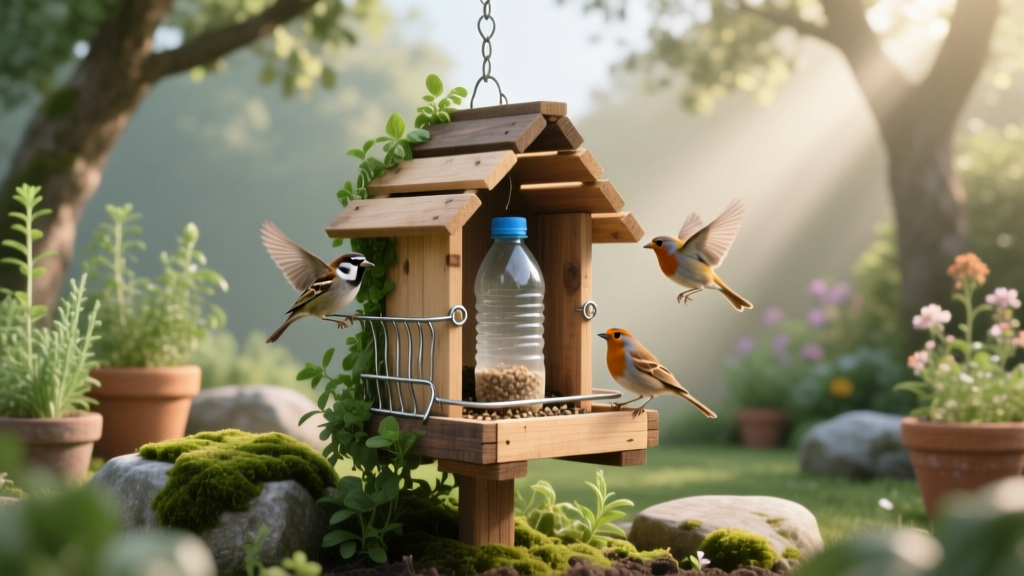
DIY Garden Bird Feeder from Recycled Items
The #1 mistake I see with “cute” DIY bird feeders is this: they feed squirrels better than they feed birds. A feeder can be perfectly crafty and still fail if it’s too slippery to perch on, too wet inside, or placed like a neon sign for predators. The good news is you can build reliable, bird-safe feeders from recycled items in under 30 minutes—and most cost $0–$5 if you use what you already have.
Below are the tried-and-true shortcuts: designs that actually work, placement rules that reduce mess, and small tweaks (drain holes, perch length, seed choice) that make a recycled feeder perform like a store-bought one.
Pick the Right Recycled Base (Match the Feeder to the Bird)
Tip: Use a 2-liter bottle for “gravity” feeding (and make the ports the right size)
A clear 2-liter soda bottle becomes a surprisingly good seed hopper if you cut two feeding ports and add perches. Keep each port about 1.25 inches wide and 1 inch tall—big enough for sunflower chips and small birds, but not a wide-open buffet for starlings. Example: if you garden for finches and chickadees, place ports 3–4 inches above the bottom so spilled seed falls out instead of building up into mold.
Tip: Turn a milk carton into a rain-shedding hopper (best for messy climates)
Milk cartons (or shelf-stable cartons) naturally block sun and shed rain, which keeps seed fresh longer than open trays. Cut two windows about 2 inches tall on opposite sides, leaving a 1-inch “lip” at the bottom to hold seed. Example: in a wet spring, a carton feeder can keep seed usable for 3–5 days longer than a saucer-style feeder in the same spot.
Tip: Use a tuna can or small tin as a suet feeder (winter powerhouse)
Suet doesn’t need a fancy cage if you add a simple hanging loop and a rough “cling” surface. Punch two holes near the rim, thread a wire hanger, and press a suet mix into the can; add a strip of hardware cloth (1/2-inch grid) inside so woodpeckers can grip. Example: in January, this little can feeder often outperforms seed for woodpeckers, nuthatches, and wrens because fat is a high-energy food in cold weather.
Tip: Skip netted produce bags for DIY feeders (they can tangle birds)
Those mesh citrus/onion bags seem handy, but they’re a snag risk—claws and legs can get caught. If you want a “hanging mesh” style, use a short cylinder of hardware cloth instead (1/2-inch). Example: a 4-inch-diameter hardware cloth tube, 10 inches tall, holds suet chunks without the tangling hazard.
Build It So It Drains, Perches Well, and Stays Clean
Tip: Add drainage holes—two minutes that prevents the #1 seed-killer
Moisture ruins seed fast, and wet seed grows mold. Drill 4–6 holes in the bottom—about 1/8 inch each—for bottles, cartons, and tubs so rain can escape. Example: if you’re using a plastic peanut butter jar lid as a tray, punching 6 holes around the edge keeps it from turning into a swamp after a storm.
Tip: Give birds a real perch: 2.5–3 inches long, not a toothpick
Most recycled feeders fail because birds can’t land comfortably. Use a 1/4-inch wooden dowel, a straight twig, or even a bamboo skewer bundle; aim for a perch that sticks out 2.5–3 inches so birds can balance and eat without flapping. Example: on a bottle feeder, a 3-inch perch placed 1/2 inch below each feeding port makes chickadees and titmice noticeably more confident about using it.
Tip: Roughen slick plastic with sandpaper where feet land
Birds avoid surfaces that feel like ice. Scuff the perch area with 80–120 grit sandpaper, or wrap the perch with jute twine for extra grip. Example: a smooth plastic bottle hung in winter can be ignored for weeks; scuffing the “landing zone” often gets first visitors within a day or two in an active yard.
Tip: Use “tight but removable” fasteners so you can clean it weekly
If you can’t open it easily, you won’t clean it—and dirty feeders spread disease. Rubber bands, twist ties, small binder clips, and zip ties (snip and replace) all work, but design so you can fully empty it in under 60 seconds. Example: a milk carton feeder clipped shut with two binder clips is far easier to scrub than one sealed with glue.
Tip: Keep the feed depth shallow in tray feeders (1/2 inch max)
Deep piles of seed trap moisture and droppings, which is a hygiene problem. In a tray feeder made from a plastic takeout lid or plant saucer, keep seed at about 1/2 inch deep and refresh frequently. Example: if you’re only seeing a couple birds per day, offer 1/4 cup at a time instead of filling the tray—less waste, less mess.
“Bird feeders should be cleaned and disinfected regularly to help prevent disease transmission.” — Cornell Lab of Ornithology (2023)
3 Recycled Feeder Builds That Actually Work (With Shortcut Upgrades)
Tip: The 2-liter bottle feeder (fastest build, best for sunflower chips)
Cut two ports, add two perches, drill drainage holes, and hang it from the cap with a looped wire. A good starting fill is 2 cups of sunflower chips, which flows well and attracts chickadees, finches, and cardinals. Real-world shortcut: tape a 2-inch “roof” above each port using scrap plastic (like a yogurt lid) so rain doesn’t funnel directly into the bottle.
Tip: The “carton hopper” (best rain protection, easiest refill)
Cut windows, punch two small holes at the top, and hang it with string; add a small stick through both sides as a shared perch. Keep the bottom lip intact and add 1/8-inch drain holes in the corners. Example: one gardener I worked with in coastal weather switched from an open tray to a carton hopper and reduced soggy-seed dumping from every 2 days to about once a week.
Tip: The “jar feeder” (small, neat, great for patios)
A clean peanut butter jar (plastic) can become a compact feeder: cut a 1.5-inch round access hole, add a short perch below it, and hang it horizontally with twine in a macramé-style cradle. Fill it with 1/2 cup of sunflower hearts or a no-mess mix to avoid husks on the patio. Example: apartment balcony gardeners love this because it’s lightweight and doesn’t clang in the wind like metal feeders.
Seed Choices That Save Money and Reduce Weeds
Tip: Use sunflower hearts/chips to cut cleanup time in half
Sunflower hearts (hulled) cost more per pound, but you don’t pay with a carpet of shells. If black oil sunflower is $1.20/lb and hearts are $2.20/lb, hearts can still be cheaper for patios because nearly 100% is edible and there’s less sweeping. Example: if you go through 10 lb/month, switching to hearts can reduce mess enough that you don’t need to hose down the area twice a week.
Tip: Avoid millet-heavy mixes if you don’t want surprise “birdseed weeds”
Cheap mixes often contain lots of white millet, milo, and filler seeds that birds toss aside. Those discarded seeds sprout under feeders, especially after rain, turning into a weedy patch. Example: if you’re seeing grass-like sprouts under the feeder, switch to a mix where the first ingredient is black oil sunflower or sunflower chips.
Tip: Offer peanuts only in a proper mesh (or chopped in a tray)
Whole peanuts attract jays and woodpeckers but can be a choking risk for very small birds if offered improperly, and they spoil if wet. Use a hardware-cloth tube (1/2-inch) for whole peanuts, or offer chopped peanuts in a covered tray. Example: one 10-inch mesh tube filled with 2 cups of peanuts can keep a pair of woodpeckers busy while smaller birds work the seed feeder nearby.
Tip: DIY suet ratio that holds up in mild winters
For a simple homemade suet block, mix 2 parts fat to 1 part dry add-ins by volume (example: 1 cup melted suet or lard to 1/2 cup oats + 1/2 cup peanut butter). Pour into a recycled shallow container (like a clean takeout cup) and chill for 2 hours. Example: in temperatures above 60°F, skip lard-heavy recipes—use a commercial “no-melt” suet cake or keep your DIY suet shaded and put out smaller amounts.
Hang It in the Right Spot (So Birds Feel Safe and You Don’t Invite Trouble)
Tip: Use the 10–12 foot rule for cover, not right inside it
Birds like quick access to shrubs, but feeders tucked deep into bushes can turn into ambush sites. Aim to place feeders about 10–12 feet from dense cover: close enough for escape, far enough to reduce surprise attacks. Example: if your feeder is currently 2 feet from a hedge, move it out toward the lawn edge and watch how quickly “nervous” birds like sparrows start visiting.
Tip: Reduce window strikes with a simple distance hack
Many collisions happen when feeders are placed where birds launch toward reflective glass. A widely recommended approach is either very close to the window (about 3 feet) or far away (30+ feet) so birds either don’t build speed or have room to maneuver. Example: a feeder at 8 feet from a big picture window is the danger zone; moving it to 3 feet can noticeably reduce hard hits.
For bird-window collision prevention guidance, see Cornell Lab of Ornithology (2023) and many extension wildlife resources that echo these placement principles.
Tip: Hang feeders 5–6 feet high for easy refill and less predator reach
Super high isn’t always better—if you hate refilling it, it won’t get maintained. A height of about 5–6 feet is a sweet spot for visibility, refilling, and keeping it out of a cat’s easy jump zone. Example: use a shepherd’s hook or a recycled metal pole; if squirrels climb it, add a DIY baffle from an upside-down plastic mixing bowl.
Squirrel-Proofing (Without Buying Fancy Gear)
Tip: Make a baffle from a $2 thrift-store bowl
Flip a metal or sturdy plastic bowl upside down and drill a center hole to slide over the pole below the feeder. Use washers and a wing nut to hold it in place, keeping the bowl about 4 feet off the ground so squirrels can’t hop from below and grab the feeder above. Example: a 12-inch diameter bowl baffle stops most climbers on a straight pole setup.
Tip: Use fishing line as a hanger to add wobble (cheap deterrent)
Birds tolerate a little movement; squirrels hate unstable landings. Hang lightweight bottle or carton feeders with 20–30 lb test fishing line so it sways when a heavier animal tries to board. Example: a carton feeder hung on fishing line from a tree branch often remains bird-only, especially if you keep it 7–8 feet from any “launch point” like a fence.
Tip: Offer two stations: “squirrel decoy” away from your main feeder
If you have persistent squirrels, fighting them at one feeder can become a full-time job. Put a small ground tray with cheap cracked corn 25–30 feet away and keep your main feeder baffle-protected. Example: gardeners with mature trees often find this reduces squirrel raids because the easier meal is elsewhere.
Cleaning and Safety Habits That Keep Birds Coming Back
Tip: Set a 7–10 day cleaning rhythm (faster than you think)
Most feeders can be cleaned in 5 minutes if you designed them to open easily. Dump old seed, scrub with hot soapy water, and let it dry completely before refilling; damp interiors are the enemy. Example: pick a routine—every Sunday morning—so it becomes as automatic as watering containers.
Tip: Disinfect occasionally with a simple ratio (and rinse well)
When feeders get slimy or if you’ve had a sick bird visit, disinfect. A commonly recommended method is a 1:9 bleach-to-water solution (1 part household bleach to 9 parts water), followed by thorough rinsing and complete drying. Example: soak removable parts for 10 minutes, rinse twice, then sun-dry for an hour.
Many extension services and birding organizations recommend routine cleaning and periodic disinfection for feeder hygiene; see Cornell Lab of Ornithology (2023) for cleaning guidance, and university extension wildlife resources for disinfection practices.
Tip: If you see sick birds, pause feeding for 10–14 days
If birds look fluffed up, lethargic, or have crusty eyes, take feeders down temporarily to break transmission cycles. Clean everything, rake or scoop the area beneath, and restart with smaller amounts when activity looks normal. Example: one suburban yard I worked with stopped feeding for 2 weeks during a conjunctivitis flare-up and saw healthier behavior after restarting with a single, easy-to-clean feeder.
Quick Comparison: Recycled Feeder Options (So You Pick the Right One)
| Recycled Feeder Type | Best For | Build Time | Typical Capacity | Mess Level | Weather Resistance |
|---|---|---|---|---|---|
| 2-liter bottle hopper | Finches, chickadees, titmice | 20–30 min | 2–4 cups seed | Low–medium | Medium (add port roofs) |
| Milk/carton hopper | Mixed songbirds, rainy areas | 15–25 min | 1–3 cups seed | Medium | High |
| Jar feeder (horizontal) | Patios, small spaces | 15–20 min | 1/2–1.5 cups seed | Low | Medium |
| Tin can suet feeder | Woodpeckers, winter feeding | 10–20 min | 1–2 cups suet mix | Low | Medium (shade in heat) |
| Open tray (plant saucer) | Ground-feeders, easy viewing | 5–10 min | 1/4–1 cup seed | High | Low |
Real-World Scenarios (What I’d Build in Your Situation)
Scenario: Balcony gardener who can’t have mess (or angry neighbors)
Go with a jar feeder and sunflower hearts, and keep the portion small: about 1/2 cup at a time. Add a catch tray by zip-tying a recycled plastic lid 2 inches below the feeding hole to grab stray bits. Example: this setup usually costs $0 if you reuse a jar and lid, and it prevents the “shell confetti” that can get complaints in shared buildings.
Scenario: Wet backyard where seed keeps clumping and molding
Choose a carton hopper, cut narrow windows, and drill drainage holes in the corners. Hang it under a branch canopy (not against the trunk) and refill every 2–3 days with only what birds eat. Example: one rainy-yard trick is to keep a spare dry carton feeder ready—swap them in 30 seconds and clean the wet one indoors.
Scenario: Squirrels rule your neighborhood and laugh at your efforts
Use a bottle hopper on a pole with a bowl baffle, and hang it at least 7 feet from a fence or tree limb squirrels can jump from. If they still pester it, switch the hanger to fishing line for extra wobble and put a decoy ground tray 25 feet away. Example: that “two-station” approach often costs less than $5 in materials and saves you from constantly refilling an emptied feeder.
Scenario: Kids want a craft feeder, but you want it to be bird-safe
Make a carton hopper together and skip sticky peanut-butter pinecone crafts that can smear feathers and collect dirt. Let kids decorate with non-toxic paint on the outside only, and keep the feeding windows smooth with tape around sharp edges. Example: set a timer for 10 minutes weekly so kids “own” the cleaning routine—bird feeding stays fun and sanitary.
Small Upgrades That Make Recycled Feeders Feel Store-Bought
Tip: Add a simple rain cap from scrap plastic
A yogurt lid, takeout lid, or cut piece of an old storage container makes an instant roof. Aim for a cap that extends 1–2 inches beyond the feeding ports to block wind-driven rain. Example: on a 2-liter bottle, a cap zip-tied above the ports can cut seed dampness dramatically during spring storms.
Tip: Label your seed mix and refill date with painter’s tape
Old seed goes stale, and it’s easy to forget how long it’s been sitting in a feeder. A strip of painter’s tape with the refill date keeps you honest and helps you notice patterns (like which mixes get ignored). Example: if a feeder hasn’t dropped much seed in 5 days, refill less next time—your goal is steady turnover, not storage.
Tip: Use a “no-drip” funnel hack for refilling from bulk bags
Cut the top off a recycled plastic bottle to make a funnel that fits your feeder opening. This reduces seed spills, which reduces rodents—simple as that. Example: if you buy seed in a 20 lb bag, a DIY funnel saves you from dumping a cup of seed on the ground every refill.
Once you build one recycled feeder that drains well, cleans easily, and fits the birds you actually have, it’s hard to go back to flimsy craft versions. Keep it simple, keep it dry, and keep the food fresh—your garden will start sounding a lot more alive within a week.
Sources: Cornell Lab of Ornithology (2023), feeder cleaning and bird-friendly practices; University/Extension wildlife and bird-feeding hygiene guidance (commonly recommends regular cleaning and periodic disinfection, including 1:9 bleach solutions).