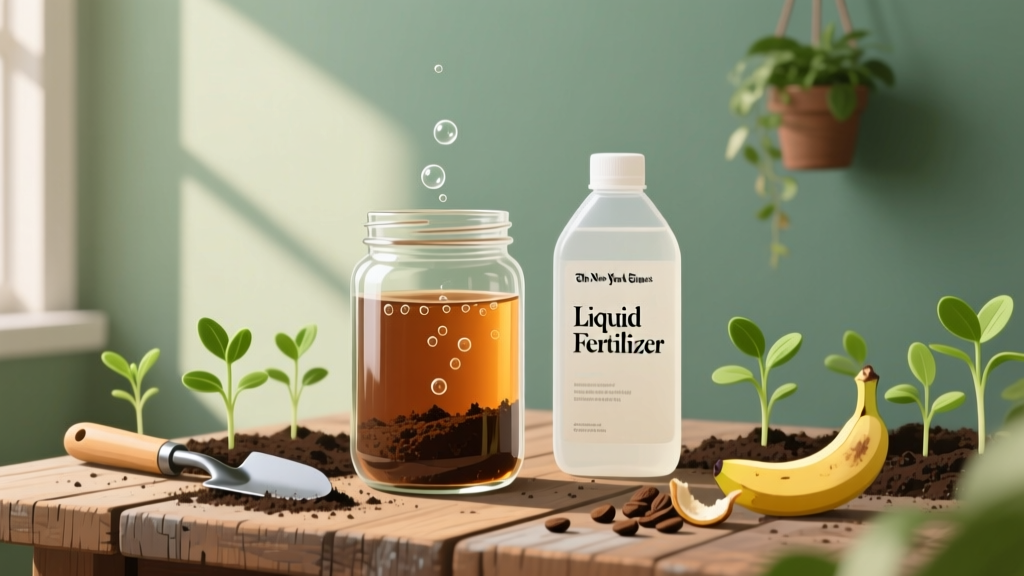
Compost Tea vs Liquid Fertilizer for Quick Feeding
The most common “quick-fix” mistake I see is gardeners treating compost tea like it’s a fast-acting fertilizer. It can be fantastic for biology and gentle support, but it rarely delivers the same immediate nutrient punch as a real liquid fertilizer—especially when plants are already showing pale leaves or stalled growth. If you’ve ever brewed a bucket of tea, drenched your tomatoes, and then wondered why nothing changed a week later… you’re not alone.
Quick feeding is about choosing the right tool for the job: compost tea for microbial support and leaf-surface competition, and liquid fertilizer for predictable, measurable nutrients now. Below are practical, numbers-based tips that help you pick (and use) the right one in real garden situations without wasting time, money, or plants.
First, Get Clear on What “Quick Feeding” Actually Means
Tip: Treat liquid fertilizer like a nutrient delivery system (because it is)
Liquid fertilizers contain soluble nutrients (like nitrate nitrogen) that plants can absorb quickly—often within days, not weeks. If you need a measurable response (new green growth, improved vigor) in 3–7 days, liquid fertilizer is usually the move. For example, a water-soluble 20-20-20 used at 1 tablespoon per gallon can green up container herbs fast when they’re pale and hungry.
Tip: Use compost tea as a “biology boost,” not a rescue feeding
Compost tea is better viewed as a way to introduce or support beneficial microbes and organic compounds rather than deliver guaranteed N-P-K. Nutrient levels in compost teas vary wildly depending on compost source, brew time, aeration, and dilution. A real-world example: two gardeners can brew “the same” tea and get totally different results—because one compost pile was nitrogen-rich and finished, while the other was carbon-heavy and undercooked.
Tip: Don’t confuse compost tea with compost extract
Compost extract is typically compost mixed with water and used immediately (minutes to hours), while compost tea is brewed over time (often 12–36 hours) to encourage microbial growth. Extract is quicker and lower-risk if you just want a mild drench today without running pumps overnight. If you’re short on time, a 10-minute extract (1 part compost to 5 parts water, stirred hard and strained) is a solid DIY option for seedlings and transplants.
Quick Comparison: What You’re Really Buying (or Brewing)
| Feature | Compost Tea (DIY) | Liquid Fertilizer (Store-bought) |
|---|---|---|
| Primary strength | Microbial support, mild nutrients | Predictable nutrients (N-P-K), fast response |
| Speed you can expect | Subtle; days to weeks depending on goal | Often visible in 3–7 days |
| Typical dilution | Often 1:4 to 1:10 (tea:water) depending on strength | Commonly 1–2 Tbsp/gal (check label) |
| Cost per gallon (rough) | $0.10–$0.50 if using home compost + electricity for pump | $0.30–$1.50 depending on brand and mix rate |
| Biggest risk | Food safety/pathogens if misused; inconsistent results | Salt buildup, overfeeding, leaf burn |
| Best use cases | Soil biology, transplant dips, disease-suppression strategy | N deficiency, heavy feeders, containers, rapid growth pushes |
One key note: if your garden problem is “plant looks hungry,” you’ll get more reliable, faster results from fertilizer. If the problem is “soil feels dead,” tea/extract plus organic matter (mulch/compost) is the better long game.
Compost Tea Tips That Actually Work (Without the Hype)
Tip: Brew shorter, not longer—12 to 24 hours is plenty for most DIY setups
Home brews can go sideways when they run too long and oxygen drops. A practical target is 12–24 hours with active aeration; beyond that, you can drift toward anaerobic conditions that smell bad and may select for unwanted microbes. Example: if your tea smells like swamp or rotten eggs, dump it on ornamentals only (not edibles) and clean your equipment.
Tip: Use a simple, repeatable recipe before you experiment
Start with: 2 cups finished compost in a mesh bag + 5 gallons dechlorinated water + aeration. If you add a food source, keep it conservative—1 tablespoon unsulfured molasses per 5 gallons is plenty; more isn’t “better,” it can spike microbial growth and crash oxygen. A repeatable baseline lets you notice whether tweaks help or just create chaos.
Tip: Dechlorinate your water if you’re trying to grow microbes
Chlorine and chloramine can suppress microbial populations. The easy hack: fill your bucket and let it sit 24 hours (works for chlorine, not always chloramine) or use a cheap inline carbon filter on your hose. If you’re on municipal water with chloramine, resting overnight may not do much—filtering is the more reliable shortcut.
Tip: Apply tea as a soil drench when the soil is already moist
Pouring tea into bone-dry soil wastes the effort because water (and microbes) won’t spread evenly. Pre-water lightly, then apply your tea so it moves through the root zone instead of beading off. Example: in a raised bed, water for 5 minutes first, then drench with tea diluted 1:4 to cover roughly 20–25 square feet per 5-gallon batch.
Tip: For foliar use, strain like you mean it and spray at the right time
If you spray compost tea on leaves, use a fine mesh or paint strainer so you don’t clog your sprayer. Spray early morning or late afternoon to avoid leaf burn and to keep microbes from getting cooked by midday sun. A practical example: on squash prone to powdery mildew, a weekly foliar spray during humid stretches can be part of a broader strategy (spacing, airflow, resistant varieties), but it’s not a magic shield.
Tip: Don’t spray compost tea on edible leaves close to harvest
For food safety, avoid applying any compost-based liquid to leafy greens shortly before picking. Extension guidance commonly recommends careful handling of compost and avoiding contact with edible portions if there’s any pathogen risk; keep sprays focused on soil or apply well ahead of harvest. If you want “something liquid” for lettuce two days before harvest, use a labeled fertilizer instead of compost tea.
“Raw manure and improperly composted materials can contain human pathogens; reduce risk by using properly composted inputs and preventing contact with edible portions of crops.” — UC ANR guidance on compost and food safety (University of California Agriculture and Natural Resources, 2016)
Citation: University of California Agriculture and Natural Resources (UC ANR), 2016, compost/food safety guidance for home and farm compost use.
Liquid Fertilizer Tips for Fast, Predictable Results
Tip: Use the “half-strength twice” rule for stressed plants
If plants are stressed (heat, transplant shock, cold nights), full-strength fertilizer can tip them into burn. A reliable shortcut is half-strength now, then half-strength again 5–7 days later rather than one heavy hit. Example: instead of 1 tablespoon per gallon, use 1/2 tablespoon per gallon on droopy seedlings, then repeat next week once they’re growing again.
Tip: Match nitrogen form to your urgency
Nitrate-based nitrogen is generally fast for plant uptake, while some organic liquids depend on microbial breakdown and can be slower in cool soils. If you need quick green-up in early spring when soil is 50–55°F, a synthetic or highly available liquid is often noticeably faster than fish/seaweed alone. Practical example: pale spinach in April responds quickly to a soluble fertilizer drench, while fish emulsion may lag if the soil biology is sluggish.
Tip: For containers, measure in teaspoons—not glugs
Containers punish guesswork because salts accumulate. Use measuring spoons and stick to labeled rates; if you feed weekly, many gardeners do best at 1/4 to 1/2 strength to avoid burning roots. Example: a 5-gallon patio tomato pot can get 1/2 strength every 7 days, plus a plain-water flush every 3–4 weeks to prevent crusty salt buildup.
Tip: If you see leaf-edge scorch, stop feeding and flush
Leaf-edge browning after feeding can be fertilizer burn or salt stress. The fastest fix is to flush with clean water—run 2–3 times the container volume through the pot (for a 5-gallon pot, that’s 10–15 gallons). Real-world payoff: you can save a basil plant that would otherwise spiral downhill for the rest of summer.
Tip: Time your “quick feed” around growth spurts
Fertilizer works best when plants are actively growing—pushing leaves, setting fruit, recovering from pruning. Feed in the morning and water in so nutrients move into the root zone rather than drying on the surface. Example: after you prune indeterminate tomatoes, feeding the next day can support the new flush of growth, especially if the plant is also fruiting heavily.
Citation: University of Maryland Extension, 2020, general fertilizer best practices for home gardens (avoid over-application; apply at correct rates; water in).
Shortcut Decision Rules (So You Don’t Overthink It)
Tip: If you can name a deficiency symptom, use fertilizer first
Yellowing lower leaves, slow growth, and weak new shoots often point to a nutrient shortage—especially nitrogen. In that moment, compost tea is a slow and uncertain fix; a measured liquid fertilizer is the fast move. Example: peppers in a container with pale leaves often perk up within a week after a correctly dosed feed.
Tip: If your soil is new, sterile, or abused, use tea/extract plus organic matter
Brand-new raised bed mixes, bagged soils, and heavily disturbed beds can be biologically thin. Compost tea/extract can help inoculate, but don’t skip the real foundation: 1–2 inches of finished compost as top-dress and a 2–3 inch mulch layer. Example: in a new bed, combining compost top-dress + tea drench often stabilizes moisture and boosts soil life better than fertilizer alone.
Tip: If you’re growing leafy greens fast, keep it boring and measurable
Lettuce, arugula, and spinach respond quickly to nitrogen, but they also show nitrate buildup concerns when overfed. Stick with labeled rates and avoid last-minute compost tea sprays on leaves near harvest. Example: for a 4’x8’ bed of cut-and-come-again lettuce, a light liquid feed every 10–14 days can outperform “mystery tea” and keeps results consistent.
Three Real-World Scenarios (What I’d Actually Do)
Scenario 1: Yellowing tomatoes in a 10-gallon grow bag mid-season
What’s happening: Grow bags leach and dry quickly; nitrogen gets used fast, and salts can build if you feed heavy.
My play: First, water thoroughly. Then apply a liquid fertilizer at 1/2 strength (example: 1/2 tablespoon per gallon) and repeat in 7 days if color doesn’t improve. If you’ve been feeding regularly and still see yellowing, flush with 10–15 gallons of water and then resume at lower strength.
Scenario 2: Powdery mildew pressure on squash every August
What’s happening: This is usually environment + airflow + varietal susceptibility, not a “needs fertilizer” problem.
My play: Use compost tea as one tool in a bigger system: weekly foliar sprays (strained well), applied at dusk, plus aggressive pruning of overcrowded leaves and keeping water off foliage. If plants are also underfed (pale and weak), add a separate liquid feeding to support new growth—don’t expect tea to do both jobs.
Scenario 3: Seedlings stalled after transplanting into a new raised bed
What’s happening: Transplant shock + cool soil + roots not exploring yet.
My play: Skip strong fertilizer on day one. Do a compost extract drench (1:5 compost to water, stirred and strained) to gently introduce biology and reduce stress, then wait 5–7 days. If new growth is still sluggish, follow with a mild liquid feed at 1/4 to 1/2 strength to nudge them without burning tender roots.
DIY and Money-Saving Hacks (Because Quick Feeding Shouldn’t Be Expensive)
Tip: DIY compost extract is the fastest “tea-like” option with almost no gear
You don’t need an air pump to get benefits from compost contact water. Mix 1 gallon of water with 2 cups finished compost, stir vigorously for 2–3 minutes, let settle 5 minutes, strain, and use immediately as a soil drench. Cost-wise, this is basically free if you already compost—and it takes under 15 minutes.
Tip: Skip fancy “compost tea foods” unless you’re consistent and careful
Molasses, kelp, and fish hydrolysate can feed microbes—but they also increase the chance of an oxygen crash if aeration is weak. If you do add molasses, keep it at 1 tablespoon per 5 gallons and don’t stretch the brew past 24 hours. The money-saving angle: most gardens don’t need a shopping list of additives to see benefits from decent compost.
Tip: Compare cost per feeding, not cost per bottle
A $20 bottle can be cheap or expensive depending on dilution rates. Example math: if a fertilizer uses 1 tablespoon per gallon and you get ~32 tablespoons per quart, that’s 32 gallons of feed; if you apply 2 gallons per week, that’s about 16 feedings. Meanwhile, a $15 air pump running 24 hours at ~5 watts costs only a few cents in electricity per brew, but your real cost is time and the quality of your compost.
Tip: Use a “targeted drench” instead of feeding the whole bed
If only a few plants are lagging, don’t blanket-feed the entire garden. Mix 1 gallon of liquid fertilizer and apply 2 cups per plant to the root zone of the problem plants, then reassess in 5–7 days. Example: spot-feeding four hungry peppers costs pennies and avoids pushing excess growth in tomatoes that are already too leafy.
Small Details That Prevent Big Problems
Tip: Never store compost tea—use it the same day
Once aeration stops, oxygen drops and the microbial community can shift fast. Use your tea within 4 hours of stopping the pump, and rinse equipment right away so biofilm doesn’t build up. If you want something storable, buy a labeled liquid fertilizer or make a fresh extract on demand.
Tip: Label your sprayer and keep tea and fertilizer separate
Residue matters. A sprayer used for fertilizer (especially salt-based synthetics) can be harsh on microbes if you later use it for compost tea, and tea residue can clog fertilizer sprayers. Real-world hack: a $12 pump sprayer dedicated to compost tea saves headaches and keeps your applications consistent.
Tip: Track one simple metric so you know what worked
Pick one: leaf color, new growth length, or days to bounce-back. Write down what you applied (date + rate), because memory gets fuzzy fast in peak season. Example: “July 10: fed cucumbers 1/2 strength; July 14: new growth darker” is the kind of note that turns guesswork into a repeatable shortcut next year.
If you want the fastest results with the least drama, keep compost tea in its lane: biology support, gentle drenches, and strategic foliar use (with food-safety caution). When you need a plant to respond on a deadline—container crops, heavy feeders, visible deficiency—liquid fertilizer is the reliable lever. Most high-performing gardens use both, but not for the same job on the same day.
Sources: UC ANR compost/food safety guidance (2016); University of Maryland Extension fertilizer best practices (2020).