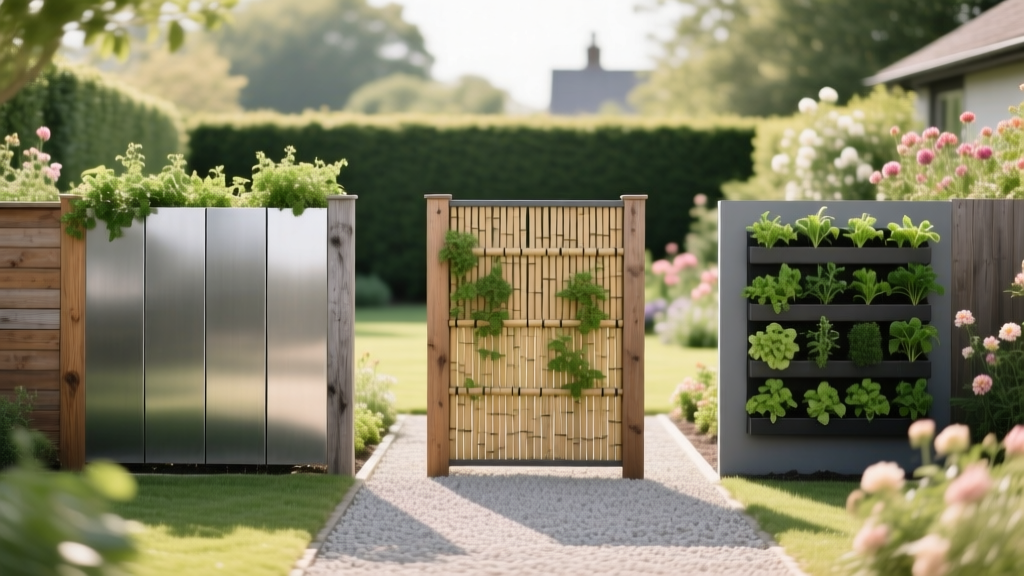
12 Garden Hacks for Garden Fence Options
Most “fence problems” in gardens aren’t really fence problems—they’re layout problems. The common mistake is installing a fence first and then trying to garden around it, only to discover you can’t wheel a compost bin through the gate, your posts rot at ground level, or deer simply jump what you built. A fence that works starts with two numbers: the animal you’re trying to stop and the space you actually need to move comfortably.
Below are 12 field-tested hacks to make garden fence options cheaper, sturdier, easier to maintain, and more effective—without turning your yard into a fortress.
Start With Smart Layout (Before You Buy Anything)
1) Use the “Wheelbarrow Rule” for Gates: 42 Inches Minimum
A gate that’s too narrow is the fastest way to hate your fence. Make your main garden gate at least 42 inches wide (48 inches is even nicer) so a wheelbarrow, mower, or cart doesn’t snag on latch posts. If you’re short on budget, put the wide gate on the side you’ll use most and install a cheaper “people gate” elsewhere.
Real-world example: A 4' gate lets you roll a 30" wheelbarrow through at an angle without scraping knuckles—especially helpful when you’re carrying a full 5-gallon bucket in one hand.
2) Build a “Service Alley” Inside the Fence: 24–30 Inches of Working Space
One underrated hack is to keep plants from eating your fence. Leave a 24–30 inch path inside the fence line so you can weed, check for pests, and run drip lines without contorting around posts. This also reduces rot and rust because vegetation won’t stay pressed against the fence holding moisture.
Case example: In a small suburban garden, a 2' interior “alley” along a 20' fence gives you space for stepping stones, access to trellis ties, and room to spray off aphids without blasting the fence for collateral damage.
3) Mark Corners With the 3-4-5 Triangle So the Fence Doesn’t Wander
Fences look “off” when corners aren’t square, and that gets expensive when panels don’t fit. Use a simple 3-4-5 measurement: measure 3 feet along one line, 4 feet along the other, and adjust until the diagonal between those points is 5 feet. Scale it up (6-8-10 or 9-12-15) for bigger fences to keep accuracy.
DIY tip: A $5 string line and a tape measure beat eyeballing every time—and prevent the “why doesn’t this panel line up?” headache.
Material Hacks That Save Money (Without Sacrificing Strength)
4) Swap 4x4 Posts for Metal T-Posts + a Wood Facing Where It Shows
If you want the look of wood without paying for it everywhere, use metal T-posts for strength and speed, then add a wood “picture frame” only on the visible side. T-posts often cost less than pressure-treated 4x4s and are quick to install with a driver. Where aesthetics matter, screw a 1x4 cedar board to the T-post with self-tapping metal screws.
Cost reality: In many areas, a T-post can be under $10–$15 while a pressure-treated 4x4 (8') can run $15–$30+ depending on market swings.
5) Use Hardware Cloth Only Where It Counts: The Bottom 24 Inches
Hardware cloth is amazing—and pricey—so don’t wrap your entire fence in it unless you need to. For rabbits and groundhogs, attach 1/2-inch hardware cloth for the bottom 24 inches of the fence, then transition to welded wire or netting above. This targets the animals most likely to chew and squeeze through at ground level.
Case example: A vegetable gardener fighting rabbits used 24" of hardware cloth around the perimeter and standard welded wire above; the rabbit damage stopped, and they cut hardware cloth costs by more than half compared to full-height coverage.
6) “Rot-Proof” Your Posts at Ground Level With a Gravel Collar (Not Concrete)
Concrete footings can trap water against wood at the surface—the exact place posts rot first. A simple hack is to dig your post hole, add 4–6 inches of compacted gravel at the bottom, set the post, then backfill with gravel for the top 6–8 inches around the post to shed water. This improves drainage and makes replacement easier later.
Expert-backed principle: The Forest Products Laboratory notes wood decay requires moisture and oxygen; improving drainage around the base reduces conditions for rot (USDA Forest Products Laboratory, 2010).
Animal-Proofing Tricks That Actually Work
7) Deer Hack: A “Slanted Fence” Beats a Taller Fence (When Space Allows)
If you can spare space, a fence angled outward can discourage deer more efficiently than simply going taller. Deer struggle with depth perception on angled barriers; a 7–8 foot slanted fence (angled about 45 degrees) can be more effective than a straight vertical fence of similar height. This is especially handy if local rules or budgets make a 10–12 foot fence unrealistic.
Source: Penn State Extension discusses deer fencing strategies and highlights that deer control often relies on fence height and design, including configurations that affect jumping behavior (Penn State Extension, 2020).
“Fence height and design matter—deer are excellent jumpers, but they’re also cautious about what they can’t judge well.”
—Penn State Extension (2020), deer exclusion guidance
8) Dig-Proof Hack for Dogs & Groundhogs: The 12-Inch “L” Apron
Animals that dig don’t care how tall your fence is. Add an “L” shaped apron of welded wire or hardware cloth: attach it to the bottom of the fence, then run it outward along the ground for 12 inches and pin it with landscape staples every 12–18 inches. Cover with mulch or soil; when they dig at the fence line, they hit wire and give up.
Real-world example: A backyard chicken keeper stopped a persistent dog from tunneling by stapling down a 12" apron and topping it with a 2" layer of mulch—no more escape artist.
9) Chicken Wire Isn’t Predator-Proof—Use the “2-Layer Rule” for Coops Near Gardens
Chicken wire keeps chickens in, but it’s not designed to keep predators out. If your fence also protects a coop or run, use welded wire (like 2"x4" no-climb) plus a 1/2-inch hardware cloth skirt around vulnerable areas. The combo stops both grabby paws and small predators that squeeze through larger openings.
Timing tip: Do the upgrade before fall when food gets scarce and predators get bold—late summer is the easiest time to retrofit while the ground is still workable.
Privacy, Wind, and Looks (Without Creating Maintenance Headaches)
10) Turn a Basic Fence Into a Wind Filter With 30–50% Permeability
A solid privacy fence can create turbulence that actually damages plants; a semi-open fence reduces wind speed more gently. Aim for roughly 30–50% airflow through the fence using slats, lattice, or spaced boards. This is a favorite trick in windy areas because it protects tomatoes and tall flowers without the “wind tunnel” effect behind a solid wall.
Case example: In a coastal backyard, swapping solid panels for a slatted screen reduced snapped sunflower stems and made the garden noticeably calmer—without losing privacy from the street.
11) “Living Fence Lite”: Train Vines on a Separate Trellis, Not Directly on the Fence
Climbing plants look amazing, but vines can shorten the life of wood fences by trapping moisture. The hack: install a separate wire trellis 4–6 inches away from the fence using standoff brackets or eye bolts and spacers. You get the green wall effect while keeping airflow behind the vines so the fence dries out after rain.
Real-world example: A gardener grew clematis on a stand-off trellis in front of a cedar fence; the blooms covered the view, and the fence stayed clean and dry enough to stain every 3–4 years instead of replacing boards early.
12) Cheap “Designer Upgrade”: Paint the Inside of the Fence Dark for Instant Depth
If your fence feels visually busy or makes your garden look smaller, paint or stain the inside a dark neutral (charcoal, deep brown, or black). Dark backgrounds visually recede, making foliage pop and the space feel larger. It’s a surprisingly high-impact upgrade for the cost of 1–2 gallons of exterior stain.
Cost note: Many exterior stains run around $35–$60 per gallon; even a small fenced garden often needs only 1–3 gallons depending on porosity and coverage (typically 150–300 sq ft per gallon).
Quick Comparison Table: Common Fence Options at a Glance
Picking a fence gets easier when you compare what it’s good at (and what it’s not). Use this as a shortcut before you price out materials.
| Fence Option | Best For | Weak Spot | Typical Height Target | Money-Saving Hack |
|---|---|---|---|---|
| Welded wire on posts | Vegetable gardens, dogs, general critter control | Can sag if not stretched | 4–6 ft (8 ft for deer zones) | Use hardware cloth only for bottom 24" |
| Wood privacy fence | Privacy, wind blocking (if slatted), aesthetics | Rot at ground line; pricey | 6 ft typical | Gravel collar at base; keep 2' service alley |
| Vinyl panels | Low maintenance, clean look | Higher upfront cost; wind load | 6 ft typical | Use permeable design or lattice top to reduce gust stress |
| Electric (temporary or semi-permanent) | Deer pressure, quick seasonal setups | Needs monitoring; vegetation shorts it out | As designed (often 2–3 strands up to 5+) | Mow a 12" strip under it to prevent shorting |
Three Real-World Setups You Can Copy
Sometimes the best “hack” is seeing a working combo in the wild. These are common scenarios with proven fence mixes that don’t overbuild (or underbuild).
Scenario A: Suburban Veg Garden With Rabbits (and a Tight Budget)
Use 5–6' welded wire on T-posts, then add 24 inches of 1/2-inch hardware cloth along the bottom. Include a 42-inch gate so you can bring in compost and straw bales without turning sideways. If rabbits are persistent, add the 12-inch wire apron and cover it with mulch.
Scenario B: Deer Country With Limited Fence Height Rules
If you can’t install a 10–12' vertical fence, build an angled/slanted layout or create a double barrier effect: a perimeter fence plus an inner line of string or wire set 3–4 feet inside the first (deer dislike confined landing zones). Keep the inside clear so you’re not constantly trimming branches that touch the fence and create “stepping points.”
Scenario C: Windy Yard That Shreds Tall Plants
Skip solid panels and aim for 30–50% airflow using spaced boards or lattice sections. Put your most wind-sensitive crops (tomatoes, pole beans, dahlias) on the protected side but still leave a 24–30 inch maintenance strip so you can stake and tie without fighting the fence. This setup often protects plants better than individual cages alone.
A Few Extra Insider Notes (So You Don’t Learn the Hard Way)
Don’t skimp on corner bracing. If you’re using wire fencing, corners take the tension. A simple H-brace (two posts with a horizontal rail) prevents sagging that can appear within one season, especially on long runs.
Plan your weed control under the fence. A 12-inch mulch strip or a line of pavers under the fence saves hours of trimming later—and keeps vines and grass from turning your fence into a maintenance trap.
Watch moisture around wood. The ground-line zone is where most failures happen. Drainage (gravel collar), airflow (service alley), and keeping soil/mulch from piling against boards can extend fence life noticeably—often more than any fancy sealer.
Sources worth keeping bookmarked: The USDA Forest Products Laboratory’s wood handbook explains decay conditions and durability strategies (USDA Forest Products Laboratory, 2010). Penn State Extension’s deer exclusion guidance is a practical reality check on what deer fencing can and can’t do (Penn State Extension, 2020).
If you take only one shortcut from all of this, make it this: build for how you’ll use the garden on your messiest day—muddy boots, full wheelbarrow, plants leaning everywhere. The right fence option feels almost invisible because everything moves smoothly, critters stay out, and you’re not fixing the same weak spot every season.