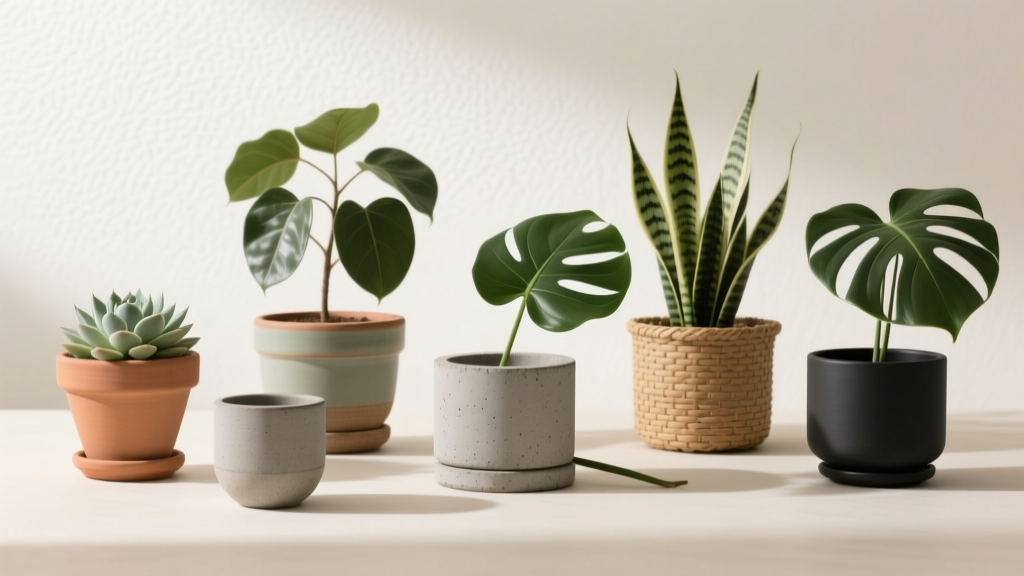
How to Choose the Right Pot for Every Plant
The fastest way to “kill with kindness” isn’t fertilizer or extra sunlight—it’s putting a plant in the wrong pot size. A too-big container stays wet longer than you think, starves roots of oxygen, and turns “mystery yellow leaves” into root rot. The pot isn’t just a holder; it’s a dial that controls moisture, temperature, airflow, and even how often you’ll be hauling watering cans.
Below are the shortcuts I use when I’m potting up everything from basil to citrus: quick rules for sizing, choosing materials, hacking drainage, and saving money without sacrificing plant health.
Start With the Two Things Pots Control: Root Space & Dry-Down Speed
Tip: Size up slowly—1–2 inches wider is usually enough
Most plants do best when you “step up” a pot rather than jump from small to huge. Move to a pot that’s about 1–2 inches (2.5–5 cm) wider than the current one for small/medium houseplants; for big floor plants, 2–4 inches is fine. That keeps the soil volume proportional to the root system, so it dries at a pace roots can handle.
Example: If your pothos is in a 6-inch pot and roots are circling, go to an 8-inch pot—not a 12-inch “because it’ll grow into it.”
Tip: Use the “root-to-soil” reality check before repotting
Slide the plant out and look: if you see a dense mat of roots with very little soil left, it’s ready. If you see mostly soil with a few roots, it’s not. This quick check prevents “repotting for fun” that leads to soggy mix and fungus gnats.
Scenario: A snake plant that’s still half soil in the pot can sit tight another season—even if it looks top-heavy.
Tip: Match pot depth to root style (taproot vs fibrous)
Deep pots are for plants that naturally dive down; shallow/wide pots work for plants that spread near the surface. As a practical rule: carrots, citrus, and many roses prefer deeper containers, while herbs like thyme and many succulents are happy in shallower pots if drainage is excellent.
Example: For container carrots, choose a pot at least 12 inches deep; for a string-of-pearls succulent, a shallow bowl can work beautifully as long as it dries fast.
Tip: Pick pot size by what you want to harvest
Edibles are brutally honest: bigger root zone usually equals bigger yield, but only if you can keep watering consistent. Tomatoes typically perform best in 5–10 gallon containers, while peppers often thrive in 3–5 gallons. If you’re going smaller, plan for smaller harvests and faster drying.
Example: A patio gardener using a 5-gallon pot for a determinate tomato can get a solid crop; that same plant in a 2-gallon pot will need watering sometimes daily in summer.
Pot Materials: Choose What Works With Your Watering Habits (Not Your Aesthetic Mood)
Tip: Use terracotta when you tend to overwater
Unglazed terracotta “breathes,” letting moisture evaporate through the sides, which speeds dry-down. That’s a lifesaver for moisture-sensitive plants like many succulents, cacti, and some hoyas. The trade-off is you’ll water more often—especially in hot, windy spots.
Example: If your aloe keeps turning mushy in plastic, move it to a terracotta pot with a gritty mix; you’ll often see improvement within 2–3 weeks because the root zone gets more air.
Tip: Use plastic (or glazed ceramic) when you travel or forget to water
Plastic and glazed ceramic hold moisture longer because they don’t wick water out through the pot walls. That’s great for thirstier plants (ferns, basil, mint) or for gardeners who miss a watering day. If you go this route, compensate with a chunkier mix and excellent drainage holes.
Cost hack: Nursery plastic pots are often $0–$3 (sometimes free if you ask at a local nursery), while a comparable glazed ceramic pot can run $25–$60.
Tip: Skip dark plastic in full sun unless you can shade the pot
Dark pots heat up fast and can cook roots on patios and balconies. Root stress shows up as leaf scorch even when the soil is moist. If you must use dark containers outdoors, place them inside a lighter cachepot, wrap with burlap, or position so the pot is shaded while the plant gets sun.
Example: A lemon tree in a black nursery pot on south-facing concrete can overheat on a 90°F day; slipping it into a light-colored outer pot often stabilizes root temperatures.
Tip: Treat wood planters like “slow-release moisture managers”
Wood breathes a bit, insulates roots, and looks great—but it also ages. Line the interior sides (not the bottom) with landscape fabric to slow rot while still allowing drainage. If you’re growing edibles, use untreated cedar or heat-treated wood rather than mystery pallet boards.
Example: A cedar half-barrel with fabric-lined sides can keep salad greens happier through warm spells than thin plastic, because roots don’t swing temperature as dramatically.
Drainage & Soil Physics: Make Water Exit Fast, Not “Eventually”
Tip: Demand at least one drainage hole per 4–6 inches of pot width
If a pot is 10–12 inches wide, one tiny hole is rarely enough; water should be able to exit quickly during a deep watering. Look for multiple holes or be ready to drill more. This matters because saturated soil loses oxygen, and roots can’t function without air.
DIY: Use a 1/4-inch drill bit for plastic; for ceramic, use a masonry bit and keep the surface wet while drilling to reduce cracking.
Tip: Don’t add “drainage rocks” at the bottom—use better mix instead
The old advice to put gravel in the bottom doesn’t improve drainage the way people think; it often raises the perched water level, leaving roots wetter. Extension experts have long discouraged this practice because it reduces the amount of usable soil volume and can keep the root zone saturated. Focus on a well-structured potting mix and a pot with proper holes instead.
Citation: Purdue University Extension has explained why adding rocks can worsen container drainage by creating a perched water table effect (Purdue Extension, 2019).
“Adding a layer of gravel at the bottom of a container does not improve drainage; it can actually lead to water staying higher in the pot.” — Purdue Extension horticulture guidance (2019)
Tip: Use a simple soil ratio tweak based on pot material
If you use plastic/glazed pots (slower drying), mix in more chunky aeration: aim for roughly 2 parts potting mix : 1 part perlite or pumice for many houseplants that hate wet feet. For terracotta (faster drying), you can back off to about 3:1 so you’re not watering twice a day in summer.
Example: A rubber plant in glazed ceramic often perks up when you add extra perlite—same watering routine, less suffocating moisture.
Tip: Elevate outdoor pots 1/2 inch to prevent “drain holes sealed by the patio”
A pot sitting flat on concrete can trap water because the holes are pressed against the surface. Lift it slightly with pot feet, small stones under the rim, or even three bottle caps. That 1/2 inch air gap makes drainage consistent after heavy rain.
Scenario: A balcony gardener wonders why their rosemary keeps dying “even though it has drainage holes”—it’s because the holes are blocked by the floor and the pot stays swampy after storms.
Plant-by-Plant Shortcuts (Houseplants, Herbs, Succulents, Trees)
Tip: For succulents, choose “tight and dry” over “roomy and damp”
Succulents often do best slightly snug, because a smaller soil volume dries faster. Pick a pot only 1 inch wider than the root ball, and prioritize terracotta with a gritty mix. If you want a big decorative bowl, keep individual plants in small nursery pots and nest them inside with air gaps.
Example: A jade plant in an oversized 12-inch ceramic pot may rot, while the same plant in an 8-inch terracotta pot thrives with identical light.
Tip: For herbs, choose wider pots and plan for fast summer watering
Most culinary herbs have dense, fibrous roots that appreciate width. Basil and cilantro like consistent moisture; a 10–12 inch pot gives you a buffer so they don’t crash the day you forget. Add a saucer only if you’ll empty it within 30 minutes after watering—standing water invites root issues.
Case: Patio basil in a 6-inch pot bolts and wilts constantly; in a 12-inch pot, it stays steadier and produces for longer.
Tip: For monsteras and other top-heavy plants, pot weight matters more than pot size
Top-heavy plants tip because the pot is too light, not always because it’s too small. A heavier ceramic pot or adding a wider base can stop accidents without overpotting. If you’re on a budget, set the nursery pot inside a heavy cachepot and fill the gap with crumpled cardboard to stabilize.
Example: A monstera in a light plastic pot falls every time you rotate it; placing it in a heavier outer pot costs less than repotting into a massive container that stays wet.
Tip: For citrus and patio trees, plan the “two-person lift” limit
The best pot is one you can realistically move before a cold snap. Many gardeners regret going too big because a wet 20-gallon container can be back-breaking. If you’re overwintering indoors, a 10–15 gallon pot is often the sweet spot—big enough for growth, manageable for moving with a dolly.
Citation: Texas A&M AgriLife Extension recommends container citrus have excellent drainage and emphasizes practical container management, including choosing sizes you can handle (Texas A&M AgriLife Extension, 2020).
Real-World Scenarios: Pick the Pot Based on Your Setup
Tip: Hot balcony with wind = bigger soil volume, lighter color, and mulch
Windy balconies dry pots dramatically faster, so going one size larger can reduce emergency watering. Choose a light-colored container to limit heat buildup, and add 1 inch of mulch (fine bark or straw for edibles) to slow evaporation. This combo can cut watering frequency from twice daily to once daily during heat waves.
Scenario: A west-facing balcony grows peppers: switching from black 3-gallon pots to light 5-gallon pots plus mulch keeps flowers from dropping in hot spells.
Tip: Low-light apartment = smaller pot and faster-draining mix
Low light means slower growth and slower water use—so an oversized pot stays wet longer. Stick to conservative pot sizes and add aeration (perlite/pumice) so the root zone doesn’t stay saturated for a week. If you’re using a decorative pot with no holes, keep the plant in a nursery pot and lift it out to water.
Example: A ZZ plant in a dim office does better in a snug 8-inch pot than in a roomy 12-inch pot that never dries.
Tip: Outdoor rainy climate = pots with feet, fewer saucers, and overflow planning
If your summer includes frequent storms, your container needs to shed water fast. Use pot feet, avoid deep saucers, and consider drilling extra holes in plastic planters. For large decorative planters, drill a few 3/8-inch holes if the base allows—your roots will thank you.
Case: Hydrangea in a decorative pot keeps wilting between rains: it’s actually waterlogged; after adding feet and more holes, it rebounds within a month.
Money-Saving Tricks That Still Look Good
Tip: Use the “nursery pot + cachepot” combo for perfect drainage and style
This is my favorite cheat: keep the plant in a cheap nursery pot (great drainage), then drop it into a pretty outer pot with no holes. You get the best of both worlds—and you can swap styles without repotting stress. Just make sure no water pools in the bottom; dump it after watering.
Cost comparison: A nursery pot might be $1–$4; a trendy ceramic cachepot can be $30+. Using both prevents you from buying multiple expensive pots as the plant sizes up.
Tip: Convert food-grade buckets into high-performance planters
A 5-gallon food-grade bucket (often $5–$8) makes a fantastic tomato or pepper container. Drill 8–12 holes in the bottom, add two holes near the rim for tying branches, and you’ve got a durable planter that lasts years. Paint the outside a light color if it’ll sit in full sun.
Example: A gardener who needs six tomato containers can spend $40 on buckets instead of $180 on six $30 planters—and still harvest heavily.
Tip: Use grow bags when weight and storage matter
Fabric grow bags are light, breathable, and fold flat for winter storage. They air-prune roots (less circling), but they dry fast, so they’re best if you’re around to water or you add drip irrigation. A typical 10-gallon bag is often $6–$12, far less than a large ceramic pot.
Scenario: A renter grows potatoes in 15-gallon fabric bags and stores them in a closet in the off-season—no bulky pots taking up space.
Quick Comparison Table: Pick What Fits Your Lifestyle
| Pot option | Best for | Dry-down speed | Typical cost | Watch-outs |
|---|---|---|---|---|
| Unglazed terracotta | Overwaterers, succulents, cacti | Fast | $8–$25 (10–12") | Needs more frequent watering; can crack in freezes |
| Plastic nursery pot | Budget setups, easy repotting | Medium-slow | $0–$5 | Can overheat in sun; lighter = tips easier |
| Glazed ceramic | Decor, indoor plants that like steadier moisture | Slow | $25–$60 (10–12") | Heavy; can stay wet too long without airy mix |
| Fabric grow bag | Vegetables, renters, root health | Fast | $6–$12 (10 gal) | Dries quickly; can stain decks if runoff is muddy |
| Wood planter (cedar) | Patios, insulation, aesthetics | Medium | $40–$150+ | Rot risk; line sides, don’t block bottom drainage |
Small Details That Prevent Big Problems
Tip: Leave a 1-inch watering gap at the top
Filling soil to the rim makes watering messy and ineffective; water runs off the sides instead of soaking in. Leave about 1 inch of headspace so you can water deeply and evenly. This also gives you room for a thin mulch layer.
Example: That annoying “water instantly spills onto the table” problem disappears when you stop potting to the brim.
Tip: Choose saucers like a pro—wide and shallow beats deep and tight
A saucer should be slightly wider than the pot so runoff doesn’t find your floor. Shallow saucers are safer because they encourage you to empty them; deep saucers quietly turn into root-swamp reservoirs. Indoors, I aim to empty any collected water within 15–30 minutes.
DIY: In a pinch, a sturdy plastic takeout lid can work as a temporary saucer for small pots.
Tip: Repot timing: spring for growth, late summer for recovery, winter only if necessary
Most plants rebound fastest when repotted during active growth—typically spring—because they can regrow roots quickly. Late summer can also work for many houseplants if conditions are stable. Winter repotting is for emergencies (root rot, broken pot), because low light slows recovery.
Example: If your ficus drops leaves after winter repotting, it’s often the timing—not your skill—that caused the tantrum.
Tip: When in doubt, prioritize oxygen at the roots
If you’re stuck between two pots, pick the one that will dry a bit faster and has better drainage. Most container failures trace back to roots sitting in wet, airless mix. You can always water more often; it’s much harder to “un-water” a pot that stays soggy for days.
Real talk: A slightly under-potted plant is usually manageable. A chronically over-potted one is a slow-motion rescue mission.
If you want a simple rule to keep in your back pocket: choose a pot that matches the plant’s current root mass, pick a material that fits your watering habits, and make drainage effortless. Do those three things, and you’ll be shocked how many “fussy” plants suddenly become easy.