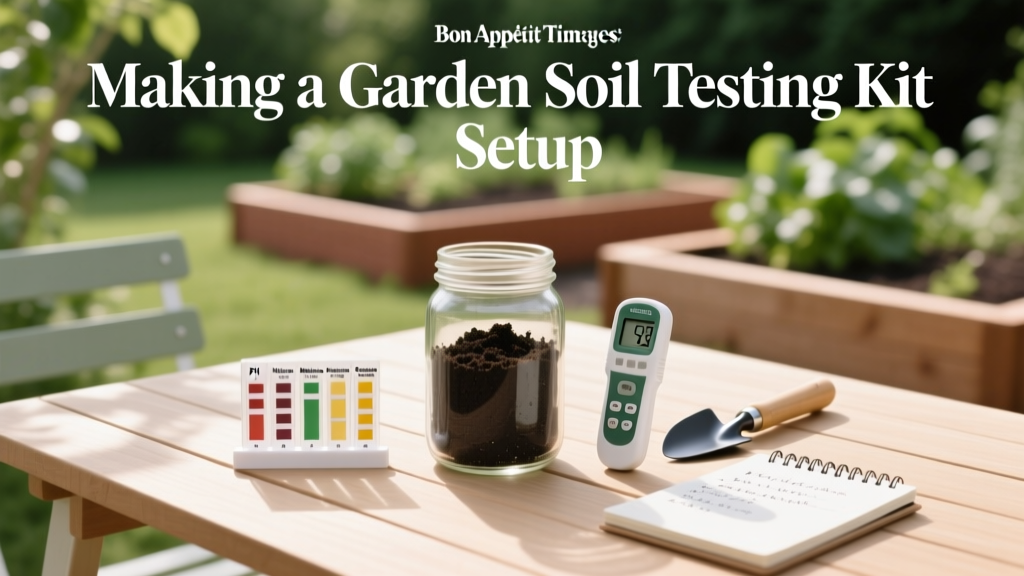
Making a Garden Soil Testing Kit Setup
The most common soil-testing mistake isn’t “not testing”—it’s testing once, getting a confusing printout, and then guessing anyway. I’ve seen gardeners spend $60 on a fancy kit, pull a sample from the first shovel scoop they see, and wonder why the results don’t match what their plants are doing. A good soil testing setup is less about buying more gadgets and more about building a repeatable system you can run in 20 minutes, twice a year, without overthinking it.
Below is the exact kind of home-and-lab hybrid setup I recommend when you want real numbers, quick checks, and a process that doesn’t fall apart mid-season.
Start With Sampling: The Part That Makes or Breaks Every Result
Tip: Make a “Zone Map” Before You Touch a Shovel
Split your yard into testing zones based on how you actually garden: lawn, veggie beds, raised beds, new flower borders, and any trouble spots. Keep each zone under about 1,000 sq ft (or one distinct bed) so results aren’t averaged into nonsense. Example: If your tomatoes are in one bed and your herbs are in another, treat them as separate zones even if they’re only 10 feet apart—watering and amendments are usually different.
Tip: Use the 10-Core Rule for Beds, 15–20 Cores for Lawns
One scoop isn’t a sample; it’s a rumor. For a garden bed, take 10 small cores (or trowel slices) across the space, mix them in a clean bucket, and submit a composite. For lawns, aim for 15–20 cores because turf is surprisingly variable. This is the same composite logic used by extension recommendations for representative sampling (University of Minnesota Extension, 2020).
Tip: Sample at the Right Depth (It’s Not Always “6 Inches”)
Match the sample depth to what you manage: 0–6 inches for most vegetable beds and lawns, but 0–4 inches is often more relevant in no-dig beds where amendments stay near the surface. If you’re diagnosing fruit trees or shrubs, consider a second sample from 6–12 inches to see what’s happening below the mulch layer. Real-world example: A blueberry patch can show decent surface pH, while the 6–12 inch layer stays too alkaline and roots sulk in midsummer.
Tip: Time It Like a Pro—Same Season, Same Window
Test at least once a year, ideally in early spring or fall, and stick to the same window so results are comparable. Avoid sampling within 6–8 weeks after liming or heavy fertilizing; fresh inputs can skew pH and nutrient readings. A simple rhythm that works: test in March/April, adjust, then retest the “problem zones” in September if you’re chasing a stubborn pH or salt issue.
Tip: Dry and Sieve at Home for Cleaner Lab Results
Air-dry your mixed sample on a paper plate for 24–48 hours (no oven—heat can alter some chemistry), then crumble and remove stones, roots, and mulch chunks. If you want extra consistency, push it through a 1/4-inch mesh screen (hardware cloth works). Example: A bed top-dressed with compost can send in a “sample” that’s half wood chips unless you sieve—your organic matter result will look inflated and your recommendations will be off.
Build the Kit: The Tools That Make Testing Fast, Not Fussy
Tip: Keep a Dedicated Clean Bucket (and Label It Like a Nerd)
Use a 2–5 gallon plastic bucket that never touches fertilizer, compost tea, or cleaning chemicals. Label it “SOIL ONLY” with a paint marker so nobody repurposes it. Example: I’ve watched a “mystery high sodium” case turn out to be a bucket previously used for ice-melt pellets—sampling contamination is real.
Tip: Upgrade One Thing: A Soil Probe or Bulb Planter
A $25–$45 soil probe makes sampling 3x faster and gives consistent depth, especially in lawns. If you don’t want a probe, a cheap bulb planter ($10–$15) makes tidy cores in softer beds. The hack: mark your probe at 6 inches with tape so every core is identical.
Tip: Stock a “Soil Drawer” With Boring Supplies You’ll Actually Need
Your setup should live in one spot: zip bags or sample boxes, a Sharpie, nitrile gloves, a mesh strainer, and a notebook. Add a permanent label system: “Bed A,” “Front Lawn,” “Blueberries,” etc. Example: When you can grab everything in one trip, you’re far more likely to retest after fixes—especially midseason when things look weird.
Tip: Use Distilled Water for Any DIY Test (Not Tap)
If you’re doing pH strips, slurry tests, or EC/salinity readings, use distilled water (usually $1–$2 per gallon). Tap water can have enough alkalinity to nudge a pH reading and confuse you, especially if your soil is already near the edge. Example: A gardener with hard municipal water “proved” her soil was pH 7.8 using tap water—distilled water showed 7.2, which matched the lab.
Pick Your Testing Methods: Lab Accuracy + At-Home Speed
Tip: Use the Lab for the Big Decisions (pH, P, K, OM)
Send at least one sample per zone to a university or reputable lab for pH, phosphorus (P), potassium (K), and organic matter (OM). Many extension-linked labs run $15–$30 per sample, and you’ll get amendment rates that actually make sense. This is especially important because phosphorus is easy to overapply and can contribute to runoff issues; labs help you avoid guessing (Penn State Extension, 2023).
Tip: Use At-Home Tests for “Quick Checks” (Not Major Amendments)
Home kits are great for spotting trends—like “pH drifting down” or “nitrogen likely low”—but don’t treat color blocks like gospel. If you use an at-home pH meter, calibrate it before each testing day with pH 7.00 and pH 4.01 buffer solutions (typically $10–$15 for a small set). Example: Use the home kit to confirm your lime application is moving pH over time, then verify with the lab once per year.
Tip: Add One Modern Tool: A Cheap EC Meter for Salts
If you garden in containers, raised beds, or droughty areas where salts can build up, an EC meter is a sneaky superpower. A basic meter runs $15–$30 and helps you catch fertilizer salt buildup before plants burn. Example: In a greenhouse bed fed weekly, EC creeping up is often the first clue that you need a deep flush or a pause in feeding.
Comparison Table: Lab Tests vs Home Kits vs Digital Meters
| Method | Typical Cost | Best For | Accuracy (Practical) | Big Gotcha |
|---|---|---|---|---|
| University/soil lab test | $15–$30 per sample | pH, P, K, OM, lime/fertilizer rates | High | Takes 1–3 weeks; sampling quality matters |
| Color-chart home soil test kit | $10–$25 | Quick trend checks, teaching tool | Medium to low | Lighting/subjective color matching changes results |
| Digital pH pen + buffers | $20–$60 + $10–$15 buffers | Tracking pH shifts over time | Medium to high (when calibrated) | Needs calibration; electrode storage matters |
| EC/TDS meter | $15–$30 | Salt buildup in pots/raised beds | Medium | Measures salts, not “fertility” in a general sense |
Set Up a Repeatable Workflow (So You Don’t Lose the Plot)
Tip: Use a Sample Label Format That Survives Real Life
Write labels like: “2026-04 / Bed2 / Tomatoes / 0–6in.” Put the same text in your notebook. This sounds overkill until you’re staring at two baggies labeled “front” and “back” in faded marker. Example: If you test twice a year, date-first labeling makes it easy to compare spring-to-fall changes without hunting through emails.
Tip: Track Amendments in “Actual Amounts,” Not Vibes
Write down exactly what you applied and how much: “3 lb pelletized lime per 100 sq ft” or “1 inch compost topdress.” Include timing: “applied April 12.” Example: If your lab says you overshot phosphorus, you can look back and see you used a chicken-manure compost at 2 inches deep (which can be phosphorus-heavy) instead of guessing what caused it.
Tip: Do One Calibration Ritual Before Every Testing Session
Pick a five-minute ritual: rinse tools, set out distilled water, calibrate pH pen, and grab fresh bags. The point is to remove friction and reduce sloppy contamination. Example: If you always do testing right after morning coffee on a Saturday, it becomes routine—like sharpening pruners.
“A soil test is only as good as the sample you send. Most errors happen before the sample ever reaches the lab.” — Extension soil testing guidance commonly emphasizes representative composite sampling (University of Minnesota Extension, 2020).
DIY Alternatives That Actually Work (When You’re on a Budget)
Tip: Make a Simple Soil Sieve From Scrap Materials
Staple 1/4-inch hardware cloth to a wooden frame (even an old picture frame works) to screen samples fast. This makes lab and DIY tests more repeatable because you’re not testing wood chips and rocks. Example: If your compost has chunky bark, sieving prevents your “organic matter” impression from being artificially high in DIY texture tests.
Tip: DIY Texture Jar Test for Drainage Clues
Put 1/3 soil and 2/3 water in a jar with a drop of dish soap, shake hard for 1 minute, then let it settle for 24 hours. Sand settles in minutes, silt in a few hours, clay last—giving you a rough texture profile. Example: If your jar shows a thick clay layer, you’ll know to focus on structure (compost, mulch, reduced tillage) rather than “more fertilizer” when plants look stunted.
Tip: Use Red Cabbage pH Indicator Only as a Party Trick (Not a Prescription)
Yes, you can make a purple cabbage tea indicator—but treat it as a rough demonstration, not a decision-making tool. It’s too sensitive to concentration and lighting to base lime or sulfur rates on. Example: Use it to teach kids that different soils shift color, then still send a real sample to a lab before adjusting a blueberry bed.
Real-World Scenarios: How a Soil Testing Setup Pays Off
Scenario: The “My Tomatoes Look Hungry” Bed (But Fertilizer Doesn’t Help)
A gardener kept feeding tomatoes weekly, yet leaves stayed pale and growth stalled. A lab test showed pH had drifted to 7.7 after repeated ash applications, locking up micronutrients; at-home pH checks would have flagged the trend earlier. Fix: stop ash, add elemental sulfur per lab guidance, and retest in 8–12 weeks in warm soil to track movement.
Scenario: Raised Beds That Suddenly Stop Performing in Year 3
Raised beds can build salts and imbalances because we add inputs constantly and leach less than in-ground soil. An EC meter reading that’s climbing week by week is your early warning, especially if you use soluble fertilizers. Fix: do a deep watering/flush, switch to slower-release feeding, and submit a lab sample annually to monitor P and K before they creep too high.
Scenario: The Patchy Lawn That Won’t Thicken Up
Patchy lawns often get treated with more nitrogen, but pH and potassium are frequent culprits. A composite lawn sample (15–20 cores) can reveal one side of the yard is acidic from runoff or pine litter while another side is fine—meaning one blanket application wastes money. Fix: split the lawn into two zones, lime only where recommended, and you can save the cost of treating the entire yard unnecessarily.
Shortcut Tips for Interpreting Results Without Overreacting
Tip: Treat pH Like the Master Switch
If you only remember one number, remember pH—because it influences nutrient availability more than most people realize. Many vegetables prefer roughly pH 6.0–7.0, while blueberries want it much lower (often around 4.5–5.5). Example: If your lab shows nutrients “adequate” but plants still struggle, correcting pH often fixes the “mystery deficiency” without adding more fertilizer.
Tip: Don’t Chase Nitrogen on Lab Tests Like It’s a Static Number
Nitrogen changes quickly with temperature and moisture, so lab nitrate numbers can be a snapshot rather than a season-long truth. Use plant performance, timing, and your fertilizer plan to manage nitrogen, and rely on labs more for pH, P, K, and organic matter. Example: If spring is cold and wet, nitrogen availability can lag; a light side-dress when soil warms is smarter than dumping more early.
Tip: Watch Phosphorus Like a Hawk (It’s Easy to Overdo)
If your phosphorus is already high, stop adding P-heavy inputs (many “bloom boosters,” manure-heavy composts, and some organic blends). This saves money and reduces runoff risk; phosphorus doesn’t magically disappear quickly. Example: If your soil test says P is high, switch to a nitrogen-only or balanced fertilizer with low/zero P for the season.
Money-Saving Moves (So Testing Doesn’t Feel Like Another Hobby)
Tip: Test Fewer Zones, More Strategically
If you’re on a budget, test the areas where you spend the most money: vegetable beds, raised beds, and any “problem child” area. Skip perfectly fine ornamental areas until you see symptoms. Example: Two $20 lab tests ($40 total) targeted at your veggie beds can prevent $80 of unnecessary fertilizers and soil “fixes” that don’t address pH.
Tip: Buy Once, Refill Cheap—Especially With Digital Meters
A decent pH pen is a one-time buy, but budget for storage solution and calibration buffers every season. If you store the electrode properly, you’ll get more reliable readings and avoid replacing the pen yearly. Example: Spending $12 on buffers can save you from applying $25 of lime based on a drifting, uncalibrated meter.
Tip: Share a Probe and Sieve With a Neighbor
Sampling tools are perfect for sharing because they’re easy to clean and don’t get “used up.” Split a $40 probe and a $15 sieve build, and you both win. Example: Two neighbors each testing 3 zones can coordinate one sampling afternoon, then mail samples the same day to keep timing consistent.
Keep It Going: The “Next Test” Should Be Easier Than the First
Tip: Store Results Where You’ll Find Them in the Garden
Print lab results and keep them in a folder in your garden tote, or snap photos into an album called “Soil Tests.” Add one note per zone: “Bed 1: pH 6.3; avoid P; add 1 inch compost each fall.” Example: When you’re standing at the store staring at fertilizer bags, that one note stops impulse buys.
Tip: Retest After Big Changes—But Don’t Panic-Retest
Retest 8–12 weeks after applying lime or sulfur if you’re trying to move pH, and annually for general maintenance. Testing every two weeks just creates noise and doubt. Example: If you limed in early spring, check again in mid-summer when soil biology has had time to react—then lock in your fall plan.
If you set up your kit so sampling is quick, labeling is automatic, and you have one “lab day” each year, soil testing stops being a chore and starts feeling like a cheat code. The goal isn’t perfect numbers—it’s fewer surprises, fewer wasted amendments, and plants that respond the way you expect when you actually do the work.
Sources: University of Minnesota Extension (2020) soil sampling guidance and composite sampling recommendations; Penn State Extension (2023) soil testing and nutrient management guidance, including phosphorus considerations.