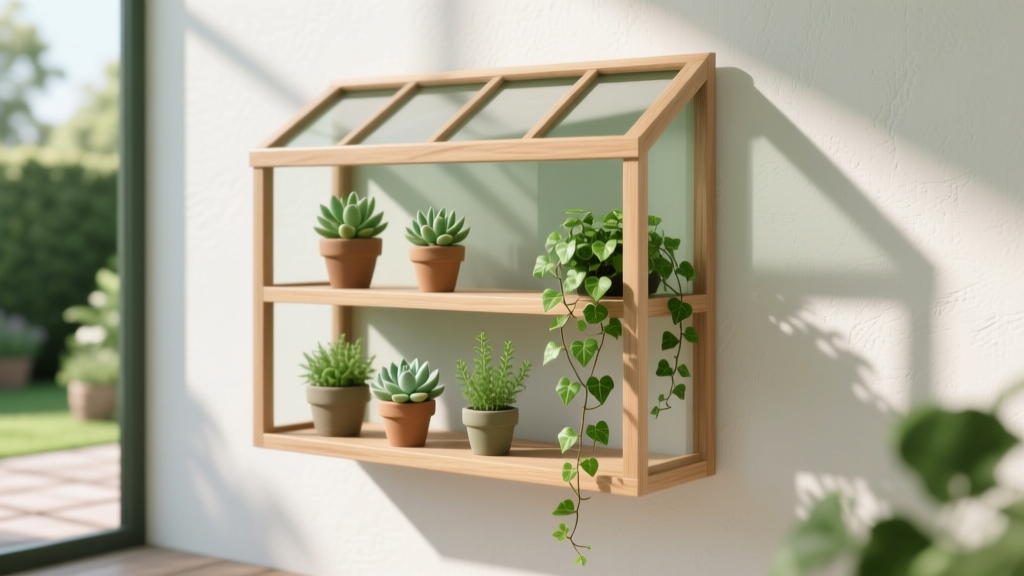
How to Build a Simple Greenhouse Shelf
The fastest way to cook seedlings isn't ?too much sun—?it's a shelf that traps heat and blocks airflow. I've seen perfectly healthy trays hit 110�F (43�C) on a calm spring afternoon just because they were jammed onto a solid board with no gaps and no air movement. A good greenhouse shelf isn't fancy; it's a small piece of infrastructure that controls light, temperature, drainage, and your daily workload.
Below are practical shelf-building tips I use (and re-use) in real greenhouses—lean-to kits, hobby houses, and even plastic hoop tunnels. Pick the parts that fit your space and budget, and you'll end up with shelving that lasts longer, keeps plants healthier, and makes watering less annoying.
Plan the Shelf Like a Microclimate Tool (Not Just Storage)
Tip: Set shelf depth to match your trays—don't waste inches
A common mistake is building shelves too deep, then losing plants in the back where you can't reach or see dry spots. For standard 10" x 20" seed trays, a shelf depth of 22?24 inches gives you enough room for a tray plus a drip lip without turning the back row into a forgotten zone. If you're using 1020 trays plus a watering wand, that extra 2?4 inches saves your knuckles and your seedlings.
Example: In a 6' x 8' greenhouse, switching from 30" deep shelves to 24" deep shelves freed a 6" ?air corridor— in the center aisle—suddenly you can carry a tray without doing the sideways shuffle.
Tip: Keep the top shelf at a height you can water comfortably
The ?right— height is the height you can water without lifting your shoulders or bending your wrist at a weird angle for 5 minutes straight. For most gardeners, 34?38 inches from the floor to the shelf surface is a sweet spot for seeding and potting. If you're adding a second tier, keep at least 18 inches of vertical clearance so seedlings don't grow into the shelf above.
Example: A back-saver setup I like: bottom shelf at 16?18 inches for heavy pots, top work shelf at 36 inches for seed trays, and a second light-duty tier at 54?56 inches for small starts.
Tip: Leave breathing room behind the shelf to reduce disease pressure
Airflow is your cheap insurance against fungus gnats, damping-off, and leaf diseases. Leave a 2?4 inch gap between the back of the shelf and the greenhouse wall so air can circulate and condensation doesn't sit on leaves. This is extra important in early spring when nights are cool and mornings are wet.
Supporting note: Good airflow and humidity management are consistent themes in extension greenhouse recommendations; for example, the University of Minnesota Extension (2021) emphasizes ventilation/air movement as a key tool for reducing humidity-related disease issues in greenhouse environments.
Tip: Build in aisle math before you cut anything
If you can't comfortably turn with a tray, you'll eventually bump plants, spill water, or avoid checking them (which is how problems sneak in). Aim for a central aisle of at least 24 inches; 30 inches feels luxurious in small hobby houses. Measure your widest watering can or tray and add 4 inches—that's your minimum aisle.
Example: In a narrow 6' wide greenhouse, two 24" shelves leave a 24" aisle (6' = 72"; 24 + 24 + 24 = 72). Tight but workable if the shelves don't protrude into the aisle with braces.
Choose Shelf Surfaces That Drain Fast and Don't Turn into Algae Farms
Tip: Use wire, slats, or mesh—avoid solid plywood as the plant surface
Solid surfaces hold puddles, grow algae, and keep pots wet for too long. A wire shelf (like heavy-duty wire rack panels) or slatted boards with 1/2 inch gaps let water drain and air hit the bottom of pots. If you must use plywood, treat it as a structural deck under a removable slatted top, not as the plant surface itself.
Example: A $25 used wire closet shelf panel (often 12"?16" deep) can be doubled side-by-side to make a 24" shelf surface that drains better than any single sheet of wood.
Tip: If you're using wood slats, size the gaps to stop small pots from tipping
Big gaps drain great—until your 2" pots start wobbling. A practical spacing is 3/8" to 1/2" between slats: enough airflow and drainage, but stable for smaller containers. Rip 1x3 boards into 2" slats and you'll get a nice balance of strength and drainage without wasting material.
Example: For a 6-foot shelf, 2" slats with 1/2" gaps take roughly 18?20 slats depending on your exact shelf depth.
Tip: Add a ?drip edge— so runoff doesn't rot your supports
Water runs where gravity tells it—usually down your frame legs and into joints. Extend your shelf surface 1 inch beyond the front support (or add a thin plastic/metal drip lip) so water drips off cleanly instead of wicking into wood. It's a tiny detail that can double the life of a wooden shelf.
Example: A strip of leftover corrugated plastic (cut 1" x shelf length) screwed to the front edge works as a quick drip edge and costs basically $0 if it's scrap.
Tip: Don't guess on load—assume wet soil is heavy
A fully watered 10" hanging basket or a flat of 4" pots can weigh a lot more than you think. Plan for at least 40?50 lbs per 2-foot section of shelf if you're doing mixed pots and trays; sturdier if you're storing soil bags. The easiest upgrade is adding one extra center support leg or a diagonal brace—cheap now, priceless when you avoid a mid-season collapse.
Real-world check: Eight 1-gallon pots on a 4-foot span can easily hit 60?80 lbs when freshly watered, depending on soil mix density.
Build a Simple, Sturdy Frame (Three Easy Approaches)
Tip: Pick your shelf style based on how permanent you want it
If you own the greenhouse and want something that won't budge, anchor a wall-mounted ledger and use brackets. If you rent, move your greenhouse seasonally, or like to reconfigure, build freestanding racks with simple legs and cross-bracing. If you want a quick win, repurpose metal wire shelving units and just add leveling feet.
| Approach | Best for | Typical cost (per 6 ft shelf) | Build time | Strength & stability |
|---|---|---|---|---|
| Wall-mounted ledger + brackets | Permanent greenhouses, clean floor space | $35?$90 (lumber + brackets) | 1?2 hours | Very stable if anchored well |
| Freestanding 2x4 frame + slats | Custom sizes, heavy loads | $45?$120 (depends on wood prices) | 2?4 hours | Excellent with cross-bracing |
| Repurposed wire rack units | Fast setup, adjustable heights | $0?$80 (used vs new) | 30?60 minutes | Good; add ties/anchors for wind |
Tip: Use exterior-rated fasteners—greenhouses are humid
Standard drywall screws rust fast in greenhouse humidity and can snap right when you least expect it. Use exterior deck screws (2-1/2" for framing, 1-5/8" for slats) or galvanized hardware. The extra few dollars up front prevents the ?mystery wobble— that shows up in year two.
Example: A 1 lb box of exterior deck screws usually runs $8?$15 and can build multiple shelves—one of the best cost-to-hassle ratios in the whole project.
Tip: Add diagonal bracing to stop the side-to-side sway
Most DIY shelves fail not by snapping downward, but by racking side-to-side until joints loosen. Add one diagonal brace across the back (even a simple 1x3 from top left to bottom right) or use metal strap bracing. This is especially important if your greenhouse is on pavers or soil, where feet can shift.
Example: In a windy area, a single $6 roll of metal plumber's strap cut into two diagonals can make a flimsy shelf feel rock-solid.
Tip: Level the legs—even a 1/2" tilt changes watering
If your shelf slopes, water pools on one end and your trays dry out unevenly. Use shims, composite deck offcuts, or adjustable furniture feet to level each leg—aim for less than 1/8" drop per foot. This is one of those ?five minutes now saves you all season— steps.
Example: On a slightly sloped greenhouse pad, adding $12 worth of adjustable leveling feet made the difference between one end constantly soggy and an even dry-down across the shelf.
Dial In Light and Heat So the Shelf Helps Your Plants (Not Hurts Them)
Tip: Don't let the top shelf shade the bottom—stagger or use narrower upper tiers
Two-tier shelves are great until the lower level becomes the ?leggy seedling dungeon.? If you're stacking shelves, make the upper shelf 6 inches narrower than the lower, or offset it toward the back so the bottom gets decent light. In winter/early spring, that small design tweak can be the difference between sturdy seedlings and stretched ones.
Example: A 24" bottom shelf with an 18" top shelf (set back 3?4") keeps the lower level usable for greens and shade-tolerant starts.
Tip: Use a reflective backer behind shelves to boost light cheaply
A white or reflective surface behind your shelf bounces light into the ?dark side— of plants near the wall. Staple up white greenhouse film scraps, white vinyl, or even a piece of white shower board. You're not trying to create a tanning bed—just evening out light so plants don't lean.
Example: One gardener I worked with taped up leftover white poly behind a tomato-start shelf and noticed less leaning within a week because side-light improved.
Tip: Put a thermometer at shelf height—bench temps are what matter
The greenhouse air temp at eye level can be totally different from the temperature around your trays, especially on sunny days. Clip a cheap digital thermometer at shelf height and check it mid-afternoon; if you regularly see temps above 85�F (29�C) for cool-season seedlings, increase ventilation or add shade cloth. Temperature management is central to greenhouse success—Penn State Extension (2019) highlights that ventilation and temperature control are critical for greenhouse crop performance.
Example: In April, one small greenhouse read 72�F at the door thermometer but 92�F on the top shelf in full sun—opening roof vents earlier fixed it immediately.
?Air movement and ventilation are some of the most effective tools we have to manage humidity and temperature in greenhouses—two factors that directly affect disease pressure.?
?Extension greenhouse guidance (University of Minnesota Extension, 2021)
Make Watering and Cleanup Easier (This Is Where Shelves Pay You Back)
Tip: Add a removable catch tray only where you need it
Catch trays are handy for messy starts, but covering every shelf with a watertight tray can spike humidity and algae. Instead, place catch trays under the 2?3 messiest zones: propagation domes, bottom-watered flats, or newly potted plugs. Corrugated plastic, old baking sheets, or boot trays work great and cost $2?$10 each depending on what you already have.
Example: Use a 24" x 36" boot tray under two 1020 flats; it contains spills while leaving the rest of the shelf open and airy.
Tip: Build in a ?dirty corner— for potting so soil doesn't invade everything
If your shelf is also your workstation, designate a 18?24 inch section as the potting zone and line it with a removable plastic mat. You'll stop sweeping soil out of every crack and keep algae from colonizing damp potting mess. A $6 plastic table mat or a cut piece of vinyl flooring remnant does the job.
Example: In a 6-foot shelf run, making the leftmost 2 feet the potting zone kept the other 4 feet clean enough for seed trays and labels.
Tip: Prevent algae with a 10-minute monthly scrub routine
Algae isn't just ugly—it's slippery, it holds moisture, and it attracts fungus gnats. Once a month, remove trays and scrub shelf surfaces with a stiff brush and a mild soap-and-water mix; rinse and let it dry with vents open for an hour. If you prefer, a 1:9 bleach-to-water solution can be used for sanitation on non-porous surfaces (spot-test first and ventilate well).
Example: Doing this on the first weekend of each month takes about 10 minutes per shelf and prevents that mid-summer green slime takeover.
Three Real-World Shelf Builds (Steal These Layouts)
Scenario: The tiny greenhouse (6' x 6') where every inch matters
Go with one long shelf on the brightest side: 24 inches deep, 36 inches tall, running 6 feet. Add a narrow second shelf (12?16 inches deep) on the opposite wall for tools and a couple of flats. This keeps a minimum 24-inch aisle so you can actually move without crushing basil starts.
Cost hack: Use two used wire closet shelves as the surface ($10?$30 total) on a simple 2x4 frame; spend your money on exterior screws and a sturdy brace.
Scenario: The humid hoop house where wood rots fast
In very humid, plastic-covered tunnels, choose wire rack shelving or build a frame from pressure-treated lumber and keep the plant surface non-wood (wire grid, cattle panel, or plastic slats). Elevate legs on pavers or bricks to keep them out of standing water. If your tunnel is seasonal, build freestanding shelves so you can store them dry in winter.
Example: A grower used two 48" wide metal rack units ($60 each used) and zip-tied a strip of shade cloth to the windward side to reduce afternoon scorch.
Scenario: The family greenhouse where kids (or pets) bump everything
Prioritize stability: freestanding frame with wide feet, diagonal bracing, and rounded edges. Keep the lowest shelf at 16?18 inches so it can hold heavier pots safely, and avoid tall narrow shelving that can tip. If the greenhouse is a traffic zone, anchor the shelf to wall studs or add L-brackets to keep it from shifting.
Example: One family added two $3 L-brackets per shelf leg into the baseboard—no more wobble when someone brushed past with a watering can.
Small Add-Ons That Feel Like Cheating (In a Good Way)
Tip: Clip-on fans beat ?cracking the door— for shelf-level airflow
Cracking the greenhouse door helps, but it doesn't guarantee airflow around dense trays. A small clip-on fan aimed across (not directly at) seedlings keeps stems sturdier and discourages fungal issues by drying leaf surfaces faster. Even a 6" fan can make a noticeable difference if it runs during the warmest 4?6 hours of the day.
Example: Set a timer so the fan runs 11 a.m. to 5 p.m.; that's when shelves usually overheat and humidity spikes after watering.
Tip: Label shelf zones so you stop losing trays in the shuffle
This sounds silly until you're juggling hardening-off schedules and succession sowings. Divide shelves into zones (A, B, C) with masking tape and a marker, and write zone letters on plant tags. It's a low-tech system that prevents the ?Where did I put the peppers—? problem.
Example: Zone A = heat lovers near the warmest wall; Zone B = greens; Zone C = hardening-off trays near the door.
Tip: Use cheap insulation only where it matters most
If nights are cold, insulating the shelf itself isn't as useful as insulating what sits on it. Place seedling heat mats on a thin foam board (1/2" thick) to reduce heat loss downward, then cover with a waterproof layer. You'll get better germination temperatures without running mats constantly.
Example: A single 2' x 4' foam board panel (often $10?$18) under two heat mats can noticeably improve consistency in early spring germination.
If you build your shelf with drainage, airflow, and reach in mind, it turns into the most productive square footage in your whole greenhouse. Start with one strong 6-foot run, live with it for a week, then add the ?nice-to-haves— like drip lips, reflective backing, or a second tier. The goal isn't showroom perfection—it's a shelf that makes your plants easier to grow and your greenhouse easier to use.
Sources: University of Minnesota Extension (2021), greenhouse ventilation/air movement guidance; Penn State Extension (2019), greenhouse temperature and ventilation management recommendations.