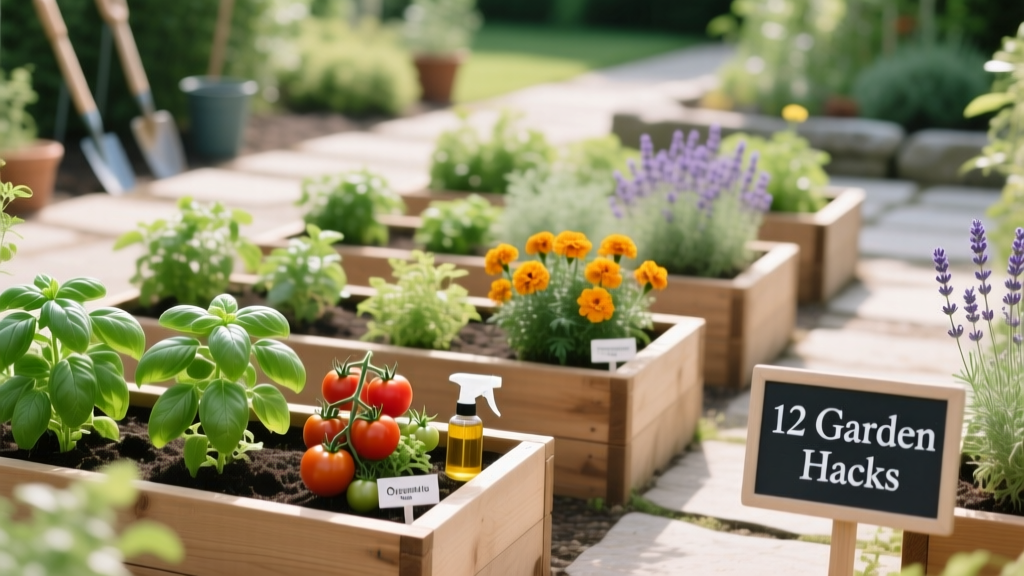
12 Garden Hacks for Preventing Plant Disease
If you’ve ever “fixed” a sick plant by spraying something after you spotted spots… you were already late. The most common mistake I see (even from experienced gardeners) is treating disease like a surprise event, when it’s usually the predictable result of moisture + timing + a few tiny habits that quietly stack up.
The good news: preventing disease doesn’t require a shelf of fancy bottles. A handful of simple hacks—many of them free—can cut disease pressure dramatically because they interrupt the disease triangle (susceptible host + pathogen + the right environment). Below are my favorite shortcuts, organized the way I actually use them in real gardens.
Group 1: Moisture & airflow hacks (because wet leaves are basically an invitation)
1) Water like a drip line—even if you don’t own one
Hack: Keep water off leaves by aiming at the soil line, not the plant. If you use a hose, set it to a slow trickle for 3–5 minutes per plant instead of a quick shower that splashes soil onto foliage (a common way fungal spores move).
Example: For tomatoes, I water in a tight circle 6–8 inches from the stem so the main root zone gets moisture but the stem base doesn’t stay soggy—this reduces early blight splash-up and stem rot issues.
2) Use the “morning rule” with one exception
Hack: Water in the early morning (6–10 a.m.) so any accidental leaf wetness dries fast. The exception is containers in extreme heat: then a small late-afternoon drink is okay, but still avoid wetting foliage.
Example: Powdery mildew loves long, humid nights. Morning watering can shave hours off leaf wetness time, which is one of the easiest ways to reduce disease pressure without spending a dime.
3) Mulch like you’re building a “splash shield”
Hack: Put down a 2–3 inch mulch layer (straw, shredded leaves, or wood chips around perennials) to block soil from splattering onto leaves during rain and watering. Keep mulch pulled back 1–2 inches from plant stems to prevent crown rot.
Example: In a rainy summer, a straw-mulched tomato bed often has noticeably less lower-leaf spotting than bare soil—because the mulch acts like a physical barrier.
4) Space plants using the “handspan rule” (a fast shortcut when you don’t want to measure)
Hack: Instead of guessing, use your body as a tool: one adult handspan is roughly 7–9 inches. Give most leafy greens 1 handspan between plants, peppers 2, and tomatoes 3+ depending on variety and trellising.
Example: Crowded zucchini is practically a powdery mildew incubator. Two extra handspans of spacing can outperform many sprays because airflow increases and leaves dry faster.
Group 2: Clean habits that stop disease from hitchhiking
5) Sterilize pruners in 10 seconds (and actually do it)
Hack: Keep a small jar of disinfectant in your garden tote. Dip or wipe blades between plants—especially when pruning tomatoes, roses, or anything with suspicious lesions.
Specifics: A common, effective option is 70% isopropyl alcohol (no mixing, fast drying). Extension guidance often recommends disinfecting tools to prevent spread of pathogens; for example, University of Minnesota Extension emphasizes sanitation to reduce disease transmission (University of Minnesota Extension, 2020).
6) Make a “quarantine corner” for new plants
Hack: New nursery plants can carry powdery mildew, rust, mites, and viruses. Park them in a separate spot for 7–10 days and inspect every other day before they join your beds.
Example: I’ve seen one “perfect” basil start introduce downy mildew to a whole patch. Quarantine feels fussy until it saves you from ripping out 12 plants.
7) Prune lower leaves early—before they’re a problem
Hack: On tomatoes and cucumbers, remove the lowest leaves so none touch soil. A good rule is to keep the bottom 8–12 inches of tomato stems leaf-free once plants are established (and always remove leaves that touch mulch/soil).
Example: In humid regions, this single habit often reduces early blight severity because the “splash zone” is where infection typically starts.
8) Bag disease debris like it’s broken glass
Hack: Don’t toss infected leaves into open compost unless you run a reliably hot pile. Bag and trash severe disease debris (especially plants with suspected viral symptoms) to avoid reinfection next season.
Example: If your roses had black spot all summer, leaving infected leaves under the shrub is basically setting out spores for spring. Rake and remove them in fall, then refresh mulch.
Group 3: Soil & roots—the “invisible” prevention zone
9) Stop overfeeding nitrogen (it makes “tender targets”)
Hack: Too much nitrogen pushes soft, fast growth that’s more disease-prone and pest-prone. If you fertilize, aim for slow-release or compost-based feeding, and avoid repeated high-N boosts once plants are established.
Specifics: For many veggies, 1 inch of finished compost worked into the top few inches of soil is a steady, low-drama feed. It’s also cheaper than boutique fertilizers: a $6–$8 bag of composted manure can cover a small bed, versus $15–$25 for specialty blends.
10) Rotate by plant family, not by crop name
Hack: Rotation works when you rotate plant families: tomatoes/peppers/eggplant (nightshades), cucumbers/squash (cucurbits), cabbage/broccoli (brassicas), beans/peas (legumes). Try a 3-year rotation for disease-prone families if space allows.
Example: If early blight hit your tomatoes, moving tomatoes but planting peppers in the same bed isn’t much of a rotation—they share several pathogens. Shift the whole nightshade family instead.
11) Solarize small problem patches with clear plastic (a targeted reset)
Hack: For a bed that keeps getting hammered by soilborne disease, solarization can reduce pathogen load. Moisten the soil, stretch clear plastic tightly over the area, and seal edges; leave it in place for 4–6 weeks during the hottest part of summer.
Evidence: Solarization has been studied as a non-chemical method to suppress soil pathogens and weeds when soil temperatures are driven high enough under plastic (UC ANR / University of California Agriculture and Natural Resources, 2018).
Cost tip: A roll of clear plastic might run $12–$20, but it can salvage a bed that would otherwise need replacing soil—often far pricier.
Group 4: Spray smarter (and cheaper) when prevention needs backup
12) Use a “weather-trigger” schedule instead of panic spraying
Hack: Most garden spraying fails because it’s reactive. If you know a disease is likely (history in your garden + forecast), spray protectants before symptoms explode—especially ahead of multi-day rain or humidity spikes.
Specifics: For fungal issues, many gardeners use sulfur or copper products as protectants; always follow the label and avoid spraying in high heat. The timing matters more than the brand: reapply after heavy rain (often 1 inch or more) or according to label intervals, commonly 7–10 days.
“Most fungicides are protectants, not cures—coverage and timing are critical.”
— General guidance echoed across multiple university extension plant disease resources (e.g., UC IPM materials, 2019)
Quick comparison: common prevention methods (what’s worth your time?)
| Method | Best for | Typical cost | Downside | My “use it when…” trigger |
|---|---|---|---|---|
| Mulch (2–3 inches) | Splash-borne diseases (blights, leaf spot) | $0 (leaf mulch) to $6–$10/bale straw | Can hold moisture near crowns if piled too close | Any bed with tomatoes, squash, strawberries |
| Tool sanitizing (70% alcohol) | Bacterial/viral spread via pruning | $2–$4 per bottle | Easy to forget mid-task | Any time I’m pruning multiple plants |
| Solarization (4–6 weeks) | Soilborne pathogens, weeds (small areas) | $12–$20 plastic sheet/roll | Takes time; best in hot weather | A bed that fails repeatedly despite rotation |
| Protectant sprays (label rate) | High-risk weather periods; known disease history | $10–$25 product | Needs thorough coverage; not a cure | Right before extended humidity/rain |
Real-world scenarios (what these hacks look like in an actual garden)
Scenario 1: Tomatoes getting early blight every July. The fastest “stack” that works is mulch (2–3 inches), prune lower 8–12 inches, and stop overhead watering. Add tool sanitizing when suckering, and rotate nightshades out for 3 years if you have enough beds. In many gardens, this reduces the annual July meltdown to a few manageable leaves instead of total defoliation.
Scenario 2: Powdery mildew taking over zucchini and cucumbers. Spacing is your first lever: give vines breathing room and trellis cucumbers so leaves don’t form a damp mat. Water in the morning at soil level, and remove the first few infected leaves (bag them) instead of leaving them to pump spores all season. If you must spray, do it ahead of the hot/humid stretch when you know mildew usually arrives.
Scenario 3: A mystery wilt in one bed that “spreads” year after year. That pattern often points to soilborne problems or lingering inoculum. Don’t replant the same family in that spot, and consider solarizing a small section (4–6 weeks) if it’s localized. If the bed is small, a targeted soil reset is usually cheaper than buying new plants repeatedly—especially when each tomato start costs $4–$6 and you lose a dozen of them.
Extra micro-hacks (small moves that pay off big)
Label your beds with last year’s plant family. A $1 plant marker or a note on your phone prevents “accidental monoculture,” which is one of the sneakiest ways disease builds up.
Thin seedlings with scissors, not by yanking. Pulling can disturb roots and flick soil onto nearby leaves; snipping at soil level is cleaner, especially for crowded greens where damping-off and leaf spots can spread fast.
Don’t work plants when they’re wet. If foliage is damp from rain or dew, brushing past can spread spores and bacteria like you’re wiping a dirty sponge across the bed. I wait until late morning when leaves are dry—especially in tomatoes and beans.
Use cheap drip “spikes” for containers. For patio growers, a pack of watering spikes or a DIY bottle-drip setup can reduce wet foliage and keep moisture consistent at the root zone. A basic DIY version: poke 2–3 tiny holes in a cap, invert a 1-liter bottle, and bury the neck slightly—simple, controlled watering with almost no splash.
Keep a dedicated “sick plant” bucket. Mine is a small lidded pail: infected leaves go straight in, not on the ground, not on the path, and definitely not in my pocket. It’s a silly little system that prevents the “I’ll pick that up later” reinfection loop.
Preventing plant disease is mostly about removing opportunities: less leaf wetness, less splash, fewer hitchhiking spores, and fewer repeats of the same plant family in the same soil. Once you build these habits, you’ll notice something weird: you stop needing “miracle cures,” because the outbreaks don’t get a chance to snowball in the first place.
Sources: University of Minnesota Extension (2020) plant disease sanitation guidance; UC ANR / UC IPM resources on soil solarization and disease management (2018–2019).