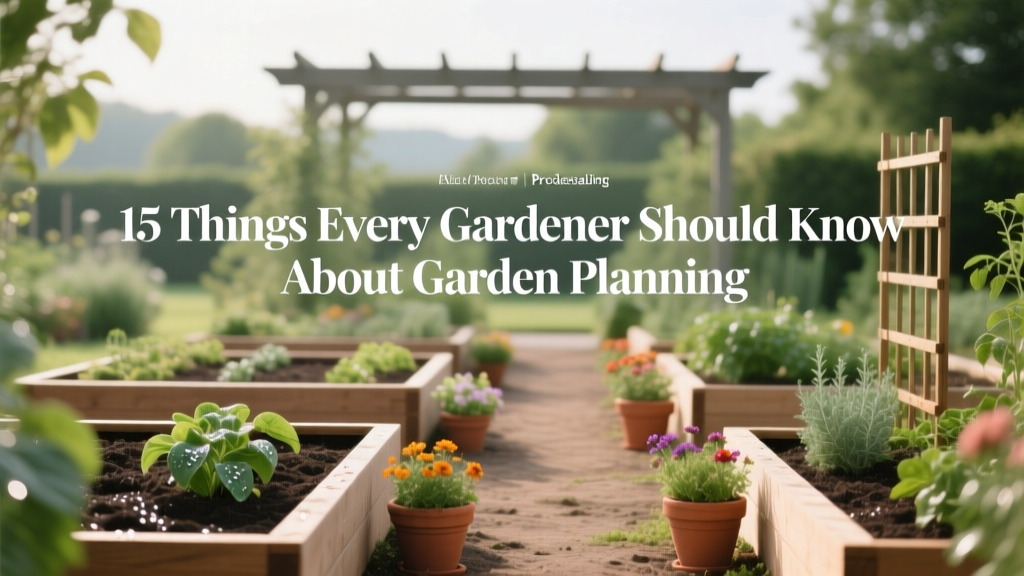
15 Things Every Gardener Should Know About Garden Planning
The most expensive garden mistake isn’t buying the “wrong” plant—it’s putting the right plant in the wrong place and then spending the next 3 months babysitting it with extra water, fertilizer, and frustration. Planning isn’t about fancy spreadsheets; it’s about making sure your garden works with your site (sun, soil, wind, and your actual schedule) instead of fighting it.
Below are 15 planning shortcuts I’ve watched experienced gardeners use over and over—the ones that save money, prevent common failures, and make harvesting easier. Pick a few this season and your future self will thank you.
Start With the Site (Not the Seed Catalog)
1) Map your sun in 10 minutes—then stop guessing
Before you plan beds, do a quick sun map: check your garden at 9 a.m., noon, and 3 p.m. and mark what’s in full sun (6+ hours), part sun (3–6 hours), or shade (<3 hours). This single step prevents the classic “why are my tomatoes sad?” problem when they’re only getting 4 hours of light. Real-world example: if your fence throws afternoon shade, put greens (lettuce, spinach) there and reserve the brightest zone for fruiting crops.
2) Do a soil test first—fertilizer is not a plan
A $15–$30 lab soil test can save you from spending $60+ on the wrong amendments. Many gardens already have plenty of phosphorus; adding more can be wasteful and may contribute to runoff issues. Several extension services recommend soil testing every 2–3 years for home gardens; for example, University of Minnesota Extension emphasizes testing to guide fertilizer and lime decisions (University of Minnesota Extension, 2020).
3) Plan around drainage with a simple “bucket test”
Dig a hole about 12 inches wide and 12 inches deep, fill it with water, and see how fast it drains after the first soak. If it drains slower than about 1 inch per hour, plan for raised beds (6–12 inches high) or choose plants that tolerate heavier soil. Example: a low spot that stays wet is perfect for a rain garden or moisture-loving natives—but it’s a recipe for root rot in lavender.
4) Design for wind and heat—your microclimates are real
Wind can dry beds out faster than heat does, and a south-facing wall can boost temperatures enough to fry cool-season crops. Use “buffers” you can move: a temporary windbreak of burlap on stakes, or a row of sunflowers planted 12 inches apart. Case example: one patio garden that struggled with bolt-happy cilantro stabilized it by moving the pot 3 feet away from reflective brick and adding a 30% shade cloth during afternoon sun.
Build Beds That Don’t Make You Work Overtime
5) Keep beds narrow enough to reach—your back will notice
If you can’t reach the middle without stepping in, you’ll compact soil and avoid weeding (because it’s annoying). A classic sweet spot is 4 feet wide for beds you can access from both sides, or 2–2.5 feet wide if against a wall or fence. Example: converting a 5-foot-wide bed into a 4-foot bed plus a 12-inch path often increases usable space because plants grow better in uncompacted soil.
6) Put paths on paper before you put plants in the ground
Plan paths first, then beds—because you’ll need access when everything is big and floppy in July. For a comfortable wheelbarrow route, aim for 30–36 inches wide; for foot traffic only, 18–24 inches works. Money-saver: use free cardboard topped with 2–3 inches of wood chips instead of landscape fabric (cardboard breaks down; fabric often turns into a weed net).
7) Water planning is garden planning: choose one system and commit
Decide early: hose-and-wand, soaker hose, or drip line. A basic DIY drip setup for a small garden can cost about $40–$80 (tubing + fittings + timer), but it often pays for itself by reducing water waste and missed watering days. Research also supports drip efficiency; for example, Colorado State University Extension notes drip irrigation can apply water more efficiently by delivering it near roots and reducing evaporation (Colorado State University Extension, 2019).
8) Use the “compost math” that actually works
If you’re top-dressing beds, a reliable planning number is 1 inch of compost over the surface once or twice per year. For 100 square feet, 1 inch is about 8.3 cubic feet (roughly three 3-cubic-foot bags). Example: instead of buying random bags weekly, plan: “My 200 sq ft garden needs about 16–17 cu ft per inch,” then price out bulk delivery vs bags.
Make Plants Behave With Spacing, Timing, and Succession
9) Use mature size, not seedling size, when spacing
It’s tempting to pack tiny seedlings close, but airflow is your cheap disease prevention. Tomatoes commonly need 18–24 inches between plants (more for indeterminate varieties), while basil can be 8–12 inches. Example: gardeners who reduce tomato crowding often see fewer leaf diseases and easier harvesting—without spraying anything.
10) Plan “waves” of harvest, not one big planting day
Succession planting is the simplest way to avoid a two-week zucchini tsunami followed by nothing. A practical rhythm: sow lettuce every 10–14 days in spring, and bush beans every 2–3 weeks while temperatures are warm. Case example: a family with limited time planted carrots in three batches two weeks apart and got steady bunches for school lunches instead of 30 pounds all at once.
11) Put your frost dates on the calendar like appointments
Your last spring frost and first fall frost are the anchors for everything else. If your tomatoes need 70 days and your first fall frost is October 15, count backward and plan for transplant size, not just seed packets. Real-world example: in short-season areas, planning to transplant peppers at 8–10 weeks old (not 6) can be the difference between green peppers and ripe ones.
12) Match crops to your real maintenance capacity
If you travel or work long hours, plan with “forgiving” crops: sweet potatoes, winter squash, okra, and herbs generally tolerate uneven attention better than celery or cauliflower. If you only have 20 minutes on weekdays, design for low-stakes success: fewer, larger blocks of plants instead of a hundred fussy varieties. Scenario: an apartment gardener with two 2x4 beds swapped needy broccoli for chard and cherry tomatoes and doubled harvest with less stress.
Use Smart Layout Tricks (Companions, Rotation, and Access)
13) Rotate by plant family, not by crop name
Rotation works best when you group plants by family because they share pests and diseases. A simple 3-year rotation: (1) nightshades (tomatoes, peppers, eggplant), (2) legumes (beans, peas), (3) brassicas + roots + greens. Example: if you had tomato blight pressure, don’t follow with peppers in the same bed next year—move the whole nightshade group.
14) Put “daily pick” crops closest to the door
Garden planning is behavioral science: if it’s easy, you do it; if it’s annoying, you don’t. Put herbs, salad greens, cherry tomatoes, and snap beans near the path you naturally walk. Case example: one backyard gardener moved basil and parsley from the far corner to a container by the back steps and went from “I forget” to using fresh herbs 4 nights a week.
15) Decide your weed strategy now—before weeds decide for you
Choose one: mulch-heavy, hoe-and-stirrup, or living mulch/cover crops. A fast, proven approach is to mulch right after planting with 2–4 inches of straw or shredded leaves (keep mulch 1–2 inches away from stems). DIY alternative: save fall leaves, run them over with a mower, and bag them—free mulch that breaks down into soil-building gold.
Quick Comparison Table: Bed Planning Choices That Change Everything
When gardeners ask what’s “worth it,” these are the tradeoffs I see most often. Choose based on your time, budget, and how permanent you want the setup to be.
| Planning Choice | Option A | Option B | Best For |
|---|---|---|---|
| Bed style | In-ground rows (lowest cost) | Raised beds (faster drainage, neat edges) | A: large spaces, good soil; B: heavy clay, accessibility needs |
| Weed control | Cardboard + 2–3 in wood chips (DIY sheet mulch) | Landscape fabric + mulch | A: improving soil long-term; B: temporary paths (fabric can be a pain later) |
| Watering | Hose + wand (cheap upfront) | Drip + timer ($40–$80 starter) | A: tiny gardens, hands-on; B: travel, consistency, water savings |
| Soil improvement | Bagged compost (easy, pricier) | Bulk compost delivery (cheaper per cu ft) | A: small beds; B: 200+ sq ft gardens needing volume |
Insider Planning Moves That Save Money
Planning isn’t just “where plants go.” It’s also choosing systems that keep you from buying the same things twice.
“Soil testing is the best way to determine lime and fertilizer needs. Without a test, you are just guessing.” — University of Minnesota Extension (2020)
Bonus money-saver: price your garden like a contractor
Before spring shopping, list your “inputs” (soil, compost, mulch, irrigation parts) and calculate volume. Example numbers that prevent surprise costs: a 4x8 bed is 32 sq ft; adding 3 inches of soil mix takes about 8 cu ft (32 x 0.25). That’s either three bags (3 cu ft each) or a fraction of a bulk yard—knowing that upfront keeps you from overbuying.
Three Real-World Planning Scenarios (Steal These Setups)
Scenario 1: The busy weekday gardener (20 minutes/day)
Plan fewer crop types, planted in blocks, with drip irrigation on a timer set for early morning. Choose “high return” plants: cherry tomatoes (1–2 plants), basil (4 plants), peppers (3 plants), and cut-and-come-again greens in a 2x4 bed. Mulch 3 inches deep immediately so your maintenance time is mostly harvesting.
Scenario 2: The small patio or balcony (containers only)
Plan for container volume first: most fruiting plants need at least 5 gallons (tomatoes often 10–15 gallons for best results), while herbs can thrive in 1–3 gallons. Use one standardized pot size so watering is predictable, and group pots by sun exposure. DIY trick: put pots on rolling plant caddies so you can shift everything during heat waves or storms without heavy lifting.
Scenario 3: The new house with unknown soil
Start with two 4x8 beds, not ten—because you’re still learning sun patterns, drainage, and what you actually like to eat. Do a soil test, then top-dress with 1 inch compost and mulch heavily while you observe. Use the first year as a data-gathering season: note which areas stay wet after rain and which scorch in August, then expand with confidence in year two.
Garden planning is basically stacking tiny advantages: the right plant in the right light, beds you can reach, watering you can automate, and harvest timing that matches your life. If you want the fastest win, do this today: sketch your garden with sun zones, mark your paths, and write your frost dates at the top of the page. That one sheet of paper will save you more effort than any “miracle” product ever will.
Sources: University of Minnesota Extension (2020); Colorado State University Extension (2019).