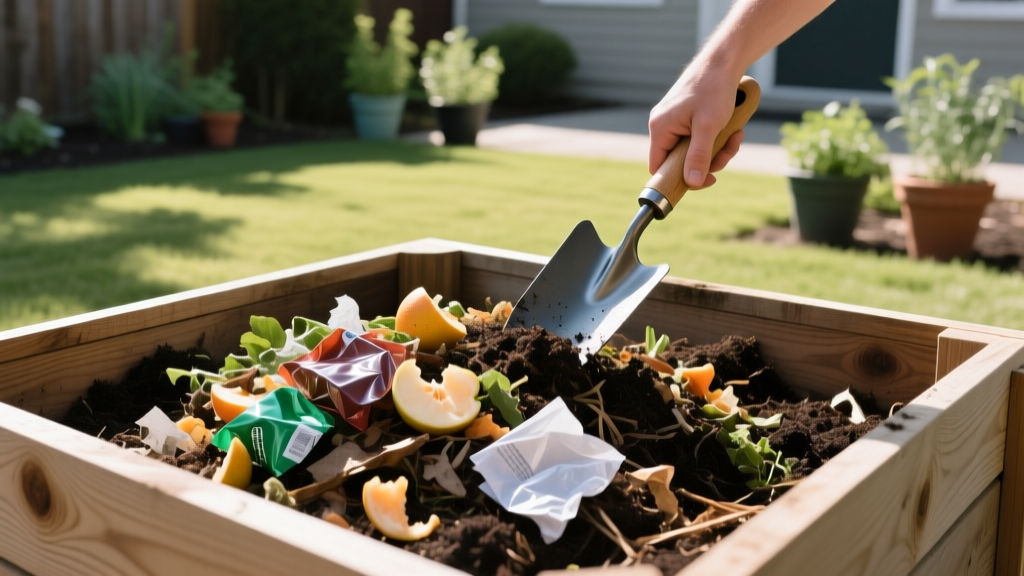
The One Mistake That Ruins Most Compost Piles
Most compost piles don’t fail because you “forgot to turn it” or because you don’t own a fancy tumbler. They fail because the pile never gets built to the right mix in the first place. Too many “greens” (wet, nitrogen-rich stuff) turns your pile into a smelly, slimy mess; too many “browns” (dry, carbon-rich stuff) leaves you with a cold pile that sits there looking exactly the same three months later.
The real mistake: not balancing carbon-to-nitrogen (C:N) and moisture from day one. Everything else—odor, flies, slow breakdown, soggy clumps, piles that never heat—is usually a symptom of that.
Good news: you can fix this with a few easy “compost shortcuts” that feel almost too simple. I’ll show you the ratios to aim for, how to eyeball them without a lab, and what to do in real-life situations like tiny yards, endless fall leaves, or a kitchen-scraps-heavy pile.
The core fix: build the pile with the right recipe (not vibes)
Tip: Use the “2:1 by volume” rule (browns to greens) as your default
If you only remember one compost hack, make it this: about 2 parts browns to 1 part greens by volume. It’s not perfect chemistry, but it’s close enough to hit a workable C:N range for most backyard piles. The University of Illinois Extension notes that effective composting generally targets a carbon-to-nitrogen ratio around 25–30:1, and the browns/greens approach is a practical way to get there without calculating every ingredient (University of Illinois Extension, 2021).
Example: For every 5-gallon bucket of veggie scraps and coffee grounds, add roughly two 5-gallon buckets of dry leaves, shredded paper, or straw.
Tip: Don’t “sprinkle greens”—layer them thin like lasagna
Thick layers of grass clippings or kitchen scraps mat down, block airflow, and go anaerobic (that sour, rotten smell). Keep green layers to 1–2 inches, then cap them with 3–4 inches of browns to trap odors and keep oxygen moving. This simple layering trick is often the difference between “pleasant earthy smell” and “my neighbors hate me.”
Example: If you dump a full bag of fresh lawn clippings, break it up into 3–4 thin layers and mix each one with a similar volume of shredded leaves.
Tip: Hit the “wrung-out sponge” moisture level—then stop adding water
Most piles are either desert-dry or swamp-wet. Compost microbes work best when the pile feels like a wrung-out sponge: damp to the touch, but not dripping when you squeeze a handful. Washington State University Extension emphasizes that moisture is critical for decomposition and that overly wet piles restrict oxygen, leading to odors (WSU Extension, 2020).
Example: Grab a handful from the center. If water drips, mix in a bucket of browns. If it crumbles like dust, add water 1–2 liters at a time while turning—don’t hose it for five minutes and hope for the best.
Tip: Size matters—build at least 3' x 3' x 3' to get heat
If you want a hot pile (fast, weed-seed-killing temperatures), you need enough mass to hold heat. A classic guideline is a minimum of 3 feet by 3 feet by 3 feet (about 1 cubic yard). Smaller piles can still compost, but they tend to be “cold compost” and may take 6–12 months instead of 6–10 weeks to finish.
Example: If you only have one kitchen-scraps bucket a week, stockpile browns in bags until you can build a real pile in one go.
Stop the stink: quick fixes for anaerobic, slimy piles
“Offensive odors are usually a sign that the pile is anaerobic—too wet, too compacted, or too much nitrogen-rich material without enough carbon.” — Washington State University Extension (2020)
Tip: If it smells like ammonia, add browns immediately (not lime)
An ammonia smell means excess nitrogen—usually too many fresh clippings, manure, or food scraps. The fastest fix is to add dry, fluffy carbon (shredded leaves, straw, shredded cardboard) and mix thoroughly. Skip garden lime: it can raise pH and actually increase ammonia loss, which wastes nitrogen you want to keep in your compost.
Example: One “ammonia week” after mowing: mix in 2–3 bags of dry leaves or a full contractor bag of shredded cardboard.
Tip: Use a “brown cap” to prevent fruit flies and raccoon problems
If you compost kitchen scraps, always bury them and then cover with a 2–3 inch layer of browns. This top cap reduces odors, discourages flies, and makes the pile less interesting to animals. It’s the simplest pest control you’ll ever do.
Example: After adding melon rinds, immediately cover with shredded paper and a scoop of finished compost or soil to “seal” the scent.
Tip: Break up mats with a $10 tool (or a DIY aerator)
Matted grass or soggy clumps block airflow. A 4-tine garden fork (often $10–$25) works better than a shovel for fluffing and lifting. DIY option: drill holes in a 1-inch PVC pipe and push it vertically into the pile in several spots to create passive air channels.
Example: If your pile has a slimy center, poke 8–12 holes with the PVC aerator, then mix in dry leaves around those channels.
Speed hacks: get finished compost in weeks, not seasons
Tip: Shred your browns—this one change can cut composting time in half
Microbes work on surface area. Whole leaves can take ages; shredded leaves break down dramatically faster and mix better with greens. If you want a noticeable speed boost, shred your leaves with a mower or leaf shredder before adding them.
Example: Run the mower over a leaf pile and collect them in the bag; those shredded leaves often finish in 8–12 weeks in a managed pile instead of lingering into next year.
Tip: Turn on a schedule: day 4, then weekly
Turning isn’t the magic; timed turning is. If you build a fresh pile all at once, give it a first turn around day 4 (right when oxygen drops and heat rises), then turn it once per week for the next month. This keeps oxygen high and evens out moisture pockets.
Example: If your pile hits hot temps by day 2–3, turn on day 4, then every Saturday for 4 weeks.
Tip: Use a compost thermometer once—then you’ll know your pile’s personality
A compost thermometer (usually $15–$35) tells you if you’re actually composting or just stacking organic matter. Hot composting commonly runs roughly 130–160°F in the active phase; if you’re stuck at 80–100°F, you need more mass, more nitrogen, or better moisture. After a season of checking temps, you’ll be able to “read” your pile without the tool.
Example: If it spikes to 150°F and then drops below 110°F within a few days, it’s time to turn and/or add a small boost of greens.
Real-world scenarios (because composting never happens in perfect conditions)
Scenario 1: “I have endless fall leaves and not enough greens”
This is the classic “too many browns” situation—your pile stays cold and looks unchanged. Fix it by adding concentrated greens: fresh grass clippings, manure (from a trusted source), coffee grounds, or even a small amount of nitrogen fertilizer if you’re desperate. A practical cheat is to add 1 cup of blood meal per 20–25 gallons of dry leaves, mixing it well (use gloves and avoid breathing dust).
Example: If you have 10 bags of leaves, shred them, then add grass clippings as you mow for the next 2–3 weeks and build the pile in layers.
Scenario 2: “My compost is a wet, stinky mess after a rainy week”
Rain pushes piles anaerobic fast—especially open piles. The rescue plan: pull the pile apart, mix in dry browns, and rebuild it looser. If you can, cover it with a tarp that’s weighted but vented (leave gaps at the sides) so it sheds heavy rain while still breathing.
Example: After a storm, add 1–2 contractor bags of shredded cardboard or dry leaves, then rebuild the pile with a fork so it’s fluffy, not packed.
Scenario 3: “I only make kitchen scraps—no yard, no leaves”
Kitchen-only compost usually fails because it’s too wet and too nitrogen-heavy. Your best move is to stockpile browns inside: tear up cardboard shipping boxes, save paper bags, and keep a bin of shredded paper next to your compost container. Aim for that 2:1 browns-to-greens ratio every time you add scraps, and always bury food in the center.
Example: In an apartment or townhouse, keep a 10–15 gallon tote of shredded cardboard; every time you add a bowl of scraps, add two bowls of shreds and stir.
Scenario 4: “My pile is full of grass clippings and keeps turning into a mat”
Grass clippings are powerful greens—and they compact like a wet blanket. The fix is to never add them alone: mix them immediately with an equal or greater volume of browns, and keep each clipping layer thin (1 inch is plenty). If you have a huge mow, spread clippings in the sun for 24 hours to wilt them slightly before composting.
Example: After mowing, mix 1 bag of clippings with 2 bags of shredded leaves and a forkful of finished compost to inoculate.
Tools and setups that actually help (and what’s a waste of money)
| Setup | Best for | Typical cost | Speed potential | Common failure point |
|---|---|---|---|---|
| Open pile on the ground | Big volumes, cheap compost | $0 | Fast if managed (6–12 weeks hot) | Gets too wet from rain; poor mixing |
| 3-bin system (DIY pallets) | People who want “batch” compost | $0–$60 | Very fast with turning | Not enough browns stored nearby |
| Tumbler | Small yards, neatness | $80–$250 | Moderate (often cool compost) | Too wet; not enough volume to heat |
| Worm bin (vermicompost) | Kitchen scraps indoors | $40–$150 | Steady, year-round | Overfeeding; too much moisture |
Tip: Spend money on “brown storage,” not gadgets
If composting fails at your house, it’s often because you run out of browns at the exact moment you need them. A simple fix is to keep browns dry and accessible: a lidded trash can, a tote, or even a cheap pop-up leaf bag. You can set up a “brown bank” for under $20 and it will outperform a $200 tumbler when it comes to preventing stink and speeding breakdown.
Example: Keep a 32-gallon trash can filled with shredded leaves under an eave; every kitchen-scrap addition gets a scoop.
Tip: DIY shredder hack—use your mower and a garbage can
No leaf shredder? Put dry leaves in a clean garbage can and plunge with a string trimmer (wear eye protection), or mow over them and collect. Shredding is the closest thing compost has to a cheat code: it improves mixing, moisture balance, and speed in one step.
Example: Shred 3 bags of leaves in 10 minutes with a mower, then mix with your weekly kitchen scraps for a pile that heats reliably.
Small adjustments that prevent big compost drama
Tip: Keep “problem foods” tiny and buried
Big chunks take forever and attract pests. Chop or tear food scraps to 1–2 inch pieces, then bury them at least 8 inches deep in the pile’s center. This keeps smells down and puts scraps where heat and microbes are most active.
Example: Instead of tossing a whole pumpkin into compost, chop it into fist-sized pieces and mix with two buckets of shredded leaves.
Tip: Don’t rely on “compost starters”—use finished compost or garden soil as inoculant
Most “starter” products are basically microbes you already have for free. A shovel of finished compost or even plain garden soil introduces decomposers and helps new piles kick off faster. Save the $8–$15 and use what you’ve got.
Example: Sprinkle 2–3 shovels of finished compost between layers when building a new pile.
Tip: If you’re composting weeds, time it with heat (or don’t bother)
Weed seeds and aggressive roots (like bermudagrass or bindweed) can survive in cool piles. If you want to compost them safely, make sure your pile is truly hot—aim for at least 131°F for several days, then turn so outside material moves to the hot center. If you can’t hit heat, solarize weeds in a black bag for 2–4 weeks before adding, or keep them out entirely.
Example: After turning, check the center temp the next day; if it rebounds above 130°F, you’re in the zone to handle most annual weeds.
Tip: Batch compost beats “dribble compost” for speed
If you constantly add a little bit every day, your pile never finishes—it’s always half raw, half done. For faster, nicer compost, collect materials and build a batch pile all at once, then let it run its course. If you need a daily drop spot, create a second “active input” bin and move it to the batch pile once it’s big enough.
Example: Use a lidded tote for daily scraps and browns; when it fills (say every 10–14 days), dump it into the main pile and cover.
When your compost pile is working, it feels almost boring: it heats, shrinks, and smells like damp forest soil. That “boring success” comes from dodging the one mistake that wrecks most piles—building without enough browns to balance greens and moisture. Get the mix right, and suddenly all the other compost advice starts making sense.
Sources: University of Illinois Extension (2021), composting carbon-to-nitrogen guidance; Washington State University Extension (2020), compost moisture/odor and anaerobic conditions guidance.