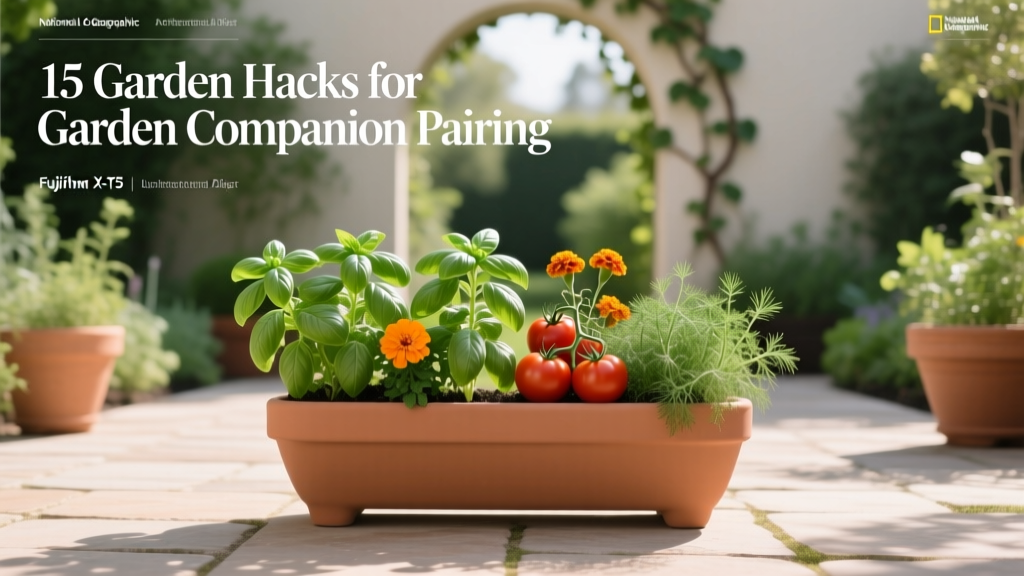
15 Garden Hacks for Garden Companion Pairing
Most companion planting “fails” for one boring reason: people plant the right partners at the wrong distance (or the wrong time) and then blame the combo. Companions aren’t magic spells—they’re tiny, practical tweaks that change airflow, scent trails, soil moisture, and pest pressure. Get the spacing and timing right, and suddenly the same pairings you’ve heard for years actually start pulling their weight.
Fast setup hacks (so you don’t overthink it)
1) Use the “one-crop-width rule” to stop overcrowding companions
When pairing two crops, keep the companion at least one mature plant-width away from the main crop unless you’re intentionally using it as a living mulch. That usually means 12–18 inches for basil near tomatoes, and 6–8 inches for scallions near carrots. This prevents the common mistake of pairing plants so tightly that you trade pests for powdery mildew from poor airflow.
Example: In a 4x8 bed, plant tomatoes down the center line, then run basil 12 inches out on both sides—easy to weed, easy to harvest, and you’ll still get the scent “confusion” effect without crowding.
2) “Border the bed” with your pest-confusers (instead of mixing everything)
Instead of peppering herbs randomly, make a continuous border: it’s faster to plant, simpler to water, and it creates a more consistent scent barrier for pests cruising the edges. A 4-foot bed edge holds about 16–20 small herb starts at 8–10 inch spacing. This is also a money-saver because you can grow border herbs from cuttings or cheap seed mixes.
Real-world scenario: A suburban raised-bed gardener with rabbits and aphids runs a border of chives + marigolds around greens; they don’t stop every pest, but they reduce “easy access” and make damage more scattered instead of a total wipeout.
3) Pair by water needs first, “folklore” second
Companion planting works best when both plants thrive on the same irrigation schedule. Put thirsty plants together (cucumbers + dill) and drought-tolerant plants together (rosemary + sage), or you’ll end up overwatering one and stressing the other. Even a perfect pest-repelling combo can flop if one partner is constantly unhappy.
Tip: If you’re on drip, group plants that like roughly the same frequency—e.g., every 2–3 days for many summer annuals in hot weather—so you’re not constantly adjusting emitters.
Soil & nutrient pairing hacks (the “hidden” side of companions)
4) Use legumes as “nitrogen neighbors,” but don’t expect instant fertilizer
Beans and peas can support soil nitrogen over time, but most of the nitrogen benefit arrives after you cut the plants and let roots break down. Treat legumes as a season-long soil investment, not a quick fix for hungry crops. Plant bush beans 6 inches from heavy feeders like corn, then chop the beans at soil level after harvest and leave roots in place.
Specific timing: Chop-and-drop bean tops after the last picking; give the bed 2–4 weeks before planting the next heavy feeder for better root breakdown.
5) “Calcium buffer strip” hack: keep brassicas away from heavy compost bands
If you band rich compost directly under brassicas (broccoli, cabbage), you can accidentally spike lush growth that attracts aphids. Instead, place a compost band for the heavy feeder row, and set a companion strip (like dill or alyssum) 10–12 inches away in leaner soil to encourage predators and keep brassicas sturdier. This isn’t about starving plants—it’s about avoiding the soft, aphid-magnet phase.
Example: In a 3-foot-wide bed, run a 12-inch compost band under broccoli, then a 12-inch strip of alyssum, then a walkway-side strip for quick greens.
6) Use “shade pairing” to reduce watering by 10–20% in heat waves
Tall crops can act like living shade cloth for heat-sensitive companions. Plant lettuce or cilantro on the east/north side of tomatoes or trellised cucumbers so it gets morning sun and afternoon relief. In many gardens, this can reduce midday wilting and help you stretch watering intervals—especially in beds that bake.
Case example: In a community garden plot with full sun, gardeners often tuck leaf lettuce 10 inches from the north side of tomato cages; it bolts later and stays usable longer into summer.
Pest-control pairing hacks (practical, not mythical)
7) Trap-crop hack: sacrifice nasturtiums to save cucumbers and squash
Nasturtiums can pull aphids and some beetles away from cucurbits, but only if you treat them like a decoy. Plant nasturtiums 12–18 inches outside the main cucurbit patch; when they get heavily infested, remove those leaves (or the whole plant) instead of letting pests multiply. One $3 packet of nasturtium seed can cover multiple bed edges.
Example: Put 6 nasturtiums along the bed’s outer border and keep cucumbers on a trellis inside; check the nasturtiums twice a week and prune infested tips.
8) “Umbel power”: add dill or cilantro flowers near brassicas for tiny wasps
Let a few dill or cilantro plants bolt and bloom near brassicas to feed beneficial insects like parasitoid wasps and hoverflies. Extension resources consistently recommend adding small-flowered plants to support natural enemies in vegetable systems (University of Minnesota Extension, 2020). You don’t need a whole herb patch—2–3 flowering plants per bed can make a noticeable difference.
Specific placement: Put bolting cilantro at bed corners so it doesn’t crowd your main crop, and so it’s easy to leave standing as “beneficial bait.”
“Small, shallow flowers—like those on dill, alyssum, and cilantro—are especially useful because they provide nectar and pollen for many beneficial insects.”
—University of Minnesota Extension (2020)
9) Garlic/chive “scent posts” for aphid-prone roses and greens
Alliums won’t make aphids vanish, but they can disrupt the scent trail and slow colonization—especially when used as consistent “posts.” Plant chives every 10–12 inches around susceptible plants, or tuck garlic cloves 4–6 inches from the base of roses in fall. It’s a low-effort, perennial-ish strategy if you let chives return each year.
DIY angle: No room for planting? Make an allium tea spray: steep chopped garlic in water overnight, strain, and spray early morning—test on one leaf first to avoid burn.
10) Use radishes as a flea beetle distraction for arugula and kale
Flea beetles often hit tender brassica leaves early; radishes can act as a “cheap distraction” because they pop up fast and offer equally tasty leaves. Sow a 6-inch-wide radish strip along the edge of your brassica bed, then thin radishes to 2 inches apart. When radish leaves look like lace, pull and compost them—don’t let the beetles build a fortress.
Specific timing: Seed radishes 7–10 days before direct-sowing arugula so the beetles find the radish strip first.
Spacing & layout hacks (where companion planting actually wins)
11) The “trellis + understory” stack: cucumbers above, basil or scallions below
Vertical growing creates bonus real estate for companions that like partial shade and consistent moisture. Put cucumbers on a trellis (a $15 cattle panel works for years) and plant basil 8–10 inches in front, or scallions 4–6 inches in front. You’ll harvest more per square foot and keep foliage off the soil, which reduces leaf disease splash.
Cost comparison: A cattle panel trellis (~$15–$30 depending on region) often lasts 5–10 seasons, while cheap string trellises may need replacing yearly.
12) Three-row “guild strip” for tomatoes: basil + alyssum + mulch gap
If you only do one tomato companion setup, make it this: tomatoes, then a 6-inch mulch gap, then a strip of basil, then a strip of sweet alyssum. The mulch gap improves airflow and reduces soil splash; alyssum supports beneficial insects; basil stays accessible for harvest without fighting tomato roots. It looks neat and makes pest scouting faster.
Example layout: In a 30-inch bed: 1 row tomatoes centered, 6 inches straw mulch, 10 inches basil, 10 inches alyssum.
13) “Edge defense” for carrots: onions on the windy side
For carrot fly issues (more common in some regions than others), plant onions or bunching onions along the bed edge that faces prevailing winds. The idea is to interrupt the smell plume that pests follow. Keep onions 4–6 inches apart and don’t over-fertilize them—lush onion tops can flop and shade carrots too much.
Real-world scenario: In a windy backyard with recurring carrot damage, placing onions on the windward edge plus using a light row cover during germination often outperforms companions alone.
Timing hacks (because companions have a calendar)
14) Stagger plantings so the “helper” is working when the pest arrives
A classic mistake is planting companions at the same time even though they grow at different speeds. Fast companions (radish, cilantro) should be seeded 1–3 weeks earlier so they’re producing foliage or flowers when pests start scouting. Slow companions (marigold starts) should go in as transplants, not seed, if you need quick impact.
Specific timing example: Start marigolds indoors 4–6 weeks before last frost, then transplant at the same time you transplant tomatoes so you’re not waiting all summer for blooms.
15) Use “rotation buddies” to make next season’s companions easier
Companion planting gets easier when you plan it across seasons: follow heavy feeders with legumes, and follow pest-prone crops with something from a different family. For example, after summer tomatoes, sow a fall mix of peas + oats; after brassicas, plant a winter cover like crimson clover where climate allows. The goal is fewer repeat pests and more stable soil structure without buying extra inputs.
Data point: Even a basic cover crop mix can cost $10–$25 for a small-yard amount, often less than a single bag of specialty fertilizer—and it feeds soil biology over months, not days.
Companion pairing cheat sheet (quick comparisons)
Some pairings are mainly about pest pressure, others about space, and others about soil rhythm. This table keeps the intent clear so you don’t expect the wrong result.
| Goal | Method A | Method B | Best use case | Downside to watch |
|---|---|---|---|---|
| Pest “confusion” | Border planting (chives/marigolds) | Interplanting (mixed within row) | Raised beds, simple watering | Interplanting can reduce airflow |
| Beneficial insects | Flower corners (dill/cilantro bolting) | Full insectary strip (alyssum row) | Brassicas, tomatoes, mixed beds | Bolting herbs can self-seed aggressively |
| Space efficiency | Trellis + understory (cuke + scallion) | Succession blocks (early greens, then summer crop) | Small yards, high yield goals | Understory may need extra water in heat |
| Soil improvement | Legume roots left in soil | Cover crop mix (pea/oat or clover) | Rotation planning, tired beds | Needs timing window to establish |
Three real-life companion setups that actually save time
Scenario 1: The “busy-week gardener” tomato bed. Use the three-row guild strip (Tip #12) with a mulch gap. You’ll spend less time staking floppy basil out of the tomato jungle, and scouting is quick because companions are in clean lanes.
Scenario 2: The apartment/patio grower with containers. Pair by water needs (Tip #3): put basil with tomatoes in a 10–15 gallon container, but don’t mix rosemary in there—it wants different moisture. Add a small pot of alyssum nearby for beneficials without crowding the main container.
Scenario 3: The “pest déjà vu” brassica patch. Combine umbel flowers (Tip #8) plus a radish distraction strip (Tip #10). If flea beetles are annual visitors, start radishes 7–10 days early and let 2 dill plants bloom at bed corners for the whole season.
Two quick reality checks (so you don’t get burned by bad companion myths)
Companions don’t replace observation. Even well-supported systems still need a 2-minute pest scan a couple times a week—look under leaves, especially on cucumbers and brassicas.
Not every “bad pairing” is actually bad in your yard. Local climate, wind, and irrigation style matter as much as plant chemistry. If you want more science-backed strategies for reducing pests using habitat, see research summaries and recommendations from extension programs like University of Minnesota Extension (2020) and University of California Agriculture & Natural Resources IPM guidance (UC ANR, 2021), which emphasize beneficial insect habitat and monitoring over one-size-fits-all pairings.
If you try only one hack this week, do the simplest: choose one bed and add a border of chives or scallions at 8–10 inch spacing, then tuck two flowering dill/cilantro plants in opposite corners. It’s cheap, fast, and you’ll notice the difference where it counts—healthier plants, easier harvest lanes, and fewer “mystery disasters” that start with spacing and timing, not bad luck.
Sources: University of Minnesota Extension (2020), beneficial insects and floral resources in gardens; University of California Agriculture & Natural Resources Integrated Pest Management (UC ANR IPM) (2021), garden pest monitoring and biologically based controls.