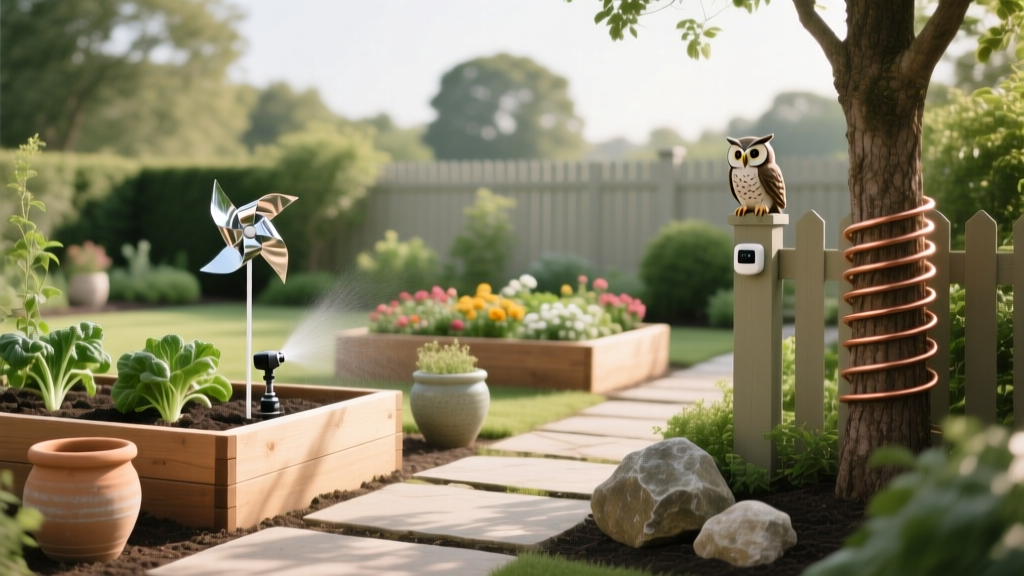
8 Garden Hacks for Garden Animal Deterrents
The most common mistake I see isn’t “forgetting to deter pests”—it’s assuming animals will politely stop once they’ve been “shooed” a few times. Deer, rabbits, squirrels, raccoons, and even neighborhood cats learn your patterns fast. If you only react after damage shows up, you’re basically training them that your garden is a dependable buffet.
The good news: you don’t need a complicated (or expensive) setup. You need a handful of targeted deterrents that hit the right animal behavior at the right time—plus a little rotation so they don’t get used to it.
Start With Physical “Nope” (Fast Wins That Don’t Rely on Smell)
1) “Right-Sized” Fencing: Make It Taller, Tighter, or Both
If you can swing one upgrade, make it physical. For deer, the reliable standard is an 8-foot fence (or two shorter fences spaced apart); for rabbits, you want 1-inch mesh low to the ground with a buried skirt. A fence that’s “almost tall enough” is basically a hurdle—deer will clear 6 feet when motivated.
Real-world example: A 20' x 30' veggie plot can be wrapped in welded wire deer fencing for roughly $120–$250 depending on height and post type, while a rabbit-tight hardware cloth border (24" tall) can be done for $40–$80 if you only protect the beds.
| Problem Animal | Method A (Cheaper) | Method B (More Reliable) | Best Use Case |
|---|---|---|---|
| Deer | 7' polypropylene deer netting + T-posts (~$0.50–$1.20/ft) | 8' woven wire + wood corners (~$1.50–$3.50/ft) | Netting for seasonal gardens; woven wire for year-round pressure |
| Rabbits | Chicken wire, 2" mesh (cheap but leaky) | Hardware cloth, 1/2" mesh (tighter) (~$1–$2/ft) | Hardware cloth for seedlings and greens |
| Groundhogs | Fence + shallow pinning (they dig under) | Fence + 12" buried L-shaped skirt | Perimeter defense where burrowing is common |
For rabbits and groundhogs: attach fencing so it’s flush to the soil, then bury an L-shaped skirt 12 inches deep with the bottom flared outward (they hit the “ceiling” when they try to dig under). This approach is commonly recommended by extension offices for keeping burrowing wildlife out of gardens (University of Maryland Extension, 2023).
2) Hardware Cloth “Plant Armor” for Seedlings (The $10 Fix)
When animals target new transplants, don’t fence the whole yard—armor the plant. Cut a strip of 1/2-inch hardware cloth about 18 inches long, form it into a cylinder, and push it 2–3 inches into the soil around each seedling. It blocks rabbits and keeps squirrels from clawing at the root zone.
Real-world example: If squirrels keep digging up your pepper starts, five individual cages cost about $10–$15 in materials and take under 20 minutes. Compare that to re-buying a six-pack of seedlings every week.
3) Floating Row Covers With “Buried Edges” (Not Just Draped)
Row cover works only if you seal it like a tent, not like a blanket. Use lightweight fabric (0.5–1.0 oz) over hoops, then bury the edges under 3–4 inches of soil or pin it every 12 inches with landscape staples. That stops rabbits, birds, and cabbage moths in one move.
Case example: A home gardener in a windy area kept losing lettuce to rabbits even with row cover—until she buried the edges. The same bed went from “chewed nightly” to harvestable heads in about 28 days.
Use the Animals’ Senses Against Them (Smell, Taste, and Surprise)
4) Spray Strategy: Timing Beats Strength (And Rotation Beats Habit)
Repellents fail most often because they’re applied once and forgotten. For commercial deer/rabbit sprays, reapply every 7–14 days and after 1 inch of rain; that schedule matters more than buying the “strongest” bottle. Rotate between two modes—an odor-based repellent (predator odor, putrescent egg) and a taste-based repellent (bitter agents) so animals don’t acclimate.
Michigan State University Extension notes that repellents can be useful, but effectiveness varies and they must be reapplied, especially after weathering (2019). Translation: if you’re only spraying once a month, you’re mostly just perfuming your garden.
DIY alternative: A simple egg-based spray can work as a short-term deer deterrent: blend 1 whole egg with 1 quart of water and a few drops of dish soap (helps it stick), then strain and spray foliage. Test on a small section first—some plants don’t appreciate it, and it’s not a miracle in high deer pressure.
“No repellent is permanent. Weathering and animal pressure determine how often you must reapply.” — Michigan State University Extension (2019)
5) Motion Sprinklers: Aim Low, Set the Clock, Save Water
Motion-activated sprinklers are one of the quickest “behavior changers,” especially for deer, raccoons, and cats. The hack is to aim them 18–24 inches high (not skyward) and run them at night only, typically dusk to dawn, so you aren’t blasting pollinators and wasting water midday. Most units cost $45–$80, which is often cheaper than replacing a season of strawberries or corn.
Case example: One suburban yard had raccoons pulling up newly planted corn like it was party food. A single motion sprinkler placed 10 feet from the corn patch stopped damage within 3 nights; the owner later moved it to protect melons when those ripened.
6) “Sacrifice + Shield” Planting: Give Them a Better Option (On Your Terms)
This one feels counterintuitive, but it’s a real tactic when animals are relentless: plant a decoy they prefer, then heavily protect the crops you care about. For rabbits, a small patch of clover or alfalfa 20–30 feet away from the garden can pull pressure off tender greens—if your main beds are fenced or covered. Without the “shield,” you’re just setting a buffet line.
Real-world example: In a community garden with constant rabbit traffic, one plot owner planted a 4' x 8' clover strip near a brushy edge and used row cover on spinach and carrots. The rabbits grazed the clover heavily, while the covered beds stayed intact long enough to harvest.
Fix the Stuff That Quietly Invites Animals In
7) Remove “Free Housing”: Seal Gaps, Stack Smart, and Clean Up Spills
Deterrents work better when you’re not also providing shelter. Stack firewood 12 inches off the ground, keep compost covered, and pick up fallen fruit within 24 hours during peak ripening. If you have a shed, check for gaps larger than 1/2 inch; that’s an open door for rodents, which then attract snakes and larger predators.
Case example: A gardener dealing with rats blamed the chicken feed—true, but the bigger culprit was an open-bottom compost pile right next to the fence. Switching to a lidded bin and storing feed in a sealed metal can reduced nighttime activity within about 2 weeks, and suddenly the “mysterious” tomato nibbles stopped too.
The University of California Agriculture and Natural Resources (UC ANR) emphasizes sanitation and exclusion—removing access to food and shelter—as core principles of vertebrate pest management (UC ANR, 2020).
8) One-Week “Deterrent Rotation” Schedule (So They Don’t Get Used to You)
Animals habituate. If you use one tactic for weeks, it fades into background noise—literally and figuratively. The hack is to rotate deterrents on a simple schedule: change something every 3–4 days during peak pressure (seedling stage and fruit ripening), even if it’s just moving the sprinkler or swapping scent types.
Practical schedule example: Week 1: motion sprinkler on nights 1–3; nights 4–7 switch to repellent spray + a physical barrier upgrade (row cover pinned tighter). Week 2: move sprinkler to a new angle and refresh spray. This small rotation often outperforms buying another gadget, because novelty is part of the deterrent effect.
Quick Scenarios: Match the Hack to the Animal
Scenario A: Deer eating hostas, beans, and roses. Start with height: an 8-foot fence is the long-term fix, but the fast patch is a motion sprinkler plus a repellent rotation every 7–14 days. Put the sprinkler where deer enter (not where they feed), about 10–15 feet from the plants to catch them early.
Scenario B: Rabbits mowing down lettuce and young carrots. Use row cover with buried edges immediately; it’s usually faster than building a perimeter fence mid-season. Then add a low rabbit fence: 24 inches tall with 1-inch or smaller mesh, pinned tight to the ground.
Scenario C: Squirrels digging in pots and raised beds. Individual hardware cloth cylinders around new transplants plus a top “grill” of bird netting over the bed (secured every 12 inches) stops the digging habit. For containers, lay decorative stones or a cut-to-fit circle of hardware cloth on top of the soil so they can’t excavate.
Scenario D: Raccoons and opossums raiding corn, melons, or compost. Motion sprinklers at night and strict sanitation (sealed compost, no fallen fruit) is usually the best one-two punch. If raccoons are rolling back mulch to hunt grubs, consider an additional step: pin down mulch edges with staples so it’s annoying to flip.
A few money-saving notes (because deterrents can add up)
If budget is tight, spend on the thing that lasts. A roll of hardware cloth might feel pricey per foot, but it can be cut into cages for years; a $20 bottle of spray disappears quickly if you’re reapplying properly. For many gardens, the cheapest “big win” is $45–$80 on a motion sprinkler plus $10–$20 on staples to make your covers actually seal.
Also: don’t underestimate how much you save by protecting the “high-value window.” Most animal damage happens when plants are under 6 inches tall or when fruit is ripening. If you only armor those stages (about 3–6 weeks total for many crops), you can often avoid building a fortress around the entire yard.
When you’re troubleshooting, take 60 seconds at dusk to look for clues: clean diagonal cuts on stems point to rabbits; torn, ragged damage higher up suggests deer; small holes and missing seeds often mean birds or squirrels. Once you identify the culprit, one well-aimed hack beats five random ones.
Sources: University of Maryland Extension (2023) wildlife exclusion guidance; Michigan State University Extension (2019) repellent effectiveness and reapplication; University of California Agriculture and Natural Resources (UC ANR, 2020) vertebrate pest management principles.