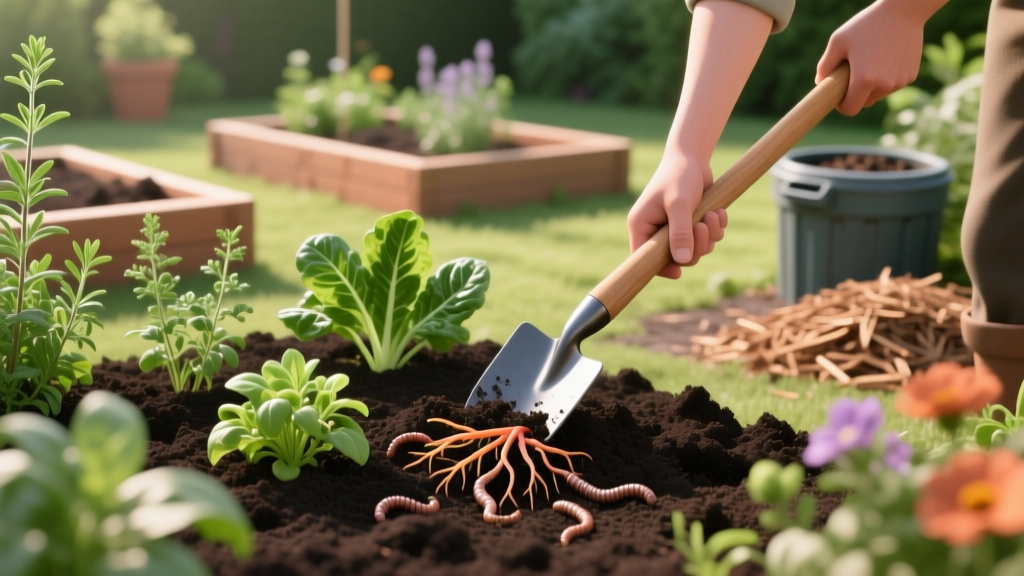
8 Garden Hacks for Soil Health Improvement
Most “bad soil” isn’t truly dead—it’s just been managed into a corner. The common mistake I see (even in nice-looking beds) is feeding plants while starving the soil biology: quick-release fertilizer goes in, organic matter stays low, and the ground gets tilled and left bare. The result is soil that crusts, drains poorly, and needs more inputs every season.
The hacks below are shortcuts I’ve used in real gardens—raised beds, clay yards, sandy plots, and rental-friendly spaces—to get better structure, more worm action, and steadier fertility without turning soil care into a second job.
Fast Diagnostics (So You Don’t “Fix” the Wrong Problem)
1) The 10-Minute Jar Test (Texture) + 60-Second Slake Test (Stability)
Hack headline: Use two tiny tests to decide if you need compost, drainage fixes, or gentler handling.
Fill a jar 1/3 with soil, add water + a drop of dish soap, shake hard for 1 minute, and let it settle for 24 hours: sand drops first, silt next, clay last. Then do a “slake test”: drop a dry soil clod into a clear cup of water and watch for 60 seconds—if it explodes into mud, your aggregates are weak and you’ll get crusting and compaction after rain.
Example: In a backyard with hardpan clay, the jar test showed a heavy clay fraction, but the slake test was the real clue—clods fell apart instantly. We shifted from tilling to topdressing compost + mulch (see Tip #3 and #4) and the surface stopped sealing after storms within one season.
2) The “Cheap, Accurate” Soil Test Combo: Lab Every 2–3 Years + DIY Spot Checks
Hack headline: Spend $20–$40 on a lab test occasionally, then use simple DIY checks to stay on track.
A lab soil test every 2–3 years is the fastest way to avoid wasting money on the wrong amendments; many Extension offices run reliable tests in the $20–$40 range. Between lab tests, track progress with a $10 pH meter or pH strips, and note biological signals—earthworm counts under mulch and how quickly leaves disappear.
Example: A community garden plot kept “failing” tomatoes; the lab report showed pH at 7.8 and high phosphorus—extra composted manure was making it worse. Switching to leaf compost and using elemental sulfur cautiously (per test recommendations) brought pH down over time and improved iron availability.
Citation: Many state Extension services recommend periodic lab testing for pH and nutrient balance; for example, University of Minnesota Extension’s soil testing guidance (updated regularly; widely referenced in Extension programming). A classic soil health framing also appears in USDA NRCS soil health principles (ongoing program guidance).
Feed Soil Biology Without Creating More Work
3) “Compost as a Topcoat,” Not a Dig-In: 1/2 Inch Twice a Year
Hack headline: Topdress compost like you’re frosting a cake—don’t bury it.
Instead of turning compost into the soil (which breaks fungal networks and can spark weeds), spread a 1/2-inch layer on top in spring and again in fall, then cover with mulch. Earthworms and rainfall carry the good stuff down naturally, and you’ll improve aggregation with less disruption.
Example: In a raised bed that dried out daily, two 1/2-inch topdressings (April and October) plus mulch reduced watering from every day to every 2–3 days by mid-summer because the soil held moisture better.
4) Mulch Like a Pro: 2–4 Inches, But Keep a 2-Inch “Stem Donut”
Hack headline: Mulch thickness is a lever—use it to boost microbes, reduce compaction, and stop soil splash.
Apply 2–4 inches of mulch (shredded leaves, straw, or wood chips) over bare soil to buffer temperature swings and keep microbes fed. Leave a 2-inch gap around plant stems to prevent rot and vole damage, and refresh mulch when it compresses to under 1 inch.
Example: Around peppers, a 3-inch leaf mulch cut soil splash (and leaf spotting) after rain. On a sloped bed, wood chips reduced runoff and helped water soak in instead of racing downhill.
Citation: Washington State University Extension and other Extension programs consistently recommend mulching to moderate soil moisture and temperature and to reduce erosion; see WSU Extension resources (various publications; common guidance across years).
5) The “Small Dose” Nitrogen Trick for Carbon Mulches: 1 Cup Grass Clippings per 1 Square Foot of Leaves
Hack headline: Prevent nitrogen tie-up when using high-carbon mulches by adding a tiny nitrogen “starter.”
Leaves and wood chips are amazing for long-term soil structure, but they can temporarily tie up nitrogen at the surface as they break down. Mix in roughly 1 cup of fresh grass clippings (or a light sprinkle of blood meal) per 1 sq ft of dry leaves around heavy-feeding crops; you’re feeding the decomposers so your plants don’t get robbed.
Example: A gardener mulched sweet corn with shredded leaves and saw pale growth. Adding a thin layer of grass clippings along the rows greened plants up within 10–14 days without having to reach for high-dose synthetic fertilizer.
Fix Compaction and Drainage (Without Renting a Tiller)
6) Broadfork “Stitching”: One Pass Per Season, 6–8 Inches Deep
Hack headline: Loosen soil like you’re aerating a mattress—lift, don’t flip.
Use a broadfork or digging fork to loosen compacted beds 6–8 inches deep once per season: push in, rock back gently, and move on—no turning. This opens pathways for roots and water while keeping layers and biology mostly intact.
Example: In a clay yard where water puddled after a 1-inch rain, a single broadfork pass in early spring plus compost topdressing reduced standing water dramatically. The next storm infiltrated instead of pooling for hours.
7) Gypsum Isn’t a Magic Wand—Use It Only When Sodium Is the Issue
Hack headline: Save your money unless a soil test says sodium is causing dispersion.
Gypsum (calcium sulfate) can help soils with high sodium (often in arid regions or where irrigation water is salty) because calcium can replace sodium on soil particles, improving structure. But for typical clay, gypsum often does little; you’ll get better results from compost + reduced disturbance. If you do need it, common application rates are often in the range of 5–10 lb per 100 sq ft—but only apply based on a soil test or Extension recommendation.
Example: A homeowner spent $35 on bagged gypsum for sticky clay and saw no change. Another gardener with documented sodium issues (lab test showed elevated sodium) used gypsum plus deep watering and saw improved infiltration over the season.
Citation: University of California Agriculture and Natural Resources discusses gypsum’s role primarily for sodic soils and cautions against assuming it fixes all clay problems (UC ANR publications; widely cited; guidance reiterated across years).
Build Fertility With Low-Cost “Inputs” You Probably Already Have
8) Two-Stream Composting: “Fast” Kitchen Scrap Bucket + “Slow” Leaf Mold Pile
Hack headline: Run two compost systems so you always have something ready.
Fast compost (kitchen scraps + greens) can be ready in 6–10 weeks with turning, but it’s easy to mess up moisture or attract pests. Leaf mold is the lazy win: pile fall leaves, wet them once, and let them sit 6–12 months—no turning required—and you’ll get a fungal-rich amendment that’s fantastic for soil structure and moisture retention.
Example: A renter with no space for a big bin used a lidded 5-gallon bucket for scraps (emptied weekly into a shared compost) and kept a leaf-mold bag behind the shed. The following spring, they topdressed containers with leaf mold and saw less drying and fewer fungus gnats than with straight potting mix.
Quick Comparison: What Actually Moves the Needle?
Different “soil improvers” shine in different situations. Here’s a quick, practical comparison to help you choose without guesswork.
| Method | Best For | Typical Application | Time to Notice Change | Approx. Cost |
|---|---|---|---|---|
| Compost topdressing | Low organic matter, weak structure, tired beds | 1/2 inch spring + 1/2 inch fall | 4–12 weeks | $0 (DIY) to $30–$60 per cubic yard delivered |
| Leaf mulch / leaf mold | Moisture retention, fungal support, erosion control | 2–4 inches mulch; leaf mold 1/2 inch | Mulch: immediate; leaf mold: next season | $0 if you collect leaves |
| Broadfork loosening | Compaction, poor infiltration | One pass, 6–8 inches deep | Immediate infiltration improvement | $0 if you borrow; $120–$250 to buy |
| Gypsum (only if sodic) | Sodium-related dispersion | 5–10 lb per 100 sq ft (test-guided) | Weeks to months | $15–$40 per bag |
“Improving soil health is less about buying a product and more about keeping the soil covered, minimizing disturbance, and keeping living roots in the ground as much as possible.” — USDA NRCS Soil Health training materials (principles emphasized across program resources)
Real-World Scenarios: Match the Hack to the Mess
Soil problems are situational. Use these quick “if this, then that” matchups to avoid wasting a season.
Scenario A: New Raised Bed Filled With “Garden Soil” That Turns Into Concrete
If a raised bed dries into a brick, it usually lacks stable aggregates and organic matter—even if it looked fluffy on day one. Topdress 1/2 inch compost, cover with 3 inches mulch, and do a gentle fork “stitch” in spring rather than mixing everything repeatedly. Expect the biggest difference after the first full season of repeated topdressing.
Scenario B: Sandy Soil That Won’t Hold Water (You Water and It’s Gone in 30 Minutes)
Sandy soil needs carbon like a savings account: add organic matter steadily and keep it protected. Use leaf mold (holds moisture without getting greasy), and aim for 1 inch total compost per year split into two applications so it doesn’t disappear as fast. Mulch matters here—without 2–4 inches of cover, you’re basically composting in the sun.
Scenario C: Lawn-to-Garden Conversion With Compaction and Weeds
Skip rototilling the sod unless you enjoy fighting weeds. Smother grass with overlapping cardboard (remove tape), wet it, then add 4–6 inches of mixed compost + topsoil and mulch; plant through after 2–3 weeks for transplants, or wait longer for direct seeding. This “lasagna” approach costs less than repeated herbicide + tilling cycles and builds soil structure as the sod decomposes underneath.
Scenario D: Container Gardening With “Tired” Potting Mix
Don’t dump and rebuy mix every year unless disease was severe. Refresh containers by replacing the top 2–3 inches with finished compost + fresh mix (roughly a 1:1 blend), and add a mulch layer (even shredded leaves work) to slow evaporation. It’s a small change that saves real money—replacing just the top layer can cut potting mix costs by 50% or more depending on container size.
Small Habits That Multiply Results (No Extra Time)
These aren’t new “tips” so much as tiny shifts that make the eight hacks above work faster. If you adopt only one, pick the one that keeps soil covered—bare soil is where good structure goes to die.
Keep a “mulch stash” on purpose. One wire bin or trash can of shredded leaves means you can cover any bare spot immediately after planting, rather than waiting until you have time to haul bales or buy bags.
Try to time your compost and mulch applications with the calendar, not motivation: early spring (when soil starts warming) and mid-fall (after cleanup) are the two easiest windows to remember. The rhythm matters more than perfection.
If you’re tempted to dig because soil “looks compact,” do the slake test first. Sometimes soil is firm but stable—and the fix is cover and organic matter, not disturbance.
And if you want the biggest shortcut of all: stop exporting organic matter. Shred leaves, chop spent annuals (disease-free), and let clean plant residues become next year’s soil food instead of bagging them up.