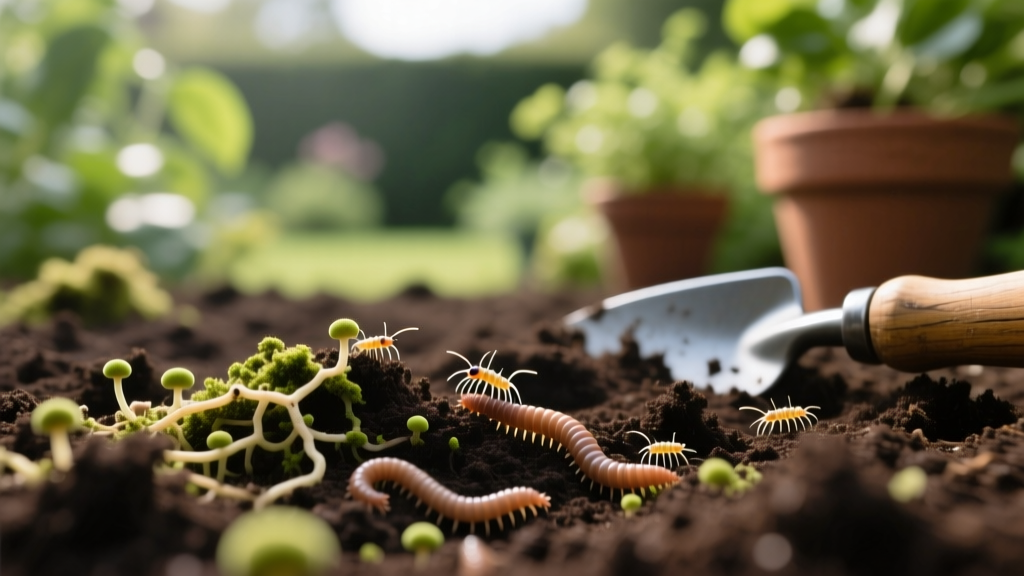
8 Garden Hacks for Soil Microbe Health
Most gardeners accidentally “sanitize” their soil without realizing it—then wonder why plants stall out even with plenty of fertilizer. The surprise: the tiniest workers in your garden (bacteria, fungi, protozoa, nematodes) don’t just live in soil; they make soil function by cycling nutrients, building aggregates, and buffering stress. If you feed plants but starve microbes, you end up paying for inputs that don’t stick around.
Microbes aren’t fragile snowflakes, but they do respond fast to what you do on weekends: how often you disturb soil, whether you keep roots in the ground, and what kind of organic “snacks” you give them. Below are eight practical hacks—shortcuts, really—that stack the deck in favor of a lively soil food web.
Group 1: Stop “Resetting” Your Soil Food Web
1) Keep tillage shallow (or ditch it) and use a “slice-and-cover” bed reset
Hack: If you must disturb soil, cap it at the top 1–2 inches and avoid flipping layers. Deep turning breaks fungal networks and exposes protected organic matter to oxygen, which burns it up faster than you can replace it.
How: After pulling a crop, cut stems at soil level, loosen only the top crust with a rake, then add 1 inch of compost and cover with mulch. In beds with weeds, slide a sharp hoe 1 inch under the surface to sever roots (“slice”), then “cover” with cardboard + mulch.
Real-world example: In a small 4x8 raised bed, switching from spring rototilling to slice-and-cover kept the surface crumbly by midsummer and reduced watering frequency from every 2 days to every 3–4 days because the soil held structure better.
2) Plant “living roots” for at least 10 months a year (even if it’s ugly)
Hack: Microbes run on root exudates—sugars and compounds that leak from living roots—so bare soil is like shutting off the kitchen. Aim for living roots in the ground most of the year; even a low, scruffy cover crop keeps microbial communities active.
How: After summer harvest, sow a quick cover: oats + peas in early fall, or winter rye + crimson clover where winters are mild. A simple ratio for small gardens: 2 parts oats : 1 part peas by volume in a jar, then broadcast and rake in lightly.
Scenario: Got a shoulder season gap between tomatoes and garlic? Sow oats/peas in September, then terminate by cutting at the base 2–3 weeks before garlic planting. You’ll get easy biomass without battling a jungle.
3) Stop leaving soil naked: mulch like you’re trying to hide it
Hack: A 2–3 inch mulch layer stabilizes moisture and temperature, which keeps microbes from yo-yoing between drought and flood cycles. It also feeds fungi and decomposers from the top down—exactly how forest soil builds long-term structure.
How: Use shredded leaves, straw, or arborist wood chips. Keep mulch pulled back 2 inches from seedling stems to avoid rot and slug hotels.
Cost saver: Arborist chips are often free (or $0–$25 per drop) compared to bagged mulch at $4–$6 per bag. One truck drop can cover multiple beds and paths, and the fungal boost is real when chips age on the surface.
Group 2: Feed Microbes Without Creating Pest or Disease Chaos
4) Use “microbe snacks” in tiny doses: oat flour, molasses, or alfalfa meal—pick one
Hack: You don’t need complicated brews to wake up soil biology. A small, consistent carbon snack can bump activity—too much, and you’ll cause stink, fungus gnat explosions, or nitrogen tie-up.
How (choose one): Sprinkle 1–2 tablespoons of oat flour per square yard and water it in. Or mix 1 teaspoon unsulfured molasses per gallon of water and drench the root zone. Or top-dress 1/2 cup alfalfa meal per 10 square feet, then mulch.
Scenario: If your seedlings look pale in a fresh potting mix, don’t dump more fertilizer immediately. Try an oat-flour dusting plus a light fish emulsion at 1 tablespoon per gallon—you’re feeding both the plant and the microbes that mineralize nutrients.
5) Compost smarter: inoculate beds with a thin layer, not a heavy dump
Hack: For microbe health, compost works best as a consistent “microbial inoculant + food” rather than a once-a-year mountain. A thin layer also avoids burying crowns and reduces the chance of nutrient overload.
How: Apply 1/2 inch finished compost in spring and again midseason if beds are intensively planted. If you only compost once, do 1 inch and mulch immediately to prevent drying.
Real-world example: A gardener with heavy clay in Ohio improved crumb structure by topdressing 1/2 inch compost in April and July for two years. The soil went from “brick clods” to breaking apart by hand, and carrots stopped forking as badly.
6) Skip the “sterile potting soil” mindset: add a small fungal boost for perennials and tomatoes
Hack: Many garden soils are bacteria-heavy and fungus-light, especially if they’re frequently disturbed. Adding a modest fungal inoculation helps long-season crops (tomatoes, peppers, berries) tap nutrients and water more efficiently.
How: When transplanting, dust roots lightly with a mycorrhizal inoculant (often $10–$25 for a small jar) or DIY it: add a handful of healthy forest leaf mold to the planting hole (avoid areas treated with herbicides). Water in and keep phosphorus fertilizers modest early on—too much P can reduce mycorrhizal colonization.
Citation: USDA NRCS notes that mycorrhizal fungi help plants access nutrients and water and contribute to soil aggregation (USDA NRCS, 2011).
Group 3: Water and Chemistry Tweaks That Keep Microbes Breathing
7) Water to protect oxygen: use “deep and spaced” timing, not daily sprinkles
Hack: Soil microbes need oxygen, and constant shallow watering can keep the surface swinging between soggy and crusted. The goal is a deep soak that encourages roots to explore, then a pause so pores can re-oxygenate.
How: For established beds, water enough to wet 6–8 inches down, then wait until the top 2 inches are dry before watering again. A cheap check: push a long screwdriver into the soil—if it slides easily to 6 inches, you’re good.
Scenario: If you’re battling fungus gnats in containers, daily sips are the culprit. Switch to bottom-watering or a full drench followed by a dry-down; microbes stabilize and gnats lose their constant moisture layer.
8) Do a pH reality check before you “fix” anything (and use gypsum only when it actually fits)
Hack: Microbes are sensitive to pH, and a lot of nutrient issues are really pH issues in disguise. Guessing with lime, sulfur, or random amendments can push soil biology into a less productive lane for years.
How: Get a basic soil test every 2–3 years (often $15–$30 through a local extension lab). If pH is low, apply lime based on results, not vibes. If you have clay with drainage issues, gypsum is only helpful when there’s a sodium problem; otherwise, focus on organic matter and roots.
Citation: Many university extension soil testing programs emphasize testing first because pH strongly affects nutrient availability and soil biological activity (e.g., University of Minnesota Extension soil testing guidance, 2020).
“Healthy soil is built by keeping the soil covered, minimizing disturbance, and keeping living roots in the ground as much as possible.” — USDA NRCS soil health principles (USDA NRCS, 2011)
Quick Comparison: Which Microbe-Boosting Method Fits Your Garden?
| Method | Best for | Typical cost | Time to see effect | Main risk if overdone |
|---|---|---|---|---|
| 1/2" compost topdress | All beds; steady improvement | $0 (homemade) to $5–$10 per 40 lb bag | 2–6 weeks | Nutrient overload if applied too thick yearly |
| 2–3" leaf/straw mulch | Moisture stability; fungal support | Free leaves to $4–$6/bag straw | Immediate moisture benefit; biology builds over months | Slugs/rodents if piled against stems |
| Mycorrhizal inoculant at transplant | Tomatoes, peppers, perennials | $10–$25 per jar (many plants) | 4–8 weeks | Wasted money if soil already rich in fungi or high P is used |
| Microbe snack (oat flour/molasses) | Kickstarting activity in tired soil | Pennies per application | 3–10 days | Gnats/odor if too wet or too frequent |
Three Mini Case Files (So You Can Copy What Works)
Case 1: The “dead-looking” raised bed that never held water
A 4x12 raised bed filled with sandy mix dried out daily and vegetables stayed small. The fix was not more fertilizer—it was 3 inches of shredded leaves, plus a 1/2 inch compost topdress in spring and midsummer. By July, watering dropped to every 3 days, and the gardener noticed earthworms under the mulch for the first time.
Case 2: Clay soil that stayed sticky and compacted
A front-yard conversion from lawn to veggies had classic clay: slick when wet, concrete when dry. Instead of rototilling every season, the gardener used slice-and-cover, kept roots in place with fall rye, and topdressed compost twice yearly. After two seasons, a shovel test showed more crumb structure and fewer flat, smeared clods—microbes and roots did what metal blades couldn’t.
Case 3: Container tomatoes that always “hit a wall” midseason
Tomatoes in 15-gallon pots looked great until fruit set, then stalled. The gardener switched from daily light watering to a deep drench that fully saturated the pot, then waited for a partial dry-down; they also added a small mycorrhizal dusting at transplant and used oat flour 1 tablespoon monthly. The plants held growth longer and needed fewer rescue feedings.
Extra Microbe-Safe Shortcuts (If You Want to Level Up Without Extra Work)
Use a “chop-and-drop” habit: When you prune basil, beans, or cover crops, leave small chopped pieces on the surface under mulch. This keeps food cycling right where microbes live and saves trips to the compost pile.
Edge your beds to keep mulch where it belongs: A simple 4-inch edge (wood, stone, or a shallow trench) keeps organic matter from washing away in storms, which is basically “microbe budget protection.”
Don’t over-sanitize tools in the soil zone: Clean pruners for disease prevention, yes—but you don’t need to sterilize shovels and rakes like surgical instruments. Most beneficial soil microbes aren’t spread that way; your main job is providing habitat and food.
If you only steal two of these hacks, make them (1) keeping soil covered with mulch and (2) keeping living roots in the ground as long as your season allows. Do those, and the rest—compost, microbe snacks, better watering—works better with less effort and less money. That’s the real cheat code: stop fighting the soil biology and let it do the heavy lifting.
Sources: USDA Natural Resources Conservation Service (NRCS) soil health principles, 2011. University of Minnesota Extension soil testing guidance, 2020.