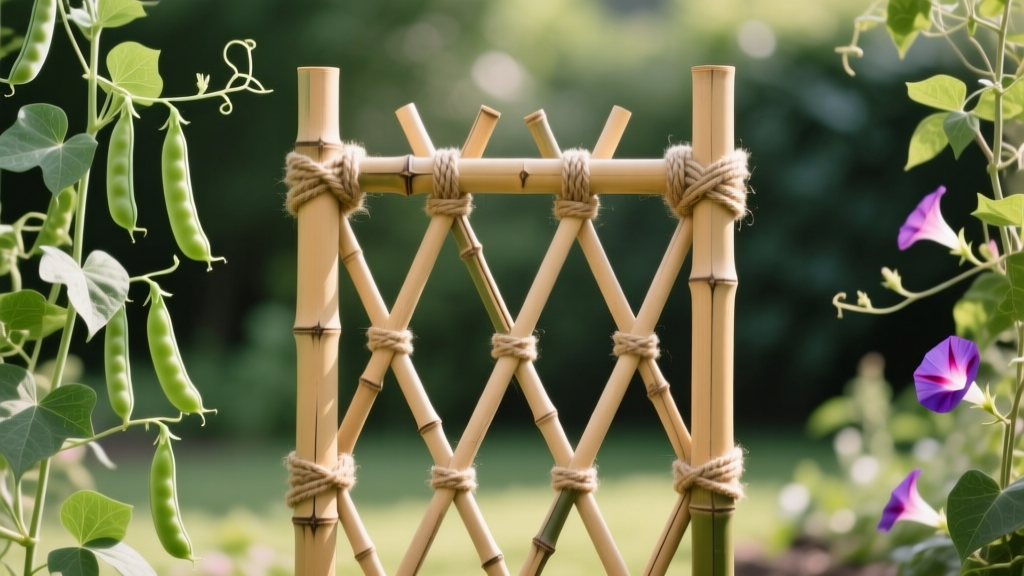
DIY Trellis from Bamboo and Twine
The most common trellis mistake isn’t weak twine or flimsy bamboo—it’s building something beautiful that’s the wrong shape for the plant. Cucumbers will happily climb a vertical net, but tomatoes need frequent tie-ins, and peas want thin rungs they can grab. Get the geometry wrong and you’ll spend the rest of summer “fixing” it with frantic knots and broken canes.
A bamboo-and-twine trellis is one of the fastest, cheapest supports you can build, and it’s surprisingly durable when you use the right lashings and spacing. Below are the shortcuts and little tricks that make it sturdy, easy to maintain, and actually helpful to your plants—not just decorative.
Start with the right bamboo (and don’t skip the boring prep)
Tip: Pick cane thickness based on crop weight, not what’s in the pile
For peas, pole beans, and lightweight flowers, bamboo around 10–15 mm (3/8–5/8 in) diameter is plenty. For cucumbers and heavier loads, step up to 20–30 mm (3/4–1 1/4 in) for the main uprights. If you’re supporting indeterminate tomatoes, use thick uprights plus frequent tie points—tomatoes don’t “cling” like vines; they lean and snap stems if the support flexes.
Example: A 4 ft row of sugar snap peas can thrive on thin bamboo “ladder” rungs, but a 6 ft row of cucumbers loaded with fruit will bow a skinny frame by mid-July unless the uprights are thicker and set deeper.
Tip: Cut above a node and seal the ends for fewer splits
Bamboo loves to split at the ends, especially where you lash it tight. Make your cuts 1–2 inches above a node (the ring) so the end is naturally reinforced. If you have time, dab the cut ends with exterior wood glue or leftover latex paint—cheap sealing that slows cracking and water intrusion.
Tip: Quick-clean and dry before building (yes, it matters)
If your bamboo is fresh or dusty, wipe it down and let it dry in the sun for a day. Twine grips better on a dry surface, and lashings stay tighter. This is also when you spot hairline cracks—better to swap a cane now than after the first windstorm.
Choose a trellis shape that matches what you’re growing
Tip: A-frame beats flat panels in wind and gives you two climbing faces
An A-frame trellis (two panels leaned together) is naturally stable and lets you grow on both sides without shading one row behind the other. Aim for a top ridge height of 5–6 ft for beans and cucumbers; 4 ft is fine for peas. Keep the base about 3 ft wide so it doesn’t tip when vines load up.
Scenario: In a breezy side yard, a flat panel trellis can act like a sail. An A-frame with a 36-inch base and a tight ridge lashing stays put even when your cucumbers turn into a leafy wall.
Tip: Vertical net trellis is fastest for cucumbers, but only if you tension it
If you want speed, build two stout uprights with a top crossbar and create a twine net between them. The trick is tension: add a bottom crossbar or a ground anchor line so the net doesn’t sag as fruit sets. Plan net squares around 6–8 inches—big enough to reach through and harvest, small enough for tendrils to find.
Example: A 6 ft tall by 4 ft wide cucumber net with 7-inch squares lets you pick from either side without wrestling foliage.
Tip: “Tomato weave” works, but only in short runs and with thick stakes
For determinate tomatoes in a row, bamboo stakes with a Florida weave can be quicker than cages. Use stakes at least 1 inch thick, placed every 2 plants (about every 4 ft), and start weaving when plants hit 12–18 inches tall. Don’t wait—early support prevents stem kinks that never truly recover.
Lashings that don’t slip (and don’t turn into a knot nightmare)
Tip: Use a square lashing for 90-degree joints—three wraps, two fraps
For uprights and crossbars, square lashing is your best friend. Wrap around both poles three times, then “frap” (wrap between poles) twice to cinch it tight, then finish with a clove hitch. This lashing tightens under load instead of loosening, which is why it’s used in classic bamboo scaffolding.
Real-world note: If your crossbar wiggles after you tie it, it will wobble worse once vines tug on it. Re-tie now—future-you will thank you in August.
Tip: Pre-stretch natural twine to avoid midseason sag
Jute and sisal relax after the first few wet/dry cycles. Pull a 6–8 ft length hard between your hands before you lash—just 5 seconds per piece reduces later slack. If you’re in a rainy climate, consider switching to braided polyester mason line for the net portion; keep natural twine for temporary ties.
Tip: Add a half-hitch “lock stitch” every 12 inches on netting
When you make a twine net, don’t rely on tension alone. Every 12 inches, add a quick half-hitch around the crossing twine so squares don’t slide out of shape. This keeps your 6–8 inch grid consistent and prevents the entire net from drifting into a big diamond pattern.
Anchoring: the part that decides if your trellis survives a storm
Tip: Sink uprights 12–18 inches, and pack the hole like you mean it
For most garden soils, 12 inches deep is the minimum for a 5–6 ft trellis; 18 inches is better for windy sites or sandy beds. Don’t just backfill—tamp the soil every few inches with a stick or the end of your shovel handle. Loose backfill is why “the trellis looked fine” until the first thunderstorm.
Scenario: In a raised bed with fluffy soil, your uprights can wobble even at 12 inches. In that case, drive the bamboo through the bed soil and into native ground below, or lash the frame to two rebar pins hammered 16–24 inches into the ground.
Tip: Cheap diagonal braces beat thicker bamboo
If your trellis rack (leans sideways), add diagonal bracing before upgrading materials. A single 3/4-inch bamboo brace lashed diagonally across a panel can stiffen it dramatically for pennies. Think triangles: they’re the secret to “lightweight but strong.”
Tip: Use guy lines when fruit load gets heavy
When cucumbers, melons, or heavily fruited beans start pulling, add two guy lines from the top corners down to ground stakes. A $2 pack of landscape staples or two 10-inch stakes can prevent a $20 pile of snapped bamboo. Tighten the guy lines until the frame feels “dead” when you shake it—no bounce.
Twine choices, with real cost and durability tradeoffs
| Material | Best for | Typical lifespan outdoors | Slip resistance | Approx. cost |
|---|---|---|---|---|
| Jute twine | Light lashings, seasonal netting | 1 season | Good (grippy) | $5–$8 per 200 ft |
| Sisal twine | Heavier lashings, thicker knots | 1–2 seasons | Good | $8–$12 per 200 ft |
| Cotton clothesline | Soft plant ties, not structural | <1 season (rots) | Medium | $6–$10 per 100 ft |
| Polyester mason line | Net trellises, guy lines | 2–5 seasons | Low (needs locking knots) | $5–$10 per 250 ft |
Tip: Mix twines—structure with tough line, plant contact with soft ties
Here’s the hack: build the trellis and net with mason line (long life), then tie plants with jute (easy to cut, gentle). You’ll spend maybe $10 total for line and twine, but you won’t rebuild the entire net every year. Keep a small scissors or snips in the garden so you can remove jute ties cleanly at season’s end.
Plant training tricks that make the trellis actually work
Tip: Train vines early—first 10 days after they start reaching is the sweet spot
Vines are most cooperative when their tendrils first start searching. Check every 2–3 days for the first couple of weeks and redirect stems onto the trellis—after that, they’ll largely handle themselves. If you wait until a cucumber vine is 3 ft long and flopping, you’ll crack stems trying to “fix” it.
Tip: Use a figure-8 tie for tomatoes and heavy stems
For tomatoes, tie with a figure-8: one loop around the stem, cross, one loop around the twine or bamboo. The cross creates a buffer so the stem doesn’t rub and scar. Re-tie every 7–10 days during peak growth (tomatoes can stretch fast in warm weather).
Tip: Prune strategically to reduce sail effect and disease pressure
A trellis works best when air can move through it. Removing the lowest 6–12 inches of tomato leaves (once the plant is established) reduces soil splash and can lower disease spread—especially in rainy periods. University extension guidance commonly emphasizes staking/trellising and pruning to improve air circulation and reduce foliar disease risk (e.g., Cornell Cooperative Extension, 2019).
“Staking and trellising improve air movement and help foliage dry faster, which can reduce the spread of many leaf diseases.”
— Cornell Cooperative Extension (2019)
Three build recipes (pick one and be done)
Tip: The 15-minute pea ladder (perfect for small beds)
Use two 4 ft bamboo uprights and 4–5 thin rungs spaced 8–10 inches apart. Lash rungs with simple clove hitches, then add a few vertical strings if your pea variety needs more grip. This costs roughly $3–$6 in materials if you already have bamboo, and it stores flat in a shed.
Case example: In a 2 ft x 4 ft raised bed, a ladder trellis on the north side lets peas climb without shading lettuce planted in front.
Tip: The sturdy A-frame for cucumbers (handles real weight)
Build two 6 ft panels: each panel gets two 1-inch uprights and two crossbars (top and mid). Lash panels together at the top ridge, then run a twine net on each side with 7-inch squares. Plan on sinking the bottom ends 12–18 inches or pinning them with rebar for stability.
Case example: A gardener growing 6 cucumber plants (3 per side) can harvest more clean fruit with fewer slug bites when vines climb up and fruit hangs, rather than resting on soil.
Tip: The patio “fan trellis” for beans in containers
In a 15–20 gallon pot, push 5–7 bamboo canes around the rim and tie them together at the top like a teepee, but then spread them slightly like a fan against a wall or railing. Run twine diagonals between canes to give extra grab points. This keeps the footprint small and stops the whole thing from toppling when the pot dries out and gets lighter.
Scenario: On a balcony with afternoon wind tunnels, a tight teepee can sway; a fan trellis lashed to a railing stays steady and keeps beans from whipping around.
Money-saving and scavenger upgrades (without making it ugly)
Tip: Reinforce high-stress joints with scrap bicycle inner tube
Before you lash, wrap a 1-inch wide strip of inner tube around the bamboo where the joint will sit. It increases friction, protects the bamboo surface, and reduces lashing slip—especially with slick mason line. One old tube can reinforce 20+ joints for basically free.
Tip: Use rebar “sleeves” to make bamboo removable and reusable
Hammer two 12-inch pieces of 3/8-inch rebar into the ground as sockets, then slide hollow bamboo over them. Your bamboo doesn’t rot at the soil line as fast, and you can lift the trellis out at season’s end. If your bamboo is narrow, use a short section of PVC as an adapter sleeve.
Tip: Swap twine netting for livestock panel scraps when you need brute strength
If you can scavenge a 4 ft x 4 ft piece of cattle panel or welded wire, lash it to a bamboo frame instead of weaving twine. It’s not as pretty, but it’s nearly indestructible for squash vines or heavy gourds. Bamboo becomes the lightweight frame; the wire does the heavy lifting.
Timing, maintenance, and getting more than one season out of it
Tip: Build trellises 1–2 weeks before planting (your back will notice)
Installing supports after seedlings are in the ground is how roots get stepped on and stems get snapped. Build and set your trellis 7–14 days early so you can tamp uprights properly and adjust tension without dodging plants. If a cold snap delays planting, the trellis just waits—no harm done.
Tip: Midseason retightening takes 5 minutes and prevents 5 hours of repairs
After the first big rain or heatwave, check lashings for slack. Tighten any joint you can twist by hand, and add one extra frap wrap if needed. Do this once around early summer (around week 3–4 of vigorous growth) and you’ll avoid the classic late-July sag.
Tip: End-of-season cleanup: cut twine, don’t untie it
Untying sun-baked knots is a great way to waste an afternoon. Snip lashings, coil usable line, and compost natural twine if it’s not full of disease residue. Store bamboo off the ground and out of direct rain—lean it under an eave or in a shed to reduce splitting and mildew.
A few science-backed reasons trellising pays off
Tip: Vertical growth improves airflow—often meaning fewer foliar disease issues
Plants trained upward dry faster after dew and rain, which can reduce disease pressure. Extension recommendations frequently point out that staking/trellising and spacing improve airflow and reduce the duration of leaf wetness, a key factor in many common garden diseases (University of Minnesota Extension, 2020). You’ll still get disease sometimes—but trellising is one of the few “setup choices” that stacks the odds in your favor.
Tip: Clean harvest is real—especially for cucumbers and beans
Fruit held off the soil is less likely to get slug damage and rot spots, and it’s easier to spot at picking time. That usually translates to harvesting more often, which keeps plants producing. If you’ve ever found a hidden zucchini the size of a baseball bat, you already know visibility is half the battle.
Citations: Cornell Cooperative Extension (2019); University of Minnesota Extension (2020).
Troubleshooting the problems that pop up in real gardens
Tip: If the trellis leans, fix the base—not the top
Leaning usually means one upright is creeping out of the soil. Push it back, then tamp soil hard and add a ground stake or guy line at the base to stop repeat movement. Adding more twine up top won’t fix a loose footing.
Tip: If twine keeps slipping, change the knot or add friction—not more wraps
Slippery line (especially polyester) needs locking knots like a constrictor knot or a finishing half-hitch. If you don’t want fancy knots, use the inner-tube friction wrap trick under the lashing. More wraps without a lock just creates a bigger mess that still slides.
Tip: If bamboo splits at a lashing point, splint it instead of replacing the whole pole
Lay a thin bamboo strip or wooden paint stirrer along the split and lash over it like a bandage. This spreads pressure and usually gets you through the season. Save full replacements for off-season rebuilding when you’re not racing the vines.
A bamboo-and-twine trellis doesn’t have to be precious to be effective. Build it like it’s going to get yanked, rained on, and buried in leaves—because it will. When the lashings are tight, the base is anchored 12–18 inches, and the shape matches the crop, you’ll spend your summer harvesting instead of propping things up with random sticks at dusk.