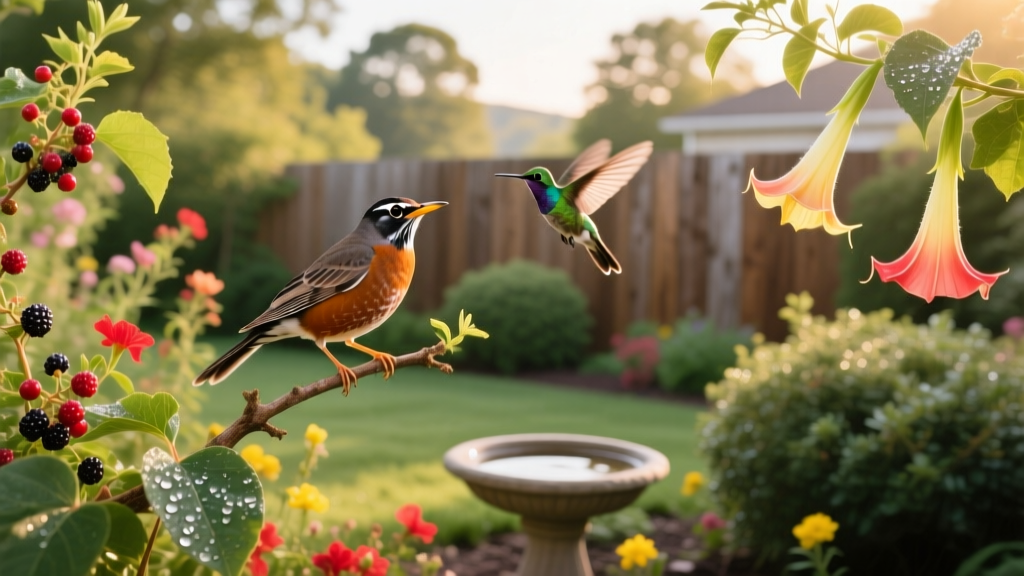
Bird-Friendly Garden Guide: Create a Wildlife Habitat in Your Backyard
Why Your Garden Matters for Birds
North America has lost 3 billion birds since 1970 — nearly 30% of the total population. Habitat loss is the primary cause. Every bird-friendly garden, no matter how small, becomes a critical stopover point for migrating birds and a year-round refuge for residents. A well-designed backyard habitat can attract 20-40 bird species and may qualify for National Wildlife Federation certification.
The Four Elements of Wildlife Habitat
The National Wildlife Federation requires four elements for garden certification: food, water, cover, and places to raise young. Here's how to provide each.
Food: Layered Planting for Every Diet
Different birds eat different things. A layered garden with canopy trees, understory shrubs, and ground-level plantings feeds the most species.
Canopy Trees (Seeds, Nuts, Insects)
- Oak trees — Support 500+ caterpillar species, feeding warblers, vireos, and tanagers
- Black Cherry — Fruits feed 40+ bird species including robins, cardinals, and cedar waxwings
- Serviceberry — June berries attract orioles, tanagers, and grosbeaks
- American Beech — Nuts feed woodpeckers, jays, and titmice all winter
Understory Shrubs (Berries, Nesting Sites)
- Winterberry Holly — Red berries persist through winter, feeding robins and mockingbirds when other food is scarce
- Viburnum — Spring flowers feed pollinators, fall berries feed migrating birds
- Elderberry — June flowers and August berries feed 40+ species. Fast-growing and adaptable.
- Dogwood — High-fat berries are critical for fall migration fuel
Ground Layer (Seeds, Insects)
- Native sunflowers — Seeds feed goldfinches, chickadees, and sparrows
- Coneflowers — Seeds attract goldfinches in fall and winter
- Native grasses — Seeds and overwintering insects feed ground-foraging birds
Water: The #1 Bird Attractor
Water attracts more birds than food, especially during migration. Even species that never visit feeders will come to a birdbath.
- Birdbath: Shallow (2 inches max), rough-textured bottom for grip. Place near cover but not so close that cats can ambush.
- Moving water: A dripper, fountain, or mister attracts birds from far away — they hear the sound.
- Winter water: A heated birdbath or de-icer is the single most effective winter bird attractor. In freezing weather, liquid water is rarer than food.
Cover: Protection from Predators and Weather
- Evergreen trees and shrubs: Provide year-round shelter from hawks, owls, and harsh weather
- Dense shrubs: Give small birds quick escape routes. Plant in clusters 3-5 feet apart.
- Brush piles: Stack fallen branches loosely — provides critical cover for ground-dwelling birds like sparrows and towhees
- Roost boxes: Specialized boxes that let multiple small birds huddle for warmth on cold nights
Places to Raise Young
- Nest boxes: Species-specific sizes — chickadees need 1.125" holes, bluebirds 1.5", wood ducks 4"x3" oval. Clean boxes annually.
- Snags (dead trees): If safe to leave standing, dead trees are the #1 nesting site for woodpeckers, nuthatches, and owls. Even a 10-foot stub helps.
- Mud puddle: Swallows and phoebes need mud for nest building. Create a small muddy area near water.
- Nesting materials: Leave pet fur (untreated with flea chemicals), yarn scraps, and dried grass in a suet cage for birds to collect.
Seasonal Bird Garden Calendar
| Season | Action | Birds Attracted |
|---|---|---|
| Spring | Clean nest boxes, fill feeders, plant early bloomers | Returning migrants, nesting residents |
| Summer | Provide water, let some flowers go to seed | Families with fledglings, summer residents |
| Fall | Leave berries and seed heads, don't deadhead everything | Migrating flocks, fat-building residents |
| Winter | Heated water, suet, leave brush piles | Overwintering species, irruptive visitors |
What to Avoid
- Pesticides — Kill the insects that 96% of backyard birds feed to their young
- Cats outdoors — Kill 2.4 billion birds per year in the US alone
- Non-native invasive plants — Support almost no native insects, starving bird chicks
- Window collisions — Apply UV-reflective decals or hang strings 4 inches apart on large windows