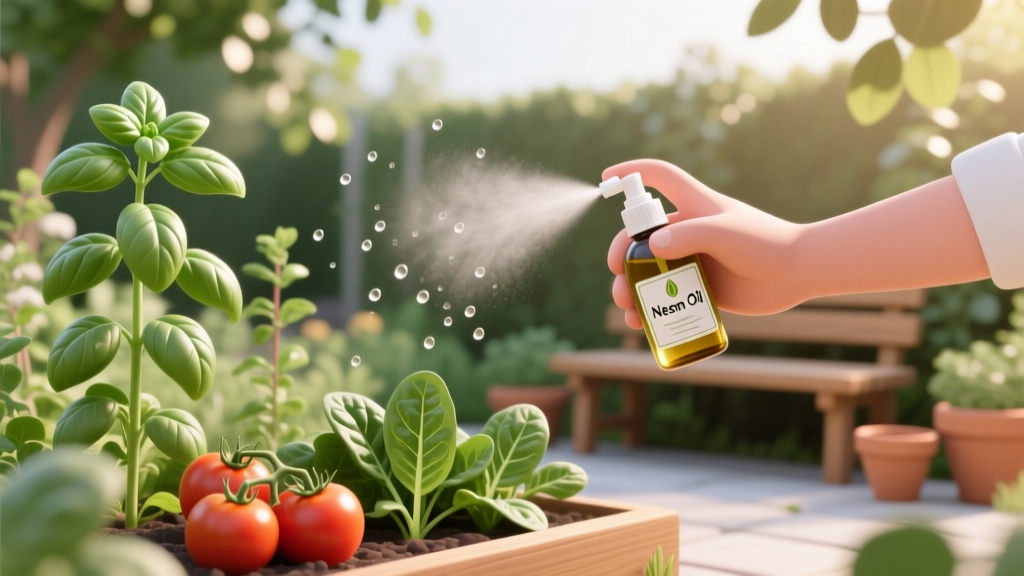
Neem Oil Application Schedule for Healthy Plants
Most neem oil “fails” because gardeners spray it like a one-and-done miracle—and then wonder why aphids are back three days later. Neem isn’t a knockdown pesticide; it’s a repeat-player. It works best when you treat it like a calendar item (with the right dilution, coverage, and timing) instead of a panic button.
Neem oil’s active compounds (especially azadirachtin in some products) disrupt feeding and growth in many pests, and it can help with certain fungal issues when used correctly. But it breaks down in sunlight and washes off in rain, so your schedule matters as much as your spray bottle.
First, get the “which neem” question out of the way
Tip: Match your schedule to the product on your label (clarified hydrophobic extract vs. azadirachtin-based)
Not all neem products behave the same. Many “neem oil” garden sprays are clarified hydrophobic extract of neem oil (often 70% neem oil) and act mainly as an insecticidal oil—good contact coverage is everything. Products that list azadirachtin (often sold as neem extracts) lean more on growth regulation and can have different intervals; always follow the label because it’s the legal schedule.
Example: If your bottle says “apply every 7 days” for aphids, don’t stretch it to every two weeks just because bugs look gone—eggs and hidden nymphs will reappear.
Tip: Use this baseline mixing ratio (and don’t “eyeball” it)
A common home-garden dilution for many neem oil concentrates is 1–2 tablespoons per gallon of water (that’s 15–30 mL per 3.8 L), plus a spreader. For small batches, that’s roughly 1–2 teaspoons per quart. Mix only what you’ll use that day; neem emulsions break and lose effectiveness when they sit.
Example: For a 1-quart hand sprayer, use 1.5 teaspoons neem oil plus a few drops of mild liquid soap (see the DIY spreader tip below), shake hard, then spray immediately.
Tip: Add a spreader on purpose (DIY-friendly)
Neem oil and water separate fast. A spreader-sticker helps droplets cling to leaf surfaces (especially waxy leaves like citrus). DIY option: add 1/4 teaspoon of a gentle liquid soap per quart, or 1 teaspoon per gallon, then shake before and during spraying.
Money note: A commercial non-ionic surfactant can cost $10–$20 for an 8–16 oz bottle, but a tiny amount of mild soap often works fine for backyard use—just avoid heavy degreasers or antibacterial soaps.
The core schedule: preventive vs. active outbreak
Tip: Use a “7–10 day” preventive rhythm during pest season
If you’re trying to keep common pests from getting established (aphids, whiteflies, spider mites), a preventive schedule of every 7–10 days during active growth is more reliable than random spraying. Neem residues break down; reapplying keeps a consistent layer on new growth where pests prefer to feed.
Example: On patio tomatoes, start preventive sprays when nighttime temps stay above 55°F and you see lush new growth—then repeat weekly until flowering is heavy (then switch to targeted-only spraying on problem leaves).
Tip: During an outbreak, tighten the interval to every 4–5 days (short-term)
When pests are already visible, treat neem like a short sprint: spray thoroughly, then repeat in 4–5 days, and again in another 4–5 days. That cadence helps catch newly hatched insects before they reproduce. After two to three rounds, drop back to a 7–10 day schedule if needed.
Example: For a spider mite flare-up on beans, three sprays over about 10 days often outperforms a single heavy spray.
Tip: Time it like a pro: dusk or early morning, not midday
Neem oil can cause leaf burn when applied in hot sun, and it degrades faster under intense UV. Spray at dusk or early morning when temperatures are under about 85°F and the plant isn’t water-stressed.
Example: If tomorrow hits 92°F, spray tonight after the sun is off the leaves, not “sometime tomorrow.”
Tip: Reapply after rain or overhead watering—don’t wait for the next scheduled day
A solid rain can strip oils off foliage. If you get more than about 1/2 inch of rain within 24 hours of spraying (or you overhead-water heavily), consider reapplying once leaves dry. This is one of the biggest reasons schedules fail in spring.
Example: You sprayed cucumbers on Sunday; a storm drops 0.8 inches Monday night—redo the spray Tuesday morning after leaves dry.
Coverage tricks that make neem actually work
Tip: Spray the undersides first (that’s where the pests are)
Aphids, whiteflies, and mites love leaf undersides. Start your spray pattern from below so you don’t just “mist the tops” and call it done. Good coverage means leaves look evenly wet—not dripping.
Example: On kale, angle the nozzle upward and work row-by-row; you’ll often see whiteflies lift off as you hit the underside.
Tip: Use a measured spray volume so you don’t under-apply
It’s easy to think you “sprayed everything” when you only used half a quart on a big plant. As a rough planning number, a mature indeterminate tomato in a pot may take 1–2 quarts to coat thoroughly (tops and undersides). Track how much you used once, then you’ll know how many gallons to mix next time.
Example: If your 5-gallon bucket garden takes 1 gallon to treat fully, mixing only a quart guarantees missed coverage.
Tip: Don’t spray stressed plants—water first, spray later
Neem oil on drought-stressed plants raises the risk of phytotoxicity (leaf spotting or burn). If the plant is wilting at 3 p.m., water at the soil line, wait until it perks back up (often by evening or next morning), then spray during cool hours.
Example: A rosemary that’s dry and heat-stressed is far more likely to spot after oil sprays than a well-watered one.
Crop-specific schedules (these save the most time)
Tip: Tomatoes & peppers—go weekly early, then spot-treat once flowering is heavy
Early season: spray every 7 days until plants are established and you’ve inspected for aphids/whiteflies. Once flowering and beneficial insects are active, switch to spot-treating problem clusters (especially new growth tips) to reduce non-target contact. Always avoid spraying open blossoms when possible.
Case example: A container tomato with recurring aphids: two rounds at 5-day intervals, then weekly for a month kept new growth clean without bathing the entire plant every time.
Tip: Cucurbits (cucumbers, squash)—start before you see powdery mildew pressure
If powdery mildew shows up every year, don’t wait until leaves look white. Begin preventive sprays around 3–4 weeks after planting (or when vines start running), then continue every 7 days during humid stretches. Neem is not a cure-all for mildew, but early, consistent coverage can help slow spread.
Source note: University extension resources commonly recommend early intervention and repeated applications for disease management rather than waiting for heavy infection (see Penn State Extension, 2020, on integrated disease management timing).
Tip: Houseplants—use a 14-day maintenance rhythm, but isolate first
Indoors, pests cycle fast and spread faster. For active infestations, treat every 5–7 days for 3 rounds, and keep the plant isolated for at least 14 days. For maintenance once clean, spray lightly every 14 days or wipe leaves with a neem solution.
Case example: A pothos with spider mites: three treatments over 14 days plus a shower rinse between sprays beat mites more reliably than weekly spraying alone.
A simple comparison table: schedule choices that actually fit real life
| Approach | Best for | Typical interval | Pros | Watch-outs |
|---|---|---|---|---|
| Preventive full-plant spray | Season-long pressure (aphids/whiteflies) on veggies | Every 7–10 days | Stops problems before they explode | More spray time; avoid blossoms/beneficials |
| Outbreak sprint (short-term) | Visible pests right now | Every 4–5 days for 2–3 rounds | Targets life cycle; faster turnaround | Higher risk of leaf stress if weather is hot |
| Spot treatment only | Local hotspots on otherwise healthy plants | Every 5–7 days on affected areas | Saves time, reduces non-target exposure | Requires good scouting; easy to miss undersides |
| Mechanical + neem combo | Heavy pests (mites/aphids) on tender plants | Rinse 2–3x/week; neem weekly | Reduces pest load before spraying | Overhead rinsing can boost fungal issues outdoors |
Three real-world schedules you can copy/paste
Scenario 1: Aphids on roses in late spring
Schedule: Day 1 spray at dusk (undersides + new tips), Day 5 repeat, Day 10 repeat, then weekly until the flush hardens off. Pinch or hose off heavily infested tips before your first spray to reduce the bug mass you’re trying to control.
Hack: Put a repeating reminder on your phone for every 5 days for two weeks; most aphid failures are simply missed follow-ups.
Scenario 2: Whiteflies on patio tomatoes and peppers
Schedule: Start with yellow sticky cards to monitor, then neem every 5 days for 3 rounds. After that, switch to every 7–10 days only if you still see adults when you shake the plant.
Money-saver: A pack of sticky cards costs about $8–$12 and can prevent you from spraying “just in case” when the population is actually low.
Scenario 3: Spider mites on indoor herbs (basil, mint) under lights
Schedule: Rinse leaves in the sink every 3 days (especially undersides), and apply neem every 6–7 days for three treatments. Increase humidity modestly (even moving from 30% to 45%) to slow mite reproduction, but don’t keep leaves wet overnight.
Example: For basil, many growers prefer a rinse + neem combo because mites tuck into leaf folds where sprays miss unless coverage is excellent.
Plant safety and “don’t wreck your good intentions” rules
Tip: Do a 24-hour patch test on sensitive plants
Some plants are oil-sensitive (certain succulents, ferns, delicate new growth). Spray a small section, wait 24 hours, and check for spotting or burn before treating the whole plant. This one step prevents most heartbreak.
Example: If a new hibiscus flush is tender, patch-test an older leaf first; new growth is more likely to show damage.
Tip: Avoid spraying during peak pollinator activity and skip open blooms
Even “natural” products can affect non-target insects if sprayed directly. Apply at dusk when bees are less active, and aim for leaves, stems, and pest zones—not flowers. This is especially important on cucurbits and herbs that flower heavily.
Source note: Extension guidance routinely emphasizes timing sprays to minimize pollinator contact and following label directions (e.g., UC IPM, 2018, integrated pest management principles for reducing non-target impacts).
Tip: Don’t mix neem with sulfur or spray near sulfur applications
Combining oils with sulfur products can increase phytotoxicity. Keep a buffer of at least 14 days between sulfur sprays/dusts and neem oil applications unless the product label explicitly says otherwise.
Example: If you used sulfur for mites on grapes last weekend, hold off on neem until two weekends have passed.
“The effectiveness of oils depends on thorough coverage and proper timing; they work best when applied early and repeated as needed.” — Integrated pest management guidance summarized from university extension recommendations (e.g., UC IPM, 2018)
Shortcuts that save time (and usually improve results)
Tip: Set two reminders: “Spray” and “Scout”
Neem works when you catch problems early. Put a 2-minute scouting reminder on your calendar for mid-week (check undersides, new growth tips, and leaf axils), and a spray reminder for dusk on the weekend. Scouting prevents you from spraying plants that don’t need it.
Example: A Wednesday scout might reveal only one pepper plant has aphids—so you spot-treat one plant instead of mixing a whole gallon.
Tip: Pre-mix the “dry run” kit so you don’t skip sessions
Most people skip neem applications because it feels like a chore. Keep a small tote with a dedicated 1-quart sprayer, measuring spoon, mild soap, and a rag. When everything’s together, you can mix and spray in under 8 minutes.
Cost note: A decent 1-quart sprayer is often $8–$15, and it pays for itself by reducing wasted concentrate from sloppy “big batch” mixing.
Tip: Combine mechanical removal with neem for faster wins
If leaves are heavily infested, neem alone may feel slow. First, knock pests down: hose off aphids, prune the worst leaves, or wipe houseplant leaves with a damp cloth—then apply neem on the remaining foliage. This cuts the population immediately and lets neem handle the stragglers and new hatchlings.
Example: On cabbage with aphid clusters, removing 3–5 worst leaves can reduce the infestation more than doubling spray strength (which you shouldn’t do).
DIY alternatives and rotations (when neem isn’t the best tool)
Tip: Use insecticidal soap for quick soft-bodied pest control, then neem on the follow-up schedule
Insecticidal soap can work faster on contact for aphids and whiteflies, especially if you’re dealing with a heavy outbreak. Use soap first, then switch to neem 5–7 days later to keep pressure on survivors and new hatchlings. This rotation can reduce how often you need neem.
Example: On a heavily infested pepper, one soap spray plus two neem follow-ups (Day 1 soap, Day 6 neem, Day 12 neem) often beats three neem sprays alone.
Tip: Try horticultural oil when you need simpler “oil-only” performance
Sometimes you don’t need neem specifically—just an oil that smothers pests and has predictable performance. Horticultural oils can be cost-competitive and are widely supported by extension recommendations for mites and scale crawlers when used with excellent coverage and correct timing.
Money comparison: Neem concentrate might run $12–$25 per 16 oz depending on brand, while horticultural oil concentrates are often in the same range but can be easier to emulsify and more consistent.
Tip: Skip DIY “neem leaf tea” if you need reliable results
Neem leaf teas vary wildly in strength and don’t deliver the same oil-based coverage. If you’re trying to control an active infestation, stick with labeled products where you can measure mL per gallon and repeat on schedule.
Example: If your goal is to reduce whiteflies before they transmit plant viruses, unpredictability is not your friend—use a product with clear directions.
Common schedule-killers (and quick fixes)
Tip: If you “never see pests,” you might still be missing the best spray window
By the time pests are obvious from a standing distance, populations are already established. Make it a habit to flip 10 leaves per plant once a week—especially new growth. You’ll catch early colonies and can spot-treat instead of full-plant spraying.
Example: On citrus, the first hint might be tiny clusters on tender flush—spot-treating early saves you from spraying the whole tree later.
Tip: If neem keeps “not working,” check water quality and mixing order
Hard water can reduce spray performance and cause separation. Use lukewarm water, add soap first, then neem, then the rest of the water—shake vigorously. If your sprayer sits for more than 10 minutes, shake again before continuing.
Example: If you see oil slicks floating at the top of the tank, you’re applying inconsistent doses—some leaves get almost none, others get too much.
Neem oil is at its best when you treat it like brushing your teeth: small, consistent actions beat heroic, occasional efforts. Pick the schedule that matches your situation (preventive, outbreak sprint, or spot treatment), apply in cool hours, and keep the intervals tight enough to interrupt pest life cycles. Once you’ve done two or three successful runs, you’ll start to recognize the early warning signs—and you’ll spray less, not more.
Sources: UC Statewide Integrated Pest Management Program (UC IPM), guidance on oils and integrated pest management timing and non-target precautions (2018). Penn State Extension, integrated approaches emphasizing early and repeated interventions for plant disease and pest management (2020). Always follow your specific product label directions, which may differ by crop and pest.