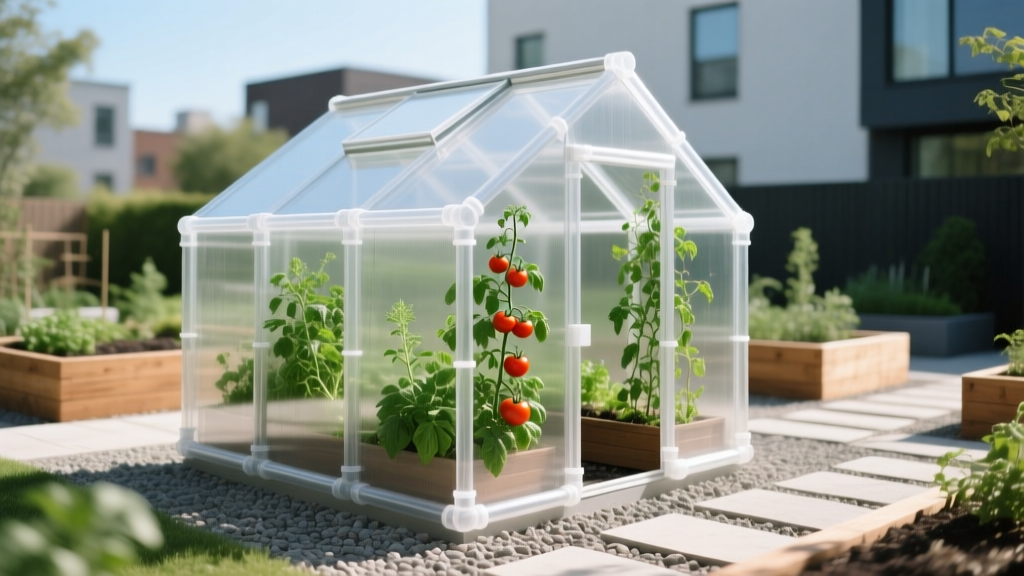
Building a Greenhouse from PVC and Plastic
The most common PVC greenhouse failure isn’t snow load or wind—it's the plastic tearing itself to shreds on a sunny, breezy day because it was stretched drum-tight over sharp PVC edges. That “nice and tight” look turns into a season-long rip line, and the fix costs more than doing it right the first time. The good news: a PVC-and-plastic greenhouse can be tough, warm, and surprisingly long-lived if you build it like a hoop house, not like a tent.
Below are the insider moves that keep frames straight, plastic intact, and temperatures stable—without spending “real greenhouse” money.
Start With a Frame That Won’t Rack, Twist, or Walk Away
Tip: Size it around standard plastic widths (or you’ll pay twice)
Most greenhouse film comes in common widths like 12', 20', and 24'. If your hoop width doesn’t match, you’ll waste plastic or end up with awkward seams that leak heat. For a simple backyard build, a 10' wide frame covered with 12' film gives you enough slack to secure edges properly without overstretching.
Example: A 10' x 12' greenhouse (120 sq ft) covered with 12' x 20' film lets you bury or fasten 12–18 inches along both sides without fighting for coverage.
Tip: Use the “ground-post + slip-over hoop” trick (it’s the difference between flimsy and sturdy)
Don’t anchor hoops directly in soil with PVC; it flexes and creeps. Instead, drive ground posts (rebar or metal EMT) and slip the PVC over them. A common, proven setup is 24" lengths of 1/2" rebar driven 12–18" into the soil, leaving 6–12" above ground to grab the hoop ends.
Example: On windy sites, gardeners often step up to 30" rebar, driven 18–20" deep, which noticeably cuts side-to-side wobble.
Tip: Pick pipe size by your weather, not your budget
Yes, 1/2" PVC is cheap, and yes, it gets floppy when the plastic starts pulling in gusts. For most backyard hoop houses under 12' wide, 3/4" Schedule 40 PVC is the sweet spot. If you get snow loads or heavy wind, consider 1" PVC for hoops and keep 3/4" for purlins to control cost.
Cost reality: In many areas, 10' sticks of 3/4" Sch 40 PVC run roughly $6–$12 each, while 1" can be $10–$18—still far cheaper than metal kits if you shop sales.
Tip: Add a ridge purlin and two side purlins (this stops the “jelly frame” problem)
One ridge purlin helps, but three lines (ridge + both shoulders) make the whole structure act like a single unit. Attach purlins with UV-rated zip ties or perforated metal strap; aim for hoops spaced every 3' to 4'. If you can push the sidewall with one hand and see the whole frame sway, you need more bracing.
Example: A 12' long house with hoops every 4' needs 4 hoops (including ends). Switching to 3' spacing bumps it to 5 hoops—often worth it in wind.
Tip: Triangulate the end walls (PVC hates rectangles)
A rectangle wants to rack into a parallelogram. Add diagonal braces in the end walls or build end frames from wood (2x3 or 2x4) and bolt them to the PVC hoops. This is also where you’ll mount a door and vents without fighting flex.
Case example: A gardener on the Colorado Front Range swapped only the end walls to wood framing after losing two plastic covers to wind-driven flapping; the third cover lasted multiple seasons because the ends stopped twisting.
Plastic Covering Tricks That Prevent Tears and Heat Loss
Tip: Use greenhouse film, not painter’s plastic (it’s not the same material)
Clear construction poly from the hardware store is tempting, but it degrades fast under UV and often turns brittle in one season. Greenhouse film is UV-stabilized and designed for tension and weather. Many growers use 6 mil greenhouse-grade polyethylene; it’s a reliable balance of strength and light transmission.
Reference: University of Massachusetts Extension notes greenhouse-grade polyethylene films are UV-stabilized and typically rated for multi-year use (UMass Extension, 2020).
Tip: Warm the plastic before stretching it (seriously)
Cold plastic fights you, wrinkles stay forever, and tension points form at clamps. Plan your install for a calm day above 60°F, ideally late morning so the plastic is warm and slightly stretchy. If you must install at 45–55°F, leave a little slack; it tightens as it warms and can tear if you pull it too hard.
Example: One builder who installed at 50°F had a perfect “tight” cover by noon—then a 70°F afternoon expanded it enough to rip at a corner clamp.
Tip: Don’t clamp directly to PVC—add a soft buffer layer
PVC edges can act like a knife when plastic flaps. Wrap the contact points with old bicycle inner tube, foam pipe insulation, or even strips of weed barrier fabric before the plastic goes on. This one hack can add a full season (or more) to your cover in windy spots.
DIY alternative: Split a pool noodle lengthwise and snap it over the hoop where the plastic touches, then tape it in place with UV-rated tape.
Tip: Fasten plastic with wiggle wire channel for the cleanest, most reusable hold
If you want a pro-style hold without stapling, use aluminum or galvanized wiggle wire channel. It grips plastic evenly, reduces tear points, and makes seasonal re-covering easier. It costs more up front, but you’ll thank yourself the first time you need to tighten or replace plastic quickly.
Cost comparison: Wiggle wire channel can run about $1.50–$3.50 per linear foot, while lath + screws might be under $0.50 per foot using scrap wood—cheaper, but less adjustable.
Tip: If you’re using lath strips, pre-drill and use fender washers
Wood lath (or ripped strips of 1x lumber) is a classic budget method. Pre-drill to prevent splitting, and use screws with 1" fender washers to spread pressure so the plastic doesn’t “buttonhole” around fasteners. Space screws every 8–12 inches for a tight, even grip.
Example: On a 12' long greenhouse, each side run might need ~15–18 screws if you space them at 10"—it sounds like a lot, but it’s far cheaper than replacing torn plastic.
Tip: Build in a “sacrificial flap zone” at the base
The bottom 6–12 inches of plastic takes the worst abuse from wind, mowers, and feet. Plan for it by leaving extra plastic and clamping over a buffer strip (old hose slit lengthwise works) so if the base gets ragged, it’s not creeping upward into the main cover.
Case example: A community garden hoop house in a high-traffic area stopped bottom-edge tears by adding a 10" tall wooden kick board inside the plastic line.
Ventilation and Temperature Control (Where PVC Greenhouses Usually Go Sideways)
Tip: Add vents first—before you ever think about adding more heat
Small plastic greenhouses overheat fast. It’s common to hit 95–110°F inside on a sunny 60°F day if there’s no ventilation. Even cold-hardy greens bolt when heat spikes, so plan at least one high vent (or door vent) plus a low intake.
Reference: Kansas State University Research and Extension highlights that ventilation is essential to prevent excessive heat buildup in covered structures, even in cool weather (KSU Extension, 2019).
“Most greenhouse crop problems trace back to air management—temperature, humidity, and airflow—not the plant itself.”
—Extension greenhouse guidance (UMass Extension, 2020)
Tip: Try roll-up sides if your greenhouse is longer than 8–10 feet
For longer structures, end vents alone often can’t exchange air fast enough. Roll-up sides are the low-tech solution that works: clamp the plastic to a 1" PVC pipe at the base, then roll and tie it up on warm days. Even a 12" roll-up gap makes a dramatic difference in humidity and heat.
Example: A 10' x 20' hoop house with roll-up sides can drop afternoon temps by 10–20°F compared with a sealed house, depending on wind and sun.
Tip: Use a cheap wax-cylinder auto vent opener for the door or a roof flap
If you can’t babysit vents, an automatic vent opener is one of the best “lazy gardener” upgrades. Many models start opening around 65–75°F and fully open near 85–90°F. Install it on a top-hinged vent panel in a wood end wall.
Cost: Basic auto vent openers often run $25–$60, far less than losing seedlings to one surprise hot day.
Tip: Add thermal mass only where it helps (and won’t grow algae)
Barrels of water can smooth temperature swings, but they’re not magic. Put them where they catch sun and where you can keep them covered to reduce algae and mosquitoes. Two 30-gallon barrels in a 10' x 12' greenhouse can noticeably soften nighttime dips in shoulder season.
DIY alternative: Use black-painted 5-gallon buckets with lids if you’re short on space or budget—cheaper and easier to move.
Money-Saving Material Choices (Without Building a Disposable Greenhouse)
Tip: Skip pricey fittings—bend continuous hoops instead of building arches with elbows
Elbows and tees add up fast and create weak points. Continuous bent hoops are stronger and use fewer parts. Save fittings for purlins, door framing, and bracing where straight connections matter.
Example: A small build might use only 6–10 fittings total if you rely on bent hoops, versus 30+ if you “assemble” the hoop curve from segments.
Tip: Use EMT conduit for the base rails if your ground is uneven
PVC can snake along an uneven base, which makes doors hard to fit and plastic harder to tension. A straight, rigid base rail of EMT (or pressure-treated 2x4) gives you a true line to build on. You can still keep PVC hoops for the easy bend.
Case example: On a sloped suburban yard, a gardener used a level 2x4 base rectangle and suddenly the door stopped sticking and the plastic stopped pulling sideways in wind.
Tip: Buy plastic once, cry once—then protect it with UV tape at stress points
If you spend on greenhouse film, protect it where it fails: corners, clamps, and near doors. UV-resistant repair tape (not duct tape) placed under and over high-stress spots prevents “starter tears.” A $12–$25 tape roll can save a $80–$200 cover.
Example: Tape both sides of the plastic where your door latch might rub, especially if you have kids (or energetic dogs) charging through.
Tip: Plan a replaceable cover system from day one
Even good film eventually dies. If your fastening method requires destroying the cover to remove it, you’ll delay replacement and limp through leaks and heat loss. Wiggle wire, lath strips, or batten tape systems make re-skinning a 10' x 12' greenhouse a 1–2 hour job instead of a weekend.
Three Real-World Builds (What Worked, What Didn’t)
Scenario: The windy backyard in the open (gusts, flapping, ripped edges)
Best move: tighten the structure, not just the cover. Use 3/4" or 1" PVC hoops, add three purlins, and anchor with rebar ground posts. Then add buffer material under all clamp zones and choose greenhouse film (6 mil) instead of bargain poly.
Result you can expect: Less flapping means fewer tears, and it also keeps nighttime temps steadier because you’re not pumping warm air out through constant flutter leaks.
Scenario: The tiny patio greenhouse (space tight, overheating constant)
Best move: prioritize ventilation and access. A single wide door plus a top vent (with an auto opener set to start around 70°F) prevents the “cooker” effect. If you can’t do roll-up sides, at least add a screened vent low on the opposite end to create airflow.
Real-world win: Patio growers often get better results growing heat-tolerant starts (peppers, basil) than cool greens unless they vent aggressively on sunny days.
Scenario: The shoulder-season seedling house (late winter/early spring starts)
Best move: aim for stable nights, not tropical days. Add two covered water barrels or multiple lidded buckets as thermal mass, and use a simple inner row cover (floating fabric) over seedling trays at night. This layering trick is cheaper than running electric heat and still protects from surprise cold snaps.
Timing tip: Start hardening off by cracking vents for 1–2 hours midday for a week before transplanting—seedlings grown in still greenhouse air need that transition.
Quick Comparison: Fastening and Framing Choices That Matter Most
| Build choice | Up-front cost | Durability | Best for | Watch-outs |
|---|---|---|---|---|
| Wiggle wire channel + greenhouse film (6 mil) | Higher (often $1.50–$3.50/ft channel) | High (re-skin friendly) | Anyone who wants quick adjustments and clean edges | Channel installation takes measuring and straight lines |
| Lath strips + screws + fender washers | Low (can be scrap wood) | Medium | Budget builds, small houses | Harder to re-tension; uneven pressure can tear plastic |
| Hardware-store clear poly tarp/plastic | Low | Low (UV breakdown) | Ultra-temporary season extender | Often fails in sun; replacement cost adds up |
| 3/4" Sch 40 PVC hoops + rebar ground posts | Medium | Medium-High | Most backyards under 12' wide | Needs purlins/bracing to prevent sway |
| 1" PVC hoops + wood end walls | Medium-High | High | Windier sites, heavier use, doors/vents | More material cost; build time longer |
Small Build Details That Save Big Headaches
Tip: Place the door on the leeward end (your hinge screws will thank you)
If your prevailing wind slams the door, it loosens hardware and stresses the end wall. Put the main door on the side that’s usually downwind so it opens calmer and stays aligned. If you can’t, add a simple latch that catches the door before it swings wide.
Example: A $6 gate latch plus a short bungee can stop door-slam damage that otherwise warps a PVC end frame in a month.
Tip: Add insect screening to at least one vent, or aphids will move in
A greenhouse is basically a pest hotel if it’s warm and protected. Screen one intake vent (even a 12" x 12" opening helps) to reduce flying pests while still allowing airflow. Use fiberglass window screen or insect mesh; attach it to a removable frame so you can clean it.
Tip: Keep the structure “square enough” by measuring diagonals on the base
If you build any kind of base rectangle, measure corner-to-corner diagonals; when both diagonals match, the base is square. This single step makes doors fit, vents close, and plastic tension evenly. It’s a 5-minute check that saves hours of fiddling later.
Tip: If you heat it, protect the plastic from the heat source
Even a small electric heater can create a hot spot that weakens plastic. Keep heaters at least 3' from the cover and use a small circulation fan to mix air. If you use a propane heater, you must vent moisture—combustion adds humidity that can spike condensation and disease pressure fast.
Tip: Label your hoops and parts for faster rebuilds
If you ever need to move it, repair it, or replace a hoop, labeled parts save time. A paint marker on each hoop (“H1, H2…”) and on purlins helps you reassemble without re-measuring every piece. It’s a tiny habit that pays off the first time a windstorm forces a quick fix.
PVC-and-plastic greenhouses aren’t about perfection—they’re about getting an early start, keeping transplants happy, and stretching your season without turning your backyard into a construction project. Build the frame like it has to survive weather (because it does), treat your plastic like it’s a valuable crop cover (because it is), and focus on airflow before you chase heat. Do that, and your “cheap” greenhouse stops acting cheap.
Sources: University of Massachusetts Extension greenhouse materials and management guidance (2020); Kansas State University Research and Extension greenhouse ventilation guidance (2019).