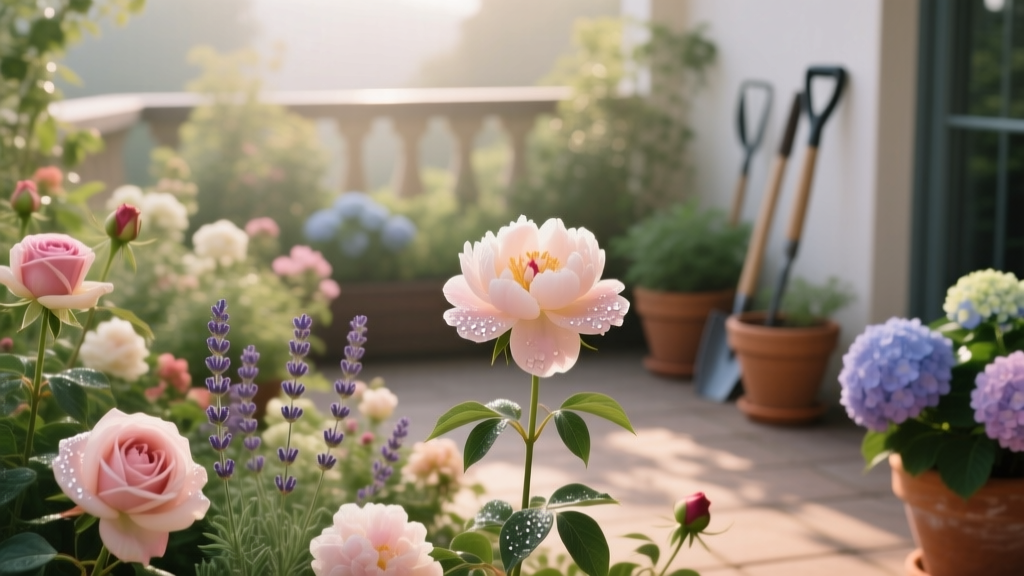
The Secret to Getting More Flowers on Your Plants
Most “not flowering” problems aren’t caused by bad luck or a black thumb—they’re caused by kindness in the wrong place. The most common mistake I see is overfeeding with nitrogen (hello, gorgeous leaves) while accidentally starving the plant of the signals it needs to bloom. If you’ve got lush green growth and only a few sad flowers, you’re not failing… you’re just pushing the wrong pedal.
What actually boosts blooms is a tight combo of light, timing, and targeted nutrition—plus a few strategic “stresses” that tell plants it’s time to reproduce. Below are the shortcuts and proven tricks that consistently turn leafy plants into flower machines.
Group 1: Fix the bloom “signal” (light, temperature, and timing)
Give bloomers a real sun audit (not a guess)
Tip: Count sun hours with a 3-day check. “Full sun” isn’t a vibe; it’s 6+ hours of direct light for most flowering annuals and veggies. Watch the plant at 9 a.m., noon, and 3 p.m. for three days—if shade hits it at two of those times, it’s probably underlit. A $0 trick: stick a bamboo stake where the plant sits and note when the stake shadow disappears (direct sun) or softens (filtered shade).
Example: A patio gardener in Chicago moved a pot of petunias from “bright shade” (2–3 hours direct sun) to the driveway edge (7 hours) and doubled blooms within 2 weeks—no fertilizer change required.
Stop “late-day watering” that creates bud drop conditions
Tip: Water early enough that foliage dries by evening. Many plants drop buds when they get stressed by fungal pressure and cool, wet nights. Water at the soil line before 10 a.m. so leaves dry fast, especially for zinnias, roses, and dahlias. If you can’t water early, use a cheap watering wand ($10–$15) to keep water off foliage.
Example: A community garden plot switched from 8 p.m. overhead watering to 8 a.m. soil-level watering; powdery mildew slowed down and zinnias held their buds instead of aborting them.
Use photoperiod tricks for picky bloomers (short-day vs long-day)
Tip: Know if your plant needs long nights to flower. Some ornamentals (like chrysanthemums and many poinsettia types) need uninterrupted darkness to set buds. Even a porch light can interrupt flowering—seriously. If night lighting is unavoidable, throw a breathable cover over the plant from 6 p.m. to 8 a.m. for 3–4 weeks to trigger bud set.
Source: Photoperiod sensitivity and night-interruption effects are well documented in floriculture production guides (e.g., Purdue Extension, 2019).
Don’t “tidy up” spring bloomers at the wrong time
Tip: Prune spring-flowering shrubs right after they bloom. Lilacs, forsythia, and many hydrangeas set next year’s flower buds soon after flowering. If you prune in late summer or fall, you’re literally cutting off next year’s blooms. Put a reminder in your phone: prune within 2–3 weeks after bloom finishes.
Example: A homeowner in North Carolina stopped fall-pruning their bigleaf hydrangea and saw the next summer’s flowers jump from “a few” to “covered,” without changing anything else.
Group 2: Feed for flowers (not foliage)
Switch from high-nitrogen to “bloom-biased” fertilizer at the right moment
Tip: Use a lower-N ratio once buds start forming. Nitrogen drives leafy growth; too much delays flowering and increases soft growth that pests love. When you see the first bud clusters, shift to something like 5-10-10 or 10-20-20 at label rates. For containers, a common routine is feeding every 7–14 days with a bloom formula instead of weekly high-N.
Money-saver: A 4 lb bag of granular bloom fertilizer is often $12–$18 and can last a season; compare that to $8 liquid bottles that vanish in a month if you have lots of pots.
Try a simple “nitrogen pause” for stubborn non-bloomers
Tip: Stop all nitrogen for 2–3 weeks to trigger bloom mode. For plants that are all leaves (geraniums, hibiscus, some peppers), pause any fertilizer with N for a short window. Keep watering steady, but don’t feed. Then resume with a bloom formula.
Example: A balcony gardener had geraniums that refused to bloom after heavy compost + lawn fertilizer drift. A 3-week nitrogen pause plus a switch to 5-10-10 brought steady blooms back in the next month.
Use phosphorus correctly (and don’t overdo it)
Tip: Only add phosphorus if your soil is actually low. Phosphorus helps flowering when it’s deficient, but “more” doesn’t automatically mean more blooms—and excess P can interfere with micronutrient uptake. Get a basic soil test every 2–3 years (often $15–$30 through county programs). If P is adequate, focus on light and potassium instead.
Source: Soil testing guidance and nutrient management recommendations are consistently emphasized by extension services (e.g., University of Minnesota Extension, 2020).
“Fertilizer should be based on soil test results… applying nutrients that are already high does not improve plant growth and can create nutrient imbalances.” — University of Minnesota Extension (2020)
Add potassium for “flower stamina” (especially in containers)
Tip: Potassium supports flower quantity and quality. If you’re growing in pots, potassium is often the missing piece because frequent watering leaches nutrients out. Look for fertilizers where the last number (K) is at least equal to the first number (N), like 10-10-10 or bloom formulas with higher K. A practical trick: if your petunias look tired and stop blooming mid-summer, potassium support often perks them up faster than adding more nitrogen.
Example: A hanging basket of calibrachoa that stalled in July rebounded after switching from 20-10-20 (too much N) to a bloom mix with higher K, plus deadheading (below).
Use a cheap DIY bloom boost: compost tea… the right way
Tip: Use compost tea as a gentle supplement, not a miracle cure. Steep finished compost in water at a rough ratio of 1:5 (1 part compost, 5 parts water) for 24–36 hours, stir occasionally, then drench the soil—not the leaves. This adds a mild nutrient and microbe boost without blasting nitrogen. It’s basically free if you already compost.
Real-world note: If your compost is “hot” (still decomposing), skip tea—unfinished compost can tie up nitrogen and stress plants.
Group 3: Pruning, pinching, and deadheading tricks that multiply blooms
Deadhead with the “one node down” rule
Tip: Cut just above a strong leaf node, not the flower head only. Snipping only the spent petals often leaves the plant sulking because it doesn’t redirect growth efficiently. For many annuals (zinnias, cosmos, marigolds), cut the flower stem back to the first or second set of full leaves. This pushes branching, which equals more flowering tips.
Example: A row of zinnias deadheaded weekly using one-node-down produced noticeably more stems for bouquets than the row that was only “pinched at the top.”
Pinch early, not constantly (especially on bushy annuals)
Tip: Pinch once at 6–8 inches tall, then let it work. Plants like basil (yes, it flowers too), snapdragons, and many bedding plants respond best to one early pinch to force branching. If you keep pinching every week, you can delay flowering indefinitely. Do it once, then switch to harvesting/ deadheading.
Timing detail: Pinch when plants are 6–8 inches tall or have 4–6 true leaves.
Use “selective thinning” to get larger flowers on roses and dahlias
Tip: Remove some buds so the remaining buds get more energy. If you want bigger blooms (not just more), thin crowded bud clusters. On roses, remove the smaller side buds and leave the strongest central bud; on dahlias, leave 1–2 buds per stem. You’ll get fewer flowers per stem, but more flowers overall as the plant keeps producing without exhausting itself.
Example: A dahlia grower thinned to two buds per stem and got showier flowers plus a longer flowering window into early fall.
Group 4: Soil and watering hacks that increase bud set
Stop pampering roots: let the top inch dry (for many bloomers)
Tip: Slight dry-down encourages flowering in a lot of ornamentals. Constantly soggy soil pushes soft growth and can reduce bud formation, especially in containers. For many common flowering plants, water when the top 1 inch of soil is dry; then water deeply until it drains out the bottom. A $6 moisture meter can help if you’re not sure, but your finger works fine.
Scenario: A gardener watering hanging baskets daily in mild weather got lots of leaves and few blooms. Switching to “dry 1 inch, then soak” produced tighter growth and more consistent flowering.
Use mulch with a purpose: 2 inches, not 6
Tip: Mulch to stabilize moisture and temperature without smothering. A 2-inch layer of shredded bark or leaf mold keeps roots steady, which helps bud retention during heat swings. Overmulching (4–6 inches piled against stems) can keep crowns too wet and lead to rot—bye-bye flowers. Keep mulch pulled back 2–3 inches from the stem base.
Cost note: Bagged mulch runs about $3–$6 per bag; free alternative: shredded leaves run through a mower.
Correct pH for bloom-heavy plants (hydrangeas are the famous one)
Tip: pH doesn’t just change color—it affects nutrient availability. Most flowering plants prefer a pH around 6.0–7.0. If your pH is too high, iron and other nutrients get locked up, and flowering can suffer even if you fertilize. If you suspect an issue, do a soil test first, then adjust slowly (for example, elemental sulfur for high pH, lime for low pH—at test-recommended rates).
Example: A gardener kept feeding petunias but leaves yellowed and blooms slowed; a soil test showed high pH, and correcting it improved plant vigor and flower output the next cycle.
Group 5: Pest and disease “stealth fixes” that protect flowers
Control thrips early—because they ruin buds before you notice
Tip: Check buds, not leaves, and treat fast. Thrips hide in flower buds and cause distorted petals or buds that never open. Tap a flower over white paper; if you see tiny moving flecks, you’ve got them. Use insecticidal soap or spinosad in the evening (follow label directions), and repeat in 5–7 days to catch new hatchlings.
Scenario: A patio rose that “mysteriously” produced crunchy, half-open flowers was diagnosed with the paper-tap test; two treatments spaced a week apart restored normal blooms.
Prevent powdery mildew with spacing, not sprays
Tip: Give plants air so buds don’t abort. Powdery mildew stresses plants and can cause fewer blooms, especially on zinnias, phlox, and roses. Space plants so leaves barely touch at mature size, and thin one or two stems if a plant is dense. Sprays can help, but airflow is the long-term win—and it’s free.
Source: Cultural controls like spacing and resistant varieties are core recommendations in extension plant disease management resources (e.g., Cornell Cooperative Extension, 2021).
Group 6: Container shortcuts (where most flowering problems live)
Use the right pot size to avoid “all roots, no blooms”
Tip: Upsize only 1–2 inches at a time. A pot that’s too large stays wet too long, encouraging roots and leaves instead of flowers. When potting up, move to a container that’s about 1–2 inches wider in diameter than the old one. For example, jump from a 6-inch pot to an 8-inch—not a 12-inch.
Example: A gardener repotted a small hibiscus into a huge decorative pot and it stalled. Moving it back into a right-sized pot improved root balance and flowering within the season.
Refresh potting mix strategically (not a full repot every time)
Tip: Replace the top 3 inches mid-season. Instead of dumping the whole pot, scrape off the top 3 inches of potting mix (where salts accumulate) and replace with fresh mix plus a slow-release bloom fertilizer. This is faster, cheaper, and it fixes a common reason containers stop blooming in midsummer. Water through afterward until it drains.
Cost comparison: Top-dressing might use 1/4 of a bag ($4–$8) instead of 1–2 full bags.
Don’t guess at feeding—use one simple schedule for heavy bloomers
Tip: Combine slow-release + light liquid feeding. For petunias, calibrachoa, geraniums, and baskets that flower nonstop, mix in a slow-release fertilizer at planting, then supplement with liquid bloom feed every 14 days. This prevents the “hungry then overloaded” cycle that causes bloom drop. If you prefer DIY, compost tea between feedings works as a gentle bridge.
A quick comparison: bloom methods that actually work (and when they don’t)
| Method | Best for | What you’ll notice | Downside | Approx. cost |
|---|---|---|---|---|
| Switch to bloom fertilizer (e.g., 5-10-10) | Leafy plants with few buds | More buds in 2–4 weeks | Won’t fix low light | $12–$18/bag |
| Deadhead “one node down” weekly | Annuals (zinnia, cosmos, marigold) | More branches, more flower stems | Time commitment | $0 |
| Top-dress containers (replace top 3 inches) | Midseason container slump | Greener growth + renewed flowering | Messy; needs watering through | $4–$8 per pot (often less) |
| Photoperiod cover (6 p.m.–8 a.m.) | Short-day bloomers near lights | Bud set after 3–4 weeks | Must be consistent | $0–$10 (sheet/cover) |
Three real-world bloom rescues (steal these playbooks)
Case 1: Tomatoes blooming but not setting fruit (flower drop in heat)
Playbook: When daytime highs push above about 90°F, tomatoes often drop blossoms instead of setting fruit. Add afternoon shade cloth (even 30% shade helps), water early, and avoid high-nitrogen feeding. One gardener used an old sheer curtain clipped to stakes for $0 and saved a chunk of the summer flower set.
Case 2: Hydrangea with no blooms after pruning
Playbook: If you pruned bigleaf hydrangea in fall or early spring, you likely removed flower buds. Don’t prune next cycle; instead, protect stems over winter (even a loose ring of leaves). Flowers return when old wood survives—no special fertilizer required.
Case 3: Petunias that quit in midsummer
Playbook: Petunias are heavy feeders and also respond to a hard cutback. Shear stems back by about 1/3, top-dress the pot (top 3 inches), and switch to bloom feeding every 14 days. Most baskets rebound with fresh flowering within 2–3 weeks.
Extra “insider” tweaks most gardeners skip
Use Epsom salt only when it makes sense (and measure it)
Tip: Magnesium helps some plants, but it’s not a universal bloom potion. If your soil test (or clear symptoms) suggests magnesium deficiency, dissolve 1 tablespoon Epsom salt in 1 gallon of water and apply to the soil, not as a constant routine. Overuse can throw off calcium/potassium balance and backfire on flowering. Think of it like a targeted supplement, not a daily vitamin.
Stake and support early to prevent “hidden” bloom loss
Tip: Flopping stems cost you buds. When stems bend and crease, plants reroute energy into repair and you lose flowering tips. Use cheap bamboo stakes ($0.50–$1 each) or DIY twig supports when plants are still small. Dahlias, cosmos, and tall zinnias bloom heavier when upright and unbroken.
Grow fewer plants per square foot for more flowers per plant
Tip: Slightly under-planting beats overcrowding. Crowding increases humidity, disease, and competition for light—classic bloom killers. If a plant tag says 12-inch spacing, don’t “cheat” it down to 6 inches and expect double the flowers. You’ll usually get fewer blooms overall because the plants fight instead of flowering.
If you want the real secret in one sentence: flowers come from a plant that gets enough sun, isn’t being force-fed nitrogen, and is nudged (by pruning and smart stress) to branch and set buds instead of endlessly producing leaves. Pick two tactics from the sections above—one light/timing fix and one feeding/pruning fix—and you’ll usually see a difference within 2–4 weeks for annuals and within a season for shrubs.
Next time a plant won’t flower, don’t reach for a random “bloom booster” first. Do the sun-hour audit, look at your fertilizer label for that first number (N), and make one intentional cut (deadhead to a node). Those three moves solve more flowering problems than any secret product ever will.
Sources: Purdue Extension (2019) photoperiod and night interruption guidance in floriculture production; University of Minnesota Extension (2020) soil testing and fertilizer recommendations; Cornell Cooperative Extension (2021) disease management emphasizing cultural controls like spacing and resistant varieties.