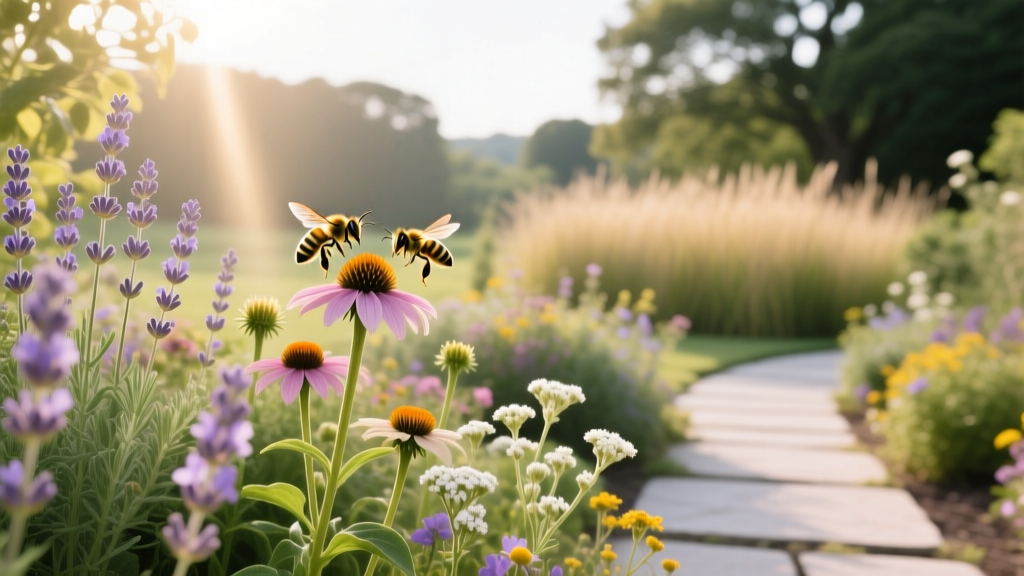
12 Garden Hacks for Bee-Friendly Garden Choices
One of the biggest bee-killers in home gardens isn’t a lack of flowers—it’s a “pretty and tidy” habit: clearing every stem and leaf the moment blooms fade. A lot of native bees nest in hollow stems, leaf litter, and bare soil, so when we manicure everything, we accidentally bulldoze their homes. The good news: you can keep your garden looking cared-for while making it wildly more bee-friendly with a few smart shortcuts.
Quick Wins: Make Your Garden Instantly More Bee-Useful
1) Plant in clumps, not confetti
Bees forage more efficiently when the same flower is grouped together, because they can work one patch without wasting energy. Instead of scattering single plants around, plant in clumps about 3 ft x 3 ft (or at least 3 plants of the same type together). Real-world example: three lavender plants in one bed edge will pull more bumblebees than three single lavenders tucked into three different borders.
2) Build a “three-season buffet” with a 3–3–3 rule
Most gardens accidentally peak for bees for just a few weeks. Hack it by choosing 3 early, 3 mid, and 3 late bloomers so something is always offering nectar and pollen. Example lineup: early (crocus, willow catkins, lungwort), mid (bee balm, coneflower, borage), late (asters, goldenrod, sedum). This simple shopping list approach stops the common mistake of buying only what’s blooming at the nursery that day.
3) Skip “double flowers” when you can—bees can’t access the goods
Those extra-petaled doubles often trade nectar and pollen for looks, so bees land and… get nothing. When you’re choosing between a single and a double bloom, pick the single form at least half the time—especially for big bee magnets like zinnias, echinacea, and marigolds. Example: single-flowered zinnias typically get covered in bees, while fully double pom-poms can be nearly silent.
4) Add a $0 bee water station (that won’t breed mosquitoes)
Bees need water, but a birdbath can turn into a mosquito nursery if it sits stagnant. Use a shallow dish (pie plate works), fill with pebbles or wine cork slices so bees can stand, and refresh every 2–3 days. DIY upgrade: set the dish under a dripline so it refills lightly after you water, then dump and rinse it on the same schedule you take out kitchen compost.
Soil, Shelter, and “Mess” (the Kind Bees Actually Need)
5) Leave 12–18 inches of stems standing through winter
A surprising number of solitary bees nest in hollow or pithy stems (think: raspberries, coneflower, joe-pye weed, sunflowers). Instead of cutting everything down in fall, leave stems 12–18 inches tall until late spring. Case example: a suburban gardener who stopped fall clean-up often notices leafcutter bees using those stems by early summer—tiny circular leaf cutouts are your “thank you” note.
“Leaving some plant stems and leaf litter provides important nesting habitat for many native bees.” — Xerces Society for Invertebrate Conservation (2020)
6) Create a 1-square-foot “bee sandy spot” for ground nesters
About 70% of native bees nest in the ground, and they prefer well-drained, sparsely vegetated soil. Pick a sunny corner and clear a small patch roughly 12 in x 12 in; mix in sand if your soil is heavy (aim for about 1:1 native soil to coarse sand in that small area). Real-world example: if you’ve ever seen little pencil-sized holes in a bare patch near a path, you’ve likely hosted ground-nesting bees already.
7) Mulch strategically: keep a “no-mulch zone” near bee plants
Mulch is great for weeds, but a thick blanket can block ground-nesting bees. Keep mulch to 1–2 inches in ornamental beds and leave small bare or lightly mulched zones near your best bee plants. Practical trick: mulch the “view areas” (front edge of beds) and leave a hidden 2–3 ft strip behind plants slightly more natural.
8) Make a bee hotel that doesn’t become a mite motel
Bee hotels work best when they’re built and maintained correctly—otherwise they can concentrate parasites. Use replaceable paper tube inserts or drill clean holes 3/32 to 3/8 inch diameter, 4–6 inches deep, in untreated wood; mount under an eave facing morning sun, 3–6 feet high. Real-world example: a small bundle of paper tubes swapped yearly is cheaper than a decorative store-bought hotel and far more hygienic.
For science-backed guidance, many extension services recommend correct hole sizing and regular replacement to reduce disease buildup (Oregon State University Extension, 2019).
Plant Choices That Do More With Less Work
9) Convert one “high-effort” bed into a native mini-meadow
If you’re always weeding the same sunny bed, flip it into a low-input bee zone. Sheet-mulch with cardboard, add 2–3 inches of compost on top, then plant a tight mix of native perennials and grasses; water weekly for the first 4–6 weeks, then taper. Case example: a 4 ft x 8 ft strip along a fence can become a pollinator corridor with coneflower, mountain mint, little bluestem, and asters—and it’s usually less work by year two.
10) Use “cheap annuals” as nectar stopgaps while perennials mature
Perennials take time to size up, but bees need food now. Sprinkle in fast annuals like borage, cosmos, calendula, and sunflowers—often $3–$5 per seed packet—while you wait for long-term plantings to fill in. Example: sow borage every 3 weeks for a rolling bloom; it’s a reliable bee magnet and self-seeds politely in many gardens.
11) Favor herbs with tiny flowers—they’re bee powerhouses
Let some herbs bolt and flower on purpose. Thyme, oregano, basil, dill, and chives produce clusters of small blooms that feed many bee species, not just the big showy ones. Real-world example: a 2 ft strip of flowering oregano can out-perform a whole row of ornamentals for bee traffic, and you still get harvestable leaves before it blooms.
Smarter Pest Control (That Doesn’t Wipe Out Pollinators)
12) Time any sprays like a pro—or better, replace them
One common mistake is spraying “just in case” during bloom, when bees are actively foraging. If you must use a product, apply at dusk when bees aren’t flying and avoid spraying open flowers; better yet, use non-spray tactics first (hand-pick, blast aphids off with water, or use insecticidal soap only on targeted foliage). Practical numbers: even “safer” soaps can harm bees on contact, so treat after sunset and re-check in 48 hours before repeating.
For pesticide risk reduction, extension services consistently emphasize timing, targeting, and avoiding blooms to protect pollinators (Penn State Extension, 2021).
Shortcut Swaps: Choose Bee-Friendly Options Without Guesswork
| Garden Choice | Common Method | Bee-Friendlier Hack | What You’ll Notice |
|---|---|---|---|
| Flowers | Singles scattered everywhere | 3 ft x 3 ft clumps of the same plant | More bee visits per minute; easier foraging |
| Fall cleanup | Cut everything to ground | Leave 12–18 in stems until late spring | More native bees nesting onsite |
| Mulching | 3–4 in mulch blanket everywhere | 1–2 in mulch + small bare patches | Ground-nesting bees can use your beds |
| “Bee hotel” | Decorative hotel left up for years | Replaceable tubes, swapped annually | Healthier nesting; fewer pests |
| Pest control | Spray during the day “when you see bugs” | Dusk, targeted, and never on blooms | Fewer accidental bee hits |
Real-World Scenarios: What This Looks Like in Actual Gardens
Scenario 1: The tiny balcony gardener (containers only). Use the clump hack by planting three of the same nectar plant in one long box—like a trio of dwarf lavender or compact salvia. Add a shallow pebble water dish and let one pot of basil flower; you’ll be surprised how quickly bees find you even several stories up.
Scenario 2: The neat-and-tidy front yard with an HOA. Keep the front edge crisp with mulch and edging, but leave a “back strip” behind shrubs where stems can stand and leaf litter can stay. Swap one foundation planting for a small native clump (for example, 3 asters together), and you’ll meet bees without looking “messy” from the street.
Scenario 3: The veggie gardener who fights pests every summer. Plant flowering herbs right in the beds—chives at bed corners, dill at the end of tomato rows, and cilantro you allow to bolt in a spare spot. Then practice dusk-only, bloom-avoiding treatments as a last resort; many gardeners see better natural control once beneficial insects and pollinators show up consistently.
Extra Insider Tricks (Little Things That Add Up Fast)
Use a “bloom gap calendar.” Walk your garden once a week for 2 minutes and note what’s blooming; if you see a gap longer than 10–14 days, that’s where bees go hungry. Fill gaps with quick annuals or long-blooming perennials like catmint or salvia.
Choose sunny spots for bee plants first. Most heavy nectar producers need at least 6 hours of sun to bloom well. If you only have one full-sun area, reserve it for the bee buffet and put foliage plants in shadier zones.
Watch for pesticide residues in “miracle” plants. Some flowering annuals and perennials sold at big box stores may have been treated with systemic insecticides earlier in production. If possible, buy from local growers who can confirm no systemic treatments, or start from seed for key bee plants—seed packets are often cheaper and give you more control.
Sources You Can Trust (and Actually Use)
Xerces Society for Invertebrate Conservation. 2020. Guidance on native bee habitat needs, including leaving stems and natural nesting materials.
Oregon State University Extension. 2019. Recommendations for mason bee housing design and maintenance, including appropriate tunnel sizing and replacement.
Penn State Extension. 2021. Pollinator-protection guidance for home garden pesticide timing and bloom avoidance.
If you try only two changes this week, do the clumps (3 plants together) and the stem rule (leave 12–18 inches until late spring). Those two alone usually turn a “bees sometimes visit” yard into a place where you can actually hear the hum when you step outside—and they don’t cost more than what you’re already doing, they just use it smarter.