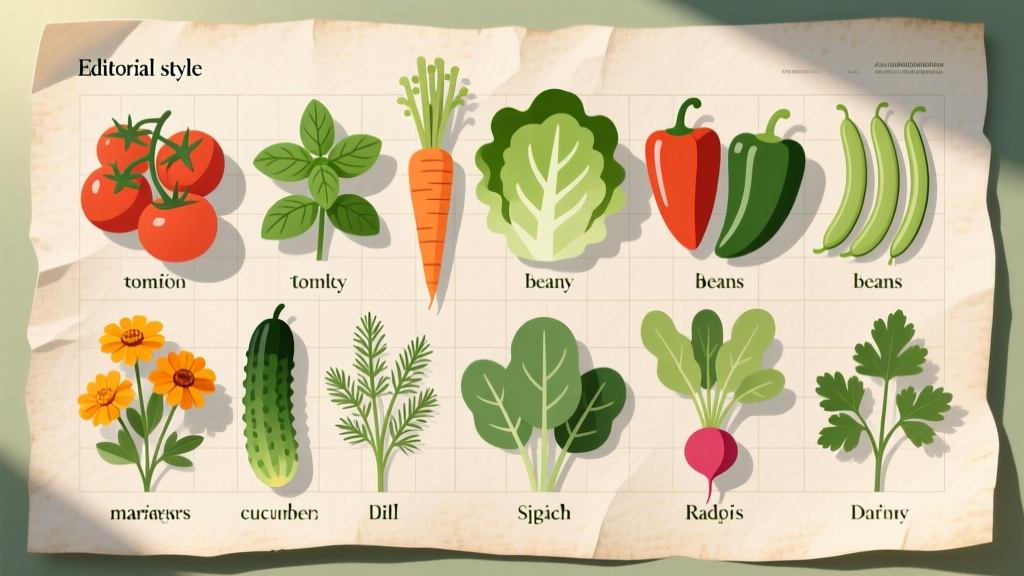
Companion Planting Chart: Best Vegetable Pairings (2026)
What Is Companion Planting?
Companion planting is the practice of growing certain plants near each other for mutual benefit — pest deterrence, improved pollination, better flavor, or more efficient use of space. Scientific research and centuries of gardening experience support many of these pairings.
The Big Three: Classic Combinations
Three Sisters (corn + beans + squash): Corn provides a trellis for beans, beans fix nitrogen for corn, squash shades soil and suppresses weeds. This Native American technique works in zones 4-9.
Tomato + Basil + Marigold: Basil repels aphids and whiteflies, marigolds deter nematodes and tomato hornworms. Plant basil 6 inches from tomato base, marigolds at bed edges.
Carrot + Onion + Rosemary: Onion and rosemary mask carrot scent from carrot fly. Plant onions in alternating rows with carrots, rosemary at bed corners.
Companion Planting Chart by Vegetable
| Vegetable | Good Companions | Bad Neighbors |
|---|---|---|
| Tomatoes | Basil, marigold, carrot, parsley, asparagus | Cabbage, corn, fennel, potato |
| Peppers | Basil, carrot, onion, spinach, marigold | Beans, fennel, kohlrabi |
| Cucumbers | Beans, corn, peas, radish, sunflower | Potato, sage, melon |
| Lettuce | Carrot, radish, strawberry, chives, garlic | Celery, parsley, cress |
| Carrots | Onion, leek, rosemary, sage, tomato | Dill, parsnip, celery |
| Beans (bush) | Corn, squash, cucumber, celery, strawberry | Onion, garlic, pepper, sunflower |
| Squash/Zucchini | Corn, beans, nasturtium, radish, borage | Potato, pumpkin |
| Broccoli | Onion, garlic, celery, potato, dill | Tomato, strawberry, lettuce |
| Eggplant | Beans, marigold, spinach, thyme, peas | Fennel, corn |
| Strawberries | Borage, lettuce, spinach, onion, thyme | Cabbage, broccoli, cauliflower |
Beneficial Flowers for Vegetable Gardens
- Marigolds: Repel nematodes, whiteflies, and tomato hornworms. Plant throughout beds.
- Nasturtiums: Trap crop for aphids (draws them away from vegetables). Edible flowers too.
- Borage: Attracts pollinators and improves strawberry and tomato flavor. Self-seeds readily.
- Sunflowers: Attract pollinators and provide shade for heat-sensitive crops. Avoid near beans.
- Cosmos: Attract beneficial insects (lacewings, parasitic wasps) that eat garden pests.
Herbs That Supercharge Your Garden
- Basil: Repels flies, mosquitoes, and thrips. Improves tomato flavor when planted nearby.
- Dill: Attracts beneficial wasps and ladybugs. Plant near cabbage and lettuce (not carrots).
- Chives: Deter aphids and Japanese beetles. Great near roses, carrots, and tomatoes.
- Mint: Repels ants, cabbage moths, and flea beetles. ALWAYS plant in containers — it spreads aggressively.
- Rosemary: Deters bean beetles, carrot flies, and cabbage moths. Drought-tolerant perennial.
Spacing Rules for Companion Planting
Good companions should be within 12-18 inches of each other to share benefits. Bad neighbors should be at least 3-4 feet apart or in separate beds. Use the "3-row buffer" rule: if two plants don't get along, separate them with at least 3 rows of a neutral plant like lettuce or radish.
Succession Planting With Companions
Maximize space by timing your companions. Plant fast-growing radishes between slow-growing carrots. When radishes are harvested (30 days), carrots have room to expand. Follow spring lettuce with summer beans, then fall spinach — all with companion herbs throughout.