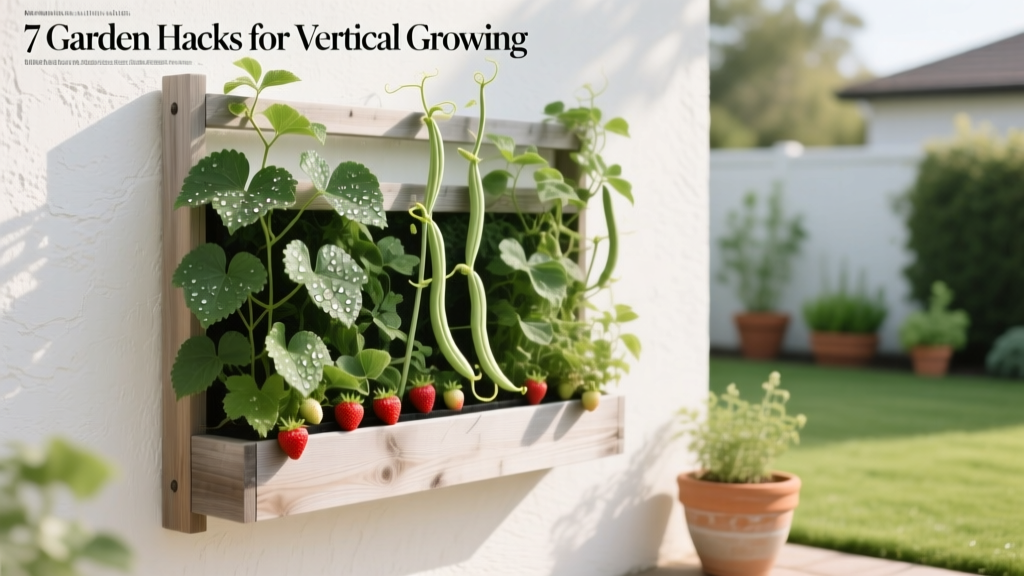
7 Garden Hacks for Vertical Growing
The most common vertical-garden mistake isn’t “picking the wrong trellis.” It’s building something tall and pretty… then planting like you’re still gardening on the ground. Vertical growing changes airflow, drying speed, weight load, and even how you fertilize—and if you don’t adjust, you get sad vines, snapped supports, and a harvest that’s weirdly small for all that effort.
Done right, vertical growing can pack serious production into tight spaces. Cornell Cooperative Extension notes that trellising vining crops improves air circulation and can reduce disease pressure while making harvest easier (Cornell Cooperative Extension, 2019). And research-backed pruning/training systems in crops like tomatoes routinely show big differences in yield and fruit quality when plants are properly supported (University of Florida IFAS Extension, 2018).
“Good support and training isn’t just about keeping plants upright—it's about managing light and air around the canopy.” — University of Florida IFAS Extension, 2018
Group 1: Build the Support Like an Engineer (Not a Crafter)
1) Overbuild the “invisible” parts: anchors, posts, and load limits
If your trellis fails, it usually fails at the base, not at the top. For heavy vines (indeterminate tomatoes, cucumbers, pole beans), set posts at least 18–24 inches deep; in loose soil, go closer to 30 inches or add a bag of quick-setting concrete. A mature tomato plant can easily weigh 10–20 lb once it’s loaded with fruit and wet foliage, and that weight is multiplied by wind like a sail.
Real-world example: A patio gardener in Denver used a 6-foot bamboo teepee in a 10-gallon fabric pot for cucumbers. It looked sturdy—until a thunderstorm leaned the whole thing over because the legs weren’t anchored. The fix was simple: three 12-inch landscaping staples pinning each leg to the pot’s rim, plus a single strap around the outside of the pot as a “belt.” Total cost: about $6, and it survived the rest of the season.
2) Use the “lean-and-lower” string trick for tomatoes (no huge cage needed)
If you’ve ever tried to wrestle a tomato jungle out of a cage, you’ll love this. Hang a strong twine (tomato clips help) from an overhead wire or pipe, then wind the stem as it grows; once it reaches the top, gently lower the line and slide the plant sideways along the bed. This is how greenhouse growers keep 10–12-foot indeterminate tomatoes productive without a 12-foot cage.
Specific setup: Run a galvanized wire (12–14 gauge) between two posts at 6.5–7 feet high, then tie individual strings down to each plant. Budget option: polypropylene baler twine; nicer option: UV-stable tomato twine. A 650-foot roll often costs $8–$15 and can handle a full row.
3) Pick trellis mesh by hole size (it matters more than brand)
The fastest way to make vertical growing annoying is choosing mesh your hands can’t work through. For peas and pole beans, 6-inch holes are perfect because you can reach in to harvest and guide vines. For cucumbers, 4–6 inch holes support fruit without deforming it; for small-fruited items (like cherry tomatoes on a trellis panel), 2–4 inch holes keep clusters from flopping.
DIY alternative: Concrete remesh (often 6-inch grid) is a workhorse and commonly costs less than purpose-built garden panels—think $12–$20 for a 7-foot sheet at many yards. It’s heavy, but that’s why it doesn’t fall over when August hits.
Group 2: Train Plants Like You’re Directing Traffic
4) Start training early: the “first 12 inches” rule
Vertical plants don’t magically climb; they need early direction. In the first 12 inches of growth, tie or clip stems every 6–8 inches so they set a growth habit that follows the support instead of flopping. Waiting until the vine is 3 feet long almost guarantees a kinked stem, broken tendrils, and a plant that spends a week recovering.
Scenario: In a community garden plot with strict pathway rules, a gardener trained zucchini vertically on a cattle panel from day one, clipping the stem weekly. The neighbor who waited until leaves spilled into the aisle had to prune aggressively and lost early flowers—same cultivar, very different timing, very different yield.
5) Use “soft ties + figure-eight” to stop girdling
Zip ties and thin string can strangle stems as they thicken, especially on tomatoes and squash. Use soft tie tape, stretchy plant tie, or even old T-shirt strips, and tie a figure-eight: one loop around the support, one loop around the plant, crossing in the middle. That crossover acts like a buffer so the plant rubs less in wind.
Cost hack: A roll of horticultural Velcro tie (about 65 feet) runs roughly $6–$10 and lasts years. If you’re frugal, cut 1-inch-wide strips from worn cotton shirts; one shirt can tie a whole balcony’s worth of vines.
6) Prune for airflow with a repeatable schedule (not vibes)
Vertical gardens get dense fast, and density is what invites fungal trouble. For indeterminate tomatoes on strings, remove suckers weekly (a 7-day rhythm is easy to remember) and keep 1–2 main stems; for cucumbers, pinch side shoots after 1–2 leaves once the vine is established to keep fruiting close to the trellis. Better airflow isn’t just comfort—it’s disease management; many extension services emphasize spacing and canopy management as key to reducing foliar disease (Cornell Cooperative Extension, 2019).
Real-world example: A humid-zone gardener in coastal Georgia switched from “let it sprawl” cucumbers to a single-stem vertical system with weekly pinching. Powdery mildew still showed up late summer, but it hit weeks later and harvest stayed cleaner because leaves dried faster after afternoon rain.
Group 3: Feed and Water Vertical Plants Without Wasting Time
7) Treat vertical containers like they’re in a wind tunnel (because they are)
Vertical planters and wall pockets dry out faster than ground beds—more surface area, more airflow, more evaporation. Instead of guessing, do a 10-second moisture check: stick a finger 2 inches deep; if it’s dry at that depth, water thoroughly until 10–15% drains out the bottom. In hot weeks, that might mean watering every 1–2 days for small pockets, while a 15–20 gallon container might hold 2–3 days.
DIY upgrade: Turn a $12 bucket into a reservoir planter: drill an overflow hole 2 inches up from the bottom, add a 2-inch layer of gravel or inverted nursery pots, then fill with mix. You get a mini wicking reservoir that buys you time during heat waves.
Group 4: Choose Vertical Systems That Match Your Space (and Your Patience)
Not all vertical methods behave the same. Some are cheap and fast; others are cleaner and more efficient long-term. Here’s a practical comparison so you can pick what fits your yard, balcony, or rental situation.
| Vertical method | Best for | Typical cost | Strength & lifespan | Common “gotcha” |
|---|---|---|---|---|
| Cattle panel arch | Squash, cucumbers, beans, gourds | $30–$60 panel + posts | Very strong; 5–15+ years | Needs solid anchoring; heavy to move |
| String trellis (overhead wire) | Indeterminate tomatoes, peas | $10–$25 materials per row | Strong if wire/posts are solid | Overhead support must be reliable |
| Wall pockets / felt planters | Herbs, lettuce, strawberries | $20–$80 | Moderate; 1–3 seasons typical | Dries fast; salt buildup possible |
| Repurposed pallet planter | Greens, shallow-root crops | $0–$25 | Varies; depends on wood | Unknown treatments; line it carefully |
Three Real-World Scenarios (and the Hack That Saves Them)
Scenario A: The apartment balcony with brutal sun and no hose
The hack: go vertical with a single deep reservoir container instead of lots of tiny pockets. A 20-gallon tote (often $10–$18) with an overflow hole 2 inches up can grow a cucumber or two plus basil at the base, and you only carry water every couple days instead of twice a day. Add a cheap $8 watering can with a long spout so you can hit the root zone without splashing the wall.
Scenario B: The narrow side yard that turns into a mildew factory
The hack: prioritize airflow over plant count. Use a rigid panel trellis 6–8 inches away from the fence so air can move behind leaves, and prune on a weekly schedule. University and extension guidance consistently emphasizes canopy ventilation and spacing to reduce foliar disease incidence (Cornell Cooperative Extension, 2019), and side yards are where this matters most.
Scenario C: The raised bed that produces leaves but not much fruit
The hack: switch from sprawling to vertical, then adjust feeding and pruning to match. Tomatoes and cucumbers grown vertically often need steadier nutrition because they’re actively producing up the vine; aim for smaller, consistent feedings rather than one big dump of fertilizer. If you’re using a water-soluble fertilizer, many gardeners do well with a half-strength mix every 7–14 days during heavy fruiting (always follow the label), plus a 2-inch mulch layer to stabilize moisture.
Bonus Mini-Hacks (Quick Wins That Feel Like Cheating)
Use shade cloth tactically—only for the root zone
If your vertical planter bakes, shade the container, not the leaves. Wrapping the pot in a light-colored cloth or slipping it into a second larger pot reduces root-zone temperature swings without sacrificing sunlight on the canopy. A scrap of burlap or an old pillowcase works, and it’s often the difference between “constant wilting” and steady growth in 90°F+ weeks.
Make harvesting easier with a “fruit face” side
Train vines so the fruiting side faces the path. On cucumbers, gently redirect tendrils so most flowers form on the accessible side; on beans, rotate the leading shoots as they climb so pods hang where you can see them. It sounds small, but it saves minutes every harvest—and missed cucumbers are how you end up with baseball bats.
Prevent soil splash with a cheap drip edge
When watering vertical beds, splashback can hit lower leaves and spread soil-borne disease. Add a 2-inch band of coarse mulch (pine bark or straw) around the base and keep the lowest 8–12 inches of tomato stems leaf-free. University of Florida IFAS Extension recommends pruning lower leaves to reduce disease spread and improve airflow (UF/IFAS Extension, 2018).
Keep It Simple, Then Improve One Piece at a Time
If you’re starting from scratch, don’t build a complicated vertical “system” you have to babysit. Start with one strong panel or one overhead wire, pick a crop that actually loves climbing (cucumbers, pole beans, indeterminate tomatoes), and commit to a once-a-week training session that takes 10 minutes. Most vertical-growing failures come from weak anchors, late training, and supports that are a pain to harvest through—fix those three, and the rest feels easy.
Vertical growing is one of those garden skills that rewards small upgrades. Swap string for soft ties, move a trellis 8 inches away from a fence, prune on a 7-day rhythm, and suddenly your plants look healthier without you working harder. That’s the kind of “hack” that sticks.
Sources: Cornell Cooperative Extension (2019), guidance on trellising/training and disease management via airflow and spacing principles; University of Florida IFAS Extension (2018), recommendations on tomato training/pruning and canopy management for plant health and productivity.