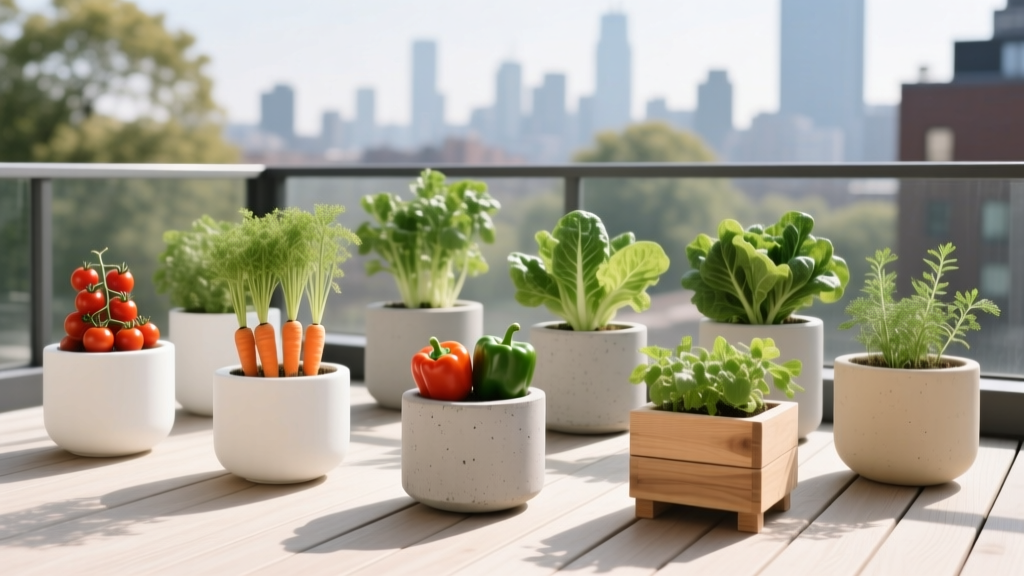
10 Garden Hacks for Container Vegetable Gardening
The most common container-garden faceplant isn’t forgetting to water—it’s using a pot that’s too small and a “nice” bagged mix that collapses into a soggy brick after a few weeks. In a container, you’re basically running a tiny, high-speed ecosystem: roots hit the wall fast, nutrients wash out faster, and one hot afternoon can undo a month of good intentions. The good news? A handful of practical hacks can make containers ridiculously productive (and a lot less needy) without fancy gear.
Group 1: Set Up Containers That Don’t Fail Mid-Season
1) Match Pot Size to Crop (Not to Your Patio Aesthetic)
Container vegetables don’t “grow into” undersized pots—they stall, then bolt, then sulk. Use a simple baseline: leafy greens in 2–3 gallon containers, peppers in 5+ gallons, and tomatoes in 10–20 gallons (bigger if you can). Example: a patio tomato in a 5-gallon bucket can work, but a slicer tomato is noticeably happier in 15 gallons because moisture swings are smaller and roots have room to keep feeding.
2) Add a Cheap Water Reservoir (So You Miss a Day Without Paying for It)
Turn a standard pot into a semi-self-watering container by adding a 1–2 inch “reservoir layer” at the bottom using a perforated insert (a cut nursery pot, a colander, or upside-down plastic berry containers). Run a fabric wick (an old cotton T-shirt strip works) from the soil down into that reservoir so moisture can climb back up. Real-world scenario: if you work 12-hour shifts, this hack often buys you an extra day between waterings during heat waves.
3) Drill the Right Drainage: Many Small Holes Beat One Big One
One large drainage hole can clog with compacted mix; multiple smaller holes keep water moving even if one gets blocked. Aim for 6–10 holes of about 1/4 inch diameter for a 5-gallon container, and elevate pots slightly on pot feet or scrap wood so water can exit freely. DIY option: if you’re repurposing a storage tote, drill holes in a grid every 2–3 inches across the bottom and add 2 holes on each side about 1 inch up to prevent a “bathtub effect.”
Group 2: Soil & Nutrition Hacks That Keep Plants Growing Fast
4) Build a Potting Mix That Won’t Collapse (The 5-1-1 Container Hack)
Many bagged “potting soils” hold too much water in a container, especially after repeated soaking and drying. A reliable DIY blend is the 5-1-1 mix: 5 parts pine bark fines, 1 part peat or coco coir, 1 part perlite (plus a handful of slow-release fertilizer). It stays airy longer, meaning fewer root problems and less fungus gnat drama—particularly helpful for basil, peppers, and eggplant that hate wet feet.
“Good container media must provide both water and air—poor aeration is a common cause of failure in containers.” — University of Florida IFAS Extension (2018)
Money saver: pine bark fines are often cheaper than premium bagged mixes on a per-gallon basis, especially if you buy a 2 cu ft bag and blend it yourself.
5) Pre-Charge Your Mix with a Measured Fertilizer Plan (Because Containers Leach)
In-ground gardens can coast on existing nutrients; containers get rinsed clean with every deep watering. Mix in a controlled-release fertilizer at label rates (commonly 1–2 tablespoons per gallon of potting mix, depending on the product) and then top-dress monthly with a mild booster. Example: for heavy feeders like tomatoes, many gardeners see steadier growth by adding a water-soluble feed at half-strength every 7–10 days once flowering starts.
Research-backed note: container nutrients wash out quickly with frequent irrigation; extension recommendations commonly emphasize consistent, ongoing fertility for container crops. See Alabama Cooperative Extension’s container gardening guidance for fertilization frequency and leaching concerns (2020).
6) Use a “Fertility Sandwich” for Hungry Crops
Instead of mixing compost evenly through the whole pot (which can compact), place a thin nutrient band 3–4 inches below the transplant: 1–2 cups of finished compost plus a tablespoon of organic granular fertilizer, then cover with plain mix before planting. Roots grow down into the band right as the plant shifts into rapid growth. Case example: this works especially well for cucumbers in 10-gallon pots—vines often explode once they tap that layer, without the top of the pot staying wet and heavy.
Group 3: Watering Shortcuts That Reduce Work (And Prevent Split Tomatoes)
7) Use the “Weight Test” + Mulch Cap (The Two-Step That Stops Guessing)
Skip finger-poking and water schedules—lift the pot. When it feels 30–40% lighter than right-after-watering weight, it’s time to water deeply. Then add a 1–2 inch mulch cap (straw, shredded leaves, or even chopped cardboard) to cut evaporation; this alone can reduce watering frequency by a day in summer conditions.
Real-world scenario: in a south-facing apartment balcony, mulched 5-gallon pepper pots often go from daily watering to every other day once plants leaf out.
8) Water Slowly with a DIY Bottle Drip (Costs Basically $0)
For plants that crack or split under inconsistent moisture (tomatoes, radishes), make a drip bottle: poke 2–4 tiny holes in the cap of a 1-liter bottle, bury it cap-down near the root zone, and refill as needed. It releases water gradually right where roots are, rather than flooding the surface and running out the sides. Cost comparison: a DIY bottle system is free; a basic drip kit can run $20–$60 depending on size—both work, but the bottle hack is perfect for “just a few pots” setups.
Group 4: Space, Support, and Sunlight Tricks for Small Areas
9) Grow Vertically First, Not Wider (Trellis Early or Regret It Later)
In containers, sprawling plants steal your walking space and shade everything else. Install supports at planting time: a 4–6 ft trellis for cucumbers and pole beans, or a sturdy tomato cage (or two zip-tied together) for indeterminate tomatoes. Example: one cucumber plant trained up a 5 ft trellis in a 7–10 gallon pot can out-produce three “bushy” cucumber plants that sprawl and mildew on a cramped deck.
| Approach | Space Used | Watering & Disease | Best For | Typical Cost |
|---|---|---|---|---|
| Vertical trellis (netting or cattle panel) | ~1–2 sq ft footprint per pot | Better airflow; leaves dry faster | Cucumbers, pole beans, small squash | $5–$25 (DIY twine/netting to metal panel) |
| Let vines sprawl | ~6–12 sq ft per plant | More mildew/rot risk; messy watering | Only if you have room | $0 |
10) Use “Sun Mapping” for Containers: Move Pots Like Chess Pieces
A huge container advantage is mobility—use it. Spend one clear day checking sunlight at 9 a.m., noon, and 3 p.m.; mark the brightest spots and place fruiting crops (tomatoes, peppers) where they get 6–8+ hours, then slide leafy greens into the 3–5 hour zones. Case example: if your patio gets blazing afternoon sun, move lettuce behind taller pots after 1 p.m. to stretch the harvest and slow bolting.
Bonus Tricks That Make These Hacks Work Even Better
Scenario: You’re leaving town for 3 days. Group pots together in the shadiest bright area (morning sun, afternoon shade), water thoroughly, add an extra 1 inch of mulch, and use the DIY bottle drip on thirstiest plants. If you can, place pots in shallow trays and add 1/2 inch of water for the day you leave—just don’t keep tomatoes sitting in water long-term.
Scenario: Your containers dry out twice a day during a heat wave. Move black plastic pots into light-colored cachepots (or wrap them with a light towel) to cut root-zone heat, and add a temporary shade cloth for the 2–4 hottest hours. University of Maryland Extension notes that container media can heat and dry rapidly; shading and mulching are standard mitigation tactics (2019).
Scenario: You keep getting weak, pale growth even though you “fertilized.” In containers, “fertilized once” is rarely enough. Check if you’re using a low-nitrogen blend, and consider a consistent schedule: slow-release at planting + liquid feed every 10–14 days after the first flush of growth, especially for tomatoes and peppers. Also make sure your potting mix isn’t too waterlogged—oxygen-starved roots can’t take up nutrients efficiently.
If you want a fast, no-drama starting setup for most patios, try this practical combo: a 10–15 gallon container for tomatoes, a 5-gallon for peppers, and a few 2–3 gallon pots for greens—each with a reservoir layer, 1–2 inches of mulch, and a trellis installed on day one. You’ll spend less time rescuing plants and more time harvesting.
Sources: University of Florida IFAS Extension (2018); Alabama Cooperative Extension (2020); University of Maryland Extension (2019).