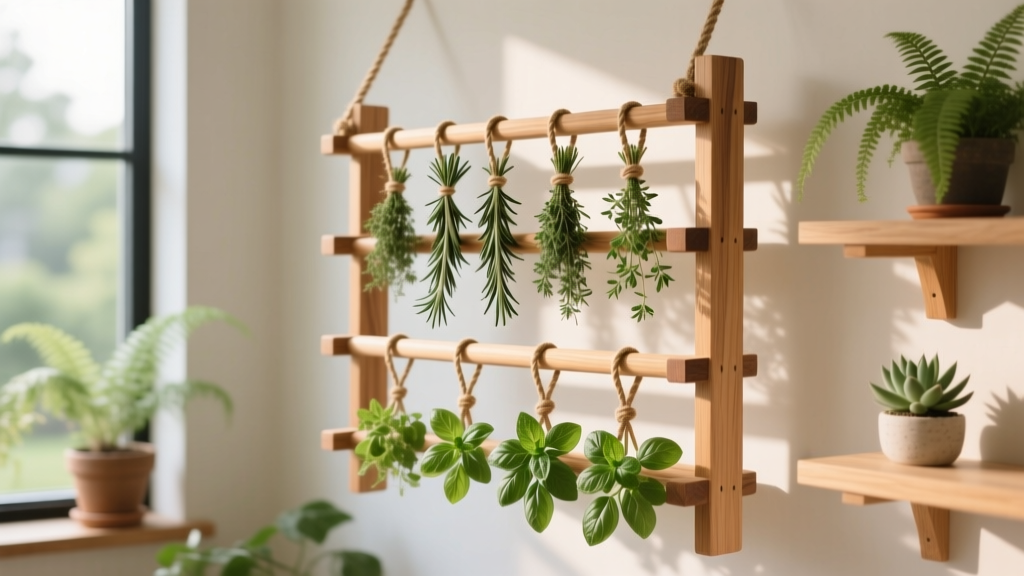
DIY Garden Drying Rack for Herbs
The most common herb-drying mistake isn’t “forgetting to harvest”—it’s drying a thick, leafy bundle like basil or mint on a hook and wondering why it turns black or smells like a basement. Herbs don’t fail because you “didn’t try hard enough.” They fail because air can’t move through the bundle, humidity gets trapped, and the leaves oxidize or mold before they dry.
A simple DIY drying rack fixes that because it spreads herbs out, keeps airflow consistent, and lets you dry small amounts fast (so flavor stays bright). Below are rack builds and the little hacks that make the difference between dusty-tasting herbs and jars you’re proud to pop open in January.
Plan the Rack Like You’re Building a Tiny Dehydrator (Airflow First)
Tip: Design for 360° airflow, not “hanging pretty.”
A rack should let air hit the herbs from above and below; flat screens with space underneath beat hooks for most tender herbs. Aim for at least 2 inches of clearance under each drying surface so air can circulate. If you can slide your hand under the tray and feel air moving, you’re in the right zone.
Example: If you’ve got a patio table, put your rack on two scrap 2x4 blocks (or even upside-down yogurt cups) to lift it and prevent the “stale pocket” of air that slows drying.
Tip: Keep herb layers thin—one leaf deep is the goal.
Overlapping leaves trap moisture and extend drying time, which increases browning and musty flavor. Spread herbs in a single layer whenever possible; for small-leaf herbs (thyme, oregano), a light scatter is fine as long as you can see mesh between most sprigs.
Example: A single 2 ft x 3 ft screen tray can dry roughly 4–6 cups of loose basil leaves in one layer—more than that and you’re asking for dark spots.
Tip: Use insect screen or hardware cloth wisely (mesh size matters).
Standard fiberglass window screen works for small leaves and prevents tiny bits from falling through; 1/2-inch hardware cloth is sturdier but needs a liner (screen or muslin) for thyme and oregano. If your rack is outdoors, screen also keeps bugs off, especially if you add a second screen layer as a “lid.”
Cost hack: A roll of window screen is often $10–$18; one roll can outfit multiple trays. If you already have an old window screen frame, you’re basically done.
Three DIY Rack Builds (Pick the One That Fits Your Space)
Tip: Build the “Old Window Screen Tray” in 10 minutes.
Repurpose a window screen frame as a drying tray—light, breathable, and already perfectly tensioned. Set it on bricks or scrap lumber for airflow underneath, and cover herbs with a second screen to keep leaf litter and insects off.
Example: A gardener with a small balcony can dry parsley on a screen laid across two storage bins, then stash the whole tray upright behind a chair when it rains.
Tip: Make a stacked “Bakery Rack” with 5-gallon buckets and mesh shelves.
If you need volume, stack multiple drying levels: use three 5-gallon buckets as legs and cut mesh trays (screen stretched over a simple wood frame) to sit on top. Space shelves 6–8 inches apart so air moves between layers and you can slide trays out easily.
Real-world scenario: If you harvest a full bed of oregano at once, a multi-tier rack prevents you from piling herbs in bowls (which sweat fast). Add a small box fan 3–4 feet away for a gentle cross-breeze.
Tip: Sew a “Hanging Mesh Herb Tower” from laundry bags.
Those pop-up mesh laundry hampers (or mesh sweater-drying racks) can be converted into a vertical drying tower. Look for mesh shelves and a zipper; hang it from a garage ceiling hook or a sturdy tree branch in shade.
Cost comparison: A pop-up mesh drying tower is often $12–$25 versus $60–$120 for a purpose-built herb drying tower.
Materials That Don’t Ruin Flavor (Yes, It Matters)
Tip: Avoid bare pressure-treated wood and fresh pine near herbs.
Fresh resinous woods can contribute odors, and pressure-treated lumber isn’t something you want near food. Stick with untreated pine, poplar, scrap hardwood, or food-safe finishes if you seal anything.
Example: If your only option is construction scrap, staple the screen so the herbs never touch the wood, then line the frame edge with kraft paper where leaves might brush.
Tip: Choose fasteners that won’t rust and stain your herbs.
Use stainless staples or galvanized staples for screens, especially if your rack lives in a humid shed. Rust flakes can fall onto leaves and discolor them, and rusty staples loosen faster.
Specifics: A 3/8-inch staple length is usually enough for screen-to-frame attachment without blowing through thin wood.
Tip: Skip scented “anti-mold” liners and dryer sheets (they perfume your harvest).
Herbs absorb odors easily, and a rack should be boring and neutral. If you need a liner, use plain cotton muslin or unbleached parchment for delicate petals or tiny leaves—no fragrance, no coatings.
Example: Chamomile heads pick up smells fast; dry them on plain muslin stretched tight, then dump directly into a jar.
Harvest & Prep Tricks That Cut Drying Time (and Keep Color)
Tip: Harvest after dew dries, but before midday heat.
For most herbs, late morning harvest hits the sweet spot: surface moisture is gone, but essential oils haven’t cooked off in the hot sun. Many extension services recommend harvesting when plants are dry to reduce mold risk during drying (University of Minnesota Extension, 2019).
Example: If dew usually lingers until 9 a.m. in your yard, harvest at 10–11 a.m. and get herbs on the rack within 30 minutes.
Tip: Wash only when you must, and dry aggressively if you do.
Washing adds hours of drying time; for clean garden herbs, a hard shake and a quick inspection is often better. If you need to rinse (aphids happen), spin in a salad spinner for 20–30 seconds and pat with a towel before racking.
Real-world scenario: After a rainstorm splashes soil onto cilantro, rinse, spin, and then spread on the rack under a fan. If you skip the spin, cilantro can turn limp and dark before it ever dries.
Tip: Strip thick stems for leafy herbs (especially basil, mint, lemon balm).
Stems hold moisture longer than leaves, so leaving thick stems attached slows drying and raises mold risk. For tender herbs, strip leaves and dry them loose; for woody herbs (rosemary, thyme), whole sprigs dry well.
Example: Basil leaves stripped from stems can dry in 24–48 hours with good airflow; big bundled basil can take 5–10 days and often browns.
Dial In the Drying Environment (Your Rack Can’t Fix Bad Conditions Alone)
Tip: Target 60–80°F with low humidity and shade.
Warm, dry air speeds drying; direct sun can bleach herbs and dull flavor. A shaded porch, airy shed, or spare room with a fan is ideal, especially if humidity stays under roughly 60%.
Citation: Colorado State University Extension notes that herbs should be dried in a warm, well-ventilated area out of direct sunlight to preserve color and oils (Colorado State University Extension, 2020).
Tip: Use a fan—but don’t blast the herbs like a wind tunnel.
A small fan on low, placed 3–6 feet away, creates steady airflow without scattering leaves or concentrating dust. If herbs flutter hard or flip over, it’s too strong; you want a gentle “moving air” feel.
Example: In a garage, aim the fan across the rack (not directly at it) to create cross-ventilation—this dries more evenly than head-on wind.
Tip: Know your “done” test: crisp leaves, bendy stems means wait.
Leaves should crumble between fingers; stems should snap cleanly rather than fold. Many herbs feel dry on top but hold moisture in midribs—give them a few extra hours once they “seem” done.
Specific timing: With decent airflow, oregano and thyme often dry in 2–4 days; mint and basil can take 1–3 days if stripped and spread thin.
“Drying is finished when the product is sufficiently brittle to crumble easily.” — National Center for Home Food Preservation, University of Georgia (updated guidance used widely in home food preservation)
Smart Layout Tricks (So You Don’t Lose Half Your Herbs)
Tip: Label racks by date and herb—your nose lies after day three.
Multiple herbs drying at once can start smelling similar, and you’ll forget what went up when. Use painter’s tape on the frame: “Mint 6/11” or “Sage 6/11.” It also helps you rotate priority herbs that bruise easily.
Example: If you’re drying oregano and marjoram together, labeling prevents you from mixing flavors unintentionally—marjoram is sweeter and gets lost if you accidentally “top off” the oregano jar.
Tip: Don’t mix high-moisture and low-moisture herbs on the same tray.
Mint and basil release moisture longer than thyme or rosemary. If you load a tray with both, the woody herbs get overdried and lose aroma while the tender herbs are still damp.
Example: Use one tray for rosemary/thyme (sprigs), another for basil/mint (stripped leaves). Rotate trays if you only have one fan.
Tip: Add a “crumb catcher” layer for tiny-leaf herbs.
Thyme leaves and oregano bits love to fall through coarse mesh. Put a sheet of clean paper or a shallow baking tray under the rack to catch crumbs—then funnel them straight into a jar.
Money saver: Catching crumbs can easily save 10–20% of your harvest compared to sweeping the floor or losing it in the grass.
Comparison Table: Air-Drying Rack vs Dehydrator vs Hanging Bundles
| Method | Best for | Typical drying time | Flavor/color risk | Approx. cost |
|---|---|---|---|---|
| DIY screen rack + fan | Leafy herbs (basil, mint), small batches to big harvests | 1–4 days (depends on humidity) | Low if shaded and spread thin | $0–$25 (repurposed screen to simple build) |
| Electric dehydrator | Humid climates, fast turnaround, consistent results | 1–6 hours at low temp | Medium if temperature is too high | $40–$150 |
| Hanging bundles | Woody herbs (rosemary, sage) in dry climates | 5–14 days | Higher for leafy herbs (mold/browning) | $0–$10 (string/hooks) |
Troubleshooting: Fix Problems Before They Ruin the Batch
Tip: If herbs smell musty at day two, stop and switch tactics.
Musty odor means moisture is lingering too long—mold can follow even if you don’t see it yet. Immediately spread herbs thinner, increase airflow, and consider finishing in a dehydrator at low temperature or in an oven with the light on and door cracked.
Example: A rainy week in the Southeast can stall air-drying; finish mint in a dehydrator at 95–105°F to keep flavor while preventing mildew.
Tip: If leaves brown fast, you’re using too much heat or sun.
Browning is usually oxidation from heat/sun or slow drying in a thick layer. Move the rack to shade, strip leaves off stems, and aim for faster drying with a gentle fan.
Real-world scenario: A west-facing porch can get blasted by late sun—basil can darken in one afternoon. Dry it indoors near a bright window (light is fine; direct sun is not).
Tip: If your herbs taste weak, you harvested at the wrong stage—or overdried.
Harvesting after flowering can reduce leaf quality for some herbs, and overdrying drives off aroma. For many culinary herbs, harvest before full bloom for best flavor, and store as soon as they’re dry—not days later on the rack.
Example: If dill has already flowered and tastes faint, use it dried for soups and breads, but freeze fresh dill next time for peak punch.
Three Real-World Setups (Copy These and Adjust)
Scenario: Apartment balcony with wind and curious pigeons.
Use a window screen tray with a second screen “lid” clipped on using clothespins. Dry in bright shade (not sun) and weight the corners with 4 small rocks or binder clips so gusts don’t flip the tray.
Shortcut: If wind is constant, skip the fan and focus on securing the rack—balcony airflow is usually enough.
Scenario: Humid garage in a coastal climate.
Build a stacked rack (two or three trays) and run a small fan plus a cheap hygrometer to watch humidity. If humidity stays above 65% for days, plan to finish in a dehydrator or indoors with A/C; air-drying can stall and invite mold.
Cost note: A basic hygrometer is often $8–$15, and it can save an entire harvest by telling you when you’re fighting physics.
Scenario: Big backyard harvest (sage, rosemary, thyme) all at once.
Dry woody herbs as whole sprigs on hardware cloth lined with screen, and rotate trays every 12 hours for even drying. Once dry, strip leaves over a clean sheet pan, then store in jars away from light.
Example: A single rosemary shrub can produce enough sprigs to fill two full screen trays; drying flat prevents needle drop from turning into a floor mess.
Storage Tricks So Dried Herbs Don’t Turn to Dust (or Lose Aroma)
Tip: Condition herbs in a jar for 2–3 days before long-term storage.
Even when herbs feel dry, a few pieces may hold moisture. Put dried herbs in a jar loosely, shake once daily for 2–3 days, and watch for fogging—if you see condensation, put everything back on the rack for another day.
Example: This is especially helpful for mint and lemon balm, where thick midribs can hide moisture and later soften the whole jar.
Tip: Store whole leaves when you can; crush right before cooking.
Whole dried leaves hold volatile oils longer than pre-ground herbs. Keep oregano and sage mostly whole, then crumble a pinch as you cook—your pasta sauce will taste noticeably brighter.
Money saver: Whole-leaf home-dried herbs can replace store jars that run $4–$7 each; a single strong oregano plant can cover multiple jars per season.
Tip: Use small jars and fill them 80–90% full to reduce repeated air exposure.
Every time you open a big jar, you swap in humid kitchen air. Smaller jars limit the damage; keep a “working jar” on the spice shelf and stash the rest in a cool, dark cabinet.
Example: Split a batch into two 8-oz jars instead of one large quart jar—open the second only when the first is half gone.
A good DIY herb drying rack isn’t fancy—it’s just consistent. Build something that spreads herbs thin, keeps air moving, and fits your actual space (balcony, garage, shed, or spare room). Once you nail airflow and timing, you’ll stop “hoping” herbs dry and start getting the same clean, fragrant results every harvest.