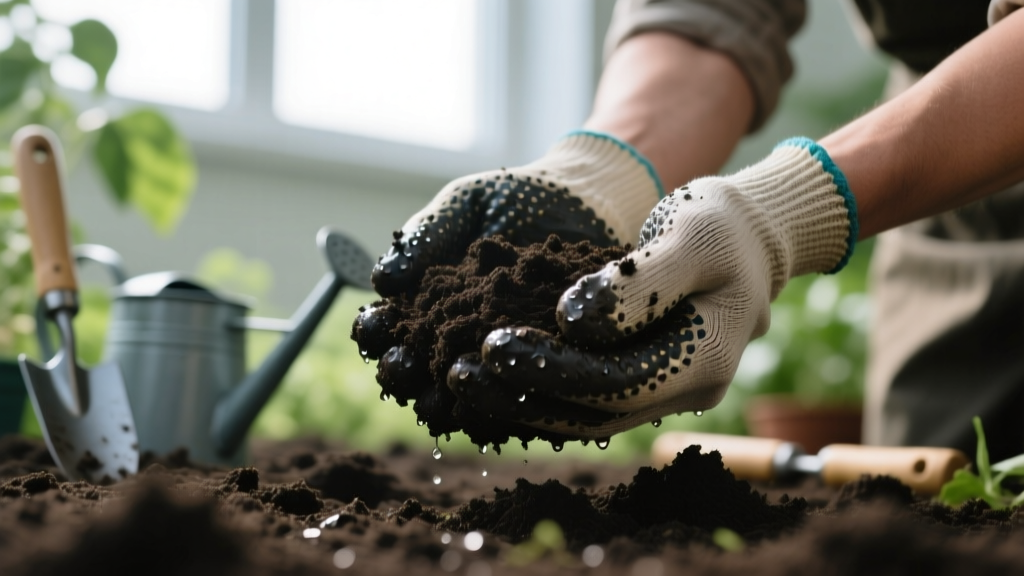
Why You Should Never Work Wet Soil
The fastest way to ruin great garden soil isn’t forgetting fertilizer—it’s stepping into a bed “just for a minute” after rain. That one casual visit can squeeze out the air pockets roots need, mash delicate soil crumbs into a brick-like layer, and set you up for weeks of slow growth, yellow leaves, and mysteriously stubborn weeds.
Most gardeners learn this the hard way: wet soil feels soft and cooperative, so it’s tempting to dig, till, plant, or haul a wheelbarrow across it. But when soil is wet, it’s at its most structurally fragile. A little pressure at the wrong time can create compaction that lasts a season (or longer), especially in clay-heavy beds.
What Wet Soil Does (and Why Plants Hate It)
Tip: Remember the “air space” you’re crushing
Healthy soil isn’t just dirt—it’s a mix of minerals, organic matter, water, and air. When soil is waterlogged, the pore spaces fill with water; then foot traffic or tools collapse those spaces and push out what little air remains. Roots and soil microbes need oxygen, and when it’s limited, growth slows and diseases get an opening.
Example: If your tomato bed stays squishy for 48 hours after a storm and you walk on it to stake plants, you often see purple-tinged leaves and stalled growth a week later—classic oxygen stress.
Tip: Know that wet clay compacts like modeling clay
Clay soils are made of tiny particles that slide and stack when wet, creating dense layers when pressed. That’s why working wet clay can leave a “plow pan” or smeared sides in planting holes that roots struggle to penetrate. Sandy soils are more forgiving, but they can still smear and seal at the surface if you work them wet.
Data point: A single wheelbarrow trip can put 200–300 lb of load over a small footprint, and that pressure is amplified when soil is saturated.
Tip: Understand drainage can get worse for months
Compaction isn’t just about today’s planting—it changes how water moves later. Once pores collapse, water infiltrates more slowly, puddles longer, and you’re more likely to get runoff (and nutrient loss) the next time it rains. It becomes a loop: wet soil gets compacted, then compacted soil stays wet.
Credible source: USDA NRCS soil health materials consistently emphasize limiting traffic on wet soils to prevent compaction and pore collapse (USDA NRCS, 2020).
“The potential for compaction is greatest when soils are wet… traffic and tillage when wet can cause long-term degradation of soil structure.” — USDA Natural Resources Conservation Service (NRCS), Soil Health guidance (2020)
Quick Tests: How to Tell If It’s Too Wet (Without Guessing)
Tip: Do the squeeze-and-ribbon test (takes 10 seconds)
Grab a handful from 3–4 inches deep and squeeze. If it forms a shiny ball that doesn’t crumble when you poke it, it’s too wet to work. For clay, try rolling it between thumb and finger—if it ribbons longer than 2 inches before breaking, step away and wait.
Example: If your raised bed looks dry on top but the handful from 4 inches down makes a sticky ribbon, you’ll smear the bed if you cultivate today.
Tip: Use the footprint test where you actually plan to walk
Step gently in the bed or path and look at the print. If the footprint holds water sheen or the sides look glazed, it’s too wet for traffic. If it crumbles at the edges and doesn’t shine, light work may be okay—especially on mulched paths, not in planting zones.
Timing: After a 1-inch rain, many clay yards need 24–72 hours before they’re safe to work; sandy beds may bounce back in 12–24 hours.
Tip: Cheap moisture meter hack—use a bamboo skewer
Push a bamboo skewer (or chopstick) 6 inches into the soil and pull it out. If it comes out with wet mud clinging thickly, you’re still in the danger zone; if it’s just lightly damp and crumbly, you’re closer to workable. It’s not lab-grade, but it prevents “looks dry” mistakes.
Cost: A pack of skewers is usually $2–$5 and lives in the potting shed forever.
High-Risk Mistakes to Avoid (These Cause the Most Damage)
Tip: Never till or “fluff” wet beds—this is how clods are born
Tilling wet soil doesn’t create a nice seedbed; it creates big clumps that bake into concrete when they dry. You’ll spend extra hours later breaking clods, and tiny seedlings struggle to push through the chunky crust. If you must prep, wait until soil crumbles in your hand instead of smearing.
Case example: A community garden plot on heavy clay was rototilled right after spring rain. The result was fist-sized clods that stayed all season; the gardener had patchy carrots and stunted beets despite regular watering.
Tip: Don’t dig planting holes in wet clay (you make a “glazed pot”)
In wet clay, a shovel can polish the sides of a hole so smooth that water and roots don’t move through it well. Roots circle instead of escaping, and the hole can hold water like a bowl. If you absolutely must plant, rough up the sides with a hand fork and mix in compost at a modest rate.
Ratio: Aim for 1–2 inches of compost on top worked into the top 6 inches (roughly 15–30% by volume). More isn’t always better in wet clay; you want structure, not a soggy sponge.
Tip: Avoid walking in beds—use boards or stay on paths
Foot traffic is a stealth compactor because it’s repeated in the same spots. If you need access, lay down a 2x8 board (or a scrap of plywood) to spread your weight. Better yet, design beds no wider than 4 feet so you can reach the middle without stepping in.
Money saver: A $10–$20 piece of plywood can prevent a season of poor growth that would cost far more in compost, plants, and frustration.
Tip: Keep heavy loads off wet ground (wheelbarrows, carts, tractors)
Wheelbarrows and garden carts concentrate weight into narrow tire tracks, which can become ruts that turn into puddle lanes all spring. If you must move materials, wait for a drier window or unload at the edge and carry smaller batches. For frequent hauling, put down wood chips 3–4 inches deep on paths to buffer the soil.
Example: Moving five 40-lb bags of soil (200 lb) across a wet lawn can leave two trenches that stay soggy every rain afterward.
Smart Workarounds When You Can’t Wait
Tip: Shift to “no-pressure tasks” the day after rain
If you’re itching to garden, pick jobs that don’t involve digging or stepping in beds: clean and sharpen pruners, pot up starts, organize drip lines, or top up mulch from the edge. You’ll stay productive without wrecking structure. This is how experienced gardeners stay ahead without causing damage.
Scenario: After a 2-day wet spell, use the time to mix potting soil (for containers) and label seedlings instead of “just weeding real quick” in muddy beds.
Tip: Weed from the edges with a long-handled tool
Small weeds pull easily when soil is slightly damp, but walking into the bed is the problem. Use a stirrup hoe or a long-handled weeder from the path, reaching in. If you must hand-pull, kneel on a board that spans the bed to distribute pressure.
Cost: A decent stirrup hoe is often $20–$35 and can replace hours of muddy hand weeding (and the soil damage that comes with it).
Tip: Plant in plugs or mounds instead of “working the whole bed”
If timing is tight (like getting brassicas in), avoid broad cultivation. Make small, shallow planting spots, add a handful of compost, and set plugs without turning the entire bed. For very wet sites, plant on low mounds 3–6 inches high to lift roots above saturated soil.
Example: In a rainy spring, planting squash on 6-inch mounds often outperforms flat planting in the same bed because the crown stays warmer and better aerated.
Fixing Compaction (If You Already Did the Thing)
Tip: Don’t “re-till to fix it”—use deep-rooted biology instead
Once soil is compacted, repeated tilling can make structure worse over time by breaking aggregates and burning organic matter. Instead, use plants to drill channels: daikon radish, annual rye, and clover are classic options. Their roots open pathways, then decay into natural aeration.
Timing: Sow daikon radish 6–10 weeks before first frost; it needs enough time to form a thick taproot.
Source: Cover crop recommendations for compaction relief are widely supported by extension guidance, including Purdue Extension’s cover crop resources (Purdue Extension, 2019).
Tip: Add organic matter in thin, repeat doses (not one massive dump)
If you add 6 inches of compost all at once, you may create a soggy, overly rich layer that collapses later. A better approach is 1 inch of compost per season (spring or fall) plus consistent mulching. Over a year or two, you’ll see better crumble, fewer puddles, and easier digging.
Data: 1 inch of compost over 100 sq ft is about 8.3 cubic feet—roughly 6–7 bags of 1.25 cu ft compost, often $25–$50 total depending on local pricing.
Tip: Use a broadfork when soil is moist, not wet
A broadfork loosens deep layers without flipping them, which preserves soil life and reduces clod formation. The trick is moisture timing: you want it slightly damp so tines penetrate, but dry enough that the soil fractures instead of smears. If soil sticks to the tines in slabs, wait another day.
DIY option: For small beds, a digging fork used gently in a grid pattern can mimic broadfork benefits—just avoid prying so hard that you lift wet slabs.
Raised Beds, Containers, and Paths: Design Your Way Out of Mud Trouble
Tip: Build beds you never step in (4 ft wide is the sweet spot)
The cheapest compaction prevention is bed design: permanent beds with permanent paths. Keep bed width at 3–4 feet so you can reach the center from either side. If you’re building new, go 10–12 inches high for better drainage in heavy soils.
Scenario: A side-yard garden with native clay stopped puddling after switching from in-ground rows to 12-inch raised beds with wood-chip paths.
Tip: Wood chip paths are a budget-friendly “mud insurance policy”
Wood chips spread your weight and absorb surface moisture, so you’re not grinding wet soil into ruts. A 3–4 inch layer is usually enough for a season; top up as it breaks down. Many towns offer free or low-cost chips through municipal tree crews or chip-drop programs.
Cost comparison: Free chips + your labor vs. $6–$12 per bag for mulch at a big box store.
Tip: Use containers when the ground is unworkable
When spring stays wet, containers let you plant on schedule without touching the mud. A 10–15 gallon fabric pot is great for tomatoes or peppers, and you can control drainage with a potting mix that won’t compact like garden soil. Place pots on pavers or gravel so they don’t sink and block drainage holes.
Data: A 15-gallon fabric pot often costs $6–$12; filling it with bagged mix can run $15–$30 depending on brand and sales—still cheaper than losing a month of growth.
Wet Soil vs. Workable Soil: A Quick Comparison
| Task | Doing it in wet soil | Doing it when soil is workable (crumbly) |
|---|---|---|
| Tilling/cultivating | Creates clods, smears layers, can form hardpan | Makes fine seedbed with fewer clumps |
| Planting transplants | Glazed holes, waterlogged roots, slow establishment | Roots explore quickly; fewer disease issues |
| Walking/wheelbarrow traffic | Ruts, compaction, puddling “channels” | Minimal structure damage; better infiltration |
| Weeding | Easy pulling but you compact the bed doing it | Still manageable; less long-term harm |
Real-World Scenarios (and Exactly What to Do Instead)
Scenario 1: Early spring vegetable bed after a 1-inch rain
You planned to sow carrots today, but the soil makes a tight ball in your fist. Instead of raking and seeding (which can crust badly), prep your carrot area by laying a board on the bed and gently raking only the top 1/2 inch from the edge—if it smears, stop. Come back in 24–48 hours, then sow and cover with a thin layer (about 1/4 inch) of fine compost to reduce crusting.
Scenario 2: You need to plant a tree, but the yard is soggy
Planting a tree in waterlogged soil can turn the hole into a bathtub. Wait until the soil passes the crumble test, or mound plant: create a broad mound 12–18 inches high and 3–5 feet wide, then plant so the root flare sits slightly above grade. This keeps new roots out of the saturated zone while the site improves.
Source: Tree planting best practices, including keeping the root flare at proper height and avoiding waterlogged planting conditions, are emphasized by multiple extension services (e.g., University of Minnesota Extension, 2022).
Scenario 3: Lawn or garden path turns into a mud runway every storm
If you keep walking the same muddy line, you’re basically building a trench on purpose. Mark a permanent path, lay down cardboard, then add 4 inches of wood chips; in high-traffic spots, add inexpensive stepping stones or pavers every 18–24 inches. This route becomes your “all-weather access” so you’re not tempted to cut through beds.
Scenario 4: You already compacted a bed hauling compost
Don’t try to pulverize it immediately with a tiller. Let it dry to moist-crumbly, then broadfork in a grid every 8–10 inches, and top-dress with 1 inch of compost plus 2–3 inches of mulch. Follow with a cover crop (clover or rye) or a deep-rooted seasonal planting to keep biology working the soil open.
Small Habits That Make a Big Difference
Tip: Set a “rain delay rule” for yourself
Make it automatic: no bed traffic for 24 hours after a soaking rain, and 48–72 hours if you have heavy clay. This one rule prevents most accidental compaction because you’re not renegotiating the decision every time you see a weed. If it’s a light shower (under 1/4 inch), your soil may be workable sooner—use the squeeze test to confirm.
Tip: Keep a dedicated kneeling board near the garden
A kneeling board is the simplest “pro move” for wet-season gardening. A 10–12 inch wide board spreads your weight so you can reach in, hand-weed, or harvest without punching footprints into the bed. It’s also easier on knees, which means you’re less likely to step where you shouldn’t.
DIY: Cut a scrap 2x10 into a 24–30 inch length; sand the edges. Cost is often $0 if you use leftovers.
Tip: Mulch before the rainy season, not during it
Trying to mulch when it’s already muddy usually leads to extra traffic and mess. Put down 2–3 inches of straw or shredded leaves in fall, or early spring before the wet stretch hits. Mulch buffers raindrop impact, reduces crusting, and keeps the surface from sealing shut.
Example: A bed mulched with 2 inches of shredded leaves in October often dries faster and stays more crumbly in March than a bare bed getting hammered by winter rains.
If you take nothing else from this: wet soil is when your garden is most vulnerable, not when it’s most workable. Wait for that crumbly feel, keep your feet in the paths, and use boards, mulch, and smart timing to get the same jobs done without paying the compaction tax later. Your plants won’t “thank you” in words, but they’ll show it with faster growth, fewer yellow leaves, and soil that gets better every season instead of worse.