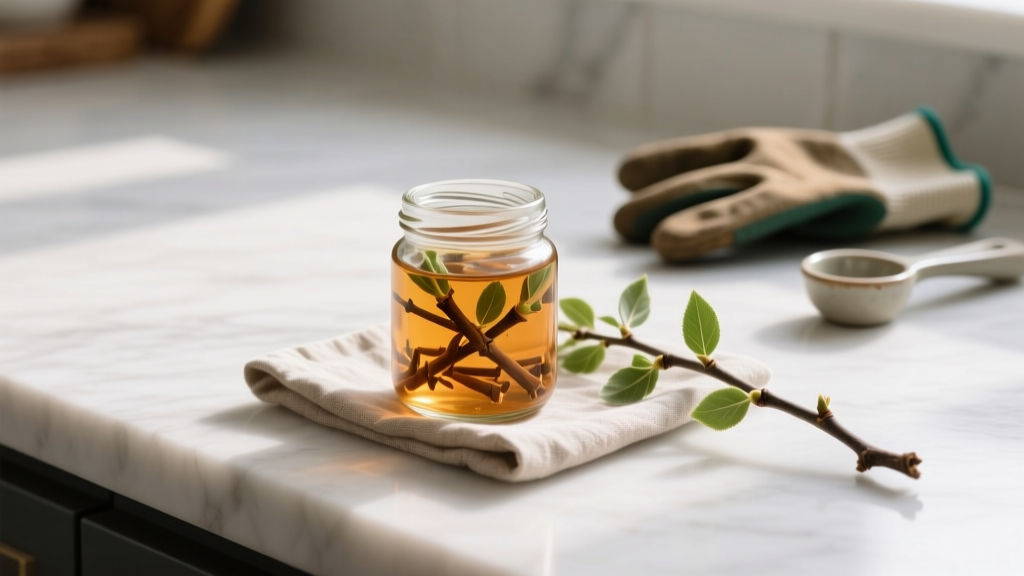
Making Your Own Rooting Hormone from Willow
Most cuttings don’t fail because you “forgot to mist.” They fail because people use the wrong part of the willow (old wood) or brew willow water like tea and accidentally destroy the very compounds they’re chasing. If you’ve ever soaked hardwood twigs for an hour in hot water, then watched your cuttings sulk for 3 weeks, you’ve met this mistake firsthand.
Willow-based rooting “hormone” is a real, practical hack—but it’s not magic, and it’s not the same as commercial IBA powders. Think of it as a cheap, quick way to nudge certain plants toward rooting, especially softwood and semi-hardwood cuttings, while also giving them a mild anti-stress boost.
Know What Willow Actually Does (and Doesn’t)
Tip: Use willow for a gentle boost, not as a guaranteed replacement for IBA
Willow contains salicylic acid–related compounds and naturally occurring auxins that can support root initiation and reduce stress in cuttings, but it won’t behave like a standardized 0.1%–0.8% IBA product. If you’re propagating easy-to-root plants (coleus, pothos, many herbs), willow water can be plenty. If you’re rooting stubborn woody plants (certain conifers, older hardwood), a commercial hormone usually wins for consistency.
Example: If you’re rooting 20 basil cuttings in water, willow water can speed things up. If you’re rooting 20 semi-hardwood camellia cuttings, I’d still reach for a commercial hormone and use willow water as the soak.
Tip: Don’t boil willow water—heat can reduce effectiveness
People often make willow water like a strong tea, but boiling water can degrade plant compounds. Use cool water soaks or warm-not-hot steeping instead. A good rule: if it’s hot enough you wouldn’t hold your finger in it, it’s hotter than you need.
Example: I’ve seen “boiled willow tea” turn into a brown, bitter brew that smelled like bark. The same batch made with cool water stayed pale and worked noticeably better for soft stems like mint and coleus.
“Auxins are important in rooting of cuttings, but the response varies widely by species, cutting type, and environment.” — NC State Extension, 2022
Harvesting Willow the Right Way (This Matters More Than the Recipe)
Tip: Use first-year green growth, not older barky twigs
The best material is young, flexible willow shoots about pencil thickness or smaller—think new whips, not gray, plated bark. Cut 6–12 inch pieces from growth produced this year. Younger shoots typically contain more of the compounds associated with rooting support than old wood.
Example: If your willow stems “snap” instead of bend, they’re likely too old. Go for stems that bend into a U-shape before breaking.
Tip: Harvest in late winter through spring for the most potent material
Willow is often easiest to identify and harvest when it’s pushing fresh growth. Late winter to spring (roughly February–May in many climates) tends to be a sweet spot for collecting vigorous young shoots. You can still make willow water in summer, but if the shoots are woody and hardened, expect a weaker batch.
Real-world scenario: In early March, I take a bundle of whips during pruning and freeze extras. In July, when neighbors ask for “that willow rooting trick,” I can thaw a bag instead of hunting for perfect green shoots.
Tip: Pick safe, unsprayed willow—roadsides are a bad bet
Willow drinks up whatever is in the soil and runoff. Avoid roadside trees (salt and hydrocarbons) and any willow you suspect was sprayed with herbicides. If you can, harvest from your own yard or a trusted friend’s property.
Example: If the willow is growing along a ditch near a parking lot, skip it. A “free” bundle isn’t worth contaminating 30 cuttings and your potting area.
Two Reliable Willow Hormone Recipes (Choose What Fits Your Schedule)
Tip: Cold-soak recipe for maximum simplicity (and minimal compound loss)
Chop young willow shoots into 1–2 inch pieces. Fill a clean jar about 1/3 full of chopped willow, then add water to the top (roughly a 1:2 ratio by volume: 1 part willow pieces to 2 parts water). Cover and steep 24–48 hours at room temperature, then strain.
Numbers that matter: A quart jar (about 1 liter) usually holds enough willow water to soak 20–40 cuttings depending on size. Steeping longer than 48 hours often turns sour—if it smells “off,” toss it.
Tip: Quick warm-steep recipe when you need it tonight
If you don’t have 2 days, pour warm water (not boiling) over chopped willow in a heat-safe container. Aim for roughly 120–140°F (49–60°C)—warm tap water is usually close enough. Steep 6–12 hours, then strain.
Example: I’ve used this same-day method when a friend dropped off 12 rose cuttings unexpectedly. We steeped willow overnight and did the soak first thing in the morning.
Tip: Make a “willow concentrate” you can dilute as needed
For a stronger batch, pack chopped willow into a jar about 1/2 full and top with water, then cold-soak 24 hours. Strain and store as concentrate. When you use it, dilute 1:1 with clean water for a more consistent, mild strength across batches.
Money saver: This approach means you’re not constantly harvesting. One packed quart jar can become roughly 2 quarts of usable solution after dilution.
Storage and Shelf Life (Don’t Keep It Forever)
Tip: Refrigerate and label—use within 5–7 days
Willow water is basically plant extract in water: it spoils. Store it in the fridge and label the date. Plan to use it within 5–7 days for best results; if it gets cloudy, fizzy, or funky-smelling, dump it.
Example: I keep willow water in a reused glass pasta sauce jar with masking tape on the lid: “Willow 4/18.” When it hits day 7, it either gets used or composted.
Tip: Freeze in ice cube trays for instant small batches
If you only propagate occasionally, freeze strained willow water in ice cube trays. Pop 2–4 cubes into a jar and add water to make a fresh small batch. This avoids the “I forgot it in the fridge and now it’s a science experiment” problem.
Numbers: Standard ice cubes are about 1 tablespoon (15 ml). Four cubes plus 1 cup (240 ml) water makes a handy ~300 ml working solution for a small propagation session.
How to Apply Willow Water for Better Rooting
Tip: Use it as a pre-soak, not just a watering replacement
The most reliable way to use willow water is soaking the bottom 1–2 inches of your cutting before sticking. Soak softwood cuttings for 2–4 hours, and semi-hardwood cuttings for 6–12 hours. This puts the solution right where it needs to be without leaving stems waterlogged for days.
Real-world scenario: For lavender cuttings (semi-hardwood), I soak overnight, then stick them into a gritty mix. The next day they look less wilted than untreated cuttings from the same batch.
Tip: Pair willow water with a humidity plan (a plastic tote works)
Willow water won’t compensate for a cutting that’s losing moisture faster than it can uptake water. Use a clear tote, a vented dome, or a zip-top bag on skewers to keep humidity high for the first 7–14 days. Open the cover for 5 minutes daily to reduce mold.
Example: A $6 clear storage bin becomes a mini propagation chamber for 30 small pots—cheap and way more consistent than misting whenever you remember.
Tip: Use a sterile, airy rooting medium—willow can’t fix soggy soil
Rooting happens fastest when oxygen is available at the cut end. Use a simple mix like 50% perlite + 50% peat or coco coir (by volume), lightly moistened. If your mix drips water when squeezed, it’s too wet—add more perlite.
Numbers: For a small batch, mix 2 cups perlite with 2 cups coco coir, then add about 1/2 cup water and adjust until evenly damp.
Willow Water vs Commercial Rooting Hormone (Honest Comparison)
| Feature | Willow Water (DIY) | Commercial Rooting Hormone (IBA/NAA) |
|---|---|---|
| Typical cost per batch | $0–$2 (mostly your time + jar) | $6–$15 per container |
| Consistency | Varies by willow age, season, recipe | High (labeled concentration) |
| Best use | Easy/moderate cuttings, stress reduction, pre-soak | Harder-to-root cuttings, production consistency |
| Shelf life | 5–7 days refrigerated (or frozen longer) | Often 1–3 years if stored dry and cool |
| Application style | Soak or water-in | Dip-and-stick powder/gel/liquid |
One more reality check: university propagation guides consistently show that synthetic auxins (like IBA) can significantly improve rooting percentages in many species, especially woody ornamentals. For example, the University of Florida IFAS Extension notes that auxins such as IBA and NAA are commonly used to stimulate rooting in cuttings (UF/IFAS Extension, 2018). Willow water can help, but it’s not standardized like those products.
Also, don’t ignore the basics of cutting physiology. The Royal Horticultural Society emphasizes that success depends heavily on cutting type, timing, and conditions—not just additives (RHS, 2020).
Shortcut Techniques That Stack the Odds in Your Favor
Tip: Wound woody cuttings lightly to expose cambium (then soak)
For semi-hardwood cuttings (rosemary, fig, hydrangea), scrape a 1-inch strip of bark off one side near the base with a clean blade. This exposes cambium and can increase rooting sites. Then do a 6–12 hour willow soak before sticking.
Example: When I propagate rosemary, unwounded cuttings might root sporadically. Wounded + soaked cuttings tend to root more uniformly in the same tray.
Tip: Use the “two-step” method for stubborn plants: IBA dip, willow water soak afterward
If you have commercial hormone, you can still use willow water as a follow-up hydration soak (not before the powder dip). Dip in powder/gel, tap off excess, stick into medium, then water in lightly with diluted willow water. This avoids washing off the hormone while still giving the cutting that willow “tonic.”
Numbers: Water in with 1/4 cup (60 ml) per 4-inch pot—just enough to settle the medium without turning it into mud.
Tip: Replace only the bottom water layer for water-propagation (don’t keep swapping everything)
If you’re rooting in jars, constant full water changes can shock developing roots. Instead, top off daily and replace only 1/3 of the water every 3–4 days with fresh willow water or plain water. Keep the water line just below the lowest leaf node to prevent rot.
Example: For pothos, I keep the jar at a steady level and only partially refresh. Roots stay white and firm instead of turning brown and slimy.
Three Real-World Scenarios (What Works, What to Watch)
Scenario: Soft herbs in spring (mint, basil, oregano)
These are perfect candidates for willow water because they root quickly anyway—and willow can shave a few days off the “waiting for nubs” stage. Take 4–6 inch cuttings, strip the bottom 2 inches of leaves, soak 2 hours, then stick into moist perlite/coir. Expect roots in about 7–14 days depending on temperature (around 70°F/21°C is a comfortable target).
Cost note: A $5 bag of perlite plus a free willow batch can set you up for dozens of herb starts, versus buying $3–$4 nursery pots of each herb.
Scenario: Roses from a bouquet (high failure rate unless you play it smart)
Bouquet roses are often treated and stressed, so expectations should be modest. Use fresh stems (not ones that sat 10 days in a vase), take 6–8 inch cuttings, remove flowers, wound the base lightly, and soak 6–12 hours. Stick into a very clean medium and keep humidity high under a clear bin—without that humidity, they shrivel fast.
Example: A friend tried sticking bouquet roses straight into soil and got 0/10. Using a humidity tote and willow soak, we got 2/12 to root—still not amazing, but better than nothing and basically free.
Scenario: Houseplant cuttings when you’re traveling (low-maintenance setup)
If you’ll be gone for a week, set up cuttings in a closed, bright-but-not-sunny spot with a small reservoir of moisture. Pre-soak cuttings for 2–4 hours, stick into slightly damp medium, and cover with a clear tote with two pencil-size vent holes. This slows moisture loss so you’re not relying on daily misting.
Numbers: Two vent holes about 1/4 inch (6 mm) each is usually enough to reduce mold while keeping humidity high.
DIY Alternatives When You Don’t Have Willow
Tip: Use aloe gel as a rooting helper for quick dips
Fresh aloe gel can act as a soothing dip and may help keep cut ends from drying out while you stick them. Slice a leaf, scoop gel, and dip the bottom 1 inch of the cutting immediately before planting. It’s not a true auxin replacement, but it’s a handy “I have this in the kitchen” option.
Example: For spider plant pups, aloe dip + a humidity dome is often enough to speed establishment compared to plain water alone.
Tip: Cinnamon is for mold control, not rooting hormones
Cinnamon gets recommended as “rooting hormone,” but its real use is as a mild antifungal dusting. If you struggle with damping-off or fuzzy mold on cuttings, a light cinnamon dusting on the medium surface can help. Don’t expect it to replace IBA or even willow water for root initiation.
Example: If your propagation tray keeps getting white fuzz, dust cinnamon around the stem base after sticking—think “salting pasta water,” not burying the cutting in spice.
Troubleshooting: When Willow Water Seems to “Do Nothing”
Tip: If stems rot, shorten the soak and fix oxygen first
Rot usually means too-wet media, dirty tools, or soaking too long—especially for soft stems. Drop your soak time to 1–2 hours, switch to a grittier mix, and sanitize snips with 70% isopropyl alcohol. Also remove any leaves that would sit under the humidity dome and stay wet.
Example: If your coleus turns black at the base in 48 hours, it’s not “lack of hormone.” It’s a rot situation—more air, less water, cleaner handling.
Tip: If leaves wilt fast, you need less leaf area, not more willow
Cuttings lose water through leaves before they have roots to replace it. Reduce leaf area by trimming large leaves in half (especially hydrangea, fig, many ornamentals). Keep the cutting out of direct sun; bright shade is the goal.
Numbers: If a cutting has 4 big leaves, reduce to 2 leaves, then cut each remaining leaf by about 50%.
Tip: If nothing roots after 3–4 weeks, change one variable at a time
It’s tempting to change everything—different mix, different light, different soak, different container—then you learn nothing. Keep notes and adjust just one factor per batch: soak duration, cutting maturity (softwood vs semi-hardwood), or humidity level. After 2–3 rounds, you’ll have a personal recipe that beats random guessing.
Example: When my hydrangea cuttings stalled, I kept everything the same but moved the tray 2 feet back from a bright window to reduce heat stress. Rooting jumped on the next batch without changing the willow at all.
Willow rooting hormone is one of those old-school propagation tricks that’s worth keeping in your back pocket—especially because it costs almost nothing and can be made on demand. Just remember the “big three” that make it work: young green willow, a cool/room-temp steep (not boiling), and a humidity setup that prevents leaf collapse. Nail those, and willow water becomes less of a folk remedy and more of a repeatable tool you’ll actually use.
Sources: University of Florida IFAS Extension (2018) propagation guidance on auxins (IBA/NAA) use in cuttings; Royal Horticultural Society (2020) advice on factors influencing rooting success; NC State Extension (2022) propagation notes on variable species responses to auxins.