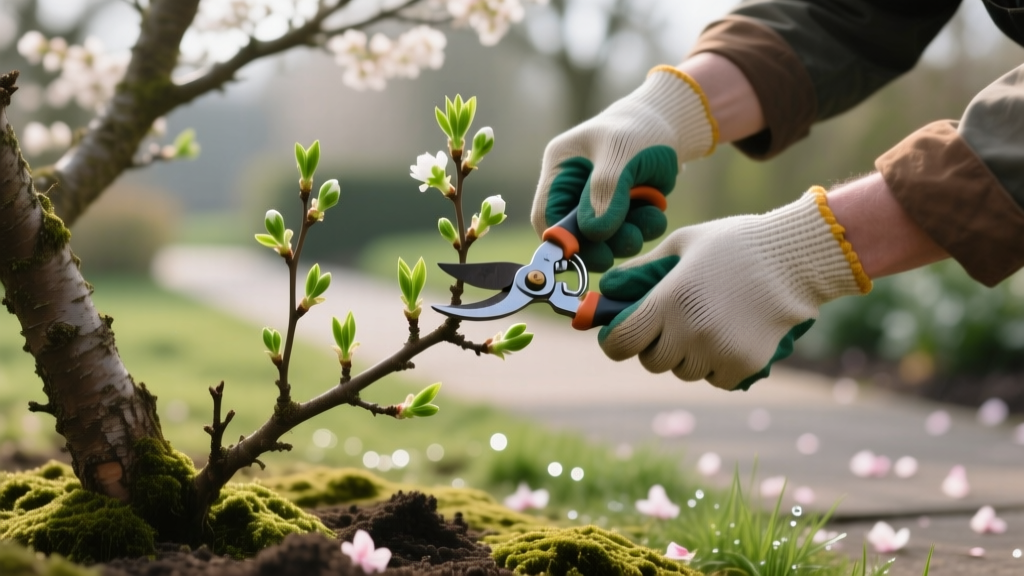
Why You Should Not Prune Everything in Spring
The sneakiest spring gardening mistake isn’t forgetting to fertilize or missing a watering day—it’s giving your whole yard the same haircut the first warm weekend. A lot of plants need spring pruning, sure. But plenty of others will punish you for it by dropping buds, bleeding sap, or sulking for months with weak, floppy growth.
The shortcut isn’t “prune early.” The shortcut is knowing what not to cut in spring—and what to do instead—so you keep flowers, avoid disease, and spend less time fixing mistakes later.
First, know what spring pruning actually risks
Tip: Don’t cut off next season’s flowers (the “old wood” trap)
If a shrub sets its flower buds last year, spring pruning can remove the blooms before you ever see them. Classic “old wood” bloomers include lilac, forsythia, bigleaf hydrangea (Hydrangea macrophylla), and many azaleas. The easiest rule: if it flowers before mid-summer, assume it blooms on old wood and prune right after flowering, not in early spring.
Example: A lilac pruned in March often produces zero flowers in May; the same lilac pruned within 2–3 weeks after bloom can still set buds for next year.
Tip: Avoid “bleeders” in early spring (maples, birch, grapes)
Some trees and vines push sap hard as they wake up. Pruning maple, birch, walnut, and grape vines during that window can cause dramatic sap bleeding—not usually fatal, but it stresses the plant and can make pruning cuts messy and slow to seal. Many extension services recommend pruning these during dormancy in mid-winter or after full leaf-out when sap pressure drops.
Source: University of Minnesota Extension (2023) notes sap bleeding is common in maples and birches when pruned in late winter/early spring.
Tip: Don’t trigger weak “water sprouts” with heavy spring cuts
Hard pruning in spring can kick off a flush of fast, soft shoots (water sprouts) that bend, break, and invite pests. This is especially common on apples, pears, ornamental pears, and over-pruned shade trees. If you must reduce size, do it in smaller steps: remove no more than 20–25% of the canopy in a year.
Example: A homeowner “topped” a crabapple in April and spent the entire summer snapping off whip-like shoots; a lighter thinning in late winter would’ve kept structure without the explosion of sprouts.
What to leave alone (or prune later) so you don’t waste spring effort
Tip: Spring-flowering shrubs—wait until right after bloom
For shrubs that bloom in spring—forsythia, lilac, viburnum, mockorange, many spireas—hold your pruners until the flowers finish. Then prune for shape and airflow while the plant still has time to set next year’s buds. Aim for a pruning window of within 3 weeks after flowering.
Case example: A row of forsythia cut to “neat balls” every March turns into a green hedge with a few yellow sprinkles. The same hedge pruned in May (right after bloom) stays full of flowers the next spring.
Tip: Bigleaf hydrangeas—spring pruning is often bloom sabotage
With Hydrangea macrophylla (mophead and lacecap types), spring pruning can remove live buds that survived winter. In spring, do a “bud check”: scratch a stem lightly with a fingernail—green underneath means alive. Only remove dead wood and spent flower heads above the first healthy buds.
Specific move: Cut spent blooms back to the first pair of fat buds, usually 6–12 inches below the flower head, rather than cutting the whole shrub down.
Tip: Lavender and rosemary—don’t cut into old woody stems in spring
Mediterranean herbs often don’t regrow well from bare wood. In spring, limit pruning to shaping the soft green growth and remove winter-killed tips; leave at least 2–3 inches of green growth on each stem. Save harder shaping for after flowering, and even then, avoid cutting into thick brown wood.
Example: A lavender cut to stubs in April may never leaf out again; a light trim that removes only the top third keeps it compact without dieback.
Tip: Evergreens—skip big spring cuts unless it’s a safety issue
Many evergreens (spruce, fir, pine) don’t back-bud reliably on old wood. If you cut past the green needles into bare branches, you may get permanent gaps. For most conifers, do minimal pruning and only “candle pinch” pines in late spring when new growth is soft, reducing candles by 1/3 to 1/2.
Money-saver: One bad spring shear on a spruce hedge can mean replacing a plant at $40–$120 each. A patient, light trim costs nothing and keeps the screen intact.
Do this instead: spring pruning that actually pays off
Tip: Start with the “3 D’s” before you touch anything else
The safest spring pruning is removing what the plant won’t miss: dead, damaged, and diseased wood. Dead stems are brittle and hollow, damaged stems are cracked or rubbing, and diseased stems often show cankers, oozing, or blackened tips. This is one of the few prune steps that’s almost always appropriate as soon as you can see what winter did.
Specific detail: Make cuts 1/4 inch above a healthy bud or back to the branch collar—don’t leave long stubs.
Tip: Thin crowded stems—don’t “shear” flowering shrubs into meatballs
Shearing creates a dense outer shell that shades the interior, leading to bare centers and more pests. Instead, thin by removing a few of the oldest stems at the base (renewal pruning), especially on lilac, forsythia, and mockorange. A good rhythm is removing 1/3 of the oldest stems each year for 3 years.
Example: An overgrown lilac responds better to removing 2–4 old trunks at ground level than to an all-over haircut that eliminates flowers.
Tip: Prune summer bloomers in spring (these are the “yes” plants)
Some shrubs bloom on new growth and actually love a spring cut: panicle hydrangea (H. paniculata), smooth hydrangea (H. arborescens), butterfly bush (Buddleja), and many roses. For panicle hydrangea, a spring trim of 1/3 can increase flower size without sacrificing blooms. For rose canes, cut to outward-facing buds and remove spindly growth thinner than a pencil.
Source: North Carolina State Extension (2022) emphasizes pruning based on bloom habit—new wood vs old wood—to preserve flowers.
Tip: Time your cuts to reduce disease pressure
Spring can be wet, and fresh cuts plus moisture can invite problems—especially with fire blight on pears and apples. If you’re pruning susceptible fruit trees and a rainy stretch is coming, wait for a dry window of 24–48 hours. Also disinfect tools between suspect cuts using 70% isopropyl alcohol (no fancy product needed).
DIY alternative: Keep a small spray bottle of rubbing alcohol in your pocket; it’s usually $2–$4 and works faster than mixing bleach solutions.
“Pruning at the wrong time is one of the biggest reasons gardeners lose flowers and invite disease. The calendar matters less than the plant’s bloom habit and the weather around your cuts.”
—Extension horticulture guidance summarized from multiple university extension publications (UMN Extension 2023; NCSU Extension 2022)
Shortcuts that save plants (and money) when you’re tempted to prune everything
Tip: Use a label system—two tags: “after bloom” and “spring OK”
This sounds almost silly until you try it: put a weatherproof tag on shrubs when they’re in flower. Mark “AFTER BLOOM” for spring bloomers and “SPRING OK” for summer bloomers/new-wood plants. A pack of 25 plastic tags costs around $6–$10, and it prevents the classic “I forgot what this was” haircut next March.
Example: Tagging a mophead hydrangea as “AFTER BLOOM / minimal spring” can save you from cutting off every bud during a cleanup frenzy.
Tip: Swap pruning for staking on floppy perennials
Not everything that flops needs a haircut. For peonies, delphiniums, and tall asters, early pruning can reduce flowers or create weak stems. Instead, add a support ring when shoots are 8–12 inches tall—plants grow through it and hide the support.
Cost comparison: A metal support ring might cost $8–$15 once, while replacing a broken peony stem costs you an entire season of blooms.
Tip: Try the “Chelsea Chop” only on the right plants (and not too early)
The Chelsea Chop (cutting back part of a perennial to stagger bloom and reduce flopping) works great on mums, asters, sedum ‘Autumn Joy’, and some salvias—but it’s not a blanket spring rule. Do it in late spring when plants are actively growing, typically late May to early June in many regions, and remove only 1/3 of height.
Example: Cutting half your asters back by one-third gives you a longer fall show instead of a single burst and collapse.
Real-world scenarios: what “don’t prune everything” looks like in actual yards
Scenario 1: The new homeowner “tidy-up weekend” (buds disappear overnight)
You move in, the shrubs look messy, and you cut everything down to knee height in April. Then May arrives: no lilac blooms, no azalea flowers, and hydrangeas that only leaf out. The fix is slow but simple—stop hard pruning spring bloomers, and switch to post-bloom thinning: remove 1/3 of oldest stems right after flowering for the next few years.
Scenario 2: The grapevine that won’t stop “crying” sap
You prune grapes in March and the cuts drip like a faucet. Usually the vine survives, but it’s stressful and frustrating. Next year, prune grapes in late winter before sap surge (often mid-winter on a mild day) or delay until after leaf-out when bleeding slows; focus on selecting canes and leaving the right number of buds for your training system.
Quick number to remember: Many backyard grape systems aim for roughly 30–60 buds per mature vine depending on vigor and variety—so you’re pruning with a plan, not just “shorter.”
Scenario 3: The “I’ll just shear it” hedge that becomes a pest hotel
A boxwood or yew hedge sheared tight every spring becomes dense outside and dead inside, with less airflow and more hiding places for pests. Instead, do selective thinning: reach inside and remove a few stems back to the main branch to let light in. If you have boxwood blight concerns, prune only in dry weather and clean tools with 70% alcohol.
Spring pruning decision table (keep this handy)
| Plant type | Best time to prune | What to do in spring | What happens if you prune hard in spring |
|---|---|---|---|
| Spring-flowering shrubs (lilac, forsythia, azalea) | Right after bloom (within 2–3 weeks) | Remove dead/damaged wood only | You remove flower buds and get few/no blooms |
| Bigleaf hydrangea (H. macrophylla) | Minimal pruning; shape after bloom if needed | Dead wood only + cut to first healthy buds | Fewer blooms; uneven dieback |
| Summer bloomers (panicle/smooth hydrangea, butterfly bush) | Early spring | Cut back by ~1/3; remove weak stems | Usually fine; may get overly tall without shaping |
| “Bleeder” trees (maple, birch, walnut) & grapes | Mid-winter dormancy or after leaf-out | Avoid major cuts during sap surge | Heavy sap bleeding; added stress/mess |
| Conifers (spruce, fir, pine) | Pines: late spring candle stage; others: minimal | Only light shaping; don’t cut into bare wood | Permanent bare patches that don’t fill in |
Smarter pruning habits that make spring easier next year
Tip: Keep cuts small—use the “pencil rule” for quick decisions
When you’re unsure, only remove stems thinner than a pencil and anything clearly dead or broken. This keeps you from making irreversible structural cuts on shrubs you don’t yet understand. Then watch the plant through the season and decide on larger pruning after you’ve seen how it blooms.
Example: With an unknown spirea, this rule prevents you from chopping a spring-bloomer and losing the show; by summer you’ll know its timing and can prune appropriately.
Tip: Trade spring pruning for mulching around woody plants
If your urge is “I need to do something,” mulch is usually the safer win. A 2–3 inch layer of shredded bark or leaf mold moderates soil temperature and moisture without risking buds. Keep mulch pulled back 2 inches from the trunk or crown to avoid rot.
DIY alternative: Run fall leaves through a mower and use them as mulch—free, and they break down into soil-building organic matter.
Tip: Invest in one sharp tool, not five mediocre ones
Clean cuts heal better, crush less tissue, and reduce stress. A quality bypass pruner in the $25–$45 range can outperform a bucket of dull bargain shears. Add a $5 diamond hand file and touch up blades every 20–30 minutes of pruning for noticeably smoother cuts.
Money-saver: Sharp tools mean fewer ragged cuts that die back and force you to re-prune—saving time and reducing plant loss.
Tip: When you must reduce size, use thinning cuts—not heading cuts
Heading cuts (snipping a branch halfway) often trigger dense regrowth at the cut point. Thinning cuts remove a branch back to its origin, which keeps the plant’s natural shape and reduces that “poodle shrub” look. If you’re trying to shrink a shrub without making it look hacked, remove a few of the tallest stems at the base instead of shortening everything.
Example: On an overgrown mockorange, removing 2–3 tall stems at ground level keeps it graceful; lopping every branch in half creates a stiff, twiggy mess.
Sources worth trusting when timing feels confusing
If you want a second opinion before cutting, extension services are the no-drama, science-backed option. University of Minnesota Extension (2023) provides clear guidance on sap bleeding species and timing. North Carolina State Extension (2022) breaks down pruning based on flowering habit and plant type—especially helpful for shrubs and landscape plants.
The spring win isn’t doing more—it’s doing less, on purpose. Leave the spring bloomers alone until they’re done showing off, go easy on bleeders and evergreens, and focus your spring energy on the cuts that actually help: the 3 D’s, selective thinning, and pruning the plants that truly bloom on new growth. Your reward is a yard that flowers harder, breaks less, and doesn’t demand a redo in July.