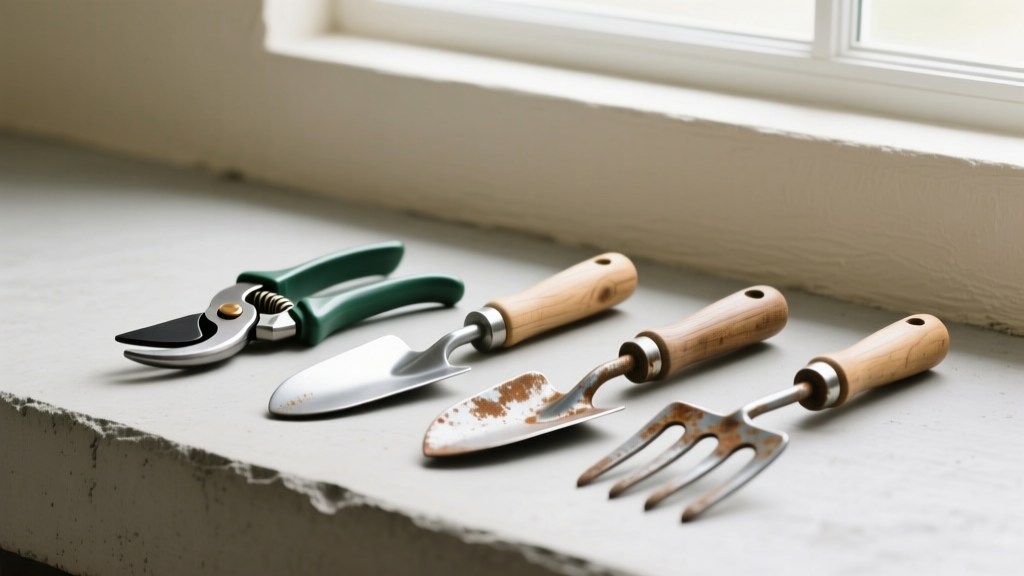
Garden Tool Maintenance: How to Clean, Sharpen, and Store Your Tools for Longevity
Why Tool Maintenance Matters
A well-maintained garden tool lasts 15-20 years. A neglected one rusts out in 2-3 seasons. Beyond longevity, sharp clean tools make gardening easier — a sharp pruner cuts cleanly without crushing plant tissue (which invites disease), and a clean shovel glides through soil instead of sticking.
Spend one afternoon per season on tool maintenance, and your tools will outlast your garden.
End-of-Season Deep Clean
Step 1: Remove Dirt and Sap
Use a wire brush and stiff putty knife to scrape caked soil from shovels, hoes, and rakes. For pruners and loppers with sticky sap, use rubbing alcohol or WD-40 on a rag.
Step 2: Disinfect
Soak cutting tools in a solution of 1 part bleach to 9 parts water for 5 minutes. This kills fungal spores, bacteria, and virus particles that can spread between plants. Rinse thoroughly and dry immediately to prevent rust.
Step 3: Remove Rust
For light rust: scrub with steel wool and mineral oil. For heavy rust: soak in white vinegar for 24 hours, then scrub with a wire brush. For stubborn spots: use a paste of baking soda and water with aluminum foil as a scrubber.
Sharpening Guide by Tool Type
Pruners and Loppers (Single Bevel)
Use a flat file or diamond sharpening stone. Hold at the existing bevel angle (usually 20-25°). Push the file away from you along the cutting edge, 10-15 strokes. Flip and lightly deburr the flat side (2-3 strokes only). Test on a piece of paper — should cut cleanly without tearing.
Shovels and Hoes (Double Bevel)
Use a flat bastard file. Hold at 45° and push along the edge in one direction. 20-30 strokes per side for shovels, 10-15 for hoes. The goal isn't razor sharpness — it's a clean edge that cuts soil and roots without snagging.
Garden Knives and Hori-Hori
Use a whetstone (medium grit, then fine). Maintain the factory angle. Hori-hori knives have one flat side — only sharpen the beveled side. Strop on leather for a final polish.
Lawn Mower Blades
Remove the blade (disconnect spark plug first!). Clamp in a vise. File the cutting edge maintaining the original angle. Balance the blade by hanging on a nail — if one side dips, file it more until balanced. An unbalanced blade causes engine vibration and premature wear.
Oiling and Protecting Metal
After cleaning and sharpening, apply a thin coat of oil to all metal surfaces:
- Camellia oil: Traditional Japanese tool oil. Food-safe, non-toxic, doesn't go rancid.
- Boiled linseed oil: Affordable and effective. Apply thin coats — thick coats get gummy.
- WD-40: Quick and easy for seasonal maintenance. Not as long-lasting as dedicated oils.
- Ballistol: Multi-purpose oil that cleans, lubricates, and protects. Biodegradable.
Wooden Handle Care
Wooden handles crack, splinter, and rot without maintenance.
- Sand handles with 120-grit sandpaper to remove rough spots
- Apply boiled linseed oil liberally with a rag — let soak 15 minutes, wipe excess
- Repeat 2-3 times for dry handles
- Let cure 24 hours before use
- Repeat at the start and end of each growing season
Proper Storage
- Hang tools: Wall hooks or pegboards keep tools off damp floors and prevent edge damage
- Sand bucket method: Fill a 5-gallon bucket with sand mixed with 1 quart motor oil. Push cleaned tools into the sand for storage — the oiled sand prevents rust while keeping edges sharp
- Climate-controlled: Store in a shed or garage, not outdoors. Humidity is the #1 enemy of metal tools
- Silica gel packets: Toss a few in your tool box or drawer to absorb moisture
Tool-Specific Maintenance Schedule
| Tool | After Each Use | Monthly | Seasonally |
|---|---|---|---|
| Pruners | Wipe sap off blade | Sharpen, oil pivot | Deep clean, replace spring |
| Shovel | Knock off soil | Check handle | Sharpen, oil, sand handle |
| Hose | Drain completely | Check for leaks | Drain, store indoors for winter |
| Wheelbarrow | Rinse out debris | Check tire pressure | Grease axle, touch up rust |
| Lawn Mower | Clear deck | Check oil/air filter | Sharpen blade, winterize |
When to Replace Instead of Repair
- Pruners with cracked frames or broken springs (unless parts are available from manufacturer)
- Shovels with bent blades or split handles (handle replacement rarely worth the cost)
- Any tool with deep pitting rust that compromises structural integrity
- Cheap stamped-steel tools — they can't hold an edge no matter how much you sharpen