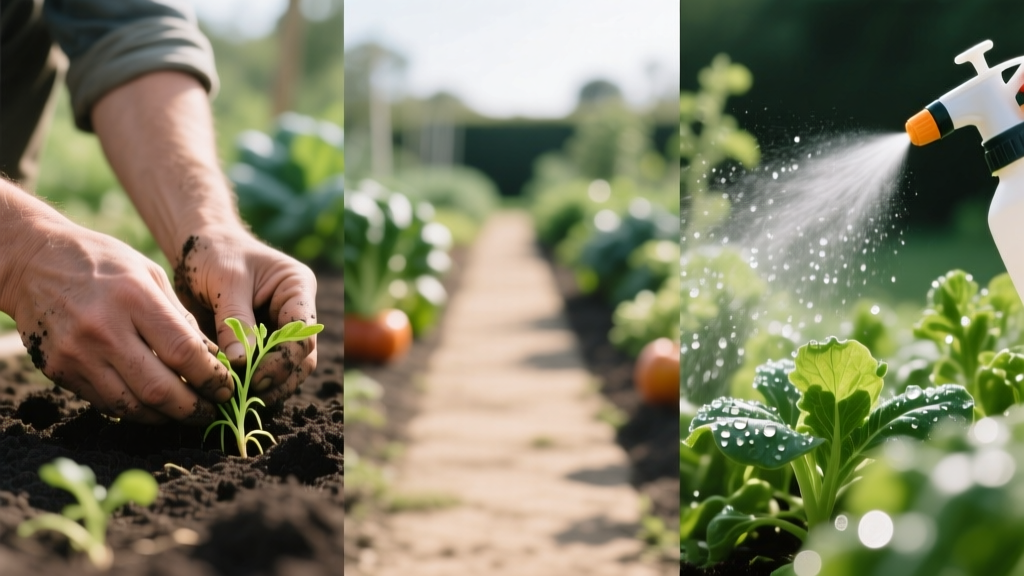
Hand Weeding vs Herbicide: Making the Right Choice
Most weed problems aren’t caused by “bad soil” or a mysterious curse—they’re caused by timing. A lot of gardeners wait until weeds are tall enough to grab… and by then, many common weeds have already dropped seed. One mature pigweed plant can produce tens of thousands of seeds, and one “I’ll pull it this weekend” can quietly turn into next year’s nightmare.
The good news: you don’t have to choose between endless hand-weeding and spraying everything in sight. The smartest gardens use both (or neither) strategically—based on weed type, weather, and what you’re growing. Let’s break down the practical shortcuts, hacks, and proven techniques to help you pick the right tool at the right moment.
Start With a Fast Decision: What Are You Protecting?
Tip: Match the method to the “damage zone” (roots, leaves, or soil)
Hand weeding removes the whole plant (if you get the root), which is ideal in tight spaces around perennials and seedlings. Herbicides usually work either by contacting leaves (contact herbicides) or moving through the plant (systemic herbicides), which is better for established weeds in open areas. If weeds are tangled in a prized iris clump, your safest shortcut is still a hand tool, not a spray.
Real-world example: In a strawberry bed, a systemic spray drift can damage runners; a quick pass with a narrow hoe between rows is safer and often faster than masking plants for spraying.
Tip: Identify “one-pull” weeds vs “regrow” weeds before you act
Some weeds pop out cleanly (chickweed, young lamb’s quarters) and are basically free wins with a quick pull after rain. Others regrow from fragments (bindweed, quackgrass), so yanking the top can actually multiply the problem. If it snaps and leaves white, ropey root behind, consider targeted herbicide or repeated shallow cultivation instead of heroic pulling.
Real-world example: Bindweed in a hedge line often laughs at weekend pulling; a carefully painted-on systemic herbicide on regrowth can be more effective than ripping up roots near shrubs.
Hand Weeding: Make It Faster, Cleaner, and Less Back-Breaking
Tip: Weed when the soil is damp—aim for “crumbly,” not muddy
The fastest pulls happen 12–24 hours after a soaking rain or deep irrigation, when soil releases roots without snapping. If the soil is sticky and smears on your gloves, wait a day—muddy soil compacts and you’ll break roots off (especially dandelion and dock). A simple test: squeeze a handful; if it holds a ball that crumbles with a poke, it’s go-time.
Real-world example: After a 0.5–1 inch rain, a 10-minute dandelion session with a weeder can outperform an hour of dry-soil tugging that leaves taproot pieces behind.
Tip: Use the right tool for the weed’s root shape (it’s not all “pulling”)
A cape cod weeder or stirrup hoe shines on shallow-rooted seedlings; a dandelion fork (or “stand-up weeder”) is made for taproots. For grassy clumps, a narrow hori-hori knife can slice under the crown with less disturbance than a trowel. The shortcut is tool-to-root matching, not brute force.
Real-world example: A stand-up weeder can pull 30–50 dandelions from a lawn edge in under 15 minutes without kneeling, if soil is slightly moist.
Tip: “Scalp” annual weeds at the white-thread stage with a stirrup hoe
Annual weeds are easiest when they’re tiny—literally hairline seedlings called the white-thread stage. A sharp stirrup hoe gliding just 1/2 inch under the surface severs them before they root deeply. Do this on a sunny, breezy day so the cut seedlings desiccate instead of re-rooting.
Real-world example: Two 5-minute hoe passes per week can keep a 4x8 ft raised bed nearly weed-free without mulch, as long as you catch seedlings before they’re more than 1 inch tall.
Tip: Don’t compost seedheads—bag them, solarize them, or trash them
If a weed has flowers or fluffy seed (dandelion, thistle, chickweed going to seed), assume it can mature even after pulling. Bag seedheads immediately, or solarize them in a clear plastic bag left in full sun for 2–3 weeks before composting. This one habit can cut next season’s weed pressure dramatically.
Real-world example: Pulling and tossing seeding chickweed into an open compost pile often “plants” it; sealing it in a clear bag prevents your compost from becoming a weed dispenser.
Tip: Mulch after weeding—3 inches is the magic number for most beds
Hand weeding works best when you follow it with a physical barrier so you don’t have to do it again next week. Many extension services recommend about 3 inches of organic mulch (shredded bark, leaf mold, straw) for weed suppression while still letting water through. Keep mulch 2–3 inches away from stems to avoid rot and pests.
Expert-backed note: Purdue Extension advises organic mulch depths commonly around 2–4 inches for weed suppression, depending on material and site conditions (Purdue Extension, 2020).
Herbicides: Use Them Like a Pro (Or Skip Them Without Losing the War)
Tip: Spray timing matters more than “strength”—target young, actively growing weeds
Most herbicides work best when weeds are small and not drought-stressed, typically when daytime temps are in the 60–85°F range and plants are actively growing. Spraying mature, hardened weeds often wastes product and increases repeat applications. If you’re going to spray, do it early and once.
Real-world example: A 4-inch tall crabgrass patch is far more responsive to treatment than a 12-inch clump that’s already setting seed.
Tip: Don’t spray before rain—respect the label’s rainfast window
Rainfast time (often 1–6 hours, depending on product) is the difference between success and “I just watered my weeds.” Check the label and watch wind too; anything over 10 mph is a drift risk in home gardens. Calm mornings often give the best control and least off-target movement.
Real-world example: If a product needs 4 hours rainfree and storms are forecast at 2 p.m., spray the next day instead of gambling and re-spraying.
Tip: Use the cheapest drift control: a piece of cardboard as a spray shield
You don’t need fancy equipment to reduce collateral damage. Hold a flattened cereal box or scrap cardboard behind the target weed to block overspray when working near roses, veggies, or young perennials. This is especially helpful with contact herbicides that burn any green tissue they touch.
Real-world example: Spraying weeds at the base of a fence next to a hydrangea is much safer with a cardboard shield than trying to “spray carefully.”
Tip: Spot-treat with a foam brush or sponge for surgical precision
For weeds growing through groundcovers or next to ornamentals, skip the spray nozzle entirely. Put a small amount of herbicide in a jar and dab it on leaves with a disposable foam brush or sponge glove. You use far less product and drastically reduce drift risk.
Real-world example: Dabbing bindweed leaves that weave through a juniper planting avoids browning the juniper tips—something a sprayer can easily do.
Tip: Know what “systemic” really buys you: root kill on perennials
Systemic herbicides move within the plant, which is why they can control deep-rooted perennials better than contact sprays. University of Maryland Extension notes that glyphosate is systemic and moves to roots and growing points, improving control of perennial weeds when applied correctly (University of Maryland Extension, 2019). The tradeoff is you must avoid contact with desirable plants—systemic doesn’t mean selective.
“Herbicides are most effective when applied to young, actively growing weeds and when applications are made under favorable environmental conditions.” — University extension guidance on weed control (University of Maryland Extension, 2019)
Quick Comparison: Hand Weeding vs Herbicide (Real-Life Tradeoffs)
| Factor | Hand Weeding | Herbicide (Spot Treatment) |
|---|---|---|
| Best for | Seedlings, tight beds, around valuables | Perennial weeds, large patches, cracks/edges |
| Speed on 100 sq ft | 15–45 minutes (depends on infestation) | 5–15 minutes plus setup/cleanup |
| Cost range | $10–$40 for a good hoe/weeder (one-time) | $15–$60 for product + sprayer; repeats possible |
| Risk | Soil disturbance, missed roots, back strain | Drift, plant injury, re-entry/wait times |
| Long-term effect | Great if followed by 3" mulch | Great if timed early + prevents seeding |
Shortcut Strategies That Beat Both: Prevention and “Less Weeding Forever” Moves
Tip: Smother weedy zones with cardboard + mulch for 6–12 weeks
If you’re reclaiming a bed, you can often skip herbicide and skip digging. Lay overlapping cardboard (6–8 inches overlap), soak it, then add 3–4 inches of mulch on top; leave it for 6–12 weeks during the growing season. This blocks light and exhausts many weeds; tough perennials may need a second round.
Real-world example: A side-yard strip full of crabgrass and dandelions can be converted to a low-weed shrub bed in one season using cardboard + mulch, then planted by cutting holes.
Tip: Use a “stale seedbed” in veggie gardens to cut weeding by half
Prep your bed, water it, and wait 7–14 days for weed seeds to sprout. Then lightly hoe off the seedlings (or use a very shallow flame weeder where allowed) and plant your crop. You’re basically tricking weed seeds into revealing themselves before your veggies are in the ground.
Real-world example: Carrots and onions—slow starters—benefit hugely from stale seedbeds because you’re not hand-weeding around tiny seedlings for the first month.
Tip: Edge and seal borders—most weeds “invade” from the sides
Garden beds don’t usually get overrun from the middle; weeds creep in from lawn edges, fence lines, and cracks. Install a simple physical edge (metal, brick, deep spade cut) and maintain a 3–4 inch mulch band along the border. This is a boring fix that saves hours later.
Real-world example: If your bed meets turfgrass, a crisp spade edge renewed every 4–6 weeks prevents runners and creeping weeds from colonizing your mulch.
Scenario Playbook: What I’d Do in Common Real Gardens
Scenario 1: Weeds exploding in a mulched perennial bed (but plants are packed tight)
Move: Hand weed the big offenders first, then switch to a narrow weeding tool to avoid disturbing perennial roots. Top-dress mulch back to 3 inches (measure it—most “mulched” beds are really 1 inch). For persistent perennials like bindweed, spot-treat regrowth with a foam brush rather than spraying across the bed.
Money saver: One $20 hori-hori plus a free cardboard-top-up mulch strategy often beats buying multiple herbicide products for a bed you can’t safely spray.
Scenario 2: Driveway cracks and paver joints full of weeds
Move: Skip hand pulling unless you enjoy it—roots break and regrow fast in cracks. Use boiling water (kettle method) for a DIY option: pour slowly to saturate the crown, repeat in 7 days for tough regrowth. If you choose herbicide, a targeted contact spray on a still day is efficient, but be careful near lawns and ornamentals.
Real-world example: A 2-liter kettle of boiling water can knock back a surprising number of crack weeds in one pass; follow with polymeric sand or joint filler to reduce reinfestation.
Scenario 3: A vegetable garden bed overtaken mid-season (you’re behind, and it’s hot)
Move: Don’t panic-spray near food crops unless the label explicitly allows that use and you can follow all instructions. Instead, do a “triage weed”: remove the top 20% worst seed-producing weeds first (anything flowering), then lay straw or leaf mulch around crops at 2–3 inches. Use a stirrup hoe only in open lanes to avoid slicing crop roots.
Timing hack: Weed in the evening, mulch immediately, and you’ll often wake up to a bed that looks like you spent all weekend—when it was really 45 minutes of focused work.
Scenario 4: Poison ivy or a nasty perennial along a fence line
Move: This is where herbicide can be the safer option than wrestling vines by hand. Wear gloves and long sleeves, and consider a cut-stump method: cut the vine close to the ground and apply herbicide directly to the fresh cut (follow label directions for this technique). It uses very little product and reduces drift.
Real-world example: For woody invasives and vines, treating the cut surface immediately (within minutes) can outperform repeated foliar spraying that hits everything else nearby.
Smart Safety and “Don’t-Regret-It” Habits
Tip: Treat herbicide like paint, not perfume—more coverage isn’t better
A common mistake is soaking leaves until they drip. Many products work best with a light, even coat; dripping increases runoff into soil and onto nearby plants. If you’re mixing concentrate, measure carefully—using double strength rarely doubles results, but it can double damage.
Cost detail: Over-applying can turn a $20 bottle meant to last a season into a two-week repeat purchase.
Tip: Track your weeds like a pest problem—two notes save you a year of work
Write down (1) the weed you fought and (2) when it set seed or regrew. A $2 notebook in the shed is more powerful than guesswork, because weeds are seasonal and predictable. Next year, you’ll know to hoe crabgrass seedlings in early summer or to hit dandelions at first rosette stage.
Real-world example: If you note “spurge appears when temps hit 80°F,” you can do one preventative hoe pass the week it shows up instead of hand-pulling mats later.
Tip: For hand weeding comfort, change your posture every 5 minutes
Back pain is why people abandon hand weeding—so design it out. Alternate between kneeling pad work, standing weeder work, and hoe work in short rotations (a simple 5-minute cycle). You’ll last longer, move faster, and stop “saving weeds for later” because you’re not wiped out.
So… Which Should You Choose This Weekend?
If the weeds are small, close to plants you love, or growing in a food bed you’re actively harvesting, hand weeding (plus immediate mulching) is usually the fastest low-risk win. If you’re dealing with deep-rooted perennials in an open area, or a fence line where repeated pulling has failed, a careful spot herbicide approach can save serious time—especially if you apply it when weeds are young and the weather is calm.
The best shortcut isn’t “always pull” or “always spray.” It’s getting ahead of seed set, using a method that matches the weed’s biology, and then locking in your results with a barrier like 3 inches of mulch or a 6–12 week smother. Do that, and next season you won’t be choosing between hand weeding and herbicide nearly as often.
Sources: Purdue Extension (2020), mulch depth and weed suppression guidance; University of Maryland Extension (2019), herbicide behavior and application timing principles.