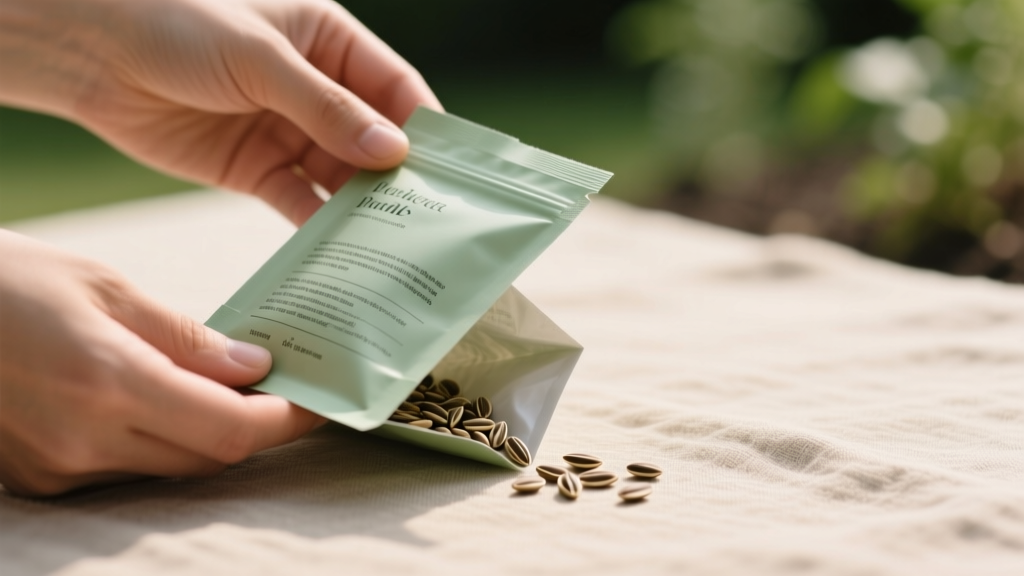
How to Read a Seed Packet Like a Pro
The most expensive seeds in the garden aren’t the ones with the highest price tag—they’re the ones you sow at the wrong time, in the wrong place, or at the wrong depth because you skimmed the packet. I see it constantly: gardeners buy a “full sun” packet, plant it in “bright shade,” wonder why everything gets leggy, then blame the seed company. The packet is basically a tiny instruction manual, but only if you know how to translate it.
Below are the shortcuts and pro-level tells I use to decide what to plant, when to start, and how many seeds I actually need—without wasting money or prime garden space.
First: Decode the Timing (This Is Where Most People Blow It)
Tip: Treat “Days to Maturity” as a moving target, not a promise
What the packet says: “Days to maturity: 60.” That number is usually measured from transplanting (for tomatoes, peppers, many brassicas) or from direct sowing (for carrots, beans), and it assumes ideal temps and consistent moisture. Add 7–14 days if you’re growing in cool spring soil, and add more if you’re planting late into heat stress.
Example: A “60-day” broccoli transplanted into a chilly April bed often acts like a 70–75 day crop. If your first fall frost is October 10, you’ll want to back-calculate with a buffer, not trust the printed number like it’s a shipping estimate.
Tip: Use the “planting window” line to reverse-engineer your calendar
Packets often say “Start indoors 6–8 weeks before last frost” or “Sow 2 weeks after last frost.” That line is your calendar anchor—more reliable than the maturity days. Write two dates in marker on the packet: your local last frost and first frost, then circle the sowing window so you don’t have to re-do the math next season.
Example: If last frost is May 5, and the packet says start indoors 8 weeks before, your seed-start date is roughly March 10. If you miss it, don’t force it—switch to a faster variety or direct sow something else.
Tip: Pay attention to soil temperature cues (not just air temperature)
Some packets include minimum germination temps like “germinates best at 70–85°F.” That’s soil temperature, not daytime highs. A $12 soil thermometer can save you an entire round of failed sowings; if you want the DIY option, stick a meat thermometer into the soil 2 inches deep in the morning for a rough read.
Example: Beans may rot in 50–55°F soil even if the air feels pleasant. Waiting until the soil is consistently 60°F+ usually gives faster, more uniform sprouting.
Next: Read the Germination Specs Like a Checklist
Tip: Follow depth instructions exactly—then tweak for soil type
Seed packets commonly list “Plant 1/4 inch deep” or similar. That’s not decoration: planting too deep is one of the quickest ways to get patchy germination, especially with tiny seeds. In heavy clay, go slightly shallower (think 1/8 inch instead of 1/4), because crusting and low oxygen can stall seedlings.
Example: Lettuce is famous for needing light to germinate; if your packet says “surface sow” and you bury it at 1/4 inch, you’ll often get near-zero results.
Tip: Translate “germination in 7–14 days” into a watering plan
If germination is expected in 7–14 days, your job is to keep the top layer evenly moist for that entire window. For outdoor beds, that can mean misting lightly 1–2 times/day during dry, windy stretches. Indoors, a humidity dome or a simple plastic bag over the tray can cut watering needs in half.
Example: Carrots can take 10–21 days to pop; covering the row with a board for the first week (lift daily to check) helps keep the seed zone moist. It’s a low-tech trick that often doubles your stand.
Tip: Use “light/dark” germination notes to avoid the classic rookie error
Some packets explicitly say “needs light to germinate” (common with lettuce, snapdragons) or “germinates best in darkness” (some flowers). Light-required seeds should be pressed into the surface and misted, not buried. Dark-germinating seeds benefit from being covered to their recommended depth and kept out of direct light until sprouted.
Source check: University extension seed-starting guides consistently emphasize correct depth and moisture management as primary drivers of germination success (e.g., University of Maryland Extension, 2020).
Spacing, Thinning, and How Many Seeds You Actually Need
Tip: Convert spacing into a “square-foot math” estimate before you buy
Packets often say “Space plants 12 inches apart” and “Rows 18 inches apart.” That’s useful, but you can turn it into a quick purchase decision: a 4x8 bed is 32 sq ft. With 12-inch spacing, you can fit roughly 32 plants (give or take for pathways and edging). If the packet contains 50 seeds and you only need 12 plants, you can split with a friend or plan a second succession.
Example: A packet of slicing tomatoes with 25 seeds might sound “small,” but if you only have room for 4 cages, it’s a multi-year supply if stored well.
Tip: Treat “thin to 6 inches” as a harvest opportunity, not waste
Thinning feels painful until you reframe it: those extra seedlings can be dinner. If your packet says “thin to 3 inches,” plan to snip (not pull) at the soil line when seedlings are 2–3 inches tall and use the thinnings as microgreens or salad toppers.
Example: Beet “seed” is actually a cluster; thinning beets often gives you a bonus bowl of beet greens weeks before the roots size up.
Tip: Row spacing on packets assumes field farming—use the “intensive” version at home
Row spacing is often designed for mechanical cultivation, not backyard efficiency. In raised beds, focus on plant-to-plant spacing in a grid, and ignore wide row recommendations unless you truly need aisle access. This can cut your space use by 30–50% while keeping airflow decent if you stagger plants.
Example: Instead of lettuce in rows 12 inches apart, plant a staggered grid at 8 inches for full heads, or 6 inches for baby leaf harvesting.
Sun, Soil, and Water Notes That Actually Matter
Tip: “Full sun” on a packet means 6+ hours—count it, don’t guess
“Full sun” typically means at least 6 hours of direct sunlight; many fruiting crops prefer 8+ hours. Use your phone to take quick photos of the same bed at 9am, noon, and 3pm to see where shadows creep. If the spot only gets 4–5 hours, pivot to greens, herbs, or roots instead of forcing tomatoes to perform.
Case example: A reader with a “sunny” balcony realized it only got 4.5 hours after nearby trees leafed out. Swapping peppers for chard turned a frustrating season into steady harvests.
Tip: Watch for drought-tolerant and heat-tolerant clues hidden in the description
Packets often say things like “withstands heat” or “slow to bolt.” Those are gold if you garden through hot summers. “Slow to bolt” lettuce is worth an extra dollar if your June temps regularly hit 85–95°F, because it buys you extra harvest weeks.
Example: If you always lose cilantro to heat, look for “bolt-resistant” or “slow-bolting” on the packet and plan to sow every 2–3 weeks for succession.
Tip: Use packet disease-resistance codes to save money on sprays
Many seed packets list resistance like V (Verticillium), F (Fusarium), N (nematodes), or PM (powdery mildew). Choosing resistant varieties is often cheaper than fighting problems later—especially if you’ve had recurring disease in the same bed. It’s one of the few truly “set it and forget it” hacks in gardening.
Source check: Resistance coding and variety selection are widely recommended as front-line disease management in home gardens (Cornell Cooperative Extension, 2019).
Variety Names, Latin, and Other Tiny Clues That Tell You Big Things
Tip: “Hybrid” vs “Heirloom” tells you what you can reliably save
If the packet says F1 hybrid, don’t expect saved seeds to come true next year; offspring can be a mixed bag. If it’s open-pollinated or heirloom, seed saving is more predictable—especially for self-pollinating crops like tomatoes and beans. This matters if you want to turn one packet into multiple seasons.
Money note: A $3.99 heirloom tomato packet that yields 10–15 plants can become essentially free seed for years if you save seed from the healthiest fruit.
Tip: Learn the “days to germination” red flags for old seed
If a packet says a seed should sprout in 3–5 days (like fresh radish) and yours is still bare at day 10, that’s a warning. Before you replant the whole bed, do a quick paper-towel test: place 10 seeds in a damp towel, seal in a bag, and check in the listed germination window. If only 4 sprout, you’re at roughly 40% viability—sow thicker or replace.
Example: Old onion seed is notorious for dropping viability fast; a 10-seed test saves you from wasting an entire row.
Tip: Packet weight and seed count can reveal value (and prevent overbuying)
Some packets list net weight (like 0.5 g) instead of seed count. Tiny seeds (basil, lettuce) can be hundreds per packet; large seeds (beans, corn) may be 25–60. If you only need a 10-foot row, you might be better off buying a smaller packet or splitting a larger one with a neighbor.
Cost comparison: A $4 packet of 40 bean seeds is fine, but if you plant a 30-foot row and need 120 seeds, a $6 bulk pack is often the better deal.
Packet Handling: Storage, Labeling, and DIY Upgrades
Tip: Write your own “field notes” directly on the packet
The pro move is to treat the packet like a lab notebook. Add the actual date you sowed, where you planted, and one result (“bolted fast,” “great flavor,” “germinated 80%”). Next year, you’ll trust your own data more than any catalog description.
Example: If you note “direct sowed May 1 = patchy; May 15 = perfect,” you’ve just customized your planting window to your microclimate.
Tip: Store seeds dry and cool—DIY it for under $10
Seed longevity depends mostly on moisture and temperature. A simple system: put packets in a sealed container with a DIY desiccant (a tablespoon of dry rice in a paper sachet works in a pinch) and keep it in a cool closet or basement. For about $8–$12, you can use a proper silica gel pack and a gasketed food container.
Example: If you keep seeds in a humid garage, you may notice clumping or moldy odor—both are hints the storage environment is shortening viability.
Tip: Cross-check “packed for” and lot numbers if germination is weird
Many packets include a lot number and “packed for” date. If you have a surprisingly poor stand despite correct planting, that information helps if you contact the company—reputable sellers often replace or refund. Keep the packet until seedlings are established; it’s basically your receipt and your troubleshooting data.
Fast Packet Translations for Common Garden Scenarios
Scenario 1: You’re late planting, but you still want tomatoes
Tip: Choose “days to maturity” under 65 and start with transplants if the calendar is tight. If it’s already June and your first fall frost is mid-October, a 85-day tomato is a gamble. Look for packets listing 55–65 days (often early or “patio” types) or buy a transplant and use the packet data to pick a faster cultivar next year.
Example: A gardener in zone 5 who switched from an 80-day slicer to a 60-day early variety got ripe fruit in late August instead of green tomatoes in October.
Scenario 2: Your spring bed is cold and soggy
Tip: Use packet germination temps to decide what to direct sow. Peas, spinach, and radishes tolerate cool soil; beans and squash generally do not. If the packet suggests warm germination (like 70–85°F), start indoors or wait for soil to warm rather than donating seeds to rot.
Example: Direct-sowing cucumbers into 55°F soil often fails; starting indoors 3–4 weeks early and transplanting once nights are above 50°F can save the season.
Scenario 3: You only have containers or a small raised bed
Tip: Use the “height” and “spread” info to avoid overcrowding disasters. Packets sometimes list plant height (like 18–24 inches)—that’s your container clue. Pair compact varieties with smaller pots, and reserve big indeterminate tomatoes for 10–20 gallon containers or they’ll outgrow support fast.
Example: A “bush” zucchini still wants space, but it’s far more realistic in a large container than a vining type that sprawls across a patio.
A Quick Comparison: Direct Sow vs Start Indoors (Using Packet Clues)
| Packet Clue | Direct Sow Usually Wins | Starting Indoors Usually Wins |
|---|---|---|
| Taproot / “does not transplant well” | Carrots, beets, radishes (less root disturbance) | Rarely—only with biodegradable pots and careful handling |
| Long “days to maturity” + frost-sensitive | Only in long seasons | Tomatoes, peppers, eggplant (buy time early) |
| Germination temp listed as warm (70–85°F) | Wait until soil warms | Start indoors with heat mat set to 75–80°F |
| Very short maturity (25–35 days) | Radish, baby greens (fast and easy) | Not worth the tray space |
Pro-Level Micro-Hacks Hidden in Plain Sight
Tip: Use “successive sowings” language to plan continuous harvest
If the packet says “sow every 2 weeks,” take it literally and schedule it. Set a recurring reminder for 14 days and sow a short row each time; it prevents the classic feast-or-famine salad situation. This is especially powerful for lettuce, dill, cilantro, and bush beans.
Example: Instead of planting all your bush beans at once (and drowning in beans for 10 days), sow 1/3 of the packet every two weeks for a longer, steadier harvest.
Tip: “Cut-and-come-again” varieties are the sneaky high-yield choice
Some packets mention repeated harvesting or “regrows after cutting.” Those varieties give more food per square foot than one-and-done heads. If you’re tight on space, prioritize these traits over novelty colors.
Example: A cut-and-come-again lettuce mix can produce multiple harvests from the same 6–8 inch spaced plants, especially if you leave the growing point intact.
“Selecting varieties with documented resistance and planting at the right time are two of the most effective ways home gardeners can prevent problems before they start.” — Cornell Cooperative Extension (2019)
Tip: If a packet mentions pollinators, plan placement—not just planting
When packets say “excellent for pollinators” or note bee activity, that’s a reminder to cluster flowers rather than scattering single plants. A group of 3–5 of the same flower variety is easier for pollinators to find, and it looks more intentional. You can even edge a veggie bed with a low-cost packet of flowers instead of buying nursery starts.
Example: Planting a $2.99 packet of alyssum along a tomato bed edge can increase beneficial insect activity and make the bed feel finished.
Tip: Don’t ignore the “packed for” region—match varieties to your climate stress
Some packets are tuned for certain regions (short seasons, humidity, heat). If you’re in a humid area, prioritize mildew-resistant cucumbers and squash; if you’re in a short-season spot, pick early corn and fast-maturing melons. When in doubt, compare two packets side by side and choose the one that addresses your biggest recurring pain (heat, mildew, bolting, short season).
Case example: A gardener who repeatedly lost zucchini to powdery mildew switched to a packet listing PM resistance and extended harvest by several weeks without changing anything else.
Once you get used to reading seed packets this way, you stop buying “hope” and start buying outcomes: the right maturity window for your frost dates, the right spacing for your beds, and the right resistance for your garden’s repeat offenders. Keep the packets, write your notes, and by next season you’ll have a personalized seed library that’s more accurate than any generic planting chart.
Sources: Cornell Cooperative Extension (2019); University of Maryland Extension (2020).