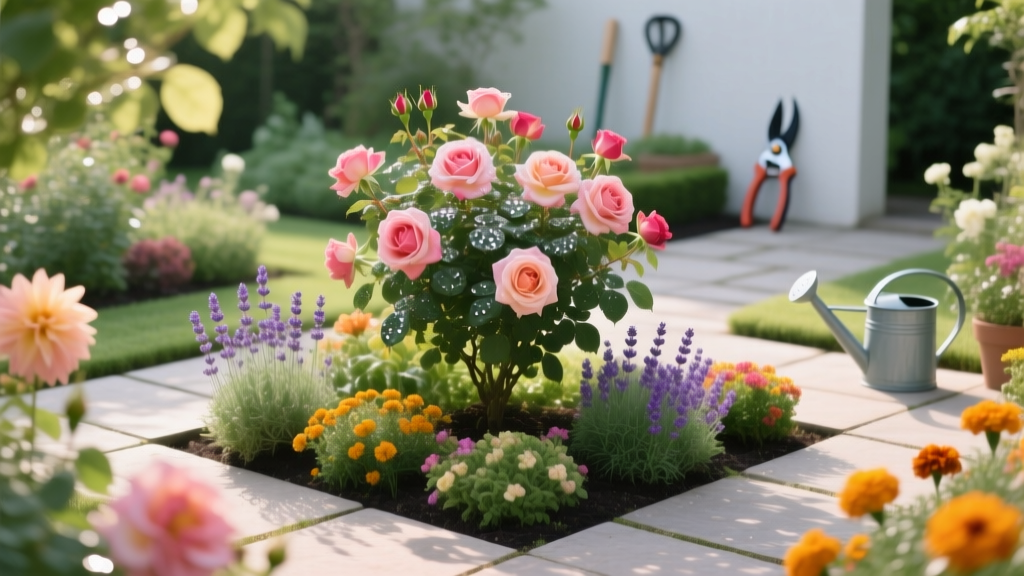
15 Garden Hacks for More Blooms
If your plants look lush and green but keep “forgetting” to flower, you’re not alone—and it’s usually not the plant’s fault. One of the most common mistakes is feeding for leaves (high nitrogen) and then wondering why buds never show up. Blooming is a resource decision for the plant, and a few small, specific changes can tip the balance from foliage to flowers fast.
Start With the Biggest Bloom-Levers (Light, Feeding, and Stress)
1) Aim for the “6-Hour Rule” (and Measure It)
Most heavy bloomers want at least 6 hours of direct sun; “bright shade” often equals “no flowers.” Use your phone’s time-lapse or a $10 light meter app and check sun at 9 a.m., noon, and 3 p.m.—trees and buildings shift shade more than you think. Real-world: that “full sun” bed can turn into 4 hours once summer foliage fills in, and suddenly zinnias get leggy and stingy.
2) Flip the Fertilizer Ratio: Use Low-N, Higher P/K at Bud Time
If your fertilizer is something like 24-8-16 (lots of nitrogen), you’re basically paying for leaves. When you see the first bud set, switch to a bloom-leaning option like 5-10-10 or 10-30-20, following label rates to avoid salt burn. Texas A&M AgriLife Extension notes excess nitrogen can reduce flowering and increase soft growth (Texas A&M AgriLife Extension, 2019).
3) Use the “Half-Strength, Twice as Often” Liquid Feed Hack
Instead of blasting plants monthly, feed with liquid fertilizer at 1/2 label strength every 2 weeks during peak bloom. This steadier approach reduces the feast/famine cycle that causes growth spurts and dropped buds. Example: petunias in containers often bloom harder with lighter, frequent feeding than with one heavy scoop of slow-release.
4) Try One Intentional “Dry-Down” to Trigger Buds (Not Wilting)
Some plants (especially container annuals and many ornamentals) respond to mild stress by setting buds. Let the top 1–2 inches of potting mix dry before watering again—don’t push to the point of midday wilt. Case example: a gardener with nonstop leafy geraniums often gets a bloom flush after correcting overwatering and allowing that top layer to dry between waterings.
Pruning & Pinching Tricks That Multiply Flowers
5) Deadhead Like a Pro: Cut Back to the Next Leaf Junction
Snipping just the spent petals often leaves a plant “thinking” it’s still finishing the job. Instead, cut the stem back to the next set of healthy leaves or a lateral bud—usually 1–3 inches below the spent bloom. Real-world: with roses, this simple cut commonly yields stronger repeat flushes than “petal plucking.”
6) Pinch Early, Not Late (Timing Is Everything)
Pinch young plants once they have 4–6 sets of true leaves to force branching—more branches usually equals more blooms. Stop pinching about 3–4 weeks before you want flowers so the plant can shift into bud mode. Example: basil is famous for pinching, but this works just as well on cosmos, snapdragons, and even some dahlias.
7) The “One-Third Reset” for Tired Annuals
When midseason heat turns annuals scraggly, shear the plant back by about 1/3 (yes, it feels dramatic), then water deeply and feed lightly. You’ll often get a new bloom wave in 10–14 days. Scenario: hanging baskets of calibrachoa that look done by July can bounce back hard after a reset prune and a half-strength feed.
8) Strip Lower Leaves for Better Airflow (Less Disease, More Flowers)
Fungal issues quietly steal blooms because the plant shifts energy to survival. Remove the bottom 6–12 inches of leaves on tall plants like dahlias, zinnias, and tomatoes (yes, tomatoes too), keeping foliage off the soil splash zone. University of Minnesota Extension emphasizes spacing and airflow as key disease prevention tools (University of Minnesota Extension, 2020).
Soil & Roots: Hidden Hacks for Showy Blooming
9) Do a $0 Soil Test First: The Jar Sedimentation Trick
Before buying amendments, figure out what you’ve got. Fill a jar 1/3 with soil, add water plus a drop of dish soap, shake, and let it settle overnight—sand sinks fast, silt next, clay last. If you’re clay-heavy, your bloom hack is adding compost and improving drainage, not piling on more fertilizer.
10) Compost “Topdress” Instead of Digging (Fast Boost, Fewer Weeds)
Skip turning the whole bed—just topdress with 1 inch of finished compost around plants (not against stems) and let water and worms work it in. This improves moisture balance and feeds soil life without disrupting roots. Cost saver: making your own compost can drop amendment costs from about $6–$8 per bag to basically free if you’re composting kitchen scraps and leaves.
11) Mulch to Stabilize Moisture and Stop Bloom-Stop Cycles
Flowering plants hate big swings: bone-dry then soaked. Apply 2–3 inches of mulch (shredded leaves, pine fines, or bark) to keep root zones steady and reduce stress. DIY alternative: run fallen leaves over once with a mower—leaf mulch is one of the best “free” bloom boosters you can make.
12) Root-Bound Rescue: The “Butterfly Cut” for Pot-Bound Plants
If roots circle the pot, the plant often stalls—buds included. Slide it out, then make 3–4 vertical slices about 1/2 inch deep around the root ball and gently tease the bottom. Real-world: pot-bound mums and hydrangeas can sit still for weeks until you break that circling pattern.
Targeted Bloom Boosters (DIY and Store-Bought)
13) Epsom Salt: Use Only When It’s Actually Needed
Epsom salt (magnesium sulfate) can help if your soil is magnesium-poor, but it’s not a universal bloom magic trick. If you suspect deficiency (interveinal yellowing on older leaves), try 1 tablespoon per gallon as a soil drench once, then wait 2–3 weeks to evaluate. Overdoing it can throw off nutrient balance, so treat it like a tool, not a habit.
14) DIY Bloom Tea: Compost + Water + Time (Keep It Simple)
You don’t need an aquarium pump and fancy brewing to get benefits. Soak a shovel of finished compost in a 5-gallon bucket of water for 24–48 hours, stir a couple times, and water at the base—think of it as a gentle nutrient rinse. Example: gardeners often use this after heavy rain leaches nutrients from containers, especially for hungry bloomers like petunias.
15) Stake and Support Early to Prevent “Invisible Bloom Loss”
When stems flop, flowers get shaded, bruised, or snap—blooms lost before you notice. Add supports when plants are 8–12 inches tall (peony rings, tomato cages for cosmos, or simple bamboo tripods for dahlias). Scenario: a bed of coneflowers that falls open after storms blooms longer when supported early, because the plant keeps leaves and buds upright and working.
Quick Comparison: Spend Money or Hack It?
| Bloom Booster Need | Store-Bought Option | DIY/Low-Cost Alternative | Typical Cost | Best Use Case |
|---|---|---|---|---|
| More blooms in containers | Bloom fertilizer (e.g., 10-30-20) | Half-strength balanced liquid feed more often | $12–$20 per bottle | Petunias, calibrachoa, geraniums |
| Better soil structure | Bagged compost | Homemade compost + leaf mulch | $6–$8 per bag vs. $0 DIY | New beds, clay soil, tired borders |
| Prevent flopping blooms | Peony rings/metal supports | Bamboo stakes + twine “corral” | $10–$30 each vs. $3–$8 DIY | Peonies, coneflowers, dahlias |
| Reduce disease pressure | Fungicide sprays | Lower-leaf strip + spacing + mulch | $10–$25 vs. minimal | Zinnias, phlox, roses in humid areas |
“Excess nitrogen fertilization can promote vegetative growth at the expense of flowering.” — Texas A&M AgriLife Extension (2019)
Three Real-World Bloom Turnarounds (So You Can Copy-Paste the Fix)
Scenario 1: The “All Leaves, No Flowers” Rose Bed
A common setup: rich soil, frequent feeding, and lots of irrigation. The fix is usually (1) switch from high-N lawn-adjacent fertilizer drift to a bloom formula, (2) deadhead back to a leaf junction, and (3) mulch 2–3 inches to stabilize moisture. Many gardeners see better repeat blooms within one cycle—often 2–4 weeks depending on variety and weather.
Scenario 2: Patio Containers That Quit by July
Heat + inconsistent watering + pot-bound roots are the big three. Do the “butterfly cut” when planting, use the half-strength feed every 2 weeks, and shear back by 1/3 when the basket looks tired. This combo regularly turns an “I guess it’s done” container into a second-season showpiece.
Scenario 3: A Sunny Border That Still Underperforms
Sometimes the issue isn’t sun—it’s competition and airflow. Thin crowded clumps, strip lower leaves to reduce splash-borne disease, and topdress with 1 inch compost instead of digging around roots. University of Minnesota Extension (2020) highlights airflow and spacing as major levers for disease prevention, which indirectly protects flowering performance.
More blooms usually aren’t about one magic product—they’re about stacking small advantages. Get the light hours right, stop overfeeding nitrogen, prune with intention, stabilize moisture with mulch, and keep roots healthy. Do those consistently, and your garden starts flowering like it has something to prove—without turning gardening into a full-time job.