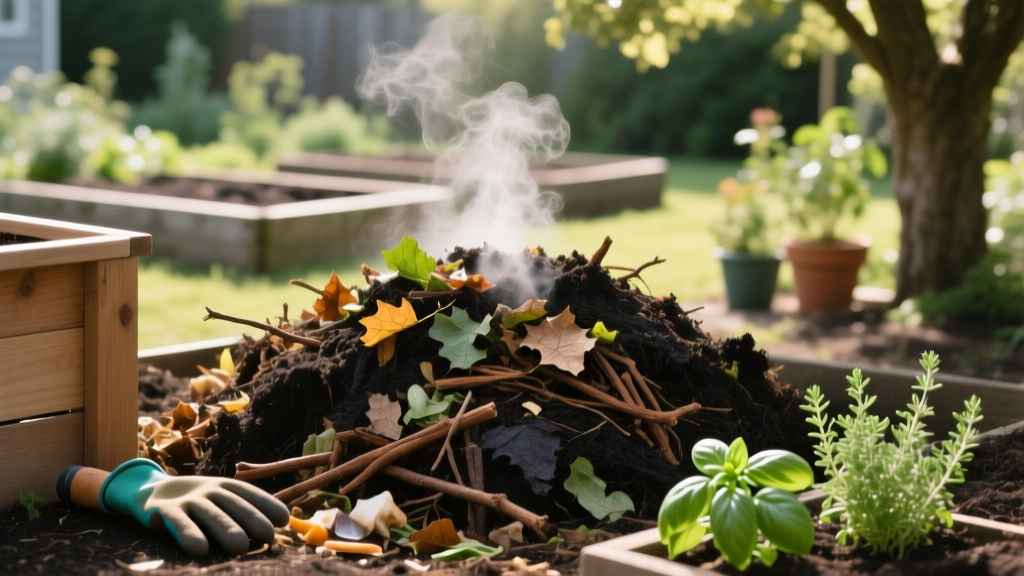
Why Your Compost Pile Is Not Heating Up and How to Fix It
Your compost pile isn’t “cold” because you did something mysterious wrong—most of the time it’s because the pile is too small. A 2-foot-tall heap of kitchen scraps and leaves can look impressive, but it often can’t hold enough heat to kick into the hot-compost range. Hot composting is basically a tiny, living furnace: it needs the right fuel mix, oxygen, moisture, and insulation to stay lit.
If you want a quick benchmark, many extension services recommend building a pile at least 3 ft x 3 ft x 3 ft (about 1 cubic yard) to reliably heat up, then aiming for internal temps around 130–160°F for fast decomposition and pathogen/weed seed reduction. The good news: most “cold pile” problems are fixable in an afternoon with a garden fork and a few cheap materials.
First, confirm it’s actually not heating (and not just “not steaming”)
Use a compost thermometer for a 10-second reality check
A pile can be working hard at 110–130°F and never look dramatic from the outside. Grab a compost thermometer (typically $12–$25) and check the core by inserting it 18–24 inches deep. If you’re under 100°F after 3–5 days from building/turning, you’ve got a real heat problem.
Example: A gardener in Portland thought their pile was dead because there was no steam. Thermometer read 128°F—it was fine; it just wasn’t cold enough outside to show steam.
Know the “normal” temperature curve so you don’t chase ghosts
Hot piles usually spike within 24–72 hours, hover for several days, then slowly cool. After 1–2 weeks, a drop is normal and often means it’s time to turn for fresh oxygen. If your pile heats only after turning, that’s not failure—that’s textbook composting.
Washington State University Extension notes that hot composting typically occurs in the 110–160°F range, and that turning reintroduces oxygen and can restart heating (WSU Extension, 2020).
The “Big Four” that decide whether your pile heats
Tip: Build bigger than you think—mass is the cheat code
If your pile is under roughly 3' x 3' x 3', it loses heat faster than microbes can generate it. Combine two small piles into one, or stockpile materials until you can build a full cubic yard at once. In cool or windy weather, going up to 4' x 4' x 4' can be even better (just don’t compact it).
Case example: A community garden in Minneapolis had three small bins that never heated. They merged them into one 4-foot cube and hit 145°F in two days—same materials, just enough mass.
Tip: Hit the carbon-to-nitrogen sweet spot (without doing chemistry homework)
A classic target is around a 25–30:1 carbon-to-nitrogen ratio for hot composting. Translating that into real life: aim for roughly 2–3 parts “browns” (dry leaves, shredded cardboard) to 1 part “greens” (fresh grass clippings, food scraps) by volume. Too many browns = slow and cool; too many greens = slimy, stinky, and often still cool because it goes anaerobic.
Penn State Extension highlights that composting works best with an overall C:N ratio near 25–30:1 and adequate moisture and oxygen (Penn State Extension, 2019).
Tip: Moisture should feel like a wrung-out sponge—test it with your hand
Composting microbes need water, but they also need air. Grab a handful from the center: it should feel damp, and when you squeeze hard, you should get 1–2 drops of water—no dripping stream, no dusty crumble. If it’s too dry, the pile can sit at 70–90°F forever; if it’s soaked, it can stall and stink.
Real-world fix: If you’re dry, add water while turning—about 1–2 gallons per wheelbarrow of dry leaves is a common starting point. If you’re wet, mix in shredded cardboard or dry leaves by the bagful.
Tip: Oxygen isn’t optional—fluff, don’t smash
People kill heat by “tamping down” the pile to make it neat. That squeezes out air pockets and shifts the pile toward anaerobic decomposition (slow, smelly, cool). Turn with a fork, or use a compost aerator tool, and mix dense layers (like wet grass) with coarse browns (like small twigs) to keep airflow.
Example: A suburban backyard pile made mostly of grass clippings often mats into a green pancake. Mixing in a 2-inch layer of shredded leaves between each 4–6 inch layer of grass usually fixes the airflow and the smell at the same time.
Fast diagnostics: what your compost pile is “saying”
Tip: If it’s cold AND dry, water during the turn—not on top
Sprinkling the surface barely reaches the core, which is where the action is. Pull the pile apart, spray each lifted forkful lightly, then rebuild like a lasagna so moisture is distributed. If you only have a watering can, add 1 quart per layer as you rebuild.
Case example: One gardener in Arizona watered daily for a week with no heat—because the center stayed bone dry. One rebuild with water added to every layer brought the core to 135°F within 48 hours.
Tip: If it’s cold AND soggy, add “dry browns” plus structure
Wet piles often need two things: absorbent carbon (shredded cardboard, dry leaves) and chunky structure (small sticks, wood chips) to create air channels. Mix in a 3–4 inch layer of shredded cardboard throughout the pile, not just on top. If you have wood chips, keep them to about 10–20% of the pile so they don’t slow everything down too much.
DIY shortcut: Run cardboard through a basic 12-sheet office shredder ($40–$80) if you have one, or soak and tear it by hand into egg-carton-sized bits.
Tip: If it smells like ammonia, you’ve got too much nitrogen—cap it and balance it
Ammonia smell usually means excess greens (or manure) and not enough carbon. Mix in browns immediately, then add a 2–3 inch “brown cap” on top to trap odors and stop nitrogen from volatilizing. This also prevents you from literally losing fertilizer value into the air.
Example: After adding chicken manure, a pile can spike ammonia. Mixing in 2 full contractor bags of dry leaves often restores balance fast and stops the smell within a day.
Tip: If it’s cold but full of worms, it may be fine—it’s just not a hot pile
Earthworms prefer cooler compost, generally below the hot-compost range. If your pile is sitting at 60–90°F with lots of worms, you’re essentially doing “cold composting,” which still works—it just takes longer (often months instead of weeks). Decide whether you want speed (hot pile) or minimal effort (cold pile).
Materials that secretly control heat (more than people realize)
Tip: Shred your browns—smaller particles heat faster
Leaves left whole can form a puffy, airy pile that dries out and heats poorly. Shredded leaves pack closer (without compacting) and give microbes more surface area. Mow over dry leaves with a mulching mower or run them through a leaf shredder—aim for pieces under 1 inch.
Cost hack: A dedicated leaf shredder can cost $100–$200, but a mower you already own is essentially free—and usually good enough.
Tip: Don’t let grass clippings form a suffocating mat
Fresh grass is a powerful “green,” but it clumps and turns anaerobic fast. Mix it immediately with browns at roughly 1:2 (one bucket grass to two buckets shredded leaves/cardboard). If you have a lot of grass, add it in batches over 3–5 days while turning daily to keep oxygen high.
Tip: Be careful with wood chips—they’re great structure but slow fuel
Wood chips are mostly carbon and break down slowly, especially if they’re chunky. Use chips as a thin structural ingredient (10–20% of the pile) or as a base layer to improve drainage, but don’t make them the main event if you want heat. If your pile is mostly chips, add a strong nitrogen source like grass clippings or manure.
Tip: Add a “nitrogen kicker” when you need quick heat
If your pile is built mostly from dry fall leaves, it may need an obvious nitrogen boost. Options: fresh grass clippings, coffee grounds, or bagged alfalfa pellets. A practical dose is 5–10 lb of alfalfa pellets per cubic yard of leaves, watered in as you build.
Money note: Alfalfa pellets are often $18–$25 for 40 lb, and a bag can jump-start multiple piles. Compare that to “compost activator” products that can run $10–$20 for a small container.
Turn timing, insulation, and the tricks that feel like cheating
Tip: Turn when the core peaks, not “whenever”
Turning too early can dump heat before microbes hit their stride; turning too late can let the core go oxygen-starved. A solid rhythm: once the center reaches 140–160°F and starts to drop (often around 3–7 days), turn it so the outside moves to the center. If you’re targeting speed, plan on 2–4 turns over 2–3 weeks.
“The most active composting happens when oxygen and moisture are maintained and the pile is large enough to retain heat; turning replenishes oxygen and mixes materials to keep decomposition moving.” — Washington State University Extension (2020)
Tip: Insulate the pile when nights are cold (it matters more than you think)
In shoulder seasons, you can have perfect ratios and still lose heat to cold air. Wrap the bin with straw bales, or cover the pile with a tarp leaving a small gap for airflow. Even a layer of finished compost or leaf mold 2–4 inches thick on top acts like a blanket.
Case example: A gardener in upstate New York couldn’t get above 105°F in October. Two straw bales (about $8–$12 each) around the bin bumped temps to 135°F within days.
Tip: Fix “compost pancake” syndrome with a chimney
If your pile compacts easily, create a simple air chimney: stand a bundle of thin sticks or a perforated PVC pipe vertically in the center as you build, then pull it out after a day to leave an air channel. This is especially helpful for piles heavy in coffee grounds or grass. It’s a DIY aeration hack that costs basically nothing if you use sticks.
Choose the right system: fast heat vs low effort
| Method | Best for | Typical pile size | Hands-on work | How fast you get usable compost |
|---|---|---|---|---|
| Hot composting (turned pile) | Speed, weed seed reduction | 3' x 3' x 3' minimum | Turn every 3–7 days | Often 3–8 weeks |
| Cold composting (add-as-you-go) | Low effort, steady trickle of scraps | Any size, but bigger helps | Minimal turning | Often 6–12 months |
| Tumbler | Neat, contained composting | Usually 40–80 gallons | Easy to spin, but volume-limited | Often 2–4 months (varies widely) |
Tip: If you’re using a tumbler, accept the volume limitation and compensate
Tumblers are convenient, but many are too small to hold heat like a cubic-yard pile—especially in cool weather. To help a tumbler heat, keep batches dense and balanced: don’t add a cup of scraps daily; instead, build a full batch over 1–2 weeks, then stop adding and let it cook. If temps stall, add a nitrogen kicker (grass or alfalfa pellets) and avoid over-spinning (once per day is plenty).
Three quick “rescue plans” for common real-life compost headaches
Scenario: “I only have dry fall leaves—no greens, no heat”
Leaves alone are compostable, but they’re slow and often too carbon-heavy to heat. Build a 1-cubic-yard pile of shredded leaves, then add nitrogen: 1–2 five-gallon buckets of fresh grass clippings per wheelbarrow of leaves, or 5–10 lb alfalfa pellets per yard, watered in. Turn after 4–5 days and you’ll usually see a real temperature rise.
Scenario: “My pile is mostly kitchen scraps and it’s wet, smelly, and cold”
Kitchen scraps are wet greens, so they need aggressive browns and airflow. Mix in shredded cardboard at least 2:1 (two parts cardboard/leaves to one part scraps by volume), plus a couple of forkfuls of coarse material (small twigs) per layer to prevent packing. If you want a cleaner setup, keep a lidded “brown bin” next to your compost so every bowl of scraps gets an equal bowl of shredded paper/cardboard immediately.
Scenario: “I did everything right, but it’s winter and nothing heats”
In cold conditions, insulation and mass are the big levers. Combine materials into one larger pile, place it in a spot sheltered from wind, and wrap the bin with straw bales or thick cardboard. If you can only manage a small pile, switch goals: run a cold pile through winter and plan a hot pile in spring when nights stay above roughly 45–50°F.
Smart add-ons that cost little (and when they’re worth it)
Tip: Skip pricey “activators” unless you’ve fixed the basics
Most compost activators can’t overcome a too-small, too-dry, or airless pile. Before buying anything, confirm: 3x3x3 size, wrung-sponge moisture, and a reasonable greens-to-browns mix. If you still want a boost, a bag of alfalfa pellets or a bucket of fresh grass is usually cheaper per “nitrogen punch” than branded additives.
Tip: Inoculants are optional—finished compost is the free inoculant
You don’t need special microbes in a bottle; they’re already on leaves, soil, and kitchen scraps. If you want a jump-start, mix in 1–2 shovels of finished compost or healthy garden soil as you build to seed the pile. It’s the zero-cost version of inoculation, and it works because it introduces an active microbial community immediately.
A simple “next weekend” checklist for a pile that heats reliably
Build (or rebuild) your pile to at least 3' x 3' x 3', aiming for 2–3 parts browns to 1 part greens by volume. Shred leaves to under 1 inch pieces, and mix wet greens with dry browns so nothing mats. Moisten as you rebuild until a squeezed handful gives 1–2 drops, then cover with a tarp or a 2–4 inch insulating layer of old compost/leaves.
Check temperature at 18–24 inches deep after 48 hours. If you’re below 100°F, your fastest fix is almost always one of these: add more greens (nitrogen), add water to the core during a turn, or increase pile size. Once you hit 140–160°F, ride that wave—turn when it starts to fall, and you’ll be shocked how quickly “nothing is happening” turns into finished, crumbly compost.
Sources: Washington State University Extension (2020), composting temperature management and turning; Penn State Extension (2019), composting basics including C:N ratio and moisture/oxygen needs.