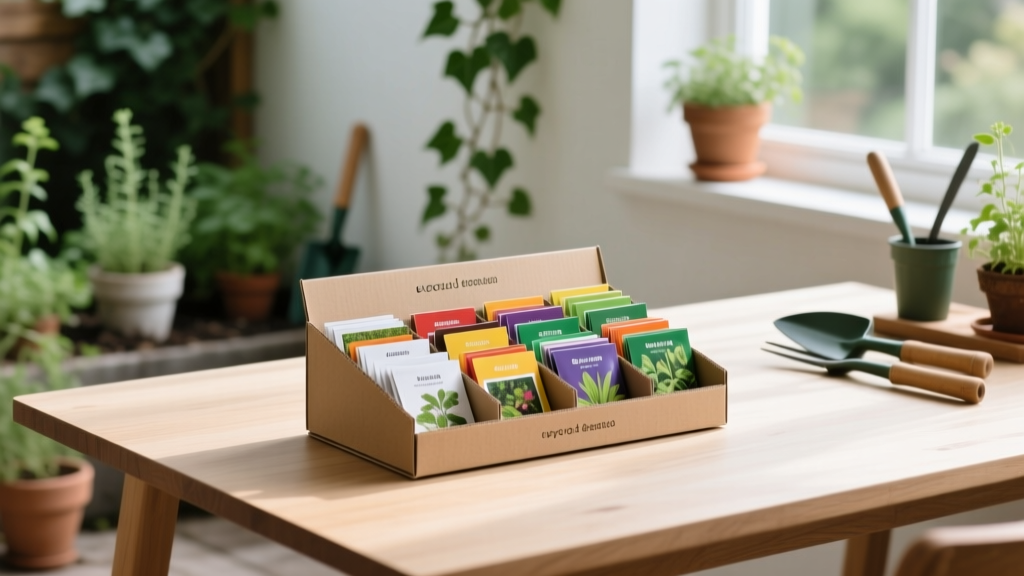
Making a Garden Seed Catalog Organizer
The most common seed-saving “system” I see is a shoebox full of packets that gets opened exactly once a year—right when you’re trying to order seeds before that one tomato variety sells out. The surprising part: the shoebox isn’t the real problem. The real problem is that most gardeners organize by packet instead of by decisions (what to grow, how much to plant, when to start, and where it goes).
A good seed catalog organizer isn’t fancy—it’s fast. You should be able to answer “What do I need to start indoors in the next 14 days?” in under 60 seconds, and you should be able to place a seed order without accidentally buying duplicates you already own.
Start with the “Decision Index” (not the pretty binder)
Tip: Build your organizer around a one-page crop plan
Before you file a single packet, make a one-page crop plan that lists what you actually intend to grow this season. Use a simple grid: crop, variety, indoor sow date, outdoor sow/transplant date, and bed/container location. This turns your organizer into a tool you use weekly, not just in January.
Example: If you’re growing basil, write “Basil: Genovese, start indoors Mar 15, transplant May 20, Bed 2 edge.” Now your seed packet has context—no more guessing.
Tip: Use a “buy list” and a “use first” list to stop duplicate orders
Keep two running lists at the front: (1) seeds you need to buy and (2) seeds you must use up first. The “use first” list is where you put older packets (especially onions and parsley) so they don’t languish year after year.
Real-world win: One client gardener I helped found 7 duplicate lettuce packets hiding in different places. After adding a buy list, her seed spending dropped by about $25–$40 per spring because she stopped re-buying what she already had.
Tip: Sort by sowing window, not alphabet
Alphabetical is tidy, but it doesn’t help on a busy weeknight when you’re trying to figure out what to start now. Instead, sort into sowing windows like “Start Indoors 10–12 weeks,” “Start Indoors 6–8 weeks,” “Direct Sow Early,” and “Direct Sow Warm Soil.” This matches how you actually garden: by timing.
Example: Peppers and eggplant go in the 10–12 weeks before last frost section; cucumbers go in warm-soil direct sow or short indoor start.
Choose a format that matches how you shop (paper, digital, or hybrid)
Tip: The binder system works best if you add a pocket-per-crop rule
A 1.5-inch binder with baseball card sleeves or 4x6 photo sleeves is a classic for a reason: it’s fast to flip and easy to expand. The trick is setting a rule that prevents chaos—like “one pocket per crop, all varieties behind it,” so you don’t scatter tomatoes across ten pages.
Cost note: A basic binder ($4–$8) plus sleeves ($8–$15) is usually under $25. If you already have office supplies, you can do this for nearly $0.
Tip: A recipe-box organizer is faster for small spaces and small seed collections
If you grow under 30 crops, a recipe box with dividers is ridiculously efficient. Label dividers by sowing window or crop family, and store packets upright so you can thumb through like index cards. It’s also easy to grab with one hand while you’re placing an online order.
Example: A shoebox-sized plastic recipe container often costs $6–$12, and you can DIY dividers from cereal-box cardboard in 15 minutes.
Tip: Hybrid system: paper organizer + a 10-minute spreadsheet
You don’t need a full garden app to get the benefits of digital. Make a simple spreadsheet with crop, variety, year purchased, and quantity on hand, then store the physical packets in whatever system you like. Update it twice a year: once when seeds arrive, once after planting.
Timing hack: Set a calendar reminder for January 15 (order planning) and May 1 (post-planting inventory) so it becomes routine.
Set up categories that prevent the three biggest seed messes
Tip: Create a “This Week” staging pocket
Add one staging pocket (or a zip pouch) labeled “This Week.” On Sunday night, pull only the packets you’ll sow in the next 7 days. This keeps you from shuffling through the whole system repeatedly and helps you notice missing supplies (like trays or labels) before you’re mid-project.
Example: If you’re sowing onions and snapdragons this week, those packets live in the staging pocket along with your plant labels and a pencil.
Tip: Separate “direct sow” from “start indoors” even for the same crop
Some crops straddle both methods (think: basil, dill, even some lettuce). Make separate sections by method so your organizer tells you what to do, not just what you own. You’ll waste fewer weeks staring at packets wondering what your past self intended.
Example: Put “Basil (indoors)” behind your 6–8 week indoor tab and “Basil (direct sow)” behind your warm-soil tab, even if it’s the same variety packet.
Tip: Add a “don’t bother again” section for honest notes
This is the tip that saves the most money long-term: keep a section for varieties you tried and didn’t love. Add quick notes like “bolted fast,” “tasted bland,” or “too disease-prone here.” You’re building a personalized catalog that gets smarter each season.
Case example: In a humid backyard garden, a grower noted that a specific heirloom tomato cracked badly after summer rains. The next year, she swapped to a crack-resistant variety and wrote the replacement right onto the old packet note—no repeat disappointment.
Labeling that actually survives real gardening
Tip: Write the “use-by year” on the top edge of every packet
Instead of guessing seed age, write the purchase year (or “packed for” year) on the top edge so it shows when filed. This makes rotating stock effortless. You can still plant older seeds, but you’ll know which ones to test first.
Seed longevity varies by crop; for example, onion seed is famously short-lived compared to tomatoes. The University of Minnesota Extension (2020) notes that storage conditions and species strongly affect viability, making age tracking worth the 5 seconds per packet.
Tip: Color-code by plant family to catch rotation problems fast
Use colored dot stickers (or a swipe of marker) to tag families: red for Solanaceae (tomato/pepper), blue for Brassicas, green for Cucurbits, etc. When you’re planning beds, you’ll instantly see if you’re accidentally repeating the same family in the same spot year after year. This is one of those tiny habits that pays off in fewer pest/disease headaches.
Example: If your “This Week” pocket has five red-dotted packets, it’s a quick reminder to split tomatoes/peppers across beds or containers.
Tip: Use pencil on packets, not pen (and why that matters)
Pencil doesn’t smear when packets get damp, and you can update notes without turning the front into a scribbled mess. I keep a $1 mechanical pencil clipped inside the binder rings or taped to the recipe box lid. It’s a small detail that keeps your organizer readable over years.
Make the organizer do your seed math for you
Tip: Add a “how many plants I actually need” line to the packet
On the front of each packet, write the number of plants you want, not just what the packet can produce. For example: “Need 6 basil,” “Need 12 onions,” “Need 2 zucchini.” This prevents the classic mistake of starting 36 tomato seedlings because the packet makes it look normal.
Example: If you only have a 4x8 bed, “Need 2 zucchini” is a sanity anchor when you’re tempted to sow half a packet.
Tip: Add a quick germination test step for older seeds
If a packet is older (or you suspect heat exposure), test germination before you rely on it. Put 10 seeds on a damp paper towel in a zip bag, keep it warm, and check after the typical germination window for that crop; the percent that sprout is your approximate viability. If only 6/10 sprout, sow about 1.5x as thick (or replace the seed if it’s a fussy crop).
Purdue University Extension (2018) describes simple at-home germination testing using counted seeds and moisture control—exactly the kind of low-effort check that prevents tray space waste.
“A simple germination test using a known number of seeds can help you determine whether you need to sow more thickly or replace old seed.”
—Purdue Extension, 2018
Tip: Track sowing dates backward from your frost date (in the organizer itself)
Write your average last frost date on the inside cover (example: May 10) and list common offsets: 12 weeks, 8 weeks, 6 weeks, 4 weeks. Then your organizer becomes a calendar. When you flip to “Start Indoors 8 weeks,” you’re not doing mental math—you’re executing a plan.
Example: If your last frost is May 10, 8 weeks back is mid-March. That’s your “tomatoes if you’re pushing it” or “brassicas if you’re late” reality check.
Storage hacks that keep seeds viable (and easy to find)
Tip: Store seeds cool and dry, but don’t overcomplicate it
Seeds last longest with low humidity and stable cool temps. A simple setup: packets in a sealed container with a silica gel pack, kept in a closet or basement shelf away from temperature swings. University of California Agriculture and Natural Resources notes that cool, dry storage extends seed life significantly (UC ANR, 2017).
DIY alternative: Save silica packets from shoe boxes or supplements; use 1–2 packs per sealed tote and swap when they feel saturated.
Tip: Use a two-container system: “active” and “deep storage”
Keep only this season’s likely-to-be-used seeds in your main organizer. Put backups, bulk packets, and “maybe someday” flowers in a second container labeled Deep Storage. This keeps your day-to-day organizer slim, which is the secret to actually using it.
Case example: A balcony gardener with one 3x6 raised bed kept the binder to 40 packets max, with everything else in deep storage. Planning got faster because she wasn’t flipping past crops she couldn’t grow in her space.
Tip: Put tiny seeds into mini coin envelopes inside the packet
Carrot, lettuce, and basil seeds love to spill, especially after you’ve opened the packet once. Slip a small coin envelope inside the original packet and label it with the same variety. It keeps seeds contained and lets you pour out a controlled pinch.
Cost note: A box of 100 coin envelopes is often $4–$8, and it can save you from wasting half a packet onto the potting bench.
Comparison table: pick the organizer that fits your habits
| Organizer style | Best for | Setup time | Typical cost | Biggest advantage | Watch-out |
|---|---|---|---|---|---|
| Binder + sleeves | Medium to large collections (40–200 packets) | 45–90 minutes | $12–$25 | Easy browsing; great note-taking | Can get bulky if you don’t “deep store” extras |
| Recipe/index box | Small collections (under ~60 packets) | 20–45 minutes | $6–$15 | Fastest grab-and-go | Less room for full-page planning notes |
| Photo case / craft case | Gardeners who like hard categories | 30–60 minutes | $15–$30 | Packets stay tidy; portable | Easy to over-segment and forget where things go |
| Hybrid (paper + spreadsheet) | Anyone who orders online frequently | 60–120 minutes initial | $0–$25 | Prevents duplicates; searchable inventory | Needs two quick update sessions per year |
Three real-life setups (copy one and you’re done)
Scenario: The balcony gardener with containers only
Go with a recipe box and dividers labeled by timing: “Now,” “Next Month,” “Warm Soil,” and “Fall.” Keep a sticky note on the lid listing your maximum plant counts (example: 2 tomatoes, 1 pepper, 3 herb pots). This stops you from buying seed for plants you literally have no pot for.
Extra hack: Put one envelope labeled “succession sow” and store quick-repeat crops there (lettuce, radish). You’ll use it every 2–3 weeks in spring.
Scenario: The suburban raised-bed gardener who starts seeds indoors
Use a binder with tabs by weeks-before-frost: 12, 10, 8, 6, 4, and direct sow. Add a front sheet with your seed-starting supply checklist: “need 72-cell tray, humidity dome, labels, mix.” This makes weeknight sowing sessions smoother because you’re not hunting for domes at 9 p.m.
Money saver: Keep a “do not buy” list for things you already have enough of (like mixed lettuce blends). If you’re ordering from catalogs, this one page can prevent a “free shipping threshold” impulse that adds $20 of duplicates.
Scenario: The community garden plotter with limited time
Do the hybrid method: physical packets sorted by sowing window plus a spreadsheet inventory. The spreadsheet is what you check before seed swaps and spring sales; the physical organizer is what you bring to the plot. For community gardens, add one more divider: “shared/borrowed” so you remember which seeds were gifted and should be used first.
Example: If someone gives you a half packet of beans, mark it “shared, 2026” and put it in your “Direct Sow Warm Soil” section so it doesn’t disappear.
DIY upgrades that make the system feel effortless
Tip: Add a catalog pocket for printed seed company pages you’re considering
If you still like paper catalogs, don’t let them take over your kitchen table. Keep a large envelope or expanding file pocket labeled “Ordering” and stash only the relevant clipped pages (or a single catalog with sticky tabs). When order time comes, everything you were considering is in one place—no scavenger hunt.
Example: I’ll tab three pages: tomatoes, peppers, and flowers—then write “already have: Sun Gold” right on the tab to avoid accidental duplicates.
Tip: Make a “seed swap kit” that lives with your organizer
Seed swaps are where organization goes to die—unless you show up with a kit. Keep 10–20 coin envelopes, a Sharpie, and a small notepad in a zip pouch stored with your seeds. When you bring home swaps, label immediately with variety and year so mystery seeds don’t pile up.
Cost: You can assemble this for under $5 if you already have a marker and just buy envelopes.
Tip: Tape a planting depth cheat sheet inside the cover
Instead of looking up the same info repeatedly, tape a tiny cheat sheet: “Small seeds: surface to 1/8 inch; medium: 1/4 inch; large: 1/2–1 inch” (adjust per crop, but this gets you close fast). This is especially helpful when you’re starting lots of flowers with dust-like seed.
Example: If you’re sowing snapdragons, your cheat sheet reminds you not to bury them—saving you a flat of “nothing came up” frustration.
Keep it working all season with two 10-minute check-ins
Tip: Do a post-planting “return and note” session immediately
After you sow or transplant, return packets to the right section and jot one note: date and what worked/failed. This takes 10 minutes for a whole batch if you do it right away. The organizer becomes your gardening memory, so next year you’re not guessing what you did.
Example: Write “Started 3/18, heat mat 75°F, popped in 6 days” on peppers. That one line helps you repeat success.
Tip: Midseason audit: pull the “still possible” seeds by July 1
On or around July 1, do a quick audit: pull seeds that can still be direct-sown or started for fall (beans, carrots, lettuce, kale—depending on your climate). Put them in a “still possible” pocket so you actually use the second half of the season. This is how you turn leftover space into real harvest.
Case example: A gardener with patchy spring germination filled gaps by July with fast greens and ended up harvesting salads well into fall—without buying a single extra packet.
If you build your organizer around decisions—what to plant, when to plant it, and how much you truly need—you’ll stop losing time to clutter and start using your seeds like a plan. Make it simple enough that you’ll actually keep up with it, and the system will quietly save you money, reduce duplicates, and make spring feel a lot less frantic.
Sources: University of Minnesota Extension (2020), seed viability and storage guidance; Purdue University Extension (2018), home germination testing methods; University of California Agriculture and Natural Resources (UC ANR) (2017), recommendations on cool, dry storage to extend seed life.