25 Time-Saving Garden Tricks
The sneakiest time-waster in most gardens isn’t weeding or watering—it’s “busywork”: walking back and forth for tools, redoing tasks because timing was off, and fixing problems that could’ve been prevented with one small setup step. I see it constantly: gardeners spend 20 minutes hunting a hose nozzle, then 40 minutes hand-watering a bed that could be on a simple timer. The good news: a handful of practical shortcuts can shave hours off your weekly garden routine without cutting corners on results.
Set up once, save time all season (systems that pay you back)
1) Put your garden on a timer (even if you “like watering”)
A basic battery timer on a spigot turns watering from a daily task into a weekly check-in. Set drip irrigation to run early morning (around 5–7 a.m.) for 20–45 minutes depending on your soil and emitter rate. Real-world example: a 4’x12’ bed with 1/2" drip line and 1 GPH emitters often needs less than 30 minutes every 2–3 days in warm weather—far faster than hand-watering.
2) Swap sprinklers for drip (less water, less disease, less time)
Drip irrigation targets roots instead of leaves, which reduces foliar disease pressure and cuts “standing around holding the hose” to near zero. The University of California Agriculture and Natural Resources notes drip irrigation improves application efficiency and can reduce evaporation losses compared with overhead methods (UC ANR, 2019). If you’re DIY-ing, a simple kit plus a pressure regulator is usually under $50–$80 for a small garden.
3) Lay a “permanent” mainline and use quick-connect zones
Instead of rebuilding hose spaghetti every spring, run one main 1/2" poly line (or a dedicated garden hose) along the back of beds and branch off with quick-connects. Label each zone with a tag (e.g., “Tomatoes,” “Greens,” “Herbs”) so you can isolate watering in seconds. Example: in a 3-bed layout, you can shut off the herb bed during rainy weeks while still watering heavy feeders like tomatoes.
4) Install two hose hookups: one near beds, one near compost
If you only add one “luxury,” make it a second spigot or a splitter with two dedicated hoses. Keeping one hose permanently at the compost area means you’re not dragging muddy hose ends across pathways. Cost reality: a quality brass Y-splitter runs about $15–$25 and can save multiple trips per week.
5) Create a “grab-and-go” garden caddy that lives outside
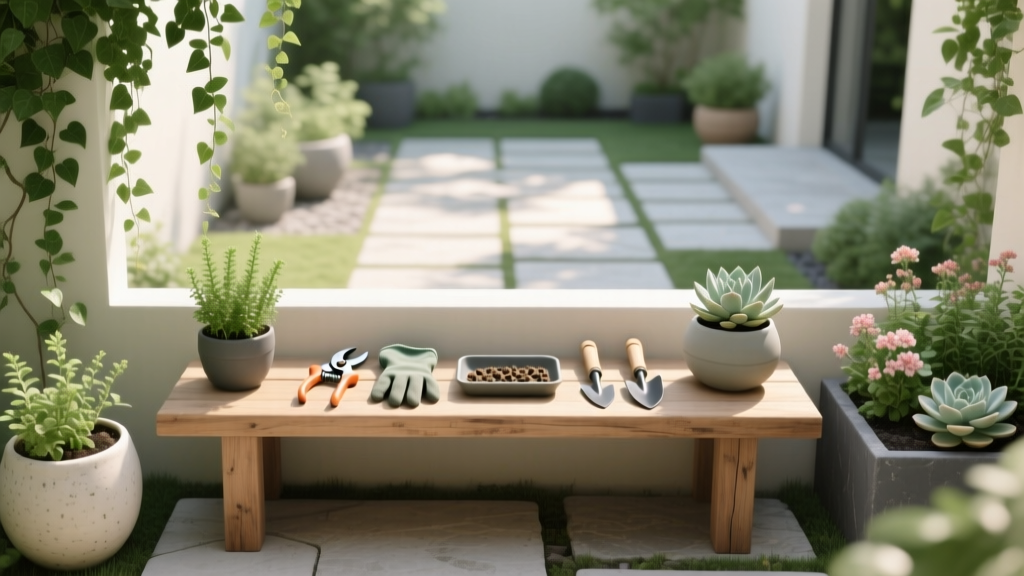
Put your most-used tools (hand pruners, twine, plant labels, marker, gloves, hori-hori) in a weatherproof tote stored in a deck box or lidded bucket. The time trick is friction reduction: if it’s always outside, you’ll do 5-minute tasks when you notice them. Case example: a busy parent gardener I worked with kept a caddy by the back door and started knocking out quick deadheading and harvesting during kid playtime—no “tool hunt,” no lost weekends.
6) Pre-stage mulch where you’ll use it (wheelbarrow “parking”)
Mulching takes forever when you’re hauling bags across the yard. Park the wheelbarrow next to the bed and open all bags (or stage bulk mulch) before you start spreading. Example: staging 10 bags at once turns 10 separate trips into one, and you finish before you’re tired enough to spread unevenly.
Soil & mulching shortcuts (less weeding, less watering, fewer do-overs)
7) Mulch to a real depth: 2–3 inches, not a “dusting”
A thin layer of mulch looks tidy but doesn’t block light well enough to suppress weeds. Aim for 2–3 inches of shredded bark, leaf mold, or straw around established plants (keep it 2–3 inches away from stems). Research-backed: Colorado State University Extension recommends organic mulch layers around 2–4 inches for weed suppression and moisture conservation (CSU Extension, 2020).
8) Use cardboard sheet mulch for new beds (one afternoon vs weeks of sod fights)
For a new bed, overlap plain cardboard (no glossy ink) by 6 inches, soak it, then top with 3–4 inches of compost plus mulch. You can plant through it immediately for transplants, and it smothers grass without digging. Scenario: converting a 10’x10’ lawn patch—sheet mulching is usually a 1–2 hour setup instead of repeated tilling sessions.
9) Make “compost pockets” when transplanting heavy feeders
Instead of amending the whole bed, dig a transplant hole and mix compost into that pocket at about a 1:1 ratio with native soil. Tomatoes, squash, and peppers respond fast, and you use less compost overall. Example: for 12 tomato plants, you might use one 5-gallon bucket of compost rather than multiple wheelbarrows spread everywhere.
10) Keep a mulch “refill bin” for quick touch-ups
Weeds sneak in where mulch thins out. Store a small bin (like a 20–30 gallon lidded trash can) of straw or shredded leaves near the beds so you can top up in 2 minutes when you spot bare soil. DIY alternative: use autumn leaves—run them over with a mower and stash bags for spring mulch.
11) Stop bagging leaves—mow-mulch them into beds
Chopped leaves settle into a weed-suppressing mat and feed soil life. Mow leaves on the lawn, then rake them into beds as a 2-inch layer; they’ll shrink down quickly. Real-world example: one large deciduous tree can produce enough leaf mulch to cover multiple beds—free material you’d otherwise pay to haul away.
12) Use a pre-emergent “mulch sandwich” in paths
For garden paths, lay cardboard, then add 2–3 inches of wood chips. This combination dramatically reduces path weeding and keeps mud down. Scenario: in a wet spring, wood-chip paths can be the difference between clean shoes and constant mess—plus you’re not spending Saturdays pulling crabgrass from walkways.
Planting hacks (fewer trips, fewer failures, faster harvests)
13) Pre-sprout big seeds to avoid replanting
Soak peas, beans, and corn for 8–12 hours, then drain and keep them in a damp towel for 24–48 hours until you see a tiny root. Plant carefully so the root points down. Example: pre-sprouted peas often pop up more evenly, which saves you from re-seeding bare patches a week later.
14) Plant in blocks, not long skinny rows
Blocks (like a 2’x3’ patch of carrots) reduce edging and make weeding faster because you’re working a defined area. They also improve pollination for crops like corn and make irrigation layout simpler. Case example: a community garden plot switched to 4 blocks per bed and cut “path creep” and maintenance time because edges were obvious.
15) Use transplants strategically: buy a few, start the rest
Time-saving isn’t always DIY. Buy transplants for slow starters (tomatoes, peppers) and direct-sow fast crops (radishes, beans). Cost comparison: a $4 tomato transplant can save 6–8 weeks of indoor seed-starting effort; meanwhile, a $3 packet of beans can produce dozens of plants with almost no prep.
16) Make a “succession sowing” calendar with 3 dates per crop
Instead of remembering when to re-sow, write three planting dates on a tag or your phone: “now,” “+2 weeks,” “+4 weeks.” This works especially well for lettuce, cilantro, and radishes. Example: sow lettuce every 14 days and you’ll harvest steadily rather than dealing with one giant glut (and then nothing).
17) Use landscape staples to pin down row cover fast
Floating row cover saves you time by preventing pest damage before it starts, but only if it’s quick to deploy. Keep a handful of 6-inch landscape staples in your caddy and pin covers down in under a minute. Scenario: brassicas under row cover early can avoid cabbage worms—less time picking caterpillars later.
18) Pre-label everything (labels first, planting second)
Write labels before you plant so you’re not trying to remember varieties later. Include the variety and date (e.g., “Jalapeño 5/12”). This saves time when troubleshooting (“Did I plant that last week or three weeks ago?”) and when planning your next sowing.
Weeding & maintenance speed-ups (do less, earlier, with better tools)
19) Weed when the soil is slightly damp, not wet or bone-dry
Timing is a cheat code. After a light rain or irrigation, weeds pull with roots intact; in dry soil, they snap and re-root. Example: if you weed 10 minutes the morning after watering, you can often avoid a 60-minute battle later.
“The best time to control weeds is when they are small.” — Purdue University Extension (2018)
20) Hoe tiny weeds—don’t hand-pull them
Use a stirrup (oscillating) hoe for thread-stage weeds in open soil; it slices them off in seconds. The trick is speed: one pass every 7–10 days can keep beds nearly weed-free. Real-world example: a 4’x8’ bed can be hoed in under 2 minutes when weeds are small.
21) Keep pruners sharp and clean (it’s faster and prevents problems)
Dull pruners slow you down and tear stems, which can invite disease. Sharpen once a month during the growing season and wipe blades with isopropyl alcohol when moving between plants that look suspect. Time saver: clean cuts heal faster, meaning fewer “mystery issues” to troubleshoot later.
22) Do a 5-minute “harvest sweep” before you water
Harvest first, then water—wet foliage and full baskets don’t mix well, and you won’t forget produce hiding under leaves. Example: a quick sweep for zucchini and cucumbers prevents the “baseball bat zucchini” situation that steals plant energy and reduces future yield.
23) Use a bucket rule: every garden trip ends with one bucket of weeds or debris
Bring a 2–5 gallon bucket every time you enter the garden and fill it before you leave. This turns cleanup into a habit instead of a once-a-month marathon. Scenario: if you garden 4 days a week, that’s 16 small cleanups a month—your beds stay tidy without “all day Saturday” maintenance.
Watering and fertilizing without the fuss (simple routines that work)
24) Fertilize with a set dilution and a set day
Pick one easy routine so you’re not constantly guessing. For container veggies, a common approach is a liquid fertilizer at 1/2 strength every 7–14 days; for in-ground beds, compost top-dressing once midseason often covers a lot. Example: choose “Sunday feed” and keep a dedicated measuring spoon in the fertilizer container so you don’t hunt for tools.
25) Use a moisture check shortcut: finger test + mulch check
Skip the complicated gadgets unless you love them. Push your finger 2 inches into the soil under mulch; if it’s dry at that depth, water. Example: gardeners often water because the mulch surface looks dry—checking under it prevents unnecessary watering and saves time (and money) on the water bill.
Quick comparisons that help you choose the faster path
| Task | Method A | Method B | Time/Cost Reality |
|---|---|---|---|
| Watering beds | Hand-watering with hose | Drip + timer | Hand-watering can take 15–30 min/day in summer; a $30–$60 timer + $50–$80 drip setup can cut it to a 5-min weekly check. |
| Starting a new bed | Digging sod | Cardboard sheet mulch | Digging is labor-heavy and slow; sheet mulching is often a 1–2 hour setup for a 10’x10’ area plus waiting time while it breaks down. |
| Weed control | Hand-pull big weeds | Hoe tiny weeds weekly | Hand-pulling large weeds is slow and disruptive; hoeing 5–10 minutes every 7–10 days prevents the problem. |
| Mulching material | Bagged mulch | Mowed leaves / free chips | Bagged mulch often runs $4–$7/bag; chopped leaves are free, and many cities offer low-cost or free wood chips. |
Three real-life “time-saver” setups you can copy
Scenario 1: The weeknight gardener with 30 minutes
Set up drip on a timer, keep a caddy outside, and adopt the bucket rule. You’ll spend your limited time harvesting and doing quick maintenance instead of dragging equipment around. A 10-minute weed hoe pass + 10-minute harvest + 10-minute tie-up/prune is a realistic weeknight rhythm that keeps the garden under control.
Scenario 2: The new bed expansion (without losing a weekend)
Sheet mulch with overlapping cardboard (6-inch overlaps), soak, add 3–4 inches of compost, then mulch. Plant transplants through slits right away (tomatoes, peppers, squash) and direct-sow later as the layer settles. This avoids digging, reduces weed pressure, and starts paying off immediately.
Scenario 3: The “I’m tired of weeding paths” fix
Cardboard plus 2–3 inches of wood chips in paths, then top up once or twice per season. Keep a refill bin of chips near the entrance so bare spots get patched the moment you notice them. This turns path weeding from a weekly annoyance into an occasional 5-minute touch-up.
If you steal only a few of these tricks, make them the ones that remove repeat decisions: timers for watering, mulch at the right depth, and a weekly micro-routine for weeding while weeds are tiny. The garden starts feeling less like a chore you “catch up on” and more like a place you can maintain in short, satisfying bursts—without sacrificing harvests.
Sources: University of California Agriculture and Natural Resources (UC ANR), Drip Irrigation (2019); Colorado State University Extension, Mulches for the Home Grounds (2020); Purdue University Extension, weed management guidance emphasizing early control (2018).