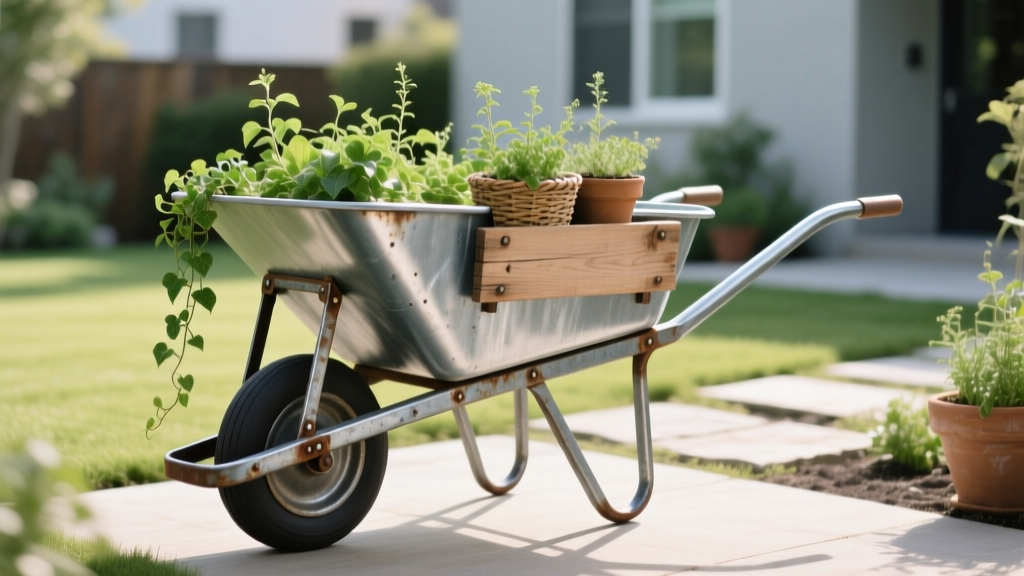
DIY Garden Cart from an Old Wheelbarrow
Most wheelbarrows don’t “wear out” the way people think—they get abandoned because they’re annoying. A wobbly single wheel, a rotting tray, or handles that bite into your wrists can make a perfectly usable frame feel like junk. The common mistake is tossing the whole thing when you only need to repurpose the parts that still do the heavy lifting: the wheel, axle, and frame geometry.
This is the fun part: with a few cuts and some thoughtful upgrades, that cranky old wheelbarrow can become a stable, easy-rolling garden cart that hauls mulch, tools, flats of seedlings, and even firewood—without dumping on your shoes. Below are the tips and tricks I’ve learned (and re-learned the hard way) to make it roll straighter, carry smarter, and cost less than buying a new cart.
Before You Build: Make Sure the Wheelbarrow Is Worth Saving
Tip: Do the 60-second “frame and wheel” sanity check
Flip the wheelbarrow over and spin the wheel hard; it should rotate freely for at least 10–15 seconds without grinding or wobbling. Sight down the frame rails—if they’re bent more than about 1/2 inch side-to-side, you’ll fight tracking forever. If the frame is solid and the axle isn’t seized, you’ve got a great cart donor even if the tray is rusted through.
Real-world example: A barrow with a rust-hole tray but a straight frame can become a flatbed cart in an afternoon. A barrow with a perfect tray but a twisted frame usually becomes a parts donor for the wheel and hardware.
Tip: Replace the tire based on how you actually garden
Air-filled (pneumatic) tires roll smoothly over roots and pavers, but they pop at the worst time—usually when you’re hauling 80 lb of wet mulch. Solid or “no-flat” tires cost more up front (often $25–$45) but save you from patch kits and frustration. If your cart will live near thorny hedges or goatheads, go no-flat.
Money note: A new pneumatic tire can be $15–$25; add tubes, patches, and the time you’ll lose during peak season, and no-flat often wins by year two.
Tip: Don’t skip the handle test—splinters and leverage matter
Grab the handles and lift like you’re unloading compost. If the handles flex excessively or feel punky, plan to replace them or cap them with new material. Handles control leverage; when they’re weak, the cart will feel “tippy” even if the wheel is fine.
DIY alternative: If the handle wood is mostly okay, sleeve the grip area with a 12–16 inch length of 1-1/4 inch PVC pipe slit lengthwise and screwed on—cheap, comfortable, and easy to replace.
Pick Your Cart Style (So You Don’t Build the Wrong Thing Twice)
Tip: Decide if you need a flatbed, a bin, or a “combo” cart
Wheelbarrows are for dumping; carts are for carrying. A flatbed excels at moving flats, bags, and tools without tipping. A bin-style cart is better for loose mulch, weeds, and leaves. If you do both, build a flatbed with removable sides—best of both worlds.
| Build option | Best for | Typical materials | Approx. cost (using salvaged wheelbarrow) | Tradeoff |
|---|---|---|---|---|
| Flatbed cart | Seedling trays, bags, tools | 3/4" plywood + 2x4 rails | $20–$60 | Loose mulch needs a tarp or sides |
| Bin cart | Weeds, leaves, mulch, compost | Plastic tote or rebuilt tray | $15–$50 | Harder to load large rigid items |
| Combo (flatbed + removable sides) | A little of everything | Plywood + 1x6 sides + bolts | $35–$90 | More build time, more fasteners |
Tip: Build around your narrowest gate (not your widest path)
It’s painful to build a gorgeous cart and realize it can’t fit through the side yard gate. Measure your tightest opening and subtract 2 inches for knuckle clearance—so a 36-inch gate means your cart should be 34 inches wide max. If your wheelbarrow frame is wider, build the deck narrower and keep the edges inside the frame rails.
Real-world example: One gardener I worked with had a 32-inch shed door; we built a 30-inch deck, and suddenly the cart stored indoors instead of rusting in the rain.
Core Build: Turning the Wheelbarrow Frame into a Cart Base
Tip: Use a “deck-first” approach to avoid crooked builds
Cut your deck (flatbed) first, then mount it to the frame with the wheelbarrow upside-down so gravity keeps everything aligned. A 3/4-inch exterior plywood deck is stiff enough for most garden hauling, and a common size is 24 x 36 inches for maneuverability. Seal the plywood edges with exterior paint or polyurethane—edges soak water faster than faces.
Timing: Give paint a full 24 hours to cure before bolting it down, or you’ll glue the deck to whatever it’s sitting on.
Tip: Bolt through the frame—don’t trust screws alone
Wheelbarrow frames flex under load, and screws can wallow out over time. Use 1/4-inch carriage bolts with washers and locknuts; four to six bolts is typical, spaced evenly along the rails. If the frame is tubular, add a wood cleat under the deck so the bolts compress wood-to-wood instead of crushing the tube.
Money saver: A box of 1/4-inch bolts and locknuts often runs $10–$18, and it’s the difference between “solid for years” and “rattly by July.”
Tip: Add a front “anti-dump” lip for civilized hauling
A flatbed cart without a lip will let bags and tools creep forward and smack the wheel. Screw a 1x2 or 2x2 across the front edge of the deck as a stop—keep it 1 inch tall if you want to slide trays off easily. For heavier loads, go 2 inches tall and chamfer the top edge so it doesn’t snag.
Real-world example: That 1-inch lip stops a 40 lb bag of compost from migrating into the wheel when you hit a bump in the lawn.
Handling and Ergonomics: Make It Roll Straight and Feel Light
Tip: Set the load over the wheel to reduce what you lift
The “magic” of a wheelbarrow is leverage—if the load sits too far back, your arms become the suspension. When you mount your deck, aim for the wheel axle to sit under roughly the front third of the deck. That geometry keeps most weight on the wheel, making a 100 lb load feel more like 30–40 lb in your hands.
Case example (mulch run): For a gardener moving 2 cubic feet bags of mulch (often 40–50 lb each), shifting the deck forward by 3 inches can noticeably reduce wrist strain on each trip.
Tip: Widen the stance for stability (especially on slopes)
Single-wheel designs tip because the center of gravity moves outside the wheel line. If your frame allows, add small outrigger skids or bolt-on “training wheels” using two 6-inch hard rubber caster wheels mounted low and wide. Keep them 1/2 inch off the ground on flat surfaces so they only catch when the cart starts to lean.
Cost: Two casters plus bolts typically run $20–$35, far cheaper than replacing spilled soil and broken seedlings.
Tip: Upgrade grip comfort with tennis wrap or bicycle tape
Hard handles force you to squeeze tighter, which makes your forearms burn out faster than the load itself. Wrap grips with bicycle handlebar tape or tennis racket wrap—cheap, weather-resistant, and replaceable. If you want a more rugged option, slide on 1-1/4 inch foam pipe insulation and secure it with waterproof tape at both ends.
Real-world example: One community garden swapped to tape-wrapped grips and cut “complaints about the cart” immediately—no tool changes, just comfort.
Smart Cargo Upgrades: Carry More Without Making It Heavier
Tip: Add removable side panels using wing nuts
For a combo cart, build 6–8 inch tall side panels from 1x6 boards or plywood strips, and bolt them to corner blocks with 1/4-inch bolts and wing nuts. This lets you haul loose weeds or leaves one day, then strip it back to a flatbed for seedling flats the next. Keep hardware standardized (all 7/16-inch heads, for example) so you’re not hunting for three different wrenches.
Timing: Once you’ve drilled and fit everything, removing or installing sides should take under 2 minutes.
Tip: Use a tarp-and-bungee “liner” for messy loads
You don’t need a permanent bin to move compost or wet weeds. Throw a 6 x 8 ft tarp over the flatbed, drop your load in the center, then bungee the corners underneath so nothing leaks or slides off. When you’re done, drag the tarp to the compost pile and tip it out cleanly.
Money saver: A decent tarp is often $8–$15; compare that to rebuilding a rusted tray or buying a molded plastic cart.
Tip: Build a dedicated “tool holster rail” on one side
Screw a 2x2 along one side of the deck and drill a few 1-1/4 inch holes for tool handles (trowel, hori-hori sheath, dibber). Add two cup hooks underneath for pruners and gloves. It keeps sharp tools from rattling under your feet or disappearing into a pile of leaves.
Case example (pruning day): A gardener doing a 2-hour rose prune kept pruners, twine, and a small bucket of alcohol wipes on the cart—no trips back to the shed, no lost tools.
Durability Tricks: Weatherproofing and Rust Control That Actually Works
Tip: Treat rust like a system problem, not a cosmetic one
If your frame has surface rust, wire-brush it, then use a rust-converting primer before paint. Rust converters chemically stabilize oxidation so it doesn’t creep under your topcoat. A quick spray paint job without prep looks good for a month; then rust freckles come right back.
DIY alternative: For light rust and no primer on hand, scrub and coat with an oil-based enamel—less ideal, but better than bare metal.
Tip: Seal wood edges and bolt holes first (that’s where rot starts)
Water enters at end grain and fastener holes. Before assembly, brush thinned exterior paint (about 10% water for latex) onto all edges and into drilled holes, then let it dry. If you want the deck to last multiple seasons, this one step does more than an extra coat on the top surface.
Data point: A 3/4-inch exterior plywood deck can last 3–5 years outdoors if edges are sealed and it’s stored under cover; unsealed edges can delaminate in a single wet season.
Tip: Grease the axle twice a season (spring and mid-summer)
A squeaky wheel isn’t just annoying—it’s extra drag every single trip. Pop the wheel, wipe the axle, and apply a thin layer of multipurpose grease. In wet climates, plan on doing this every 8–10 weeks during peak use.
Expert-backed note: Extension maintenance checklists routinely flag lubrication and inspection as key for keeping wheeled equipment safe and functional over time (University of Minnesota Extension, 2020).
Safety and Load Rules: Keep Your Back Happy and Your Cart Predictable
Tip: Cap your “comfortable load” before your cart’s “possible load”
Just because the frame can physically hold it doesn’t mean you should haul it. As a practical rule, keep routine loads around 100–150 lb for a single-wheel DIY cart unless you’ve upgraded stability and grips. Wet soil is deceptively heavy; when in doubt, do two trips—it’s usually faster than cleaning up a spill.
Case example (soil move): A gardener tried hauling wet topsoil in one go, hit a root, and dumped half the load. Two 75 lb trips would’ve finished sooner than one 150 lb “hero run” plus cleanup.
Tip: Use the “slope test” before loading on a hill
On slopes, tip-over risk skyrockets because the center of gravity shifts downhill. Before loading, stand the empty cart sideways on the slope and gently lean it downhill—if it wants to tip easily, reduce load height and keep weight low and centered. If you routinely haul on a slope, those outrigger casters (set 1/2 inch off the ground) are worth every penny.
Research-backed reminder: Safety guidance for outdoor equipment consistently emphasizes stability, inspection, and avoiding overload—small changes prevent most incidents (OSHA, 2019).
“Most equipment failures and injuries come down to three things: overloading, poor maintenance, and instability on uneven ground.” — Safety guidance summarized from OSHA materials on safe use of wheeled/handling equipment (2019)
Three Builds I Keep Recommending (Pick One and Copy It)
Scenario 1: The “Seedling Shuttle” for spring planting days
If you’re moving flats from a garage or greenhouse to beds, build a 24 x 36 inch flatbed deck with a 1-inch front lip and add two removable side rails that are only 2 inches tall. That keeps flats from sliding but still lets you slide them off without lifting. Add a bungee across the top for bumpy paths, and you can carry 4 standard 10x20 trays in one trip.
Scenario 2: The “Mulch & Weed Wrangler” for messy summer work
Go combo style: flatbed with 8-inch removable sides and a tarp liner for wet weeds. Keep a dedicated hook for a hand brush so you can sweep the deck clean before switching to tool hauling. This is also where no-flat tires shine—mulch runs always seem to find the one nail or thorn in the yard.
Scenario 3: The “Firewood & Fall Cleanup Hauler” for heavy, awkward loads
Build a slightly longer deck—around 24 x 42 inches—if your frame allows, and add a rear cleat so logs don’t roll into your ankles. Screw on two tie-down points (even simple eye bolts) so you can strap down branches or bundles. For leaf season, remove the cleat and use a tarp hammock to move bulky but light piles without needing tall sides.
Little Extras That Feel Like Cheating (In a Good Way)
Tip: Add a kickstand so loading doesn’t become a balancing act
A wheelbarrow wants to nose-dive when you set it down, which makes loading awkward. A simple kickstand can be a hinged piece of 2x2 or a salvaged metal bracket mounted near the rear of the frame. Set it so the deck sits level when parked—loading compost or stacking trays becomes calmer and faster.
Tip: Mark quick volume guides for mulch and compost
If you haul amendments regularly, draw volume lines on the inside of your removable side panels or on the deck using paint marker. For example, mark “1 cu ft” and “2 cu ft” zones based on your deck area and side height. It’s a surprisingly handy way to portion compost without hauling out a measuring bucket every time.
Tip: Keep a “cart kit” attached so it’s always ready
Zip-tie a small weatherproof pouch under the handle with a spare bungee, a pair of gloves, and a wrench that fits your main bolts. The best cart is the one that doesn’t require a scavenger hunt to use. If a bolt loosens mid-season, you’ll fix it in 60 seconds instead of letting it wobble for six weeks.
A rebuilt wheelbarrow cart is one of those rare garden projects where the payoff starts immediately: fewer trips, less strain, and a setup that matches how you actually work. Once you’ve used a stable, purpose-built cart for a week, the old tippy barrow you used to wrestle will feel like a practical joke.
Sources: University of Minnesota Extension (2020) maintenance guidance themes on inspection/lubrication for outdoor tools and equipment; OSHA (2019) general safety principles relevant to manual handling and wheeled equipment use on uneven surfaces and overload prevention.