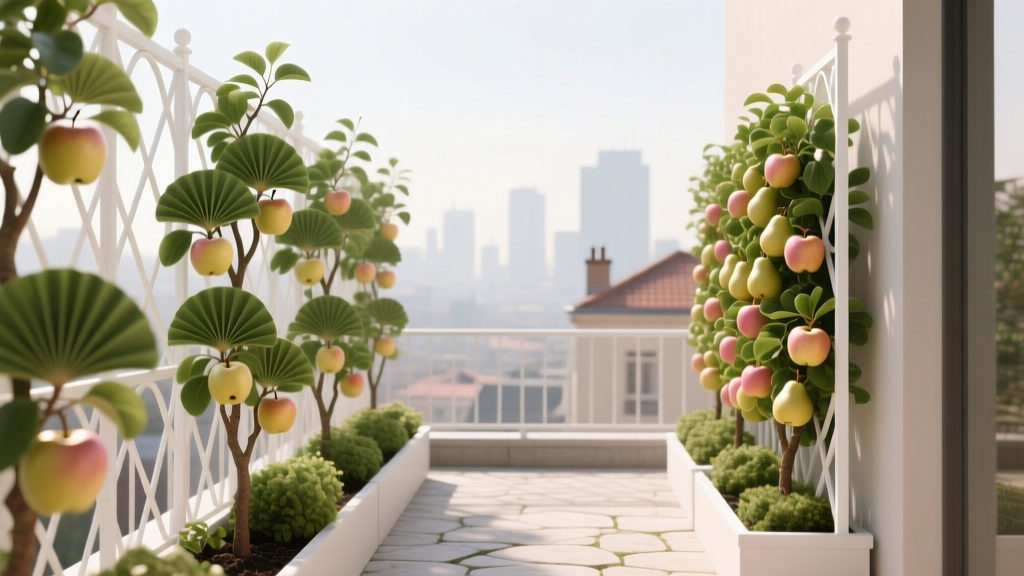
Balcony Compact Espalier Fruit Garden
The first time you notice it, it’s usually mid-summer: you step onto your balcony with a mug of coffee, and the space feels… used up. A chair here, a small table there, maybe a pot of basil clinging to the railing—and yet the sunlight pouring in makes you want more. More green. More shade. More harvest. The problem isn’t that you don’t have room for fruit trees; it’s that you don’t have room for fruit trees in the way they’re traditionally grown.
That’s where espalier comes in. An espalier fruit garden turns a balcony wall, railing line, or privacy screen into a productive, architectural surface—fruiting branches trained flat like living latticework. Done right, it feels designed, not crammed: a clean layout, predictable maintenance, and fruit you can pick without stepping off your doormat.
Design principles for a balcony espalier that actually works
Think “vertical plane,” not “container jungle”
On a balcony, floor area is precious. Instead of scattering pots, you’ll build one continuous fruiting zone along the brightest edge—typically the railing side or the sunniest wall. Your goal is a narrow footprint (often 12–18 inches deep) that reads as one cohesive garden element.
Espalier is especially suited to compact spaces because it keeps canopies thin, letting light reach leaves and fruit. That isn’t just aesthetics; it’s health. Purdue University Extension notes that training and pruning improve light penetration and air circulation, which are key to fruit quality and disease reduction (Purdue Extension, 2021).
Start with a measured site check (5 minutes that saves months)
Before buying a single tree, take these measurements:
- Usable length: the straight run where you can place containers (example: 8 ft along a railing).
- Depth limit: how far you can project without blocking passage (target: keep a clear walking lane of 24–30 inches).
- Sunlight: track direct sun; most fruit needs 6+ hours of sun, with 8 hours ideal for apples/pears. If you’re at 4–5 hours, choose figs or sour cherries (or prioritize foliage and accept lighter crops).
- Wind exposure: high balconies can desiccate leaves; plan a permeable windbreak (reed screen) rather than a solid wall that creates turbulence.
“The key to successful espalier is maintaining a thin canopy so sunlight can reach all fruiting wood; training is as much about light management as it is about shape.” — Royal Horticultural Society, espalier guidance (RHS, 2023)
Load, safety, and renter-friendly rules (don’t skip this)
Containers full of wet soil are heavy. A 20-gallon pot can weigh 150–220 lb when saturated, depending on soil mix. If you’re renting or unsure about balcony load limits, use lighter media (coir-based mixes) and split plantings into multiple smaller containers rather than one massive trough. Also check building rules about attaching wires to walls/railings—many balconies require freestanding supports.
Layout strategies: three balcony templates you can copy
Template A: The “Railing Run” (best for renters)
Best when: you have a sunny railing line and can’t drill into walls.
Layout: Place 2–3 narrow containers in a row, each with one espalier tree and a freestanding trellis frame anchored in the pot. Keep the fruiting plane inside the railing line to reduce wind damage and avoid branch conflicts with neighboring balconies.
Typical dimensions: containers 36 in L x 14 in W x 14–18 in D; trellis frame 6 ft tall. Space trees 30–36 inches apart for compact apples/pears on dwarfing rootstocks.
Template B: The “Wall Fan” (most productive per tree)
Best when: you have a warm, sunny wall (south or west exposure) and permission to anchor wires.
Layout: One tree trained as a fan espalier against a wall. The wall radiates heat, improving ripening. Install horizontal wires at 18-inch intervals from 18 inches above the container to about 66 inches high.
Typical footprint: one large container 20–25 gallons, placed 8–12 inches from the wall for airflow.
Template C: The “Privacy Screen Orchard” (for exposed balconies)
Best when: you need privacy and want fruit.
Layout: Two espalier trees trained into a narrow screen on a freestanding panel (like a rigid wire mesh or cattle panel cut down). This doubles as a wind filter. Put it perpendicular to the railing to create a nook for seating.
Typical dimensions: screen panel 6 ft tall x 4 ft wide; two trees spaced 24–30 inches apart, each trained into half the panel.
Choosing espalier forms for compact balconies
Cordon (single or double): the narrowest footprint
A single cordon is essentially one trunk angled or vertical with short fruiting spurs. It’s ideal when you only have 12 inches of depth. Use it for apples and pears. Expect a modest crop, but excellent manageability.
Horizontal tiers: the classic “living fence”
This is the iconic espalier look: a trunk with arms trained left and right on wires. On a balcony, aim for 2 tiers (maybe 3 if your railing and wind conditions allow). Two tiers often fit neatly under a 6 ft trellis and are easier to maintain.
Fan espalier: best for stone fruit and figs
Peaches, nectarines, and some plums are more naturally suited to fan training. Fans also handle uneven light better—helpful if your balcony gets shade in the morning or late afternoon.
Plant selection: compact varieties that earn their keep
Espalier success starts with the right tree on the right rootstock. For balconies, you want: restrained vigor, good disease resistance, and strong fruiting on spurs (for apples/pears) or manageable new wood (for peaches).
Apples (best all-around for espalier)
- ‘Liberty’ (apple): reliable disease resistance (notably apple scab), good flavor, and productive on spurs—great for tidy tiered espalier.
- ‘Honeycrisp’ (apple): premium eating quality; can be vigorous, so choose a dwarfing rootstock and commit to summer pruning.
- Rootstock note: look for M27 (very dwarf) or M9 (dwarf) for containers; M27 is smaller but can be less forgiving about watering.
Pears (excellent for vertical cordons)
- ‘Seckel’ (pear): naturally smaller fruit and tree habit, sweet flavor, and good for tight training.
- ‘Harrow Sweet’ (pear): bred for fire blight resistance; valuable in humid climates.
- Rootstock note: many container pears are on quince rootstock; confirm compatibility and cold hardiness for your region.
Figs (for warmer walls and fewer chill hours)
- ‘Petite Negra’ (fig): compact habit, suited to pots, good for small spaces where you want a dense fan.
- ‘Chicago Hardy’ (fig): tougher in colder areas; if winter is harsh, plan to insulate the pot.
Stone fruit (only if you can commit to pruning)
- ‘Bonanza’ (dwarf peach): bred for containers, naturally compact; works well in a fan form on a warm wall.
- ‘Stella’ (sweet cherry) on dwarfing rootstock: self-fertile, but can outgrow a balcony quickly—choose only if you can prune and have 8+ hours sun.
For pest and disease realism: balcony gardens can still get aphids, scale, and fungal issues if airflow is poor. Keeping the espalier plane thin and not crowding containers is your first defense. The University of Minnesota Extension emphasizes pruning and canopy management as core practices for fruit tree health (University of Minnesota Extension, 2022).
Comparison table: best espalier fruit choices for balconies
| Fruit | Best espalier form | Minimum sun (hrs/day) | Container size | Spacing between trees | Notes |
|---|---|---|---|---|---|
| Apple (M27/M9) | 2-tier horizontal / cordon | 6–8 | 15–20 gal | 30–36 in | Most forgiving; great structure and productivity |
| Pear | Cordon / 2-tier horizontal | 6–8 | 15–25 gal | 30–42 in | Elegant form; watch fire blight in warm humid areas |
| Fig | Fan | 5–7 | 15–25 gal | 36 in | Excellent for warm walls; protect pot in cold winters |
| Dwarf Peach | Fan | 7–8 | 20–25 gal | 42 in | High pruning needs; best flavor when heat is strong |
Step-by-step setup: build a compact espalier line in a weekend
Materials and budget (real numbers)
Costs vary by region, but here’s a practical baseline for one espalier tree:
- Dwarf fruit tree (1–2 year): $45–$90
- Container (15–20 gal): $25–$60
- Potting mix + compost (about 3–4 cu ft): $20–$40
- Trellis frame or rigid panel: $30–$80
- Soft ties + wire + eye bolts (if allowed): $10–$25
Typical total per tree: $130–$295. A two-tree balcony line often lands around $260–$500, especially if you reuse containers or build DIY supports.
1) Place containers for light and movement first
- Mark a straight run along the sunniest edge.
- Leave a minimum clear walkway of 24 inches (more if this is your main passage).
- Set containers 30–36 inches apart center-to-center for apples/pears.
2) Install a support you can trust in wind
- If drilling is allowed: install eye bolts and run galvanized wires at 18-inch vertical intervals.
- If drilling is not allowed: sink a freestanding trellis frame into the container (or bolt it to the container rim) and add cross braces.
- Keep the support 6 ft tall for manageability; taller structures catch wind and demand ladders—both bad balcony outcomes.
3) Plant at the correct depth and water thoroughly
- Use a container at least 15 gallons for apples/pears; 20–25 gallons for figs/peaches.
- Keep the graft union 2–3 inches above soil level.
- Water until it runs freely from the drainage holes; expect to repeat daily during heat waves.
4) Begin training immediately (gentle, consistent)
- Select the central leader and the best side shoots for your first tier (or fan arms).
- Tie branches at a slight upward angle (about 10–20°) for establishment, then gradually lower toward horizontal over several weeks.
- Use soft, adjustable ties; check monthly so they don’t bite into bark.
Three real-world balcony scenarios (and how the design shifts)
Scenario 1: The 8-foot rental balcony with no drilling allowed
You have 8 ft of railing, 6 hours of sun, and strict rules: no hardware on railings, no wall anchors. Go with two apple cordons or two 2-tier apples in 36-inch troughs, each with a pot-anchored trellis frame. Underplant with shallow-rooted herbs (thyme, chives) to soften edges without stealing too much moisture.
DIY alternative: build a trellis from 1x2 cedar strips and exterior screws. It’s lighter than metal and easier to modify if the tree grows faster than expected.
Scenario 2: The windy 12th-floor corner balcony
Wind is the real limiter here, not sun. Choose pears or apples (tougher foliage than many stone fruits) and keep the profile very flat—cordons or a low two-tier system. Add a semi-permeable screen (reed or slatted panel) to slow wind without creating a sail. Use heavier containers, but keep soil lightweight by blending perlite or pumice into the mix.
Spacing matters more in wind: give each tree at least 36 inches so leaves dry quickly after rain and to reduce branch rubbing.
Scenario 3: The warm wall balcony that bakes in afternoon sun
If you get 7–8 hours of sun and the wall holds heat, this is fig territory. Train one ‘Petite Negra’ fig as a fan on a 6 ft panel, and you’ll get a lush, Mediterranean feel without sacrificing seating. Mulch the pot surface with 1 inch of compost to slow evaporation, and plan drip irrigation if you travel.
Budget note: drip kits can be as low as $35–$60, and they’re often the difference between steady fruiting and frustrating fruit drop in hot exposures.
Maintenance expectations: the rhythm that keeps it beautiful
Espalier looks high-maintenance, but it’s really “small, frequent touches” rather than big weekend ordeals. Plan on 20–40 minutes per week during the growing season once training is established.
Weekly (spring through early fall)
- Water: in hot weather, containers may need water 3–6 times per week. Check top 2 inches of mix; if dry, water deeply.
- Tie and adjust: a quick check to keep branches aligned and prevent tie damage.
- Pest scan: look under leaves for aphids; wipe or rinse early rather than waiting.
Seasonal pruning and training (where crops are won or lost)
- Late winter: structural pruning—set your tiers, shorten leaders, remove crossing shoots.
- Early summer (after growth flush): summer prune to keep the espalier thin; shorten side shoots to encourage fruiting spurs (especially apples/pears).
- Mid-summer: fruit thinning—aim for one apple every 6 inches along a branch for good size and reduced limb stress.
- Fall: clean up leaves and check supports; tighten wires and replace worn ties.
If you want a simple rule: winter sets the shape, summer protects the shape. Miss winter pruning and the structure becomes awkward; miss summer pruning and it becomes a leafy sail with fewer fruits.
Small-space polish: companion planting and finishing details
A balcony espalier can look stark if it’s just sticks and wires. Add restrained layers that don’t compete with the tree’s root zone:
- Low herbs: thyme, oregano, chives—shallow roots and easy harvesting.
- Pollinator support in small pots: sweet alyssum or calendula in 6–8 inch pots placed between containers.
- Mulch: a 1–2 inch compost layer improves moisture retention and adds a finished look.
Keep companions modest. Overcrowding is the fastest way to turn a clean espalier concept into a thirsty tangle.
Budget-smart choices and DIY alternatives (without cutting corners)
If you want the look for less, spend on the tree and save on the hardware. A healthy dwarf tree with a strong central leader is worth it; a flimsy support system is a recurring headache.
- Use cattle panel offcuts (if available locally) instead of a boutique trellis. Cut to 6 ft height and zip-tie to a wood frame.
- Repurpose a narrow bookcase-style shelving unit (weatherproofed) as a freestanding wire anchor—attach horizontal wires across the back.
- Start with one tree (around $130–$295) and add a second next season once you understand watering and wind patterns.
If you’re renting, prioritize reversibility: freestanding frames, weighted bases, and non-marking ties. You can take the entire orchard with you when you move—your espalier is essentially a portable wall of fruit.
By late spring, your branches will be neatly pinned into place, leaves laid out like solar panels. By mid-summer, fruit hangs where you can see it from the kitchen door—no ladder, no lawn, no wasted square footage. The balcony stops being a leftover outdoor zone and becomes a deliberate room: part dining nook, part privacy screen, part orchard. And every time you tie a new shoot into line, the space feels more like it was designed for you all along.
Sources: Purdue University Extension (2021), “Training and Pruning Fruit Trees” materials on light penetration and canopy management; Royal Horticultural Society (RHS) (2023), espalier and trained fruit guidance; University of Minnesota Extension (2022), home fruit tree care emphasizing pruning for health and productivity.