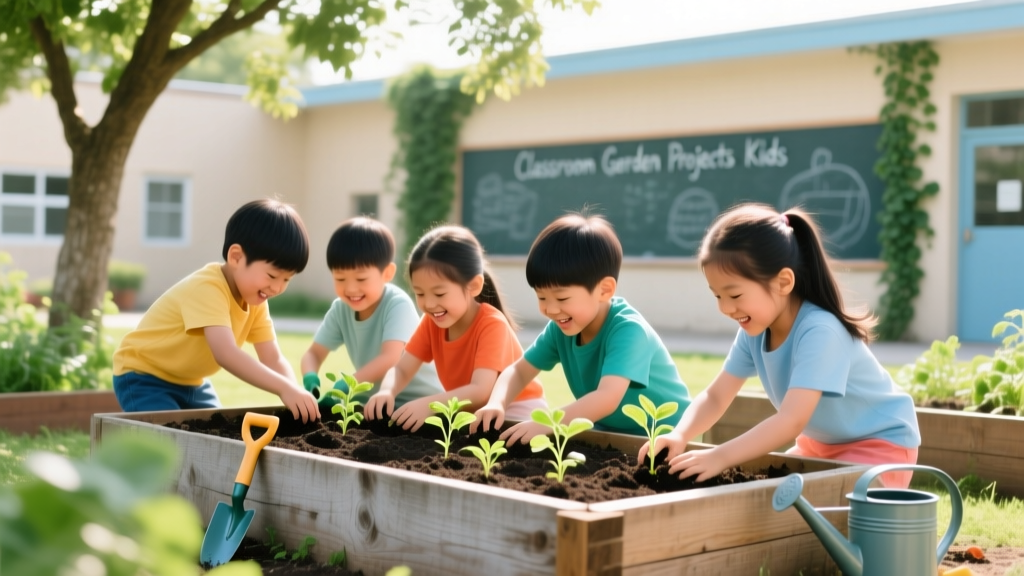
Classroom Garden Projects for Kids
The bell rings, the kids pour out, and you’ve got that familiar mix of energy and chaos—plus one practical problem: you want a hands-on project that actually holds attention longer than five minutes. A classroom garden does that, but only if it’s designed like a small landscape: clear paths, purposeful beds, and plants that behave. The good news is you don’t need a campus-sized yard. With a sunny corner, a few containers, and a plan drawn to scale, you can build a kid-friendly garden that fits your space and your schedule.
Think of this as a layout walkthrough—like I’m standing beside you with a tape measure and a pencil, helping you build a garden that teaches science, math, and patience without turning into a weedy guilt patch.
Start with the “teaching flow”: design principles that keep kids engaged
In a classroom garden, the layout is your classroom management tool. If students can move through the space without bumping, stepping on seedlings, or crowding one “favorite” bed, you’ve already won half the battle.
Design for circulation first: paths beat perfect symmetry
Give kids a path that makes sense. For a small garden, a single loop (enter → work → observe → exit) reduces bottlenecks. If you’re working in a backyard or a shared courtyard, aim for a minimum path width of 24 inches for one-direction traffic and 36 inches if students will pass each other with watering cans.
If space is tight, define paths with mulch, cardboard topped with wood chips, or even painter’s tape on pavement. Clear edges reduce accidental trampling—especially during the “look what I found!” moments.
Right-size the beds so kids can reach the middle
For in-ground or raised beds accessed from both sides, keep bed width at 4 feet maximum. If the bed is against a wall or fence (access from one side only), cap it at 2 feet. This keeps little arms from climbing into the bed to reach the center.
Raised bed height can be flexible: 10–12 inches is plenty for most vegetables and is easy to build from standard lumber. If you’re designing for mixed ages or accessibility, a higher bed (24–30 inches) can reduce bending, but it increases material costs.
Put the “high interaction” plants closest to the entry
Kids want to touch, smell, and harvest. Place the sensory and snack plants at the front edge—strawberries, basil, cherry tomatoes—so interaction happens where you can supervise. Taller plants and long-season crops can go in the back where they won’t block sightlines.
Plan sunlight like a designer: measure before you build
Most edible classroom garden plants perform best with 6–8 hours of direct sun. If you only have 3–5 hours, choose leafy greens and herbs over fruiting crops. A simple way to check: note sun/shade at 9 a.m., noon, and 3 p.m. for a few days, or use a phone sun-tracking app and confirm with real observation.
To keep plant growth predictable, group plants by light needs rather than by “theme.” A rainbow garden is charming; a rainbow garden in shade can be disappointing.
Layout strategies that work in real homes, rentals, and school corners
Below are classroom-garden layouts I’ve used (and adapted) in tight urban patios, community rooms, and suburban backyards. Pick one and scale it to your space.
Layout A: The 4' x 8' raised bed “lab bench”
If you can fit one bed, make it a 4' x 8'. It’s the sweet spot: large enough for variety, small enough to manage. Place it with the long side facing the primary viewing spot (doorway, patio, classroom window). Keep 36 inches of working space on at least one long side.
Spacing rule of thumb: plant labels and grid markers help kids understand spacing. Use a simple grid: string lines or painted slats every 12 inches across the bed. That turns planting into a math activity and prevents overcrowding.
Layout B: Container “pods” for renters and paved areas
No soil? No problem. A pod system uses multiple containers arranged like stations. I like 6 containers in two rows of three, with a 30–36 inch aisle between rows. Each container becomes a mini-lesson: salad greens, pollinators, herbs, roots, sensory, and compost observation.
Use 5–7 gallon buckets (drill drainage holes) or 10–15 gallon fabric grow bags for tomatoes and peppers. If you’re designing for younger kids, stable, wide containers tip less than tall skinny pots.
Layout C: The “edge garden” along a fence (2' x 12' strip)
Long, narrow strips are common in side yards and along school fences. Treat it like a border: keep it 24 inches wide so kids can reach everything from the path side. Use a repeating pattern (herb, flower, vegetable, herb, flower, vegetable) to make it look intentional and to simplify care.
In a fence strip, pay attention to shade. Morning sun with afternoon shade often works well for greens and herbs, especially in hot climates.
Materials, costs, and smart DIY alternatives
You can build a classroom garden on a shoestring, but it helps to know where to spend and where to improvise.
- 4' x 8' raised bed lumber + screws: typically $80–$160 depending on wood type and local prices.
- Soil/compost fill: a 4' x 8' x 12" bed needs about 32 cubic feet of soil mix (roughly 1.2 cubic yards). Bagged soil can run $120–$250; bulk delivery may be cheaper per volume.
- Mulch: $5–$7 per bag, or use free leaf mulch if you can collect it.
- Seeds: $2–$5 per packet; choose fast crops for quick wins.
- Kid-sized tools: budget $25–$60 for a basic set, or ask families to send one labeled trowel each.
DIY alternative: If a raised bed isn’t possible, use cardboard + compost to sheet-mulch a new bed. Lay overlapping cardboard (no glossy print), add 3–4 inches of compost, top with straw or leaves. You can plant into it right away for many crops, though roots prefer deeper loosened soil.
Step-by-step setup: build the project like a mini landscape install
Keep the build structured. Kids thrive when each step feels like a job site task with a clear “before and after.”
- Choose the site and measure it. Mark corners with stakes or tape. Confirm at least 6 hours of sun for fruiting crops or 4–5 hours for greens and herbs.
- Draw a simple scaled plan. Even a 1 square = 6 inches grid is enough. Assign planting zones and paths.
- Define edges. Install the bed frame, or outline container pods with chalk, tape, or bricks so the layout reads clearly.
- Prepare soil. For beds: fill with a blend of compost + topsoil; for containers: use potting mix (lighter, drains better). Water thoroughly before planting.
- Add a path surface. Cardboard + wood chips is fast and forgiving. Aim for 2–3 inches of chips to suppress weeds.
- Plant in “attention order.” Put fast sprouters (radishes, lettuce) where kids will see them first; plant slower crops (peppers) as supporting characters.
- Label everything. Use weatherproof labels. Add one sign per bed/pod showing planting date and expected harvest date.
- Mulch and set watering rules. Mulch reduces summer failure. Establish a simple rule: water deeply when the top 1 inch is dry.
Plant selection: kid-proof varieties that perform in small spaces
Choose plants that provide quick feedback, obvious changes, and forgiving growth. You’re designing for attention span and success rate as much as aesthetics.
Fast harvest “wins” (2–6 weeks)
Radish ‘Cherry Belle’ is ready in about 3–4 weeks, giving kids a fast payoff. Space seeds about 1 inch apart, then thin to 2 inches. Thinings are a built-in lesson on plant competition.
Lettuce ‘Black Seeded Simpson’ is a reliable cut-and-come-again leaf lettuce that tolerates container culture and partial sun. Plant 6–8 inches apart for heads or sow thickly for baby greens.
Bush beans ‘Provider’ sprout quickly and are sturdy. Space plants 4–6 inches apart, full sun preferred. Kids love finding beans—like a treasure hunt in leaves.
Small-space fruiting crops (8–14+ weeks)
Cherry tomato ‘Sungold’ is famously sweet and motivating for reluctant vegetable tasters. It needs full sun and support; use a sturdy cage. In beds, space 18–24 inches apart; in containers, use 10–15 gallon pots.
Pepper ‘Lunchbox Red’ (or similar snack peppers) fits well in containers, with colorful harvests kids will actually eat. Give it 6–8 hours sun and consistent watering to avoid blossom drop.
Cucumber ‘Bush Champion’ keeps vines compact compared with standard slicers. In beds, give it about 18 inches and a small trellis; in containers, a 7–10 gallon pot works.
Pollinator and sensory plants that make the garden feel alive
Sunflower ‘Teddy Bear’ stays shorter and makes a friendly border without shading everything. Plant seeds 12 inches apart. The flowers become a science lesson on pollinators and seed formation.
Nasturtium ‘Alaska’ is edible, tough, and visually exciting. It trails nicely from containers and attracts pollinators. Plus, kids love the peppery taste test.
Sweet basil ‘Genovese’ is the classic smell-and-taste plant. Pinching basil becomes a lesson in branching and plant form.
Comparison table: choose a project format that matches your space
| Project format | Best for | Minimum footprint | Typical cost range | Maintenance load |
|---|---|---|---|---|
| Single raised bed (4' x 8') | Backyards, courtyards, community spaces | About 4' x 11' (bed + 36" work zone) | $200–$450 (bed + soil + basics) | Moderate (weeding + weekly watering checks) |
| Container pods (6 containers) | Renters, patios, paved school areas | About 6' x 6' with aisle | $60–$250 (DIY buckets to large planters) | Higher (containers dry out faster) |
| Fence-edge strip (2' x 12') | Narrow side yards, along fences | 2' x 12' + 24–36" path | $80–$250 (depending on soil improvement) | Low–moderate (easy access, but can get weedy) |
Three real-world scenarios (and how I’d lay them out)
Scenario 1: The renter’s patio garden (all containers, no digging)
You’ve got a 6' x 10' patio and a landlord who doesn’t want soil on the pavers. Go with container pods. Place taller containers on the back edge and keep a clean 30-inch aisle for kid movement. Put herbs and salad greens nearest the door for quick harvest during snack time.
Planting set: one grow bag with ‘Sungold’ tomato, one with ‘Lunchbox Red’ pepper, two buckets of lettuce (succession sow every 14 days), one bucket of radishes, and one container of nasturtiums spilling over the edge.
Budget note: DIY buckets can cut container costs to near-zero. Spend your money on potting mix; plants fail faster in poor media than in cheap containers.
Scenario 2: The suburban side yard strip (2' x 12', part shade)
This space often gets 4–5 hours of sun and turns into a forgotten corridor. Make it a learning border with repeating clusters so it reads like design, not “random planting.” Keep everything within reach from the path side.
Planting pattern (repeat 3 times): basil + lettuce + calendula. Calendula is a tough, cheerful flower that brings pollinators and can handle cooler weather. Add a short trellis section at one end for ‘Bush Champion’ cucumber if you get closer to 6 hours of sun.
DIY soil fix: sheet-mulch with cardboard and add 3 inches of compost. Edge with bricks or scrap wood to keep the border crisp.
Scenario 3: The small school courtyard corner (one raised bed + observation zone)
If you have a corner near a hose bib, set one 4' x 8' raised bed and leave a 3' x 3' “observation square” beside it—just a mulched spot with a small bench or stepping stones. That observation square is where kids sketch leaves, count pollinators, and wash hands with a water jug if needed.
Planting layout: tomatoes and peppers on the north side (so they don’t shade others), lettuce and radishes on the south/front edge for quick harvesting, bush beans in the center, and a strip of nasturtiums along the edge to soften the bed line.
What research says (and how to use it without overcomplicating)
Gardens aren’t just “cute projects”—they have measurable benefits when they’re maintained and integrated into routines.
“School gardening can improve students’ attitudes toward vegetables and increase willingness to taste them, particularly when gardening is paired with nutrition education.” — USDA Farm to School literature summaries (USDA, 2016)
The practical takeaway for your design: include at least two “immediate snack” plants (cherry tomatoes, strawberries, snap peas, basil) near the front edge, so tasting is easy and frequent.
Also, food safety matters when kids are harvesting. The U.S. Centers for Disease Control and Prevention emphasizes handwashing as a key step to prevent foodborne illness (CDC, 2024). Build a simple handwashing moment into your garden flow—place wipes or a water jug + soap station near the entry/exit.
Citations: USDA (2016) Farm to School resources and literature summaries on gardening and student outcomes; CDC (2024) handwashing guidance for reducing germ spread.
Maintenance expectations: keep it realistic for busy weeks
A classroom garden succeeds when it’s maintained lightly but consistently. For a single 4' x 8' bed, plan on 30–45 minutes per week during peak growth. Container gardens can take 45–60 minutes per week because they dry out faster, especially in summer heat.
Weekly rhythm (simple and teachable)
- Water check: 2–3 times weekly in warm weather; daily during heat waves for containers.
- Weed sweep: 10 minutes—teach kids to pull small weeds early.
- Harvest and pinch: pick beans, pinch basil, cut lettuce to encourage regrowth.
- Pest scan: look under leaves for aphids or caterpillars; remove by hand when possible.
Seasonal tasks that prevent “garden collapse”
- Spring: refresh beds with 1–2 inches compost; start cool-season crops first.
- Summer: mulch heavily; set a watering schedule with a neighbor, camp, or family rotation if school is out.
- Fall: plant another round of greens; remove spent plants and add leaves as mulch.
- Winter: cover bare soil with mulch; store tools; plan next season with kid input.
Budget-smart upgrades that add big value
If you have a little extra budget, spend it where it reduces ongoing labor.
- Soaker hose or drip line: even a basic setup can save time and improve consistency. Pair it with a simple timer if allowed.
- Thick mulch: adding 2–3 inches of mulch is one of the cheapest ways to cut weeding dramatically.
- Sturdy trellis: vertical growing increases yield per square foot and keeps paths clearer.
If budget is tight, prioritize: clean layout edges, decent soil, and a few fast crops. A beautiful cedar bed won’t compensate for poor light or neglected watering.
The best classroom gardens feel like small outdoor rooms—clear entry, a place to stand, and plants that invite curiosity. If you build the layout around movement and reach, then choose varieties that reward attention quickly, you’ll end up with something rare: a garden kids ask to visit again, even when the bell rings.