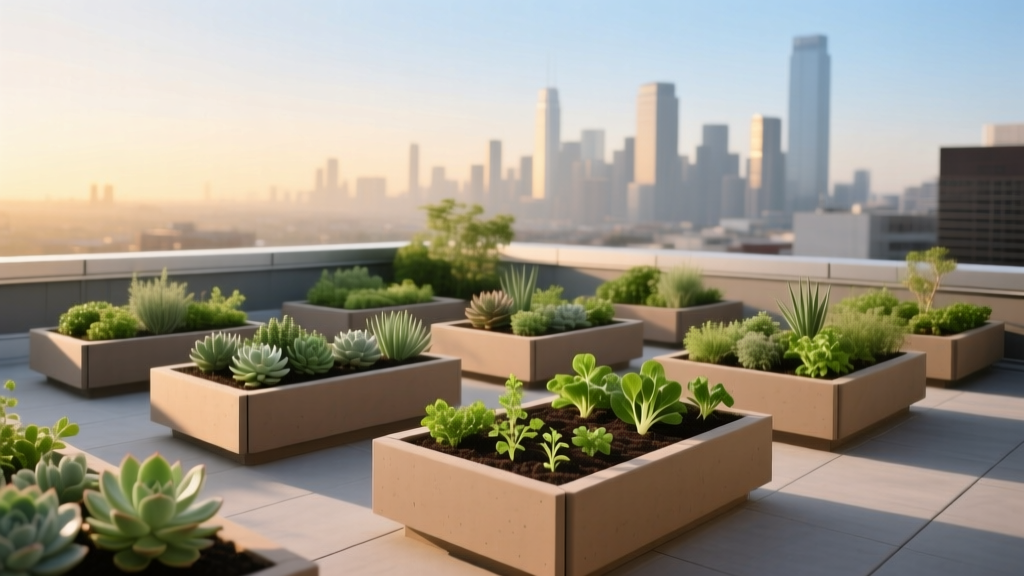
Rooftop Lightweight Soil Garden System
The elevator doors open, you step onto the roof, and the wind hits first—then the view. It’s a blank expanse of membrane roofing, a couple of HVAC units, and that familiar thought: This could be a garden… if it didn’t weigh a ton. You’ve probably heard rooftop gardens are “possible,” but the real friction is practical: load limits, hauling materials upstairs, drainage, and not turning your roof into a soggy sponge. The good news is that a lightweight soil system—designed like a modular landscape—can turn a roof into a productive, beautiful space without flirting with structural risk or daily headaches.
I’m going to walk you through a layout that behaves like a professional terrace garden: clear circulation, purposeful microclimates, containers sized to roots (not wishful thinking), and a soil approach that stays lighter than traditional garden beds. You’ll get plant lists with specific varieties, spacing and dimensions you can copy, and three real-world scenarios to show how the same system flexes for different rooftops and budgets.
Start With Reality: Loads, Water, and Wind
Before you buy a single bag of mix, treat the roof like a client site visit. There are three non-negotiables: how much weight the roof can carry, where water will go, and how wind will behave around walls and parapets.
Weight: design by the square foot
Roofs are typically engineered for specific live loads (people, planters, snow) and dead loads (the roof itself). You’ll see many residential roofs designed around roughly 30–40 pounds per square foot (psf) live load, but that varies widely by building type, age, and local codes. Confirm with your building management or a structural engineer before installing anything heavy. The U.S. General Services Administration notes that intensive green roofs can exceed 80 psf saturated, while extensive systems are often much lighter (GSA, 2011).
Lightweight soil design isn’t about guessing—it’s about limiting saturated weight and spreading it out. The simplest move: use more containers with smaller footprints instead of one giant bed, and keep soil depths appropriate to what you’re growing.
Water: design the drainage path first
Every rooftop garden is a water-management project wearing a pretty outfit. Plan for:
- Drain access: keep drains visible and reachable; never box them in.
- Runoff control: elevate containers slightly so water can move underneath, and avoid pooling that can stress membranes.
- Moisture protection: use trays or risers under pots, and add a root barrier layer if you’re building any continuous bed system.
Wind: the invisible layout constraint
Wind desiccates leaves, snaps stems, and empties containers faster than you expect. A parapet wall helps, but even a 3–4 ft parapet can create gusty turbulence. Design wind buffers (trellis panels, slatted screens, tall planters) and cluster containers so plants shelter each other.
“A successful roof design begins with water and wind management—if those are solved, plants become the easy part.” — Nigel Dunnett, planting designer and author (Dunnett & Kingsbury, 2010)
The Lightweight Soil System: Layers and Container Logic
Traditional topsoil is heavy and compacts quickly in containers. For rooftops, aim for a soilless, lightweight, structure-holding mix that drains well and resists compaction for at least a season. Many green roof guidelines emphasize engineered media with mineral components for drainage and stability; the German FLL guidelines are widely referenced in green roof practice (FLL, 2018).
Recommended lightweight mix ratios (DIY-friendly)
For most rooftop containers (12–18 inches deep), this blend hits a good balance of weight, moisture, and nutrients:
- 40% coconut coir or fine pine bark (structure + water retention)
- 30% expanded shale/perlite/pumice (lightweight drainage)
- 20% compost (nutrients—don’t overdo it)
- 10% worm castings or composted manure (slow fertility)
Practical note: perlite is very light but can float; pumice is heavier but more stable. If your roof is windy, consider using more pumice/expanded shale and less perlite.
Container depth rules that keep weight in check
Soil depth is where rooftops go from “smart” to “uh-oh.” Use only what roots need:
- 6–8 inches: sedum, strawberries, lettuce, shallow herbs (thyme, oregano)
- 10–12 inches: peppers, bush beans, basil, compact tomatoes (with support)
- 14–18 inches: eggplant, cucumbers (trellised), dwarf blueberries (acidic mix)
If you crave carrots, choose short varieties in 12-inch deep pots—long-root types force you into heavy depths.
Layout Strategies: Make a Roof Feel Like a Garden Room
On rooftops, layout is not decoration—it’s performance. You’re balancing solar exposure, wind, and access while keeping weight distributed. Think in zones: a central path, edges for wind buffers, and a “work corner” where water and tools live.
Use a simple grid you can measure
Here’s a layout that works on many urban roofs: a 10 ft x 12 ft garden room built from modular containers. It fits on a portion of a larger roof and keeps everything reachable.
- Primary walkway: 24 inches wide (comfortable with a watering can)
- Container rows: 18–24 inches deep along each side of the path
- Wind buffer zone: a line of tall planters or trellis on the windward edge
Sun target: most vegetables want 6–8 hours of direct sun. If your roof gets only 4–5 hours, lean into greens, herbs, and fruit like strawberries rather than tomatoes.
Put tall elements where they help, not where they shade
On a roof, you usually have stronger sun and stronger wind. Place trellises and tall planters on the north or west edge (in the Northern Hemisphere) so they block wind without casting shade over everything. A simple trellis panel 2 ft x 6 ft attached to two heavy planters can create a sheltered pocket for basil and lettuces.
Design with “maintenance reach”
Every container should be serviceable without gymnastics. Keep the far edge of any planted area within 24 inches of where you can stand. If you’re building a continuous bed, cap it at 4 ft wide only if you can access both sides.
System Comparison: Pick a Build Style That Matches Your Roof
| System Type | Typical Soil Depth | Best For | Weight Control | DIY Difficulty | Ballpark Cost |
|---|---|---|---|---|---|
| Fabric grow bags | 8–14 in | Renters, seasonal veggies | High (light + breathable) | Easy | $8–$20 per bag (10–20 gal) |
| Plastic/resin self-watering planters | 10–14 in (with reservoir) | Busy schedules, herbs/greens | Moderate (water adds weight) | Easy | $40–$120 each |
| Modular raised bed kits (composite/aluminum) | 12–18 in | More volume, mixed plantings | Moderate (bigger footprint) | Medium | $150–$500 per bed |
| Green roof tray modules | 3–6 in | Sedum/low-maintenance coverage | High (engineered + shallow) | Medium | $15–$35 per sq ft |
If you’re renting, fabric bags and lightweight resin planters are usually the best mix of low commitment and high yield. If you own and want a more finished look, modular beds can be beautiful—but do your load math carefully.
Step-by-Step Setup: Build a 10' x 12' Rooftop Garden Room
This is the sequence I use when installing a small rooftop system. It keeps you from backtracking and makes sure drainage and access are solved early.
- Confirm permissions and limits: Ask for roof load guidance and rules on penetrations (no drilling into membrane without approval).
- Map sun and wind: Over one day, note where you get 6+ hours of sun and which direction wind hits strongest.
- Lay down protection: Place a heavy-duty rubber or recycled plastic protection mat where containers will sit; leave a 12-inch clear zone around drains.
- Set the walkway: Install deck tiles or a simple outdoor runner to define a 24-inch path; this prevents “pot creep” that blocks access later.
- Position wind buffers: Put 2–4 tall planters (or two planters with a trellis) on the windward edge.
- Place containers by water needs: Group thirsty plants together near your water source; drought-tolerant herbs can go farther out.
- Mix lightweight medium: Blend your components in a tarp; pre-moisten coir so it doesn’t repel water.
- Install irrigation (optional but powerful): A simple drip system on a timer can cut weekly labor dramatically. Even a gravity-fed reservoir can help if spigots are limited.
- Plant in layers: Tall/trellised crops first, then medium, then edges (spillers like strawberries or thyme).
- Mulch and label: Add 1 inch of straw or fine bark to reduce evaporation; labels save you from “mystery pepper” syndrome.
Plant Palette: Varieties That Thrive in Rooftop Containers
Rooftop conditions are intense: brighter light, faster drying, and wind. Choose plants that either love heat or stay compact and forgiving. Below are specific varieties that consistently perform in containers and small footprints.
Edible anchors (high yield, container-friendly)
- Tomato ‘Sungold’ (cherry): prolific and tolerant of heat; use a 12–15 gallon container, stake or cage, and give 18–24 inches spacing from neighbors.
- Tomato ‘Patio Choice Yellow’: compact habit for smaller roofs; does well in 10–12 gallon pots.
- Pepper ‘Jimmy Nardello’: productive in heat; 3-gallon minimum, better at 5 gallons; spacing 12–16 inches.
- Cucumber ‘Diva’: parthenocarpic (sets fruit well without heavy pollinator activity) and great trellised; use 12–15 gallon pot and a 5–6 ft trellis.
- Strawberry ‘Albion’ (day-neutral): fruits across the season; works in window boxes at 8 inches deep; spacing 10–12 inches.
Herbs that handle wind and neglect (and make the roof smell amazing)
- Thyme ‘German Winter’: drought-tough, shallow-rooted; ideal for 6–8 inch pots; also a living mulch.
- Oregano ‘Greek’: thrives in heat; keeps flavor in full sun.
- Chives: reliable perennial in containers; tolerates partial sun (4–6 hours).
- Basil ‘Prospera’ (downy mildew resistant): a smart rooftop choice where humidity swings can trigger disease; use 8–10 inch pot per plant.
Greens for edges and shoulder seasons
- Lettuce ‘Little Gem’: compact heads, less wind damage than looseleaf; plant at 8 inches spacing.
- Kale ‘Red Russian’: handles wind better than some curly types; give 12–16 inches spacing.
- Swiss chard ‘Bright Lights’: ornamental and productive; 10–12 inches spacing; strong stems handle breezes.
Ornamental structure (because it should look designed)
- Pennisetum setaceum ‘Rubrum’ (purple fountain grass): dramatic and wind-tolerant; use a 12–16 inch pot; place as a screen element.
- Lavender ‘Hidcote’: loves sun and drainage; perfect in the lightweight mix with extra pumice; keep crown dry.
- Sedum ‘Autumn Joy’: a tough, architectural perennial for roof edges; shallow soil tolerant.
Three Real-World Scenarios: Same System, Different Lives
These examples show how to translate the system to real constraints—rental rules, limited sun, and high-wind exposure.
Scenario 1: The renter with a strict “no permanent changes” rule
You have a small roof corner and you can’t drill or build. Use six 10-gallon fabric grow bags arranged in two rows of three, with a 24-inch walkway in front. Add two tall resin planters as a wind buffer.
Planting plan: one ‘Patio Choice Yellow’ tomato, two ‘Jimmy Nardello’ peppers, one ‘Diva’ cucumber with a freestanding trellis, and two bags split between basil ‘Prospera’ and ‘Little Gem’ lettuce succession plantings. Fabric bags keep weight modest and are easy to move if management changes its mind.
Budget feel: grow bags ($60–$120 total), lightweight mix and compost ($80–$150), trellis ($25–$60). Total: roughly $165–$330 depending on what you already have.
Scenario 2: The owner who wants a “garden room” for entertaining
You want it to look intentional—like an outdoor living space with planting as architecture. Build a 10 ft x 12 ft zone with deck tiles underfoot and a U-shaped arrangement of planters around seating. Use two 2 ft x 4 ft modular raised beds (12–14 inches deep) along the back edge, flanked by tall planters holding lavender and purple fountain grass.
Planting plan: the raised beds carry chard, kale, basil, and strawberries as an edible tapestry that still reads as ornamental. Add one compact tomato in a statement pot near the sunniest corner. The space feels lush without becoming a farm.
Cost reality: deck tiles can run $3–$8 per sq ft; two bed kits $300–$800; containers $200–$600; soil and amendments $150–$300. A designed look often lands around $800–$2,000 for this size.
Scenario 3: The windy roof with blazing afternoon sun
This roof bakes and dries out fast. The design response is not “more watering,” it’s microclimate building. Place a slatted screen (no roof penetrations—use weighted bases or attach to heavy planters) on the windward side, then tuck sensitive crops behind it. Choose heat-loving plants and reduce leaf-fragile options.
Planting plan: peppers, eggplant in 10–15 gallon containers, thyme and oregano as edge fillers, sedum in shallow trays where you need green but not watering. Skip big-leaf basil in the windiest spot—plant it in the sheltered pocket instead. Mulch every container and prioritize drip irrigation.
Performance goal: keep watering to 3 sessions per week in peak summer instead of daily by using mulch + grouped containers + wind buffering.
Budget and DIY Alternatives (Without Cutting the Wrong Corners)
A rooftop garden can be surprisingly affordable if you spend on the right things: containers that won’t crack, a medium that won’t collapse, and a watering method that matches your schedule.
Where to invest
- Soil medium: lightweight and stable is worth it. Compacted mix is a season-long headache.
- Watering: a timer and drip line can pay for itself in saved plants.
- Wind management: one good screen or trellis setup prevents repeated damage.
Where to save (smartly)
- DIY container clustering: use matching saucers and align pots in clean rows to look “designed” without buying expensive sets.
- Upcycled food-safe containers: olive barrels or sturdy storage bins can work if you drill drainage and elevate them; keep depth modest to control weight.
- Homemade trellis: EMT conduit and nylon netting can create a 6 ft tall trellis for under $40 in many areas.
One cost you should not skip: a protection layer under containers. A heavy-duty mat is often $1–$2 per sq ft and can reduce abrasion risk to roofing surfaces.
Maintenance Expectations: The Rhythm That Keeps It Fun
Rooftop gardens thrive on consistency more than intensity. With a lightweight mix, containers dry faster than ground soil, so your main job is water and quick checks.
Weekly time commitment
- With drip irrigation: plan on 30–60 minutes per week for harvesting, pruning, and checking pests.
- Hand-watering only: expect 1.5–3 hours per week in hot weather, especially if your roof gets 8+ hours of sun.
Seasonal tasks that matter
- Spring (setup and fertility): refresh containers with 1–2 inches of compost, check irrigation lines, and re-level pots so they drain properly.
- Mid-summer (stress management): add mulch, shade tender greens with 30–40% shade cloth if needed, and prune tomatoes for airflow.
- Fall (cleanup and soil care): remove spent crops, top up mix that settled, and sow a quick cover crop in larger beds if you’re leaving them outdoors.
- Winter (protect and simplify): move fragile containers away from roof edges, reduce watering drastically, and secure any lightweight items before storms.
Pest pressure can be lower on roofs, but it’s not zero. Aphids and spider mites show up in hot, dry microclimates—exactly what rooftops provide. A weekly leaf check (especially undersides) prevents outbreaks from becoming rooftop-wide dramas.
A Sample Planting Layout You Can Copy This Weekend
If you like clear directions, here’s a straightforward layout for that 10 ft x 12 ft zone:
Windward edge: 2 tall planters (lavender ‘Hidcote’ + purple fountain grass), plus one 2 ft x 6 ft trellis panel.
Behind the screen (sheltered): 1 cucumber ‘Diva’ in a 15-gallon pot at trellis base; 2 basil ‘Prospera’ in 10-inch pots.
Sunny mid-zone: 1 tomato ‘Sungold’ in a 15-gallon container, plus 2 peppers ‘Jimmy Nardello’ in 5-gallon containers.
Edges (low and tidy): strawberries ‘Albion’ in a 36-inch window box, thyme ‘German Winter’ as filler in shallow bowls, and a pot of chives near the door for easy snipping.
This arrangement keeps tall plants acting as shelter instead of shade, puts daily-harvest herbs near your entry point, and makes watering efficient because the thirstiest crops are clustered.
The first time you harvest a warm strawberry with the city skyline behind it, the roof stops feeling like leftover space and starts behaving like a room you live in. Keep the system lightweight, modular, and intentional, and it will reward you with the best kind of luxury: a garden that fits your building, your schedule, and your life.
Sources: U.S. General Services Administration (GSA). The Benefits and Challenges of Green Roofs on Public and Commercial Buildings (2011). FLL (Forschungsgesellschaft Landschaftsentwicklung Landschaftsbau). Guidelines for the Planning, Construction and Maintenance of Green Roofing (2018). Dunnett, N., & Kingsbury, N. Planting Green Roofs and Living Walls (2010).