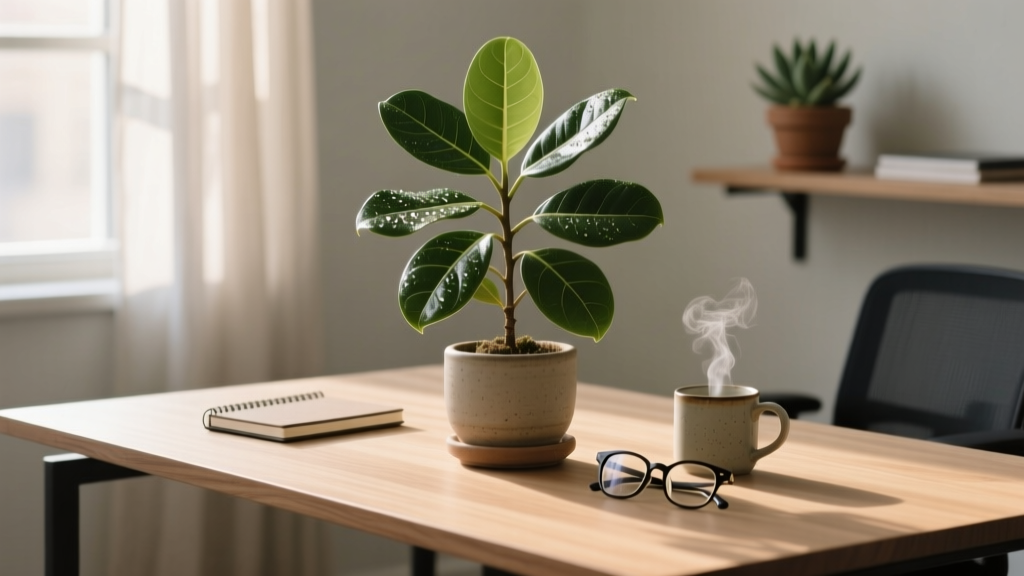
Office Desk Plant Care Tips
It’s 3:10 p.m. You glance down at your desk and see it: a pot of tired soil, a few yellowing leaves, and a sticky note that reads “water?” You meant well. But between glare from a window, weekend heat spikes, and the office AC that runs like a desert wind, the plant has been living in a guessing game. Let’s fix that the way a landscape designer would—by reading the site, choosing the right “plant palette,” and setting up a simple layout that makes care almost automatic.
Even if you’re a renter with a 40-inch-wide desk or a homeowner working from a spare room, desk plants are still a design project: a tiny, high-visibility garden bed with its own microclimate. The win isn’t owning more plants—it’s keeping the right few thriving where you can see them every day.
Read Your Desk Like a Site Plan: Light, Air, and Human Traffic
Before you buy anything new, take two minutes to assess the desk “exposure.” In landscape work, we start with sun and wind. Indoors, it’s light direction, HVAC airflow, and your habits (do you actually notice the pot?).
Measure the light in hours, not vibes
Track how many hours of usable light your desk gets. “Usable” means bright enough to cast a soft shadow, not just daylight in the room.
- 0–2 hours/day: low-light desk zone (typical interior office, north window far away)
- 2–4 hours/day: medium light (near a bright window, filtered light)
- 4–6+ hours/day: high light (right next to an east/south/west window; watch heat)
If you want a quick benchmark, the University of Vermont Extension notes that most houseplants do best in bright, indirect light rather than harsh direct sun (University of Vermont Extension, 2020). That’s especially true on desks, where reflected heat from glass can be intense.
Map the “wind” from vents and fans
Air vents can dry a small pot in 48 hours. If your plant sits within 12 inches of a vent, it’s essentially in a wind tunnel. Move it or choose a tougher plant (snake plant, ZZ plant), and plan on more frequent watering checks.
Account for desk realities: spills, bumping, and electronics
High-traffic corners get knocked. A plant that tips onto a keyboard is not a design success. Prioritize:
- Low center of gravity (heavier ceramic cachepots, wider bases)
- Controlled soil (topdress with pebbles to reduce mess)
- Non-drippy watering (use a saucer or self-watering insert)
Layout Strategies: Make Care Easy and the Desk Feel Bigger
On a desk, every inch matters. The goal is a layout that frames your workspace, keeps plants in stable light, and makes watering a 30-second habit.
The “Triangle” composition: tall, medium, trailing
Designers use triangles because they read as balanced without being symmetrical. On a desk:
- Tall anchor (8–18 inches): snake plant (Sansevieria/Dracaena trifasciata) or a narrow bamboo palm
- Medium mass (6–10 inches): pothos in a compact pot, peperomia, or a small philodendron
- Trailing softener: heartleaf philodendron or satin pothos trained to drape away from your keyboard
Keep the grouping to a footprint of about 12 x 18 inches so it doesn’t creep into your working zone.
Create a “watering lane” to prevent spills
Reserve a small service zone—like a mini potting bench—so you’re not watering over electronics. Aim for a 6-inch-wide strip on the far side of the desk or a shelf above.
Use vertical space: shelves, risers, and clip-on lights
If your desk is only 24 inches deep, go up instead of out:
- A 10–12 inch riser brings a plant closer to the window without stealing desk surface.
- Wall shelf at 18–24 inches above the desktop is ideal for trailing plants.
- A clip-on LED grow light can substitute for weak winter light; look for 20–40W equivalent units with a timer.
Step-by-Step Desk Plant Setup (Designer Workflow)
- Measure your plant zone: mark a rectangle with painter’s tape (try 12 x 18 inches to start).
- Confirm light exposure: note the number of bright-light hours (2, 4, or 6+) and direction (east/south/west/north).
- Choose one “anchor” plant: tall and architectural, in a stable pot.
- Add one supporting plant: medium height for fullness and color.
- Add one trailing or textural accent: to soften lines and make the desk feel styled.
- Standardize pot sizes: choose 4–6 inch nursery pots inside matching cachepots to simplify care.
- Install spill protection: saucers or a waterproof tray at least 1 inch larger than each pot.
- Set a watering check day: pick one day per week to test soil moisture (finger test to first knuckle or moisture meter).
- Write the care cue: a tiny label under the pot: “Water when top 2 inches dry.”
Plant Selection: Specific Varieties That Behave Well on Desks
Desk plants need to tolerate irregular care, smaller root volumes, and indoor air. The best picks are slow growers with forgiving watering needs.
Low-light champions (0–2 hours/day of bright light)
1) ZZ plant (Zamioculcas zamiifolia)
Why it works: thick rhizomes store water; glossy leaves look clean even when you miss a week. Keep in a 6-inch pot and water roughly every 14–21 days depending on HVAC dryness.
2) Snake plant ‘Laurentii’ or ‘Moonshine’ (Dracaena trifasciata)
Why it works: upright form takes little footprint; tolerates low light. Place it 6–18 inches from the desk edge so it doesn’t get bumped. Water when fully dry.
3) Cast iron plant (Aspidistra elatior)
Why it works: famous for tolerance of neglect and low light; leaves are durable in busy rooms.
Medium light favorites (2–4 hours/day)
1) Pothos ‘Golden’ (Epipremnum aureum)
Why it works: resilient, easy to prune, great trailing accent. Train vines along the back edge of the desk to keep the work zone clear.
2) Heartleaf philodendron (Philodendron hederaceum)
Why it works: softer look than pothos and tends to handle indoor conditions with less fuss. Pinch tips monthly for a denser shape.
3) Peperomia obtusifolia (‘Green’ or ‘Variegata’)
Why it works: compact, desk-scale plant with thick leaves that store moisture; less dramatic wilting.
Bright window desks (4–6+ hours/day, mostly indirect or morning sun)
1) Hoya carnosa (‘Krimson Queen’ or classic green)
Why it works: loves bright light, tolerates drying out, and stays tidy in a pot. Let it climb a small hoop trellis (6–8 inches wide).
2) Aloe vera (compact cultivar)
Why it works: thrives with strong light and infrequent watering; place in a gritty mix. Keep it away from high-traffic keyboard zones due to spines.
3) Mini rubber plant (Ficus elastica ‘Tineke’)
Why it works: bold foliage reads “designed,” but it needs consistent light; rotate quarter turns weekly for even growth.
Comparison Table: Choose Plants by Light and Attention Level
| Plant | Best Desk Light | Watering Rhythm | Typical Pot Size | Best For |
|---|---|---|---|---|
| ZZ Plant (Zamioculcas zamiifolia) | Low to medium | Every 14–21 days | 6" pot | Frequent travelers, forgetful waterers |
| Snake Plant (Dracaena trifasciata) | Low to bright indirect | Every 21–30 days | 6–8" pot | Small footprints, upright “architectural” look |
| Pothos (Epipremnum aureum) | Medium | Every 7–10 days | 4–6" pot | Fast visual payoff, trailing style |
| Peperomia obtusifolia | Medium | Every 10–14 days | 4–6" pot | Tidy desks, compact growth |
| Hoya carnosa | Bright indirect / morning sun | Every 10–21 days | 4–6" pot | Collectors who want sculptural vines |
Care Systems That Prevent Common Desk-Plant Failures
Watering: stop guessing, start checking
Most desk plants die from overwatering, not underwatering—small pots hold moisture longer than you think, especially in low light. Build a system:
- Soil test: water only when the top 2 inches are dry for most tropicals; for succulents, wait until fully dry.
- Bottom watering once a month: set the nursery pot in a bowl for 10–15 minutes, then drain. Less mess, better root hydration.
- Use a tray: a waterproof tray costs about $8–$15 and prevents the “oops” ring on a desk.
The Royal Horticultural Society recommends watering houseplants based on compost dryness rather than on a strict calendar (RHS, 2023). That advice is gold on a desk, where airflow and light vary wildly.
Potting mix: pick a blend that matches your lighting
Designer rule: lower light needs a faster-draining mix because the plant uses water more slowly.
- For ZZ/snake: add 30–40% perlite or pumice to indoor potting soil.
- For pothos/philodendron: standard indoor mix plus 20–30% perlite.
- For succulents: cactus mix or make your own with gritty amendment; never let pots sit in water.
Lighting upgrades: a small lamp can replace a window
If you’re in a dim office or a basement room, a grow light changes everything. Expect to spend $25–$60 for a clip-on light with a timer. Aim for 8–10 hours/day on a consistent schedule. Place the light about 8–14 inches above foliage (closer for weak lights, farther for stronger ones).
“Design is not just what it looks like and feels like. Design is how it works.” — Steve Jobs (quoted widely in design literature, 2003)
That line applies perfectly here: the best desk plant setup isn’t the prettiest photo on day one—it’s the one that still looks good on day 100 because the system is workable.
Three Real-World Desk Scenarios (and the Layouts That Solve Them)
Scenario 1: The windowless cubicle (0–2 hours of light)
Constraints: overhead fluorescents, dry HVAC, limited personal space.
Design move: choose tough plants, shrink the palette, add a small grow light.
Recommended layout: a single anchor plant plus one compact accent.
- Anchor: Snake plant ‘Moonshine’ in a 6-inch pot (footprint-friendly, upright).
- Accent: ZZ plant ‘Zenzi’ (dwarf form) in a 4-inch pot.
- Light: clip-on LED on a shelf, set for 9 hours/day.
Care expectation: soil check 1x/week; watering usually every 2–4 weeks. Time: 5 minutes/week.
Scenario 2: Bright south-facing home office window (4–6+ hours)
Constraints: strong sun patches, heat near glass, potential leaf scorch.
Design move: use bright-light plants and pull them 12–24 inches back from direct sun, or filter with a sheer curtain.
Recommended layout: triangle composition with a trellis element.
- Anchor: Ficus elastica ‘Tineke’ in an 8-inch pot, set back from the window.
- Medium: Peperomia obtusifolia for compact density.
- Trailing: Hoya carnosa on a small hoop trellis.
Care expectation: water check weekly; most weeks it’s 10 minutes. Rotate ficus weekly to keep it balanced. In summer, watch for quicker drying; in winter, slow down.
Scenario 3: The commuter desk (you’re away Friday–Sunday)
Constraints: long gaps between watering, unpredictable indoor temperature, maybe the lights are off on weekends.
Design move: choose plants that store water and keep them slightly under-potted to avoid soggy soil.
Recommended layout: two drought-tolerant plants, no thirsty foliage.
- ZZ plant (6-inch pot)
- Haworthia (4-inch pot) or a compact aloe
DIY upgrade: a self-watering pot sounds helpful, but for drought-tolerant plants it can backfire. Instead, use a heavier cachepot and a gritty mix (add 40% pumice/perlite) so roots breathe.
Budget Planning: What to Spend (and Where to Save)
You can design a desk plant setup that looks intentional without spending like it’s a showroom vignette. Here’s a realistic range:
- Plant cost: common varieties run $10–$25 in 4–6" pots; larger 8" statement plants often cost $30–$60.
- Cachepot + saucer: $12–$35 depending on ceramic vs. plastic.
- Grow light (optional): $25–$60.
- Soil/perlite: $10–$20 total for small bags that last multiple repots.
DIY alternatives that still look designed:
- Use a thrifted ceramic bowl as a cachepot—just add a plastic saucer inside.
- Topdress soil with aquarium gravel or small stones ($5–$10) to hide perlite and reduce spills.
- Turn a wood cutting board into a plant tray with a waterproof liner.
Maintenance Expectations: Your Weekly Rhythm and Seasonal Tasks
A desk garden should not become another chore. Aim for a predictable cadence.
Weekly (5–15 minutes total)
- Soil check for each pot (finger test or meter).
- Leaf wipe on one plant (dust blocks light; rotate plants so you wipe one per week).
- Quick prune: pinch pothos/philodendron tips to keep a compact shape.
Monthly (15–25 minutes)
- Deep water once (sink or bottom-water), then fully drain.
- Inspect for pests: check leaf undersides for spider mites or mealybugs.
- Rotate any plant leaning toward a window.
Seasonal (2–4 times/year)
- Spring: refresh top 1 inch of soil; start light fertilizing at 1/4 strength monthly for foliage plants.
- Summer: monitor heat at windows; move plants back 12 inches if leaves pale or scorch.
- Fall/Winter: reduce watering frequency; if daylight drops below 2 hours, consider a grow light schedule of 8–10 hours/day.
Troubleshooting Like a Designer: Read the Plant’s “Signals”
Yellow leaves + wet soil usually means too much water or low light. Move the plant closer to a window or add light, and let it dry more between waterings.
Brown crispy tips often point to dry air or inconsistent watering. Check if it’s sitting near a vent; moving it 18 inches away can make a noticeable difference.
Leggy growth means it’s reaching for light. Prune it back and increase light exposure (brighter spot or grow light).
Fungus gnats indicate consistently moist topsoil. Let the top layer dry, topdress with sand or fine gravel, and avoid frequent “sips” of water.
A Desk Plant Layout That Stays Beautiful Under Real Life
If you want a simple, reliable template to copy, use this: one upright anchor plant in an 8-inch pot on the far corner, one compact plant in a 4–6 inch pot near your monitor stand, and one trailing plant placed high enough to cascade away from your hands. Keep all pots on saucers, keep them out of direct vent blast, and check soil once a week—no guilt, no guessing.
The best part is that this tiny garden starts to behave like a good outdoor planting: it matures. Leaves get larger, vines get fuller, and your desk begins to feel composed—like someone planned it. Because you did.
Sources: University of Vermont Extension (2020); Royal Horticultural Society (RHS) houseplant watering guidance (2023).