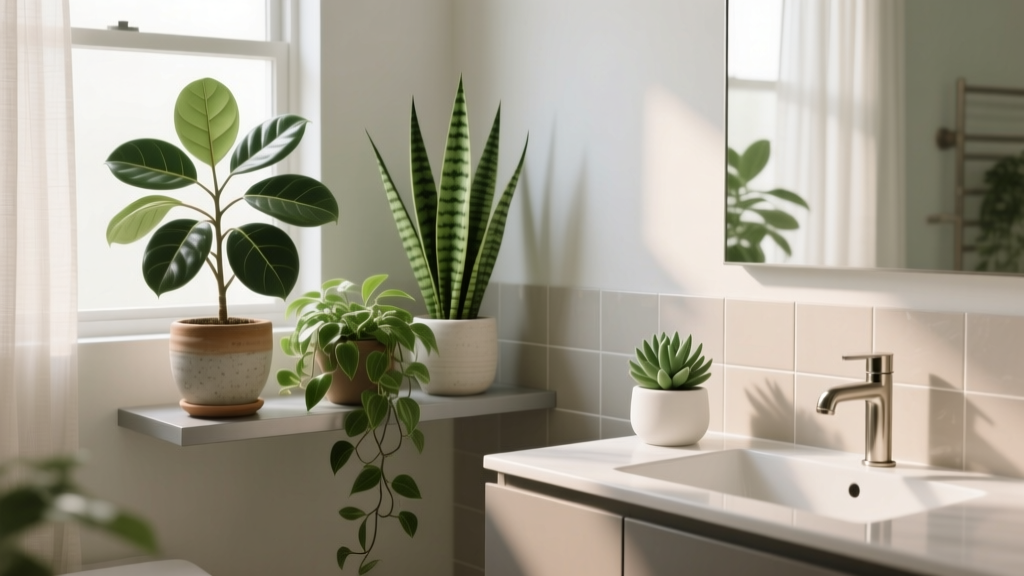
Indoor Bathroom Plant Selection
The mirror is fogged, the towel never quite dries, and the one tiny window feels more decorative than useful. You want the bathroom to feel alive—not like a storage closet with plumbing—but every plant you’ve tried has either melted into mush from humidity or crisped up from low light. The trick isn’t luck. It’s designing a miniature indoor landscape that treats your bathroom like the unique microclimate it is: warm, steamy bursts, cool nights, and light that often arrives sideways and late.
Let’s design it the way I would on a client walk-through: first map the light and moisture, then assign “plant jobs” to specific zones—shower, sink, shelf, sill, and floor—so each plant is placed where it can actually thrive.
Start With the Bathroom’s Microclimate Map
Measure light like a designer, not a guesser
Bathrooms vary wildly. A south-facing window can deliver 4–6 hours of bright light; an interior bath may get <1 hour of usable ambient light. Before buying plants, stand in the bathroom at three times: morning, midday, and evening. Note where direct sun lands and for how long.
If you want a quick number, use a free lux meter app and take readings at plant height. As a rough reference: many low-light-tolerant houseplants stay stable around 50–250 foot-candles (about 500–2,700 lux), while brighter indoor spots may reach 500+ foot-candles. The more accurate your map, the fewer “mystery deaths.”
Track humidity zones: steady damp vs. splash-and-dry
Steam doesn’t equal constant humidity. A shower creates a brief spike, then the room often dries rapidly—especially with a fan. Plants that love consistent moisture (like many ferns) do best near the shower but not in the splash zone. Plants that tolerate swings (like pothos or snake plant) handle the sink counter and shelves well.
“Right plant, right place is the golden rule—match the plant’s needs to the conditions you actually have.” —Royal Horticultural Society (RHS), guidance on plant selection and siting (RHS, 2023)
Layout Strategies That Make a Bathroom Feel Designed (Not Cluttered)
Use the “wet-to-dry gradient” layout
Imagine your bathroom as a gradient moving away from the shower. Place plants accordingly:
- Zone 1 (wettest): within 2–3 ft of the shower/tub, but outside direct spray
- Zone 2 (moderate): vanity counter, toilet tank top (with a tray), window ledge
- Zone 3 (driest): upper shelves, back of the door, far corners
Design with vertical layers to save floor space
Bathrooms reward vertical gardening. Use three layers:
- High layer: trailing plants on shelves (60–72 in high) to soften hard lines
- Mid layer: countertop or wall planters (36–42 in) for daily eye-level impact
- Low layer: one “anchor” floor plant in a corner, ideally 10–14 in pot diameter
Pick containers that handle moisture and clean-up
In bathrooms, containers are part of the maintenance plan. Glazed ceramic, sealed terracotta, and plastic nursery pots inside decorative cachepots all work. Keep at least 1/2 inch clearance under pots with rubber feet or a tray—this prevents water rings and mildew on wood shelves.
A Plant Palette That Actually Works in Bathrooms
Below are reliable performers with specific varieties. I’m choosing plants that handle humidity swings, tolerate lower light, and won’t punish you if you skip a watering. (Still, remember: no plant thrives in true darkness. For windowless bathrooms, plan on a grow light.)
Shower-side stars (humidity lovers)
1) Boston fern (Nephrolepis exaltata ‘Bostoniensis’)
Best for: bright indirect light, steady moisture. Hang it near the shower where steam is frequent but leaves won’t get blasted by water. Give it a 10–12 in hanging basket and space it at least 12 in from walls for airflow.
2) Bird’s nest fern (Asplenium nidus ‘Crispy Wave’)
More forgiving than many ferns and visually architectural. It likes consistent moisture and medium light. Place 2 ft from a frosted window or under a bright ceiling fixture (supplemental light helps).
3) Moth orchid (Phalaenopsis hybrids)
A designer’s favorite for vanities because it looks intentional, not “houseplant-ish.” Phalaenopsis enjoy humidity and bright indirect light. Water about every 7–10 days depending on pot size. Use a clear inner pot for root monitoring.
Vanity and shelf workhorses (tolerant of real life)
4) Pothos (Epipremnum aureum ‘Golden’ or ‘Marble Queen’)
Ideal for shelves. Trails beautifully, tolerates low light, and forgives missed waterings. Plan on 6–10 in of trailing growth per month in brighter conditions; prune to shape. Keep it 12–18 in away from the shower spray to avoid soggy soil.
5) Heartleaf philodendron (Philodendron hederaceum ‘Brasil’)
Slightly more refined leaf pattern than pothos, similar care. Great for renters: one hook and a hanging pot can change the whole room.
6) ZZ plant (Zamioculcas zamiifolia ‘Zenzi’)
For the dim corner where nothing else behaves. The compact ‘Zenzi’ stays tidy. Water sparingly—often every 2–3 weeks in bathrooms—because humidity slows drying.
Floor anchors (one big plant beats five small ones)
7) Snake plant (Dracaena trifasciata ‘Laurentii’ or ‘Moonshine’)
A classic for low light and irregular watering. Use a 10–12 in pot for a stable, sculptural look. It’s also noted for indoor air research—though real-world effects depend on ventilation and plant quantity (NASA, 1989).
8) Cast iron plant (Aspidistra elatior)
If your bathroom has low light and you want a lush, upright clump without fuss, this is it. It tolerates shade and temperature fluctuations better than most “tropical” options.
Quick Comparison: Match Plants to Light, Water, and Placement
| Plant (Variety) | Best Bathroom Zone | Light Needs | Water Rhythm | Typical Cost (US) |
|---|---|---|---|---|
| Boston fern (‘Bostoniensis’) | Zone 1 (near shower) | Medium to bright indirect (2–4 hrs bright ambient) | Keep evenly moist; check 2x/week | $18–$35 (10–12 in pot) |
| Pothos (‘Golden’, ‘Marble Queen’) | Zone 2–3 (shelf/trailing) | Low to medium (1–3 hrs ambient) | Water when top 1–2 in dry | $12–$28 |
| Snake plant (‘Moonshine’) | Zone 3 (driest corner/floor) | Low to bright indirect | Every 2–4 weeks | $20–$60 (10–12 in pot) |
| Phalaenopsis orchid | Zone 2 (vanity/window) | Bright indirect (near window, no hot sun) | Every 7–10 days | $20–$45 |
| ZZ plant (‘Zenzi’) | Zone 3 (low light shelf/floor) | Low to medium | Every 2–3 weeks | $25–$55 |
Step-by-Step: Set Up Your Bathroom Plant Layout in One Afternoon
- Map light and splash zones. Mark the shower spray radius and measure distance: aim to keep most pots at least 24 in from direct spray.
- Choose one anchor plant first. Place a snake plant or cast iron plant in a corner with a 10–12 in pot. This sets scale.
- Add one trailing plant above eye level. Install an adhesive hook rated for 5–8 lb (renter-friendly) and hang pothos/philodendron in a 6–8 in pot.
- Assign the vanity a “clean composition.” Keep it to one plant (orchid or small fern) on a tray. Leave at least 8–10 in clear counter space for daily use.
- Use nursery pots inside cachepots. This prevents water damage and makes removal easy for sink-watering.
- Set a watering cadence. Put a recurring reminder: “Check soil Sundays + Wednesdays” (you won’t always water, but you will look).
- Test ventilation. Run the fan during showers and for 15–20 minutes after to reduce mold risk on walls and plant surfaces.
Three Real-World Bathroom Scenarios (and Exactly What I’d Plant)
Scenario 1: Windowless powder room (5 ft x 7 ft) with a single ceiling light
This is the hardest space, but still solvable. You’re designing with artificial light as the sun.
Layout plan: One tall anchor on the floor + one small plant on the vanity, both under a grow light.
- Anchor: Snake plant ‘Laurentii’ in a 10 in pot, placed 6–12 in from the corner to avoid leaf bruising.
- Vanity plant: ZZ plant ‘Zenzi’ (compact, tidy) in a 6 in pot.
- Light fix: A plug-in LED grow bulb (around $20–$35) in a clamp lamp aimed at plants for 10–12 hours/day.
Why it works: Both plants tolerate low light and irregular watering. The grow bulb turns “no window” into a stable environment.
Scenario 2: Renter bathroom with a small frosted window (18 in x 24 in), zero drill policy
Here, your design challenge is mounting. We’ll go adhesive and over-the-door.
Layout plan: One trailing plant on an adhesive hook + one sill plant that loves humidity.
- Hook plant: Pothos ‘Golden’ in a lightweight 6 in plastic pot inside a cachepot. Keep total weight under 6 lb when watered.
- Window ledge: Phalaenopsis orchid (or bird’s nest fern if you prefer foliage) set 6–12 in back from the glass to avoid cold drafts.
- DIY shelf alternative: A tension rod across a niche can hold a small hanging basket—no holes, costs about $15–$25.
Why it works: The frosted window gives gentle, diffused light—perfect for orchids and foliage without sunburn risk.
Scenario 3: Bright family bathroom with a real window and daily showers (8 ft x 10 ft)
This is where you can be a little lush. The goal is “spa energy” without making cleaning miserable.
Layout plan: Create a three-point composition: fern near shower, trailing plant above, and a floor anchor.
- Near-shower feature: Boston fern in a 12 in hanging basket, positioned 30–36 in from the showerhead to avoid constant soaking.
- Above-toilet softener: Heartleaf philodendron ‘Brasil’ trailing from a shelf, leaving 18 in clearance above tank lid for access.
- Corner anchor: Cast iron plant in a 12 in pot for durable, upright greenery.
Why it works: You’re matching humidity lovers to the steam zone, and using tougher plants where hands, towels, and traffic are constant.
Spacing, Soil, and Drainage: Small Details That Prevent Big Problems
Spacing: Give most medium plants 6–12 in breathing room from walls to reduce mildew and to keep leaves from staying damp. Hanging baskets should be at least 8 in from the ceiling to avoid heat pockets around light fixtures.
Soil: Bathrooms slow evaporation. Use a chunky indoor mix: potting soil cut with orchid bark or perlite. For many foliage plants, a practical ratio is roughly 2 parts potting mix : 1 part perlite. Orchids need an orchid bark mix, not standard soil.
Drainage: If you use cachepots (no holes), keep plants in a nursery pot with drainage and lift it out to water at the sink. Never leave standing water in the bottom longer than 15 minutes.
Budget Planning and DIY Alternatives (So It Doesn’t Get Out of Hand)
A bathroom plant setup can be modest or showroom-level. Here’s a practical range:
- Starter set ($45–$90): One snake plant ($25), one pothos ($15), two simple cachepots ($10–$50 total depending on style).
- Mid-range “spa feel” ($120–$220): Add a Boston fern ($25–$35), a nicer hanging basket ($15–$25), and a wood/metal shelf unit ($40–$90).
- Windowless upgrade (+$20–$60): Add a grow bulb and clamp lamp so your plants aren’t surviving on hope.
DIY swaps: Use thrifted ceramic bowls as cachepots (just keep the nursery pot inside), or convert a glass jar into a pebble tray for humidity (plant pot sits on pebbles above waterline). For a designer look without designer pricing, buy 4 in starter plants and let them grow—especially pothos and philodendron, which fill out quickly with pruning.
Maintenance Expectations: What It Takes Week to Week
Plan on 15–25 minutes per week for a typical 3–5 plant bathroom setup. The work is light, but consistency matters more than intensity.
- Weekly (10–15 minutes): Check soil moisture, empty any standing water in trays, wipe dust or water spots from leaves.
- Every 2–4 weeks (10 minutes): Rotate plants 1/4 turn for even growth, prune trailing plants to keep them off towels and door frames.
- Seasonally (30–45 minutes): In winter, watch for cold window drafts; in summer, increase airflow to prevent mildew. Refresh top 1 in of soil if it’s crusted with minerals.
Fertilizing: Bathrooms don’t change the basic rule—feed lightly during active growth. Many foliage plants do well with a diluted houseplant fertilizer every 4–6 weeks in spring/summer. Orchids prefer orchid-specific fertilizer at low strength.
Safety and Plant Choice Notes for Real Homes
If you have pets or small kids, be selective. Pothos and philodendron are common and beautiful, but they are toxic if chewed. In that case, place them high and out of reach, or swap to pet-friendlier options like certain ferns (still not for eating, but generally safer). Also consider fragrance sensitivity: some bathrooms are small enough that strongly scented plants can feel overwhelming.
Credible Guidance (and What It Means for Your Bathroom)
The research behind houseplants and indoor air is often oversimplified online. NASA’s often-cited study did show certain plants can remove volatile organic compounds in controlled settings (NASA, 1989), but real bathrooms have different airflow patterns and moisture dynamics. That’s why I treat air “benefits” as a bonus, not the design goal. Your primary success factors are light, drainage, and placement.
For practical plant siting, the RHS’s emphasis on matching plants to conditions aligns perfectly with bathroom design: choose species that tolerate your actual light and humidity, and your maintenance becomes easy instead of constant troubleshooting (RHS, 2023).
When your bathroom plant selection is right, you feel it immediately: towels dry better because you’ve kept airflow in mind, the mirror-side vignette looks composed instead of crowded, and the shower-side greenery turns steam into atmosphere. Start with one anchor plant and one trailing plant, give them the correct zones, and let the room grow into its new identity—fresh, calm, and unmistakably lived-in.
Citations: NASA (1989), “Interior Landscape Plants for Indoor Air Pollution Abatement.” Royal Horticultural Society (RHS) (2023), plant selection and “right plant, right place” guidance.