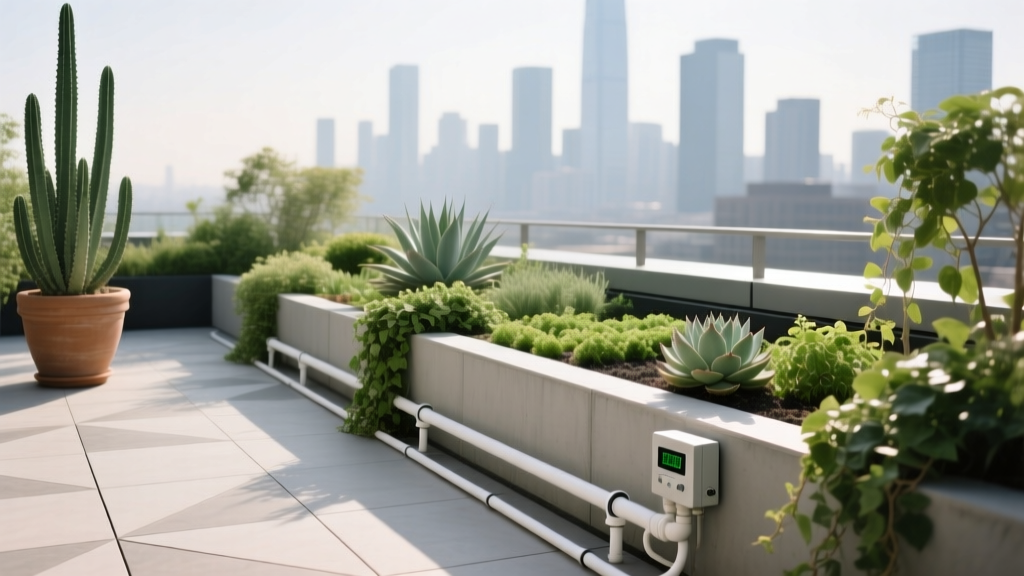
Rooftop Garden Irrigation Setup
The first time you carry a watering can up four flights of stairs, it feels quaint—almost romantic. The third time, in a heat wave, when the wind whips the water sideways and your basil still looks thirsty, the romance evaporates. Rooftops are bright, exposed, and impatient: containers dry fast, leaves scorch faster, and a missed day can set you back a week. A good rooftop irrigation setup isn’t about gadgets; it’s about designing water to move through your space as intentionally as paths, seating, and planting.
Let’s walk through a rooftop project the way a landscape designer would: start with constraints, sketch zones, choose plants that cooperate with your microclimate, then build an irrigation layout that’s reliable, repairable, and sized to your budget.
Start with the forces on a roof: sun, wind, weight, and water
Rooftops amplify weather. Most roofs get 6–10 hours of direct sun in summer, and wind can be 10–20 mph higher than street level depending on exposure. That combination drives evapotranspiration up, which means your containers may need water daily in July even if the same plants at ground level need watering twice a week.
Before you buy a single fitting, do two checks: (1) verify your building’s load limits and roof rules, and (2) test your water source. Many rooftop gardens are limited to a hose bib on a balcony, a laundry sink inside, or—if you’re lucky—a dedicated spigot on the roof.
“Drip irrigation provides water directly to the soil surface… and can reduce evaporation losses compared with overhead irrigation.” — U.S. Environmental Protection Agency (EPA), WaterSense, 2023
That’s the backbone of rooftop irrigation design: keep water low, targeted, and shielded from wind. If you can water at soil level under mulch, you’re already winning.
Design principles that make irrigation feel effortless
1) Zone the roof by thirst, not by plant type
Think in three irrigation zones:
Zone A: High-demand containers (small pots, herbs, leafy greens). These dry out fastest and deserve their own line or frequent schedule.
Zone B: Medium-demand planters (peppers, dwarf tomatoes, flowering annuals). These like consistent moisture but can tolerate short gaps.
Zone C: Low-demand planters (rosemary, lavender, sedums, native grasses). These should not be watered on the same schedule as basil.
On a 10 ft × 20 ft roof terrace (200 sq ft), I often place Zone A closest to the door and water source to simplify maintenance, Zone B in the sunniest middle, and Zone C along the windiest perimeter where tough plants act as a living windbreak.
2) Keep runs short and accessible
Long tubing runs look tidy on day one and become mysterious on day sixty when something leaks. Design your layout so every connector and emitter is visible and reachable. A practical rule: keep individual 1/4-inch drip lines under 15–20 feet where possible, and route them along planter edges so you can lift them for inspections.
3) Build in pressure control and filtration from the start
Municipal water pressure can be 40–80 psi; drip systems typically want ~15–30 psi. Use a filter (150 mesh is common) and a pressure regulator right after the spigot. This prevents emitter blowouts and clogging—two rooftop headaches you don’t need.
4) Design for wind: low emitters, mulch, and shade timing
Wind turns sprinkler spray into a fine mist that never reaches roots. Drip emitters (0.5–2.0 gallons per hour) placed under a 1–2 inch mulch layer (coconut coir chips, shredded bark, or composted wood fines) dramatically reduce evaporative loss. If you can irrigate early morning (say 5–7 a.m.), you’ll also reduce evaporation compared with midday watering. The FAO notes that irrigation efficiency is strongly affected by evaporation and wind drift, especially with sprinklers (FAO, 2012).
Choose your irrigation approach: what fits your roof and your life
There’s no single “best” system—there’s the system you’ll maintain. Here’s a comparison of the most common rooftop options.
| System | Best for | Typical cost (10–20 containers) | Water efficiency | Notes for rooftops |
|---|---|---|---|---|
| Hand watering + moisture meter | Small setups, attentive gardeners | $15–$40 | Medium | Works until summer travel; wind makes overhead watering wasteful. |
| Hose-end timer + drip kit | Most renters/homeowners | $80–$200 | High | Fast to install, removable, no plumbing changes. |
| Soaker hose in planters | Long trough planters | $40–$120 | Medium | Can be uneven on long runs; better in straight planters than pots. |
| Micro-sprayers | Dense beds, groundcover trays | $100–$250 | Low–Medium | Wind drift is a real issue on exposed roofs. |
| Rain barrel + gravity drip | Eco-focused setups with safe overflow | $120–$300 | High | Pressure is low; needs careful layout and mosquito-proofing. |
For most rooftop gardeners, a hose-end timer paired with drip tubing is the sweet spot: efficient, modular, and easy to remove when you move.
Layout strategies: make water lines part of the design
Create a “wet spine” and branch lines
Run a single 1/2-inch mainline (the wet spine) along the back edge of planters or along a wall. Then branch 1/4-inch lines to each container. On a 10 ft × 20 ft terrace, that might be a 20-foot mainline with 12–18 short branches.
Keep the timer, filter, and regulator clustered at the spigot in a small weatherproof box or tucked behind a planter. You want one obvious control point—especially useful if you need to shut everything off quickly.
Use container size to set emitter count
A practical rooftop baseline:
- 12-inch pot: 1 emitter (1 GPH) placed near the root zone
- 16–18-inch pot: 2 emitters (1 GPH each), opposite sides
- 24-inch trough: 2–3 emitters spaced 8–10 inches apart
Spacing matters more than brand. If emitters are too close to the stem, roots stay shallow; too far away, the center dries out. Aim for emitters 4–6 inches from the plant crown for most vegetables and annuals.
Plan for drainage like it’s part of irrigation (it is)
Overwatering on a roof is not just a plant problem; it’s a building problem. Every container needs a clear drainage path. Use saucers only if they can’t overflow; otherwise, elevate pots on risers so water can exit freely. If you’re using trays, measure them: a 24-inch tray can hold several gallons if blocked, which is heavy and risky.
Step-by-step: a practical rooftop drip setup (DIY-friendly)
This is the approach I’d use for a typical roof with a hose bib and 12–20 containers.
- Map your roof. Sketch the area with dimensions. Example: a 12 ft × 16 ft roof (192 sq ft) with a spigot near the door and planters along the perimeter. Mark the sunniest edge and the windiest corner.
- Group containers into 2–3 zones. Put herbs/greens together (frequent watering), fruiting veg together (consistent), and Mediterranean herbs together (lighter).
- Choose a timer with at least two programs. A basic digital hose timer often runs $35–$60. Two programs let you water greens more often without drowning rosemary.
- Install a filter + pressure regulator. Budget $20–$35 for both. Attach directly after the timer (or before, per manufacturer instructions).
- Lay the 1/2-inch mainline. Run it along the planter line, securing with clips every 3–4 feet so wind doesn’t whip it around.
- Punch in barbed connectors. Use a punch tool to add 1/4-inch lines to each container. Keep branch lines as short as possible.
- Add emitters. Start with 1 GPH pressure-compensating emitters for consistency across the line. For big tubs (20–25 gallons), use two emitters.
- Mulch and stake tubing. Cover emitter zones with 1–2 inches of mulch; pin 1/4-inch tubing so it doesn’t pop out as you move pots.
- Program watering times. Start with 10–15 minutes in early morning for Zone A, and 20–30 minutes every other day for Zone B—then adjust. Your goal is moist root balls, not constant wet soil.
- Run a bucket test. Put one emitter into a measuring jug for 10 minutes. A 1 GPH emitter should deliver about 0.17 gallons in 10 minutes. If it’s far off, check pressure and clogs.
If you’re renting and need a no-drill installation, use weighted clips, zip ties to railing sections (where allowed), and freestanding planter screens to hide lines.
Plant selections that cooperate with rooftop irrigation
On roofs, plant choice is half irrigation strategy. You want varieties that tolerate wind, rebound after dry spells, and still perform in containers.
Zone A (high-demand, frequent watering): fast harvesters
Basil ‘Genovese’: thrives with consistent moisture; drip keeps leaves dry, reducing mildew risk. Plant 8–10 inches apart in troughs.
Lettuce ‘Black Seeded Simpson’: handles container life well; benefits from morning watering. Give 6–8 inches spacing for baby leaf, 10 inches for heads.
Swiss chard ‘Bright Lights’: more forgiving than spinach in heat; steady water prevents bitterness. Space 10–12 inches.
Zone B (medium-demand): fruiting plants that hate drought swings
Tomato ‘Sungold’ (cherry): productive in large containers (15–20 gallons). Needs steady moisture to reduce cracking. Put 2 emitters per pot, placed opposite sides.
Pepper ‘Cajun Belle’ or ‘Lunchbox Red’: container-friendly; consistent watering prevents blossom drop. Space one plant per 3–5 gallon pot, but 7–10 gallons is easier on your irrigation schedule.
Strawberry ‘Seascape’ (day-neutral): great for troughs; drip prevents fruit rot from splash. Space 10–12 inches.
Zone C (low-demand, wind-and-sun tough): the rooftop backbone
Lavender ‘Hidcote’: prefers leaner, drier soil and hates soggy roots. Put it on a separate line or use adjustable emitters dialed low. Needs 6+ hours sun.
Rosemary ‘Arp’ (cold-hardy): wind tolerant, fragrant, and resilient. One emitter is usually enough once established.
Sedum ‘Autumn Joy’: stores water, handles heat, and gives structure. Perfect for perimeter planters that dry quickly.
Design tip: use Zone C plants as a living “edge” along parapets to slow wind and shade the soil surface behind them, improving irrigation efficiency for more delicate plants.
Three real-world rooftop scenarios (and how the irrigation changes)
Scenario 1: The renter’s 6 ft × 12 ft balcony roof nook (no plumbing changes)
You have a spigot, but you can’t drill or permanently mount anything. Keep it simple: 8–10 containers, one mainline along the railing, and a single timer program.
Layout: Put salad greens and basil together in two 24-inch troughs near the door for quick harvesting; place rosemary and lavender in the windiest corner as a buffer.
Budget: $120 total is realistic: $45 timer, $25 filter/regulator, $50 drip kit and extra emitters.
Planting: Prioritize ‘Black Seeded Simpson’ lettuce, ‘Genovese’ basil, ‘Bright Lights’ chard, plus rosemary ‘Arp’ in a heavier pot that won’t tip.
Scenario 2: The homeowner’s 20 ft × 30 ft roof deck (multiple zones, entertaining space)
Here, irrigation should disappear into the design. Create a perimeter planting band with a 30–50 foot 1/2-inch mainline, then branch to containers. Consider two zones: edibles and ornamentals.
Layout: Keep a 4-foot clear path for moving furniture and service access. Place large planters (24–30 inches wide) at corners to anchor the space and hide irrigation junctions.
System upgrade: Add a two-outlet timer ($60–$90) so fruiting vegetables can water longer than drought-tolerant ornamentals. If the deck gets 8+ hours sun, plan for more frequent cycles in July.
Planting: Tomatoes ‘Sungold’ in 20-gallon pots, strawberries ‘Seascape’ in troughs near seating (snack-able), and sedum ‘Autumn Joy’ plus lavender ‘Hidcote’ along the hottest edge.
Scenario 3: The no-spigot roof (hauling water is not an option)
This is common in older buildings: beautiful roof access, no water up top. You have two workable paths.
Option A: A rain barrel system (where allowed). A 50-gallon barrel can support a small drip system, but gravity pressure is low; keep the barrel elevated 2–3 feet if possible and use short runs. Budget $150–$300 including a screened inlet and overflow hose. Always confirm local rules and roof drainage constraints.
Option B: A portable tank + pump. A 10–15 gallon rolling container filled at a sink and connected to a small transfer pump can run a short drip line. This is more equipment, but it avoids constant bucket trips. Budget $120–$250 depending on pump choice.
Planting strategy: Lean into low-water plants: rosemary ‘Arp,’ lavender ‘Hidcote,’ sedum ‘Autumn Joy,’ thyme, and compact ornamental grasses. Keep high-demand greens to a minimum unless you can automate reliably.
Costs, tradeoffs, and smart DIY swaps
A solid, rooftop-ready drip setup for 12–20 containers commonly lands between $80 and $200. If you add a second zone, a nicer timer, and extra fittings, $250 isn’t unusual. The good news: these systems are modular, so you can start small and expand.
Ways to keep costs down without cutting reliability:
- Use one mainline kit and buy emitters in bulk (often $10–$20 for a multi-pack) instead of specialty “container sets.”
- Skip micro-sprayers unless your roof is sheltered; wind will waste water and frustrate you.
- Make your own wind shield with a slatted screen or trellis panel. Reducing wind can reduce watering frequency noticeably.
- DIY moisture checks: a $12 soil moisture meter can prevent overwatering in Zone C while you dial in schedules.
Maintenance expectations: what you’re signing up for
A well-designed rooftop irrigation system should take about 20–40 minutes per week in peak season: quick visual checks, occasional emitter adjustments, and a glance at soil moisture. Add another 30 minutes per month to flush lines and clean filters if your water is gritty.
Weekly rhythm (10 minutes at a time)
- Walk the lines and look for a single stressed plant (often a clogged emitter).
- Check the timer battery and confirm the next run time.
- Spot-check two pots per zone by hand: soil should be moist 2–3 inches down after watering, not swampy.
Seasonal tasks
- Spring start-up: flush the mainline for 1–2 minutes before re-attaching end caps; replace cracked 1/4-inch lines.
- Mid-summer adjustment: increase runtime during heat spells; containers may need 2 short cycles (morning + late afternoon) rather than one long soak if water runs through too fast.
- Fall shutdown: drain the timer and lines to prevent freeze damage; coil tubing neatly and store the timer indoors.
If you travel, this is where drip irrigation earns its keep. A neighbor can check that water is running; they don’t have to understand your plants.
Small design moves that dramatically improve irrigation performance
Increase soil volume. A 5-gallon pot dries far faster than a 15-gallon pot. Upsizing a few key containers can reduce watering frequency and stabilize fruiting crops.
Use consistent potting mix across zones. Mixing heavy soil in one pot and airy mix in another makes scheduling impossible. Choose a quality container mix and amend lightly with compost; avoid garden soil that compacts.
Add drip stakes and label lines. When everything looks the same, troubleshooting takes longer. A simple tag that says “Zone A” or “Tomatoes” saves time.
Design for overflow. Especially on roofs, route excess water safely. Confirm that runoff won’t stain surfaces or pool near drains.
Sources that inform good rooftop watering decisions
Two references I trust for irrigation fundamentals and efficiency:
- U.S. Environmental Protection Agency (EPA). WaterSense: Drip Irrigation. 2023.
- Food and Agriculture Organization of the United Nations (FAO). Irrigation Water Management: Irrigation Methods. 2012.
They reinforce what rooftop gardeners learn quickly through experience: put water at the root zone, protect it from wind and evaporation, and design the system so it’s easy to maintain.
Once your wet spine is in place and your zones are tuned, rooftop gardening changes character. You stop rushing up the stairs with a sloshing can. You start stepping out with a cup of coffee to check new growth, adjust a single emitter, and harvest basil that tastes like summer—without the daily scramble to keep everything alive.