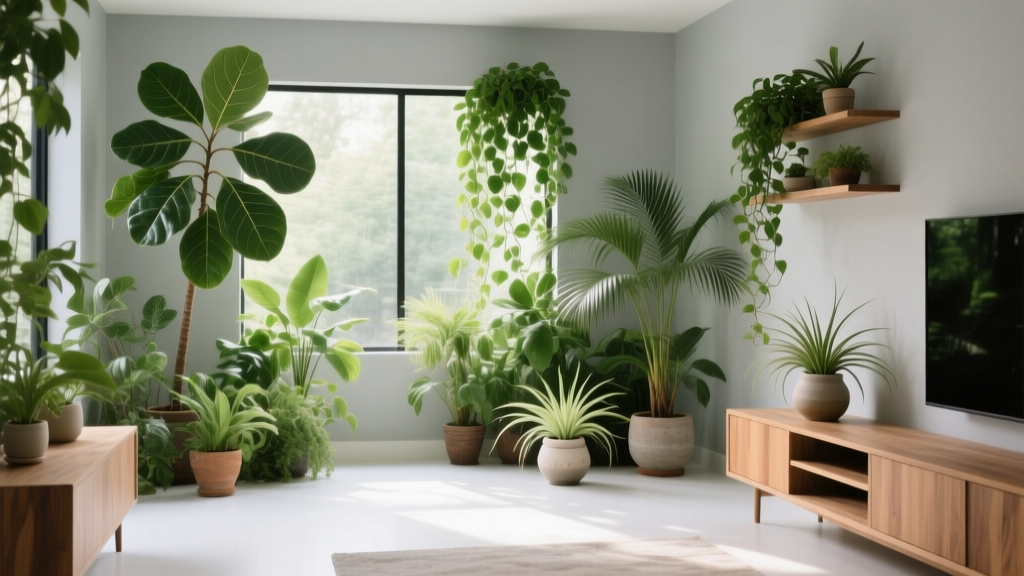
Indoor Jungle: How to Fill Your Home with Plants
It usually starts with one plant on the windowsill—something “easy,” something forgiving. Then a second arrives because the first one looked lonely. A month later, you’re rotating pots like a stage manager so everyone gets a turn in the spotlight, and you’re realizing the real issue isn’t your enthusiasm—it’s the layout. Plants don’t just need care; they need a plan. Without one, you end up with a cluttered corner, a thirsty fern two rooms away from the sink, and a pothos that’s thriving purely out of spite.
Let’s design your indoor jungle the way I’d approach a small courtyard: read the light, map the circulation, pick a plant palette that matches the microclimates in your home, then layer heights and textures until it feels lush—without becoming a daily burden.
Start with the “light map,” not the plant list
Before you buy anything, spend one day noticing where the light actually lands. Indoor plant success is less about willpower and more about putting the right leaf in the right beam.
Measure sunlight in hours (quick and practical)
Stand in each room at three times: morning, mid-day, late afternoon. Note how many hours of direct sun hit each window zone. Use these benchmarks:
- Low light: 0–2 hours direct sun (bright shade most of the day)
- Medium light: 2–4 hours direct sun
- High light: 4–6+ hours direct sun
If your best window is still dim, plan for a grow light. A basic full-spectrum LED bar is often $25–$60, while a stronger pendant-style fixture runs $70–$150. Place most LEDs 12–18 inches above foliage for useful intensity (check your fixture’s guidance, but this range works well for many home setups).
Microclimates: your home has “zones” like a garden
Think like a designer: each area has humidity, temperature swings, and access to water.
- Bathroom: higher humidity, often lower light—great for ferns and some aroids if there’s a window.
- Kitchen: warmth and water access—perfect for herbs, trailing plants, and anything that likes consistent moisture.
- Near HVAC vents: drying airflow—reserve for tough plants (snake plant, ZZ) or add a humidity tray.
Layout strategies that make an indoor jungle feel intentional
Good indoor plant design isn’t “more plants everywhere.” It’s composing greenery so it frames your life: where you sit, where you walk, where you want softness and privacy.
Design principle #1: Keep walkways clear (circulation first)
Indoors, circulation is sacred. Maintain a minimum 30 inches for main walkways (especially in apartments). If you’re tightening a corner, don’t go below 24 inches unless it’s a low-traffic nook. Plants can spill into space visually, but not physically.
Design principle #2: Build in vertical layers
A jungle look comes from stacking heights. Aim for three layers in each “plant moment”:
- Floor layer: a tall plant (5–7 ft) or a clustered group of medium plants.
- Mid layer: plant stand, shelf, or console-top plants at 2–4 ft high.
- Canopy/trailing layer: hanging basket or top-shelf trailer to soften the edge.
Practical spacing: leave 2–4 inches between pots so you can rotate, water, and check for pests without performing gymnastics.
Design principle #3: Repeat a few pot finishes for calm
Jungle doesn’t have to mean chaotic. Repeat 2–3 finishes (matte white, terracotta, black, woven baskets). A simple rule: keep 60–70% of pots in your “base neutral,” then use the remainder for texture.
Design principle #4: Group plants by water needs
Designers group plants for visual impact; plant people group them for survival. Do both. If a calathea sits next to a cactus, one will suffer. Cluster thirsty plants together so your watering rhythm makes sense.
“Right plant, right place is still the most important rule—indoors or out. Light and water patterns should drive the design.” —Dr. Royal Heins, horticulture professor (quoted in multiple greenhouse lighting discussions and extension materials; principle echoed widely in controlled environment research)
Three real-world indoor jungle layouts (with dimensions you can copy)
Here are three scenarios I design for often—each with a layout that respects real homes: limited square footage, rented walls, and mixed light.
Scenario 1: The bright living-room window (renter-friendly)
Conditions: South or west window with 4–6 hours of direct sun; floor space limited.
Layout concept: Create a “green corner” that reads like a single installation. Use one tall anchor, two mediums, and a trailing piece above.
- Anchor: One 10–12 inch pot on the floor, placed 12 inches off the window glass (prevents leaf scorch and allows curtain movement).
- Mid-layer: A 3-tier plant stand, roughly 12–14 inches deep and 30–36 inches tall, tucked beside the anchor.
- Upper layer: Tension rod or over-the-curtain-rod hook (no drilling) with one trailing plant.
Budget ballpark: $120–$250 for plants + $40–$90 for stand and saucers. DIY alternative: thrifted stool + stacked books + waterproof tray ($10–$25 total if you hunt).
Scenario 2: The low-light apartment (plants that won’t sulk)
Conditions: North-facing windows or shaded city exposure; 0–2 hours direct sun.
Layout concept: Spread greenery across the room so it feels immersive, then “spotlight” 1–2 areas with a grow light to expand your plant options.
- Primary cluster: Place tough, architectural plants along a wall 3–6 ft from the window.
- Grow-light shelf: A narrow bookshelf (10–12 inches deep) with an LED bar mounted under each shelf.
- Visual trick: Add one tall plant near the darkest corner to pull the eye through the room; choose a species that tolerates low light rather than forcing a sun-lover.
Cost reality: A shelf + two LED bars often lands around $90–$180 depending on what you already own. Electricity use varies, but many LED bars are modest; run them 10–12 hours/day for consistent growth.
Scenario 3: The small bathroom jungle (humidity lover’s dream)
Conditions: Higher humidity from showers; often medium to low light.
Layout concept: Keep plants off the floor (cleaning matters), and use moisture as your ally.
- Shower-side shelf: A rust-resistant corner shelf holding 2–3 small pots (4–6 inch).
- Mirror-side accent: One trailing plant on a high shelf to soften hard tile lines.
- Floor alternative: If you want a statement plant, choose one medium pot on a waterproof tray and keep at least 6 inches from the tub edge.
Rental-safe tip: Use adhesive-mounted shelves rated for at least 10–15 lb (always check packaging and wall surface compatibility).
Plant selection: specific varieties and why they work
Here’s a designer’s plant palette—reliable performers with strong form. I’m prioritizing plants that tolerate indoor conditions and look good as living architecture.
Anchors (tall structure for floor level)
- Fiddle-leaf fig (Ficus lyrata): Best in bright light (ideally 4+ hours of strong indirect/direct filtered light). Creates a sculptural “tree” silhouette. Keep it stationary; it dislikes frequent moving.
- Rubber plant (Ficus elastica ‘Burgundy’ or ‘Tineke’): More forgiving than fiddle-leaf, bold leaves, great for corners with medium-bright light.
- Dracaena marginata: Excellent for low-to-medium light; narrow form fits tight footprints (great when you only have 18–24 inches of corner width).
- Bird of paradise (Strelitzia nicolai): For true bright rooms; big leaves bring instant jungle energy. Needs space—plan a 3 ft radius so leaves don’t shred on traffic paths.
Mid-layer heroes (shelves, stands, tables)
- Monstera deliciosa: Iconic split leaves, handles medium-bright light, climbs beautifully with a moss pole. Give it a pot upgrade when roots circle—usually every 12–18 months.
- Philodendron ‘Birkin’: Compact, graphic striping, stays tidy for tabletops.
- ZZ plant (Zamioculcas zamiifolia): Low-light champion, glossy structure, ideal for “I travel a lot” households.
- Chinese evergreen (Aglaonema ‘Maria’ or ‘Silver Bay’): Durable, attractive pattern, tolerates lower light without looking sparse.
Trailing and canopy plants (to soften edges)
- Pothos (Epipremnum aureum ‘Golden’ or ‘Neon’): Fast, forgiving, perfect for shelves and hanging baskets. Great for visually linking plant clusters across a room.
- Heartleaf philodendron (Philodendron hederaceum): Slightly more elegant drape than pothos, thrives in medium light.
- String of hearts (Ceropegia woodii): Best for bright windows; delicate, romantic texture.
Humidity lovers (bathroom and grouped “wet zones”)
- Boston fern (Nephrolepis exaltata): Lush when kept evenly moist; place in bright indirect light. It’s dramatic, but it will tell you immediately if it’s too dry.
- Bird’s nest fern (Asplenium nidus): More forgiving than Boston fern; bold rosette shape.
- Prayer plant (Maranta leuconeura): Stunning leaf patterns; prefers consistent moisture and medium light.
A quick comparison table: pick plants by light and effort
| Plant | Best indoor light | Watering rhythm | Designer use | Care difficulty |
|---|---|---|---|---|
| ZZ plant | Low–medium (0–3 hrs direct) | Every 2–4 weeks | Architectural filler in dim rooms | Easy |
| Monstera deliciosa | Medium–bright (2–6 hrs filtered) | About weekly (let top inch dry) | Main character for corners | Medium |
| Boston fern | Bright indirect | 2–3x/week (even moisture) | “Lush cloud” texture in baths | Medium–Hard |
| Snake plant (Dracaena trifasciata) | Low–bright | Every 2–5 weeks | Clean lines; great for bedrooms | Easy |
| Rubber plant | Medium–bright | Every 7–14 days | Glossy height without chaos | Medium |
Step-by-step: build your indoor jungle in one weekend
This is the setup sequence I use to avoid the common mistake of buying plants first and then trying to “fit” them later.
- Map your light. Identify 2–3 prime zones (windows, bright corners). Write down estimated direct sun hours.
- Choose two plant “moments.” Example: one living-room corner + one bathroom shelf. Designing in moments keeps it cohesive and avoids scattering.
- Set hard dimensions. Measure the footprint you can spare: e.g., a corner area 24 x 24 inches for an anchor pot plus stand; a shelf that’s 10–12 inches deep so it doesn’t eat your walkway.
- Buy or assemble supports first. Stands, saucers, trays, hooks, and a watering can. (If you skip saucers, you’ll eventually pay for it in warped floors.)
- Select plants by zone. Match light and humidity; group similar watering needs together.
- Pot check. Ensure each pot has drainage. If using cachepots (decorative outer pots), keep a nursery pot inside and empty standing water after watering.
- Place and adjust for spacing. Leave 2–4 inches between pots and 6–12 inches away from cold windows in winter-prone climates.
- Add a single unifying element. A moss pole, a consistent pot color, or one trailing plant that visually connects levels.
Budget planning (and DIY swaps that still look designed)
Let’s talk numbers honestly. An indoor jungle can be built on thrift and patience or bought instantly. Either way, plan costs by layers.
- Anchor plant (8–10 inch pot size): often $35–$90 depending on species and size.
- Medium plants (6 inch): typically $12–$35 each.
- Planters: decorative planters run $15–$60, but nursery pots + baskets can cut this in half.
- Saucers/waterproof trays: $5–$15 each; don’t skip them on wood floors.
- Grow light (if needed): $25–$150.
DIY alternatives that read high-end:
- Use a thrifted ceramic bowl as a cachepot—just keep the plant in a nursery pot inside.
- Turn a wooden crate into a stand by adding furniture feet (4–6 inches tall) and a waterproof tray on top.
- Make a pebble humidity tray: a shallow tray + river stones + water kept below pot base (low cost, clean look).
Maintenance expectations: what you’re signing up for
A well-designed indoor jungle should feel like a pleasure, not a second job. With grouped watering needs and good placement, most homes can maintain 10–25 plants in about 30–60 minutes per week.
Weekly (30–60 minutes)
- Water in zones (thirsty cluster first, drought-tolerant last).
- Quick pest check: look under leaves and at new growth.
- Rotate plants a quarter turn if they lean (especially near windows).
Monthly (30 minutes)
- Wipe dust from large leaves (rubber plant, monstera) so they photosynthesize efficiently.
- Flush salts: water thoroughly until it drains freely, especially if you fertilize.
Seasonal tasks (4x/year)
- Spring: Repot if roots are circling; refresh topsoil on large pots.
- Summer: Increase watering frequency; watch for fungus gnats if soil stays soggy.
- Fall: Reduce watering as light drops; move plants 6–18 inches closer to windows if needed.
- Winter: Keep plants away from cold drafts and heating vents; consider a humidifier for crispy-leaf plants.
Health and air quality: what plants can (and can’t) do
Plants make a home feel better immediately, but it’s worth being precise about air-cleaning claims. The often-cited NASA Clean Air Study (1989) showed certain plants could remove VOCs in sealed test chambers. That’s real data—but it’s not the same as a typical home with normal ventilation.
Later research suggests you’d need an impractical number of plants for significant air-cleaning in real buildings. One widely cited analysis is Cummings & Waring (2019), which discusses how ventilation rates in buildings overwhelm plant-based VOC removal at typical indoor plant densities. Use plants for beauty, humidity comfort, and psychological well-being—treat “air purification” as a bonus, not the design brief.
Finishing touches that make it feel like a designed indoor landscape
Once the plants are in, the last 10% is what makes the whole thing feel intentional.
- Lighting: Add a warm floor lamp behind a plant cluster to cast leaf shadows at night; it extends the jungle feeling after sunset.
- Negative space: Leave one surface empty. A jungle reads richer when it has contrast.
- One “specimen” plant per room: A single standout (a tall rubber plant, a big monstera) is more impactful than five small, random pots.
If you want your home to feel like it’s wrapped in green, build it the way you’d build a garden outside: start with the site conditions, design circulation, choose a plant palette that suits the microclimates, then layer. Give yourself permission to grow it over time. The best indoor jungles aren’t installed in a day—they’re composed, adjusted, and quietly improved as you learn how your home breathes.