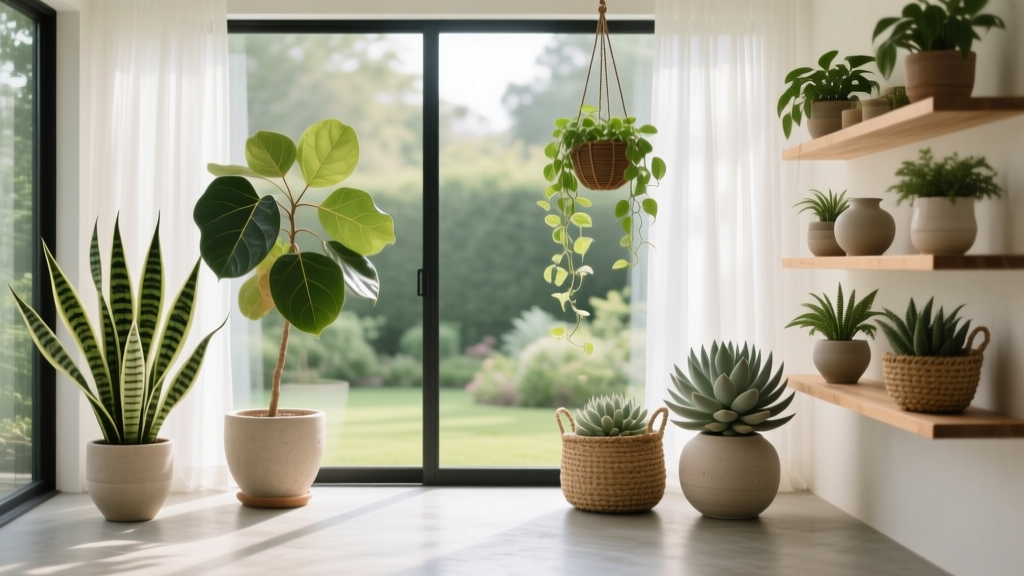
Sunroom Plant Selection Guide
The first time you notice it, it’s usually mid-winter: the sunroom is bright and warm at 2 p.m., but the plants look tired—leggy stems reaching toward the glass, crispy leaf edges, and a puddle under the prettiest pot you own. A sunroom feels like a greenhouse, yet it behaves more like a shifting stage set: sun angles change by season, glass amplifies heat, and that “just right” corner in July can be a cold pocket in January. The fix isn’t buying tougher plants; it’s designing the room like a small landscape—with light maps, circulation paths, and plant groupings that match your real conditions.
This guide walks you through a designer’s approach: measure first, plan the layout, then choose plants that thrive in the exact microclimates your sunroom creates.
Read the Room Like a Site Plan
Step 1: Measure the footprint and the “use zone”
Start with a quick sketch and three measurements. Most sunrooms end up crowded because we plan for plants and forget humans. Aim for a comfortable path and a place to sit, even if it’s just a small chair.
- Measure the usable floor area. Example: a typical sunroom might be 10 ft × 12 ft (120 sq ft).
- Reserve circulation: keep a primary walkway of 30–36 inches wide so you can carry watering cans and rotate plants without snagging leaves.
- Reserve a “dry landing”: a tray or mat area of 24 in × 36 in near the door for drip-prone pots and tools.
Design rule of thumb: if you can’t comfortably turn around holding a 2-gallon watering can, you’ve overfilled the space.
Step 2: Map sunlight hours (not just direction)
Sunroom light is about hours and intensity, not just “south-facing.” Track sun for two days—one clear day and one cloudy day—then average it out.
- Bright direct sun: 6–8+ hours of direct rays on leaves.
- Mixed light: 3–6 hours direct, plus bright ambient light.
- Bright shade: 0–3 hours direct, but enough brightness to read comfortably without turning on a lamp.
Important: glass changes plant behavior. The Royal Horticultural Society notes that many indoor plants are injured by scorching and dry air near windows and radiators, and that light levels can drop sharply as you move away from glass (RHS, 2023). Treat your sunroom like a gradient—hot and bright at the glass, gentler 3–6 feet back.
Step 3: Identify temperature swings and drafts
Sunrooms often swing more than the rest of the home. A simple thermometer helps: check morning low and afternoon high for a week. If you see a daily swing of 15–25°F, prioritize plants that tolerate fluctuation (citrus, succulents, many palms) and keep ferns and thin-leaved tropicals in the more buffered interior zone.
Also note: winter cold radiation off glass can stress foliage even when the air feels warm. If leaves touch the window on a cold night, they can chill and spot.
Layout Strategies That Make Plants Look Intentional (and Grow Better)
Create three plant zones: Glass Edge, Midroom, and Interior
I design sunrooms in bands. It keeps maintenance predictable and prevents the “one sad plant in the corner” look.
- Zone 1: Glass Edge (0–2 ft from windows) — brightest, hottest, driest. Best for sun-lovers and thick-leaved plants.
- Zone 2: Midroom (2–6 ft from windows) — bright but less extreme. Best for most flowering houseplants and many foliage plants.
- Zone 3: Interior (6+ ft from windows) — stable, lower light. Best for shade-tolerant foliage and “understory” plants.
Spacing matters for airflow. For medium pots (8–10 inch diameter), plan 10–14 inches between pot rims so leaves don’t overlap constantly. For larger floor plants (12–16 inch pots), keep 18–24 inches between canopies, especially if you’re prone to fungus gnats or powdery mildew.
Use vertical layers: floor, bench, and hanging height
Think like a conservatory: floor plants anchor the room; bench plants create a lush middle layer; hanging plants soften the ceiling line and reduce empty-window syndrome.
- Floor layer: 2–4 large specimens in 12–16 inch pots.
- Bench layer: a shelf or plant stand 14–18 inches deep so pots don’t feel precarious.
- Hanging layer: place hooks so foliage hangs 12–18 inches above head height in walking areas.
If you’re renting, use freestanding ladder shelves and tension-rod hanging systems to avoid wall anchors.
Plan watering logistics before you buy plants
Water is the hidden design constraint. A sunroom full of plants can mean weekly hauling unless you set up an easy routine.
Budget for these small upgrades—they prevent mess and plant stress:
- Large waterproof trays: $8–$20 each (use under clusters).
- Capillary mats for benches: $15–$35 per roll (great for small pots).
- Soil moisture meter: $10–$18 (prevents overwatering in winter).
“Right plant, right place is not just an outdoor concept—indoors, light drops rapidly with distance from the window, so positioning is your most powerful tool.” — Extension guidance on indoor plant light placement (University of Minnesota Extension, 2020)
The University of Minnesota Extension emphasizes matching indoor plants to actual light conditions and recognizing how quickly light declines indoors (University of Minnesota Extension, 2020). That’s your cue to design with zones, not guesses.
Plant Selection: Specific Varieties That Behave Well in Sunrooms
Below are designer-tested picks for sunrooms—plants that tolerate bright light, variable humidity, and the “window-to-interior” gradient. I’ll note what they’re good at (statement plant, filler, trailer), where they sit best, and why they work.
Zone 1 (Glass Edge): Sun and heat specialists
1) Citrus (Calamondin orange, Citrus × microcarpa)
Why it works: Handles bright light and rewards you with flowers and fruit. Calamondin stays relatively compact compared to many citrus.
Placement: 1–2 ft from the brightest window; rotate ¼ turn weekly for even growth.
Container: Start in a 14–16 inch pot; expect to up-pot every 2–3 years.
Design role: A living sculpture; anchor a corner seating area.
2) Aloe vera (‘Barbadensis’ type)
Why it works: Thick leaves shrug off dry air; perfect for the “hot glass shelf.”
Placement: Right at the window; keep 8–12 inches from cold glass in winter nights.
Spacing: 12–18 inches from other pots for airflow and to avoid leaf damage.
3) Jade plant (Crassula ovata, ‘Hummel’s Sunset’)
Why it works: Tolerates missed waterings, colors up in strong light, and forms a small tree silhouette.
Placement: Glass edge, but not pressed against the pane.
Cost: Often $12–$35 depending on size; easy to propagate from cuttings (DIY savings).
4) Bird of paradise (Strelitzia nicolai)
Why it works: Dramatic vertical leaves, loves bright light, and reads like “instant resort.”
Placement: Brightest corner with at least 6 hours strong light.
Space planning: Give it a footprint of about 3 ft × 3 ft over time; keep it out of the main walkway.
Zone 2 (Midroom): Reliable bloomers and lush foliage
5) Chinese hibiscus (Hibiscus rosa-sinensis, ‘Brilliant’ types)
Why it works: Handles bright conditions without demanding full outdoor sun; flowers can be showstoppers.
Placement: 3–5 ft from the glass, where light is bright but midday heat is moderated.
Maintenance note: Pinch tips monthly in spring/summer for branching.
6) Phalaenopsis orchid hybrids
Why it works: They like bright, indirect light—exactly what midroom provides in many sunrooms with strong glazing.
Placement: 4–6 ft from the window or behind a sheer curtain.
Spacing: Give each orchid 6–8 inches of breathing room to reduce crown rot risk.
7) Rubber plant (Ficus elastica ‘Burgundy’)
Why it works: Tolerates a range of light, thick leaves handle sunroom dryness better than many tropicals.
Placement: Midroom; too much direct sun can scorch if suddenly introduced—acclimate over 10–14 days.
Design role: Strong vertical mass to balance trailing plants.
8) Bromeliads (Guzmania hybrids)
Why it works: Color without constant blooms; the rosette form looks tidy in modern sunrooms.
Placement: Midroom bright shade; avoid harsh direct midday rays.
Watering: Keep water in the central “cup,” flush monthly.
Zone 3 (Interior): Soft, shade-tolerant structure
9) ZZ plant (Zamioculcas zamiifolia ‘Raven’)
Why it works: Low-light tolerant, glossy texture, very forgiving if you travel.
Placement: 6–10 ft from windows or along interior walls.
Design role: Dark foliage adds depth behind lighter plants.
10) Cast iron plant (Aspidistra elatior)
Why it works: Durable and steady; leaves stay clean-looking with minimal fuss.
Placement: Interior edges where other plants get leggy.
Maintenance: Wipe leaves monthly; water when top 2 inches dry.
11) Heartleaf philodendron (Philodendron hederaceum)
Why it works: Trails beautifully, tolerates lower light, easy to prune and propagate.
Placement: On a shelf at the boundary between midroom and interior so it can reach toward the light.
Quick Comparison: Match Plants to Your Sunroom Conditions
| Plant | Best Zone | Light Target | Pot Size (Typical) | Water Rhythm | Designer Use |
|---|---|---|---|---|---|
| Calamondin orange | Glass Edge | 6–8+ hours bright light | 14–16 in | When top 2 in dry | Statement tree |
| Aloe vera | Glass Edge | High light, some direct sun | 10–12 in | Let dry between | Sculptural accent |
| Phalaenopsis orchid | Midroom | Bright indirect (0–3 hours direct) | 5–6 in | Weekly-ish, drain well | Bloom focal point |
| Ficus elastica ‘Burgundy’ | Midroom | Bright light, limited harsh sun | 10–14 in | When top 1–2 in dry | Vertical structure |
| ZZ plant ‘Raven’ | Interior | Low to medium light | 8–10 in | Every 2–3 weeks | Depth + reliability |
Three Real-World Sunroom Scenarios (and How I’d Plant Them)
Scenario 1: The rental sunroom with strict “no holes in walls” rules
Challenge: You want jungle vibes, but you can’t mount hooks, and you’ll move in 1–2 years.
Layout move: Build a modular plant wall with two ladder shelves (each about 20 inches deep) along the brightest window side, leaving a 36-inch walkway.
Plant palette:
- Top shelf (bright): jade plant ‘Hummel’s Sunset’ + aloe vera
- Middle (medium): phalaenopsis orchids + guzmania bromeliads
- Lower (shade): ZZ ‘Raven’ + heartleaf philodendron to trail
Budget: Two ladder shelves ($70–$160 each), 10 plants at $10–$25 average, plus trays. Total range: roughly $260–$600. DIY alternative: thrifted bookcase sealed with polyurethane + boot trays as drip protection.
Scenario 2: A south-facing sunroom that turns into an oven
Challenge: Summer afternoons spike heat, and leaves scorch near the glass.
Layout move: Add a sheer curtain to cut intensity, and pull sensitive plants back to Zone 2. Keep the glass edge for plants that enjoy it.
Plant palette:
- Glass edge: aloe, jade, and a bird of paradise as the “heat hero”
- Midroom: rubber plant ‘Burgundy’ and hibiscus (bright but buffered)
- Interior: cast iron plant as the steady green base
Spacing & placement: Keep bird of paradise at least 24 inches from the hibiscus so you can access it for cleaning and rotation. Place a large tray under the hibiscus; it drinks more in summer.
Cost note: A simple sheer panel setup can be $25–$60 and can save you from replacing scorched plants.
Scenario 3: A winter-bright, summer-dim sunroom (trees leaf out outside)
Challenge: In winter, you get 6 hours of sun. In summer, leafy shade reduces it to 2–3 hours.
Layout move: Use rolling plant caddies under your highest-light plants so you can chase sun seasonally without heavy lifting.
Plant palette:
- On caddies: calamondin citrus and hibiscus (move closer in summer shade)
- Stable midroom: phalaenopsis orchids (less seasonal drama)
- Interior backbone: ZZ plant + philodendron (unfazed by summer dimness)
DIY alternative: If caddies feel pricey, place pots on felt furniture sliders ($6–$12 for a pack) and use a hard tray beneath to protect flooring.
Step-by-Step Setup: Build a Sunroom Plant Layout in One Weekend
- Day 1, morning: Light test. Mark three points on the floor at 2 ft, 6 ft, and 10 ft from the main window. Note direct sun hours at each point.
- Day 1, midday: Sketch zones. On your sketch, draw the 30–36 inch walkway first. Then draw Zone 1 (0–2 ft), Zone 2 (2–6 ft), Zone 3 (6+ ft).
- Day 1, afternoon: Place hardscape. Set shelves, benches, and a small table. Keep shelf depth around 14–18 inches so pots sit securely.
- Day 2, morning: Stage plants empty. Put empty pots (or similarly sized boxes) where you want plants. Walk through, sit down, and check sightlines.
- Day 2, midday: Plant and group. Group by water needs: succulents together, thirsty bloomers together. Leave 10–14 inches between medium pots for airflow.
- Day 2, late afternoon: Add drip control. Put trays under clusters; add a boot tray under your watering zone; label plants with light preferences.
Maintenance Expectations (So the Design Stays Beautiful)
If your layout is zoned well, maintenance becomes a routine instead of a weekly rescue mission.
- Weekly time: plan on 20–40 minutes per week for watering checks, leaf wipe-downs on two or three plants, and rotating any one-sided growers.
- Every 2 weeks: inspect for spider mites (especially in dry, hot sunrooms), and rinse dusty leaves in the shower if feasible.
- Monthly: prune trailing philodendron for shape; flush bromeliad cups; wipe rubber plant leaves for sheen and better photosynthesis.
- Seasonal (spring): refresh the top 1–2 inches of potting mix on heavy feeders; start fertilizer at half strength for citrus/hibiscus.
- Seasonal (fall): reduce watering frequency as growth slows; move plants 6–12 inches away from cold glass as nights cool.
Expect some seasonal repositioning. Plants are honest: if a hibiscus drops buds, it may need more consistent moisture and brighter light; if a jade stretches, it wants more sun.
Budget Planning and Smart DIY Upgrades
A sunroom planting can be done on a lean budget without looking sparse. Put money into the pieces that stabilize the system: trays, good soil, and one or two strong statement plants.
Budget starter plan (around $150–$300):
- 1 medium statement plant (rubber plant or bird of paradise): $25–$60
- 4–6 smaller plants (aloe, philodendron, ZZ, bromeliad): $10–$25 each
- Trays + moisture meter: $25–$60
Designer splurge plan (around $500–$900):
- Citrus tree + large pot: $80–$200
- Bench/shelving: $150–$350
- Orchid grouping (3–5 plants): $60–$200
DIY alternatives that look polished:
- Use matching nursery pots inside identical cachepots for a cohesive look—swap plants without changing the visual design.
- Make a humidity pocket by clustering plants on one large tray filled with pebbles; keep water below pebble tops so pots aren’t sitting in water.
- Turn a narrow console table into a plant bench by adding a waterproof liner and raised slats for drainage.
The best sunroom designs don’t cram every bright inch with greenery. They give plants the light they want, give people space to live, and use repetition—two matching aloes, three orchids in a row, a pair of ZZ plants—to make it feel intentional. Once you’ve mapped your light and built your zones, the plant choices become easy: let the glass edge carry the sun lovers, let the midroom handle your bloomers, and let the interior hold steady green structure all year.
Citations: Royal Horticultural Society (RHS), 2023. University of Minnesota Extension, 2020.