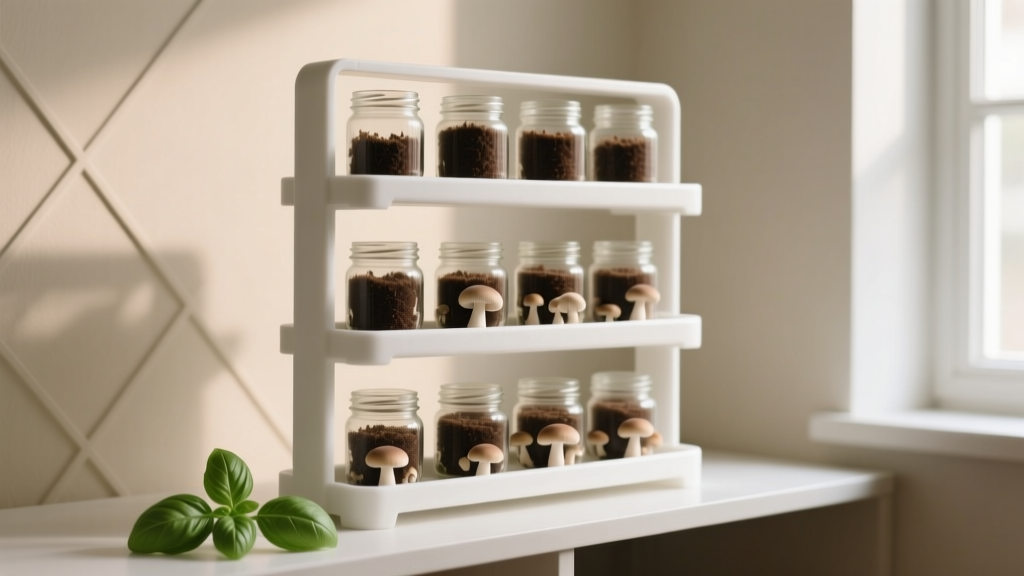
Indoor Mushroom Growing Setup
You clear a shelf in the laundry room, stack a couple of bins, and imagine dinner: sautéed oyster mushrooms, still warm from harvest. Then reality sets in—your “grow corner” is wedged between a humming dryer and a drafty window, and the first kit you tried dried out in two days. Mushrooms don’t need a sunroom or a greenhouse, but they do need a deliberate layout: humidity where you can keep it, fresh air where you can control it, and a workflow that won’t make you dread maintenance.
Think of this project the way a landscape designer thinks of a courtyard: define the microclimate, choose the right “plants,” and design circulation so daily care is simple. Indoor mushroom growing is exactly that—microclimate design in miniature.
Design the Microclimate First: Humidity, Fresh Air, and Clean Zones
The biggest indoor mistake is treating mushrooms like houseplants. They’re closer to cut flowers: they want steady moisture and plenty of fresh air, but not wind or drying heat. Start by mapping two zones—one for “clean work” (inoculating or opening bags) and one for “fruiting” (where mushrooms actually grow).
Target Conditions (the “site requirements”)
Most home-friendly species fruit well in a cool-to-mild room. Aim for:
- Temperature: 60–75°F (16–24°C) for oysters; 55–70°F (13–21°C) for shiitake fruiting.
- Humidity: 85–95% relative humidity during fruiting for many species (especially oysters) to prevent cracked caps and stalled pins.
- Fresh air exchange: Enough to prevent long, skinny stems and fuzzy caps (a classic “stale air” symptom).
- Light: Mushrooms don’t photosynthesize, but many need light cues to form normal caps—plan for 8–12 hours of low-intensity light daily (a 6500K LED shop light works well).
These ranges line up with extension guidance: Penn State Extension notes that oyster mushrooms fruit well at high humidity and moderate temperatures and need fresh air to avoid poor form (Penn State Extension, 2023). For indoor air and health considerations, the U.S. EPA emphasizes controlling indoor moisture to reduce mold growth (U.S. EPA, 2023)—a good reminder to keep humidity contained in a tent or bin rather than humidifying an entire apartment.
Containment Is the Indoor Designer’s Secret
Instead of trying to humidify a whole room (which can swell baseboards and invite mildew), build a contained “fruiting room” inside your room. The most space-efficient options are:
- A small grow tent: 24" x 24" x 60" (2' x 2' footprint) fits behind a door or beside a dresser.
- A clear tote fruiting chamber: a 66-quart bin (about 24" L x 16" W x 13" H) for one or two blocks.
- A wire shelving rack wrapped in plastic: 36" W x 18" D x 72" H gives you vertical production with a small footprint.
“Design is not just what it looks like and feels like. Design is how it works.” — Steve Jobs (often cited; applicable here as a reminder that your grow setup should reduce daily friction, not add it)
Layout Strategies That Make Mushrooms Easy to Live With
Strategy 1: The 2' x 2' Vertical Farm (Best for renters)
If you can spare a 24" x 24" corner, you can grow a steady rotation of oyster mushrooms with minimal mess. Place a small tent on a waterproof mat (a $15 washing-machine drip tray works). Inside, use a narrow rack or hang fruiting blocks from the top bar.
Spacing rule: Give each fruiting block 6–8 inches of clearance on all sides so clusters don’t press against walls (which causes bruising and uneven growth).
Strategy 2: The “Closet Orchard” (Best for homeowners with a spare closet)
A coat closet can become an extremely stable microclimate. The design trick is airflow: closets trap CO2. Add a small, quiet inline fan (4" duct fan) set to pulse a few minutes each hour, or crack the door and use a clip fan on low.
Light plan: Mount a 2' LED shop light under the top shelf and run it 10 hours/day on a timer. You’re not feeding the mushrooms light—you’re giving them a compass.
Strategy 3: The Countertop “One-Block” Station (Best for tiny apartments)
If you only want occasional harvests, keep it simple: one fruiting block in a modified tote on a kitchen counter away from the stove. You’ll trade volume for convenience, but you’ll actually keep up with misting and harvesting.
Moisture protection: Put the tote on a cafeteria tray or boot tray so you can wipe drips in one pass.
Choose Your “Plants”: Mushroom Varieties That Match Real Homes
In landscape design, you pick plants for the site. Same here. Start with species that forgive small mistakes and fruit reliably indoors.
Oyster Mushrooms (Pleurotus) — the best indoor workhorse
- Pearl oyster (Pleurotus ostreatus): Broad temperature tolerance (often 60–75°F) and fast fruiting. Great for first-time indoor growers.
- Blue oyster (P. ostreatus var. columbinus): Often prefers slightly cooler rooms; caps are meaty and attractive.
- Pink oyster (P. djamor): Gorgeous color, but it prefers warmer conditions and tends to be more perishable—better if your room stays closer to 70–80°F.
Why they work indoors: They fruit from bags/blocks without needing logs, and they’re quick—often producing a first flush in 10–21 days after you start fruiting conditions, depending on supplier and temperature.
Shiitake (Lentinula edodes) — slower, but excellent quality
- Wide-range strains: Many commercial strains fruit well in typical home basements or cool rooms.
- Why they work indoors: Dense, flavorful mushrooms and tidy growth from supplemented sawdust blocks.
Design note: Shiitake often benefits from a “soak and rest” rhythm; you’ll want a bucket or deep pan dedicated to dunking blocks (plan for a 5-gallon bucket).
Lion’s Mane (Hericium erinaceus) — for the patient with good airflow
- Why it works indoors: It loves high humidity and looks sculptural—like a living white pendant.
- Design caution: It’s sensitive to stale air; plan more fresh-air exchange than you think you need.
Compare Setup Styles Before You Buy Anything
| Setup Style | Footprint | Best For | Approx. Cost (USD) | Maintenance Load |
|---|---|---|---|---|
| Modified tote fruiting chamber | 24" x 16" | One or two blocks, small apartments | $25–$60 | 10–20 min/day (misting & checks) |
| 2' x 2' grow tent + humidifier | 24" x 24" | Steady production, renters | $150–$300 | 30–60 min/week (refills, wipe-downs) |
| Wire rack wrapped in plastic + DIY humidification | 36" x 18" | More volume, flexible shelving | $90–$220 | 45–90 min/week (more surfaces) |
Costs vary by region, but budgeting in ranges keeps you honest. If you already own a shelf and a spare bin, you can start at the low end.
Step-by-Step: A Practical Indoor Mushroom Layout You Can Build in an Afternoon
This plan assumes a renter-friendly footprint: a 24" x 24" x 60" tent or a similar vertical zone. You can adapt the same logic to a closet or rack.
- Pick the location. Choose a spot with stable temps (not above a radiator, not in direct sun). A north-facing room or interior wall is ideal. Keep at least 3 feet away from forced-air vents.
- Protect the floor and nearby walls. Set a waterproof tray or tarp under the setup. If you’re in a carpeted room, add a rigid layer (like a plastic chair mat) under the tray.
- Install shelving or hanging points. If using a rack, leave 12–16 inches between shelves so clusters have room to form and you have room to harvest.
- Add humidity control. For a tent: a small ultrasonic humidifier (0.5–1 gallon tank) piped into the tent works well. For a tote: use perlite on the bottom or frequent misting, but expect more daily attention.
- Add fresh-air movement. A 4" inline fan on a timer is ideal; otherwise use a clip fan outside the tent pointed at an open vent flap (gentle, not blasting). Stale air causes deformed oysters fast.
- Set lighting on a timer. Hang a 6500K LED strip or shop light and run it 8–12 hours/day.
- Place a hygrometer/thermometer at mushroom height. Don’t measure at the top of the tent—measure where the caps are forming.
- Introduce your fruiting blocks and label them. Tag each block with start date and variety so you can track flush timing.
- Draft your workflow. Keep a spray bottle, alcohol wipes, gloves, and a small knife in a dedicated bin beside the setup. The fewer trips you take, the more consistent your care will be.
Real-World Scenarios: Three Layouts, Three Lifestyles
Scenario A: The Studio Apartment Cook (Countertop tote, pearl oysters)
You have one window, one counter, and no patience for extra equipment. A 66-quart clear tote becomes your fruiting chamber. You keep it 4 feet from the stove to avoid heat spikes and grease. You mist the walls of the tote twice a day and crack the lid for fresh air.
Result: One 5 lb oyster block can produce multiple flushes over several weeks. Your harvests come in waves—perfect for someone who cooks a few times a week and wants a “mushroom moment” rather than constant production.
Scenario B: The Basement Hobbyist (2' x 2' tent, mix of oysters and lion’s mane)
You have a cool basement corner and want reliability. You set up a 2' x 2' tent on a tray, run an ultrasonic humidifier, and add a small exhaust fan that kicks on periodically. You keep humidity around 90% during pinning, then let it drift slightly lower as mushrooms mature to reduce condensation.
Result: Better cap shape, less cracking, and fewer stalled pins. Lion’s mane forms dense, clean spines because you designed for fresh air rather than just “more mist.”
Scenario C: The Busy Family Kitchen (Closet conversion, shiitake blocks on a schedule)
You don’t want daily misting battles. You convert a closet with a rack, a timer light, and a simple “soak station” using a 5-gallon bucket. Shiitake blocks fruit in cycles: soak overnight, drain, fruit for a week or two, then rest.
Result: Fewer daily tasks, more predictable harvest windows. The closet door becomes the control valve: closed when you want humidity to build, cracked when you need more airflow.
Budget Planning and DIY Alternatives (Without Cutting the Wrong Corners)
A smart budget prioritizes control (humidity + airflow) and containment (keeping moisture from your home). Here are realistic numbers you can plan around:
- Entry-level tote setup: $25–$60 (bin, hygrometer, spray bottle, small LED).
- Mid-range tent setup: $150–$300 (2' x 2' tent, humidifier, timer, hygrometer, light).
- Fruiting blocks: often $20–$40 each depending on species and size (shop local if possible to reduce shipping stress).
- Electricity: typically modest for LEDs and small fans; humidifiers add more depending on runtime.
- Floor protection: $10–$25 for a boot tray or washing-machine drip tray.
DIY swaps that work:
- Use a wire shelving rack you already own and wrap it in painter’s plastic for a budget “tent.”
- Use zip ties and S-hooks to hang bags from the top shelf to maximize vertical space.
- Instead of an automated humidifier, start with manual misting—but accept the trade: more time and more variability.
DIY swaps to avoid: Humidifying an entire bedroom to 90% is asking for peeling paint and mold. The U.S. EPA’s guidance on moisture control is clear: manage moisture at the source and keep indoor dampness from becoming a building problem (U.S. EPA, 2023).
Maintenance Expectations: What It Actually Takes Week to Week
Mushrooms reward consistency, not heroics. If your design is right, maintenance becomes a short, calming routine rather than a daily scramble.
Weekly time budget
- Tote setup: plan on 20–40 minutes/week total, plus brief daily checks (misting and fresh air).
- Tent with humidifier: about 30–60 minutes/week (refilling humidifier, wiping surfaces, checking growth).
- Higher-volume rack systems: 60–90 minutes/week, mostly cleaning and dialing airflow/humidity as blocks cycle.
Seasonal adjustments (yes, even indoors)
- Winter: indoor air dries out; you may need higher humidifier output and more frequent refills. Keep blocks away from heaters.
- Summer: rooms run warmer; choose warm-tolerant varieties (pink or certain oyster strains) or move production to a cooler interior spot.
- Shoulder seasons: watch condensation when temperatures swing—too much wetness on surfaces invites contaminants.
Cleanliness as a design feature
Plan a weekly wipe-down: tray, tent floor, and any surfaces that collect droplets. A simple routine—remove spent clusters, wipe splash zones, check for pooling—prevents 90% of the “mystery problems.” Penn State Extension also emphasizes sanitation and clean handling to reduce contamination when growing edible mushrooms at home (Penn State Extension, 2023).
Small Details That Make the Setup Feel “Designed,” Not Improvised
Make harvesting comfortable. Place blocks between waist and chest height when possible. If you’re crouching to harvest, you’ll postpone it—and over-mature mushrooms drop spores and make cleanup harder.
Plan for drainage. A shallow tray under blocks catches drips. Standing water is not “extra humidity”; it’s a maintenance headache.
Keep a simple rotation. Two blocks started two weeks apart gives you staggered flushes. This is the indoor equivalent of succession planting: steadier harvests, less feast-or-famine.
Give your setup a boundary. A tent or wrapped rack looks intentional and keeps humidity where it belongs. It also makes it easier to explain to roommates: “This is the mushroom zone,” not “Why is everything damp?”
The best indoor mushroom setup is the one that fits your space the way a well-drawn patio fits a backyard—clear edges, a comfortable workflow, and the right species for the conditions you can truly provide. Once you’ve built that little microclimate room-within-a-room, you’ll stop babysitting mushrooms and start harvesting them.
Sources: Penn State Extension (2023), “Mushroom Growing at Home”/home mushroom cultivation guidance. U.S. Environmental Protection Agency (2023), moisture and mold control guidance for homes (EPA mold resources).