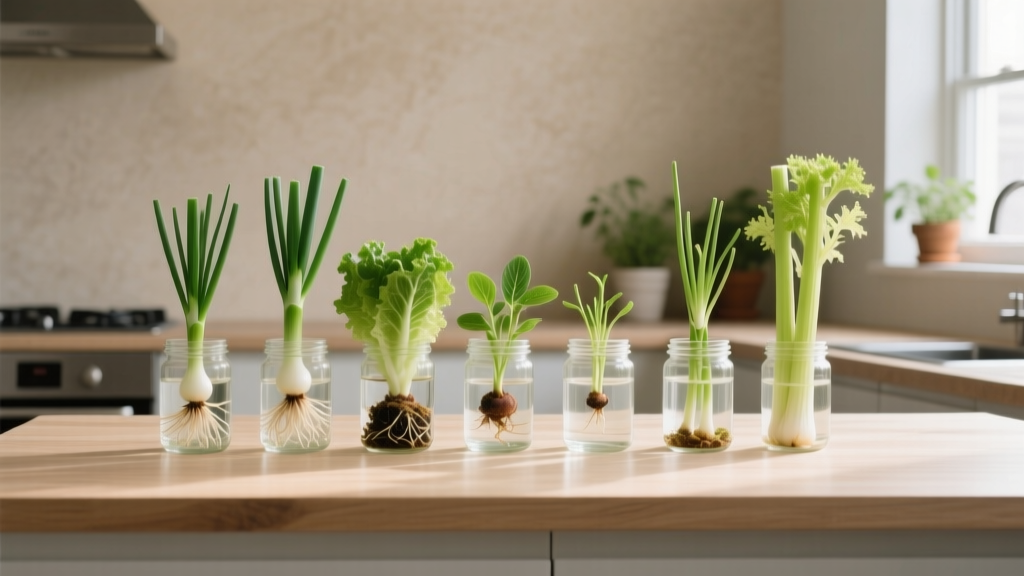
Kitchen Scrap Regrowing Station
You’re making dinner, the cutting board is a confetti of onion skins, scallion roots, celery bases, and a romaine stump. The trash can is open, waiting. But you pause—because you’ve done this before: tossed “perfectly good” living parts that could have become tomorrow’s garnish, next week’s soup base, or a small but steady trickle of greens that makes the kitchen feel generous. The challenge isn’t the idea. It’s the clutter. A jar of murky water on the windowsill, seedlings stretching for light, a tray that drips, and suddenly your regrowing habit feels messy instead of magical.
This is where a kitchen scrap regrowing station earns its keep: a tidy, intentional mini-layout that turns scraps into reliable regrowth without turning your counter into a science experiment. Think like a landscape designer—define edges, control water, give plants the light they need, and choose crops that thrive in this microclimate. You’ll end up with a station that looks good, works hard, and fits renters and homeowners alike.
Start with the “micro-site”: light, water, and traffic
In garden design, the first step is always reading the site. Your “site” is a windowsill, counter corner, balcony shelf, or utility nook. The best regrowing stations succeed because they respect three realities: sunlight hours, water management, and how people move through the space.
Light mapping: measure before you buy anything
For most kitchen-scrap regrows, target 4–6 hours of bright light daily. A south- or west-facing window is ideal; east works for gentle morning light. If your station gets less than 3 hours, plan to add a grow light.
Practical rule: place your phone on the intended spot and check light at three times—morning, midday, late afternoon—for two days. If the surface is bright enough to comfortably read a book without turning on a lamp, you’re close.
Water containment: design for drips
Regrowing creates drips, algae, and occasional odor if water sits too long. Build in a “wet zone”: a tray with a lip, a dish rack insert, or a shallow bin. A station that contains water is the difference between “I do this weekly” and “I tried once.”
Plan for a tray at least 12 in x 18 in (30 x 45 cm) for a typical household station—large enough for 6–10 jars/pots, small enough to lift to the sink.
Traffic flow: keep it off the chopping line
A regrowing station should be within arm’s reach of the sink (for easy water changes) but not in the main prep zone. If it’s constantly moved, it will slowly die. If you’re tight on counter space, design vertically: a two-tier shelf or window-mounted rack keeps the station stable and out of your way.
Layout strategies: three proven station footprints
Here are three layouts I recommend most often. Each is designed around a core principle: make the station easy to maintain, because maintenance is what keeps regrowth going.
1) The windowsill “jar rail” (smallest footprint)
Best for: renters, studio apartments, small kitchens with a bright window.
Space needed: 24–36 inches of windowsill length and 6–8 inches depth.
Design move: Line up matching jars in a tray like a miniature nursery bench. Use low, wide containers to reduce tipping and give roots room. Keep labels minimal—one piece of painter’s tape per jar.
2) The counter-corner “wet/dry split” (most practical for families)
Best for: busy households that generate lots of scraps.
Space needed: roughly 18 in x 18 in (45 x 45 cm).
Design move: Divide the station into two zones: a wet tray for water-rooting and a dry tray for potted-on regrowth. That separation prevents the entire station from feeling damp and disorganized.
3) The balcony or porch “transition shelf” (maximum output)
Best for: anyone with outdoor space who wants meaningful harvests.
Space needed: a shelf unit about 24 in wide x 12 in deep.
Design move: Start scraps indoors for fast root initiation, then move them outdoors into pots once nights are reliably above 50°F (10°C). Outdoors, light intensity and airflow turn regrows into actual plants.
Build the station: materials and step-by-step setup
A great station doesn’t require fancy gear, but it does require intentional choices. Here’s a setup that looks clean and works reliably.
Core materials (with realistic costs)
- Tray with lip (12 in x 18 in or larger): $8–$20
- 6–10 glass jars (8–16 oz): $0–$15 (save pasta sauce jars or buy a set)
- Small pots (4–6 inch) for potting on: $1–$4 each
- Potting mix (8–12 qt): $6–$12
- Optional LED grow light (10–20W strip or clamp): $20–$45
Step-by-step setup (designer’s sequence)
- Define the boundary: Place your tray where it will live permanently—near the sink, near light, out of traffic.
- Create height hierarchy: Put taller jars at the back, shorter containers in front. This prevents shading and looks orderly.
- Assign functions: Left side = new scraps in water; right side = established regrows in soil (or vice versa). Keep the system consistent.
- Add a water-change cue: Keep a small empty cup or squeeze bottle on the tray. It signals “water lives here,” making weekly refresh automatic.
- Set a potting-on zone: Place 2–3 small pots on the “dry” side so successful water-rooters have an obvious next step.
- Label lightly: Use painter’s tape with date started (e.g., “Scallion 5/10”). Dates are more useful than names—timing tells you what’s working.
“Good design is making something intelligible and memorable. Great design is making something memorable and meaningful.” — Dieter Rams (often cited in design studies and interviews; widely attributed)
That quote matters here because a regrowing station fails when it’s not intelligible—when you can’t quickly see what’s new, what needs water, and what’s ready to move to soil.
Plant selection: scraps that genuinely earn their space
Not every kitchen scrap is worth nursing. Some will regrow leaves but never produce a meaningful second harvest indoors. Choose plants that either (1) regrow quickly for repeated snips or (2) transplant well into soil for bigger returns.
Top performers for water-rooting and repeated snips
Scallions/green onions are the poster child for a reason: quick turnaround, low fuss, and high usefulness. Leave 1–2 inches of white base with roots attached, stand in 1/2 inch of water, and refresh every 2–3 days.
Celery will push new leaves from the center. Cut the base to 2 inches tall and keep it shallowly watered. Once it shows roots and new growth (often in 7–10 days), move to soil for best results.
Romaine lettuce and bok choy are reliable for a small flush of leaves. Keep the base in shallow water, then transplant. Expect “bonus greens,” not a full head.
Scraps that perform better when potted up
Sweet potato slips are a high-return project if you have light. Suspend half a sweet potato with toothpicks in a jar so the bottom sits in water. In a few weeks, you’ll have slips to plant. This one wants bright light and patience.
Garlic can sprout greens from cloves (useful like chives). For bulbs, you’ll need a longer season and outdoor space, but garlic greens indoors are immediate and flavorful.
Specific varieties to buy once, then keep the cycle going
Scrap regrowing is even better when you start with varieties bred for flavor and repeat harvest. If you’re buying produce anyway, choose these:
- ‘Evergreen Hardy White’ scallions: cold-tolerant if you transition outdoors; reliable regrowth habit.
- ‘Lacinato’ (dinosaur) kale: not a scrap regrow, but a perfect “station companion” in a pot for steady leaf harvest near the same light source.
- ‘Genovese’ basil: propagate from cut stems (not kitchen “scraps” exactly, but often leftover herb stems). Fast rooting in water with warm temps.
- ‘Bright Lights’ Swiss chard: again, not a scrap, but pairs well when your station expands—high yield in containers with repeated picking.
Why include non-scrap companions? Because a station that produces something dependable keeps you engaged while the slower regrows do their thing.
Spacing and growth rules you can actually use
Indoor regrows suffer most from crowding and stale water. Treat each jar like a planting hole with its own “root zone.”
- Jar spacing: Leave 2–3 inches between jars so leaves can expand and air can circulate.
- Water depth: Keep water shallow—typically 1/4 to 1/2 inch touching roots or the base. Deep water encourages rot for many scraps.
- Pot size for potting-on: Use a 4-inch pot for scallions and lettuce bases, 6-inch for celery or bok choy before moving up.
- Sunlight target: 6 hours is the sweet spot for leafy regrowth; less than 3 hours needs supplemental light.
Comparison table: pick the right station style for your space
| Station Style | Footprint | Best Light Requirement | Typical Capacity | Estimated Cost | Best For |
|---|---|---|---|---|---|
| Windowsill Jar Rail | 30 in x 7 in | 4–6 hrs direct/bright | 6–8 jars | $10–$35 | Small kitchens, renters |
| Counter Corner Wet/Dry Split | 18 in x 18 in | 3–6 hrs + optional light | 8–12 containers | $20–$70 | Families, high scrap volume |
| Balcony Transition Shelf | 24 in x 12 in shelf | 6+ hrs outdoors (after transition) | 10–20 starts + pots | $35–$120 | Biggest harvest potential |
Three real-world scenarios (and how I’d design each)
Scenario 1: The renter with one bright window and zero counter space
You’ve got a south-facing window, but the sill is narrow and you can’t drill holes. Go with the windowsill jar rail: a slim tray (24 inches long) plus 6 matching jars. Use a non-slip shelf liner under the tray so it doesn’t creep when you open/close the window.
Plant plan: scallions + romaine bases + basil stem cuttings. Keep only 4–6 active jars at a time; rotate scraps in and out. In a rental, restraint is the secret to keeping it charming instead of chaotic.
Scenario 2: The busy household that cooks nightly (and hates mess)
Your challenge is volume and cleanup. Design the wet/dry split station: left side for “incoming scraps,” right side for potted regrows. Use a tray with a 1-inch lip so drips never reach the counter. Add one small lidded container under the sink for “scraps worth regrowing” so you’re not sorting at the tray.
Plant plan: scallions (always), celery (one at a time), bok choy bases, and garlic greens in a small pot. Keep a strict rule: if it smells off, it’s compost. A clean station is a station you’ll keep.
Scenario 3: The homeowner with a patio who wants real harvests
Use the transition shelf approach. Start scraps inside to root, then move them outdoors into containers. Outdoors, romaine bases and celery can bulk up far more than they ever will in a jar.
Plant plan: scallions in a 10-inch pot as a “cut-and-come-again” clump; celery in a 2–3 gallon container; plus one pot of ‘Lacinato’ kale for guaranteed weekly greens. This hybrid approach gives you the delight of regrowth with the payoff of container gardening.
Maintenance expectations: keep it productive in 15 minutes
The station should run on a small, predictable routine. If it takes an hour, it won’t happen.
Weekly rhythm (about 15–25 minutes total)
- Water changes: 5–10 minutes. Refresh jars every 2–3 days for best results; minimum weekly if you’re busy.
- Rinse containers: 5 minutes. A quick rinse reduces algae and odor.
- Trim and harvest: 5–10 minutes. Snip scallion greens, remove limp outer leaves on lettuce regrows.
Seasonal tasks (the designer’s “reset”)
- Spring: If you have outdoor space, begin transitioning potted regrows outside once nights stay above 50°F. Increase light gradually over 3–5 days to avoid shock.
- Summer: Watch water more closely—heat speeds rot indoors and dries pots outdoors. Consider shading outdoor containers during extreme heat.
- Fall: Bring outdoor pots in before frost; reduce watering as growth slows indoors.
- Winter: Add a small grow light if you’re below 4 hours of sun. Winter success is mostly about light.
Budget-smart upgrades and DIY alternatives
A regrowing station can be nearly free, but a few upgrades improve success rates and aesthetics.
- DIY tray: Repurpose a baking sheet with a cooling rack insert. Cost: often $0 if you already own it. The rack lifts jars slightly so airflow dries drips faster.
- DIY grow light stand: Use a tension rod in the window frame and hang a 10–20W LED strip with zip ties. No drilling; renter-friendly.
- Free jars: Standardize by saving matching salsa or pasta jars. A cohesive look makes the station feel intentional.
- Potting mix alternative: If you only pot on occasionally, buy a smaller 8-qt bag instead of a bulky bale, and store it in a sealed bin to keep fungus gnats down.
If you want the station to look like decor, choose one material theme—clear glass + white tray, or amber jars + wood tray. Designers call this “material consistency,” and it’s a quiet way to make a functional project feel at home in your kitchen.
Food safety and plant health: a few grounded notes
Scrap regrowing is common, but it’s still plant material sitting in water. Keep it clean. The United States Food and Drug Administration recommends washing produce under running water before preparation (FDA, 2022). That same habit helps here: rinse scraps before placing them in jars, especially if they’ve been sitting on a cutting board with raw ingredients nearby.
For plant growth basics, remember that most leafy vegetables prefer strong light and moderate temperatures; inadequate light leads to weak, pale growth. Extension programs frequently emphasize matching light conditions to plant needs for indoor growing (University of Minnesota Extension, 2020).
Citations
- U.S. Food & Drug Administration (FDA). “Selecting and Serving Produce Safely.” 2022.
- University of Minnesota Extension. Indoor lighting guidance for starting seeds/houseplant growth (lighting intensity and duration recommendations). 2020.
Common design mistakes (and how to fix them fast)
Mistake 1: Too many projects at once. Your station gets crowded, water gets cloudy, and you stop changing it. Fix: cap active jars at 6–8. Compost the rest.
Mistake 2: Deep water. Many scraps rot when submerged. Fix: lower water to 1/4–1/2 inch and refresh more often.
Mistake 3: No potting-on plan. Some scraps stall in water. Fix: keep 2–3 small pots ready so successful starts can move to soil immediately.
Mistake 4: Light wishful thinking. If your window is dim, growth will be leggy and disappointing. Fix: add a modest grow light and run it 10–12 hours per day.
A station that fits your life (not the other way around)
The best kitchen scrap regrowing stations don’t try to turn your kitchen into a greenhouse. They aim for a small, repeatable win: scallions you snip twice a week, a celery base that becomes a potted plant, a romaine stump that gives you a handful of crisp leaves when you’re making sandwiches. Once the layout is calm—contained water, clear zones, enough light—you’ll find the habit sticks.
Tonight, when the cutting board fills up again, you won’t hover over the trash. You’ll pivot, set the viable bases into their jars, and slide the tray back into its clean boundary—like placing new plants into a well-designed bed. Small space, tight system, real payoff.