Indoor Orchid Blooming Schedule Guide
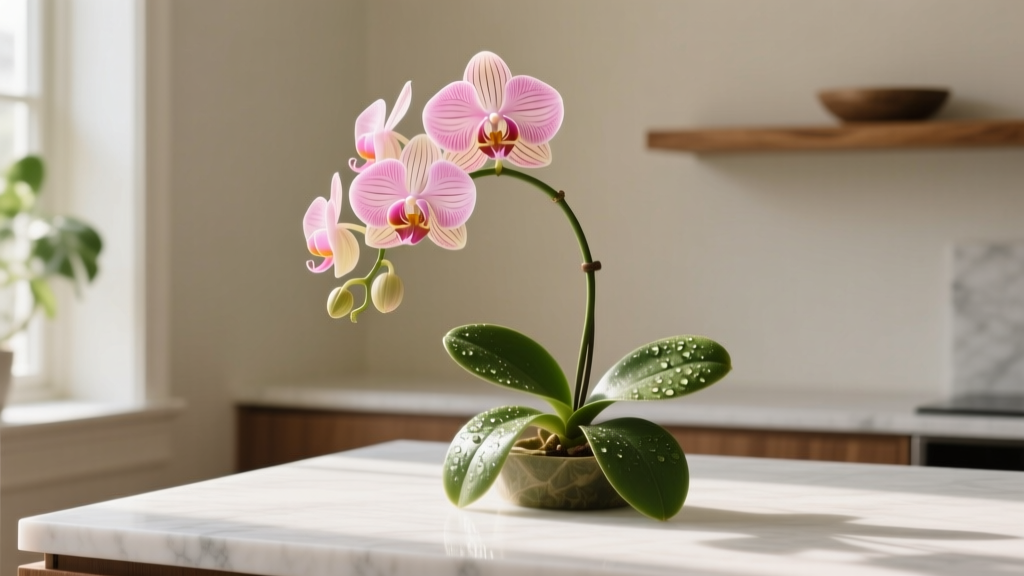
You bought the orchid when it was perfect—three stems of moth-like blooms floating above glossy leaves. Then, two weeks later, the flowers dropped. Now it’s sitting on a windowsill like a handsome green sculpture that refuses to perform. If that sounds familiar, you don’t need “luck.” You need a blooming schedule you can design for—one that treats light, temperature, potting, and placement like a room layout problem.
I’m going to walk you through setting up an indoor orchid “bloom calendar” the way a landscape designer plans seasonal interest outdoors: stagger varieties, create reliable microclimates, and build simple routines that make flowering predictable. Along the way, you’ll get real dimensions, spacing, light-hour targets, and budgets—plus three real-world room scenarios so you can match the plan to your home (or rental) without turning your living room into a laboratory.
Designing Your Bloom Calendar: Think Like a Landscape Designer
Orchid blooms are less about random timing and more about triggers. Each genus has its own cues: temperature drops, daylength, light intensity, and a rest period. Your job is to place plants where those cues happen naturally, then support them with consistent care.
Principle 1: Build Microclimates Instead of Fighting Your Home
Most homes have at least three orchid-worthy microclimates: a bright window, a warmer interior shelf with stable temps, and a humid bathroom or kitchen corner. Your blooming schedule gets easier when you assign each orchid to the microclimate that matches its bloom trigger.
- Bright window zone: strongest light, most day/night temperature swing—great for bloom initiation.
- Interior “gallery shelf” zone: stable temps, controlled grow lights—great for steady vegetative growth.
- Humid utility zone: bathrooms/kitchens—useful for recovery and root growth if light is adequate.
Principle 2: Stagger Bloom Seasons Like You Would Outdoor Perennials
If you only grow one orchid type, you’ll get one main bloom season. Mix a few genera and you can have flowers across the year. Many homeowners do best with a core trio: Phalaenopsis (easy winter/spring bloomer), Oncidium alliance (often fall/winter), and a mini Cattleya (late winter through summer depending on hybrid).
Principle 3: Respect Spacing—Air Is Part of the Layout
Crowding is the quiet killer of indoor orchids: it reduces airflow, increases fungal issues, and slows recovery between bloom cycles. On shelves and stands, give each pot a clear “breathing circle.”
Spacing targets: allow 6–8 inches between pot rims for Phalaenopsis and Oncidium types; 8–12 inches for Cattleya types with broader leaves and pseudobulbs. If leaves touch constantly, you’re inviting spotting and pests.
Light and Placement: The Real Driver of Bloom Timing
Indoors, light is your #1 scheduling tool. Most “my orchid won’t bloom” stories trace back to insufficient light. The American Orchid Society notes that orchids require the right light levels to bloom, and that inadequate light is a common reason plants fail to flower (American Orchid Society, 2020).
Sunlight Hours: Practical Targets You Can Measure
Instead of vague “bright indirect light,” design for hours and positioning:
- Phalaenopsis: aim for 6–8 hours of bright filtered light near an east window, or 2–4 feet back from a south window with a sheer curtain.
- Oncidium alliance: target 8–10 hours of bright light; closer to a south/east exposure or under a grow light.
- Mini Cattleya: generally needs higher light; plan for 10–12 hours bright light (window + grow light often works best in apartments).
For renters with limited windows, a simple LED grow light is the most controllable “season.” Set it on a timer and your orchids get consistent daylength even when winter storms darken the room.
Grow Light Layout: A Clean, Shelf-Friendly Setup
If you’re building an orchid shelf, here’s a designer’s layout that keeps it tidy and effective:
- Choose a shelf section at least 24 inches wide and 12–16 inches deep.
- Mount an LED bar light under the shelf above, keeping the light 8–14 inches above the leaves (adjust based on plant response).
- Set a timer to 12 hours/day for steady growth; shift to 10–11 hours in late fall if you’re trying to encourage certain bloom triggers.
- Keep plants 6–8 inches apart for airflow; add a small USB fan if the area feels stagnant.
Cost checkpoint: a basic 2-ft LED grow light bar typically runs around $25–$60, a timer $8–$15, and a compact fan $12–$25. That’s often cheaper than replacing “failed” orchids each year.
Temperature Triggers: Scheduling Blooms on Purpose
Temperature differences between day and night are a reliable bloom signal—especially for Phalaenopsis. A slight cool-down in fall often initiates spikes.
The University of Florida IFAS Extension notes that Phalaenopsis commonly initiate flower spikes when night temperatures drop to around the mid-60s °F after warm growing conditions (UF/IFAS Extension, 2013). That’s great news indoors: you can use a cooler room or a window zone to create this shift naturally.
Design Strategy: Create a “Spike Zone”
Pick a spot where night temps naturally run a bit cooler in autumn—often 60–67°F near a window (without cold drafts). Keep daytime around 70–78°F. That difference can be enough to cue spike initiation on many Phalaenopsis hybrids.
“The most consistent indoor flowering comes from designing conditions you can repeat—light first, then a modest seasonal temperature shift. Treat bloom triggers like a layout feature, not a gamble.” —Interior plant designer’s rule of thumb used in commercial interiorscaping workflows
Watering and Potting: Timing the Rest and the Push
A blooming schedule also depends on cycling between growth and recovery. After flowering, many orchids need time to rebuild energy. Your watering and feeding plan should reflect that.
Pot Size and Media: Keep Roots in the Goldilocks Zone
Orchids generally prefer being slightly snug in their pots, but not suffocated. For common grocery-store Phalaenopsis, a 4–6 inch pot is typical. Repotting into an oversized container can keep the center too wet and slow root aeration.
- Repot cadence: about every 12–24 months depending on media breakdown.
- Media cost: quality orchid bark mixes often cost $8–$18 per bag (enough for several pots).
Weekly Rhythm (What to Expect)
For a small indoor collection (3–6 orchids), plan on 20–35 minutes/week for routine care. Add another 30–60 minutes once a month for deeper checks (roots, pests, cleaning leaves).
- Week to week: water when media approaches dryness; in many homes that’s every 7–10 days for bark-grown Phalaenopsis.
- Feeding: apply a dilute fertilizer about 2–4 times/month during active growth; reduce in lower-light winter conditions.
- After bloom: keep care steady; don’t “punish” the plant with drought. Recovery is when next season’s blooms are being prepared.
Orchid Varieties That Make Blooming Schedules Easier
Plant selection is where your schedule becomes realistic. Choose varieties known for indoor adaptability and reliable reblooming.
Phalaenopsis (Moth Orchids): The Backbone of Winter-to-Spring Blooms
Why they work: tolerant of typical home temperatures, bloom spikes often triggered by fall temperature drops, and flowers can last 8–12 weeks in good conditions.
- Phalaenopsis ‘Sogo Vivien’ (miniature): compact for renters; fits a 6–8 inch footprint on a shelf.
- Standard Phalaenopsis hybrids (white/pink): widely available and forgiving; great for learning your home’s light patterns.
Oncidium Alliance (Dancing Lady Types): For Fall/Winter Interest and Fragrance
Why they work: many Oncidium types bloom from mature pseudobulbs and reward brighter light. They add motion and spray-like flowers—excellent for “centerpiece weeks” when Phals are between cycles.
- Oncidium ‘Sharry Baby’: famous for fragrance; best under brighter conditions and consistent watering.
- Oncidium ‘Twinkle’ types: smaller plants with generous bloom sprays—great for tight shelving.
Mini Cattleya Hybrids: A High-Light Accent for Late Winter Through Summer
Why they work: they behave like focal plants—bold flowers, often strong color, and defined growth cycles that help you plan. Give them the brightest spot you have (or grow lights) and they’ll reward you.
- Rhyncholaeliocattleya (Rlc.) hybrids (mini types): choose compact growers for indoor scale.
- Cattleya walkeriana hybrids (where available): can be fragrant and compact, but need stronger light discipline.
Bloom Timing Comparison (So You Can Stagger on Purpose)
| Orchid Type | Typical Indoor Bloom Window | Light Target (Practical) | Spacing Needs | Best Placement |
|---|---|---|---|---|
| Phalaenopsis | Winter–Spring (often) | 6–8 hours bright filtered light | 6–8 inches between pots | East window or back from south window |
| Oncidium alliance | Fall–Winter (common) | 8–10 hours bright light / grow light support | 6–8 inches between pots | South/east window, bright shelf |
| Mini Cattleya | Late winter–Summer (varies by hybrid) | 10–12 hours bright light (often needs LEDs) | 8–12 inches between pots | Brightest window zone + supplemental light |
Three Real-World Layout Scenarios (With Bloom Scheduling Built In)
Let’s match common home setups to a practical blooming schedule. Each scenario includes placement, timing cues, and budget options.
Scenario 1: The Apartment East Window (Limited Space, Great Morning Light)
Space: a 36-inch wide windowsill or narrow console near an east-facing window. This is the classic renter setup—excellent for Phalaenopsis and compact Oncidium types.
- Place 2 Phalaenopsis about 8 inches apart so leaves don’t overlap.
- Add 1 Oncidium ‘Twinkle’ at the brightest side of the sill.
- In early fall, keep the Phals closest to the glass (not touching) to catch slightly cooler nights—your “spike zone.”
Budget approach: Use a thrifted tray and a simple humidity strategy: a pebble tray can help locally, but don’t let pots sit in water. A pack of clear plastic saucers ($6–$12) keeps the sill clean and protects wood.
Expected bloom rhythm: Oncidium often gives you late-year excitement; Phals take over in winter/spring for long-lasting blooms.
Scenario 2: The Low-Light Living Room (Beautiful Room, Not Enough Window)
Space: a bookcase or bar cart 24 inches wide, 14 inches deep, positioned 6–10 feet from a window. Without help, orchids here will grow slowly and skip blooms.
- Install a 2-ft LED grow light under the top shelf.
- Set a timer for 12 hours/day (for example, 8 a.m. to 8 p.m.).
- Choose 2 mini Phalaenopsis and 1 Oncidium that tolerates indoor conditions well (like ‘Twinkle’ types).
- Keep the shelf airy: 6 inches minimum between pots, and consider a small fan on low for 2–4 hours/day.
DIY alternative: If you can’t mount lights, use a clamp light with a quality LED bulb aimed down from above; total cost can stay under $40 if you already have a shelf.
Expected bloom rhythm: Grow lights turn “random” into repeatable. You’ll see steadier leaf and root growth, and blooms that line up more consistently year to year.
Scenario 3: The Bright Kitchen + Humid Bathroom Combo (Two-Zone Rotation)
Space: a bright kitchen window plus a bathroom with higher humidity but possibly lower light. This is perfect for a rotation plan—like moving containers between patio and porch outdoors.
- Use the kitchen window as the primary growing/blooming zone (light first).
- After watering, let orchids drain fully, then move one plant at a time to the bathroom for 24 hours if your home is very dry—this supports root hydration without leaving them constantly damp.
- Return plants to the bright window to maintain bloom strength and reduce stretching.
Design note: Bathrooms can be deceptive: humidity is good, but if there’s no window or only weak light, flowering will slow. Treat the bathroom as a short “recovery spa,” not the main stage, unless it has strong natural light.
Expected bloom rhythm: Stronger roots and less bud blast in winter heating season, especially for Phalaenopsis.
Step-by-Step: Set Up a 12-Month Indoor Orchid Blooming Schedule
This is the practical framework I use when I want a homeowner to feel in control of orchid blooms—not overwhelmed by guesswork.
- Choose three orchids with staggered tendencies: 1–2 Phalaenopsis, 1 Oncidium alliance, 1 mini Cattleya if you have enough light.
- Map your light: note which window gets the most usable light and for how long (aim for the hour targets above). If you can’t reach them, budget for a grow light.
- Create two placements: a “growth shelf” (steady conditions) and a “spike zone” (slightly cooler nights in fall).
- Schedule your fall trigger: for Phals, plan 3–6 weeks of cooler nights (roughly mid-60s °F) while maintaining bright light.
- Track bloom cycle events: note month of spike emergence, first bloom, last bloom, and post-bloom recovery start. A notes app works.
- Repot on a calendar: pencil in repotting every 12–24 months, ideally when new roots begin (often after blooming for Phals).
Maintenance Expectations: What You’ll Actually Do Each Season
Orchid care feels easier when it’s seasonal, not daily. Here’s a realistic cadence for indoor collections.
Weekly (20–35 minutes total for 3–6 orchids)
- Check media moisture and water as needed (often every 7–10 days in bark).
- Quick leaf and crown check for pests or rot.
- Rotate pots a quarter turn to keep growth even (optional, but helps symmetry).
Monthly (30–60 minutes)
- Flush pots with plain water to reduce fertilizer salt buildup.
- Wipe dust off leaves so plants can use available light.
- Inspect roots through clear pots (if using them) and adjust watering rhythm accordingly.
Seasonal Tasks
- Fall: implement the cooler-night “spike zone” for Phals; ensure light stays strong as days shorten.
- Winter: watch for dry air; keep blooms away from heater vents; consider a small humidifier if humidity drops severely.
- Spring: repot if media is breaking down and new roots are starting; resume slightly stronger feeding.
- Summer: protect from harsh direct sun through glass; increase airflow to prevent leaf spotting.
Budget Planning and DIY Alternatives (So You Don’t Overspend)
You can build a reliable blooming setup at several price points. The key is spending on what moves the needle: light, drainage, and stable placement.
- Starter (about $25–$60): 1–2 Phalaenopsis, clear saucers, a simple fertilizer, and a better spot near an east window.
- Bloom-control upgrade (about $50–$120): add an LED grow light and timer to stabilize daylength.
- Collection-friendly (about $120–$250): shelf lighting + fan + quality media + a couple of selected hybrids like ‘Sharry Baby’ or a mini Cattleya.
DIY swap: Instead of a specialty orchid stand, use a wire pantry rack you can adjust. Wire shelves improve airflow underneath pots and reduce stagnant moisture—functionally better than solid wood shelves for most orchids.
Citations That Support the Schedule Approach
The two points that consistently matter for bloom scheduling—light and temperature cues—are supported by credible horticultural guidance:
- American Orchid Society. Light guidance and blooming dependence on adequate light (American Orchid Society, 2020).
- University of Florida IFAS Extension. Notes on Phalaenopsis spike initiation associated with cooler night temperatures (UF/IFAS Extension, 2013).
Once you start treating your orchid corner like a designed planting—right plant, right place, repeatable seasonal cue—the “green sculpture” phase becomes a predictable rest stop, not a dead end. Set up the shelf, give each orchid its breathing room, and let fall’s cooler nights do what they’re meant to do: write next season’s blooms into your calendar before winter even arrives.