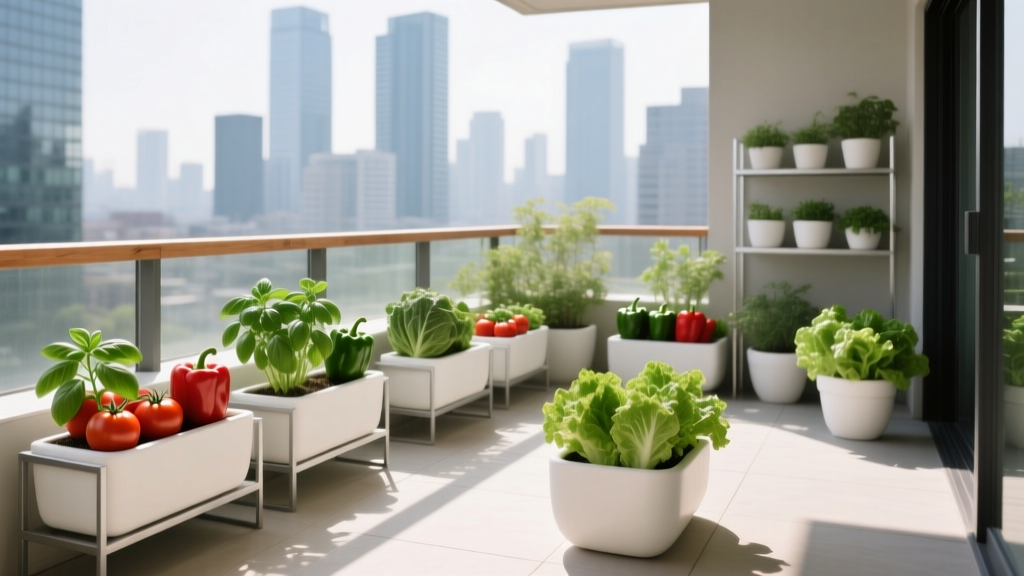
Urban Balcony Vegetable Garden Ideas
The elevator doors open, you step out with a paper bag of groceries, and the basil you bought for pasta is already wilting before dinner. Outside, your balcony is the one square of “yard” you actually control—yet it’s also where wind funnels between buildings, afternoon sun bounces off glass, and every inch matters. If your balcony has ever felt too small, too shady, or too exposed to grow food, that’s a design problem—not a personal failure.
Think like a landscape designer working in miniature: you’re not just placing pots; you’re building a functional layout with light, access, water, and harvest rhythm in mind. Below are balcony-tested design strategies, plant picks with specific varieties, and three real-world layouts you can copy and adapt.
Start With a Balcony “Site Survey” (10 Minutes That Saves Months)
Measure the footprint and the pinch points
Grab a tape measure and record the usable floor area and the narrowest walking lane. A common apartment balcony is roughly 4 ft x 8 ft (about 32 sq ft), but yours may be a long corridor or a compact nook. Your goal is to preserve at least a 18–24 inch clear path so watering and harvesting doesn’t become a daily obstacle course.
Map sun by hours, not guesswork
Vegetables are picky about light. Most fruiting crops (tomatoes, peppers, cucumbers) perform best with 6–8 hours of direct sun; leafy greens and herbs can produce with 3–5 hours. Track sun for two days: note when direct sun hits the balcony floor and when it’s blocked by adjacent buildings. If you prefer data, Cornell University notes that most vegetables need “at least 6 hours of sun per day” for good yields (Cornell Cooperative Extension, 2023).
Check wind and weight realities
High balconies behave like wind tunnels. If leaves shred or pots dry within hours, plan for wind buffering (trellis panels, clear balcony screens, or a row of sturdy herbs as a living windbreak). Also respect load: wet potting mix is heavy. If you’re renting, ask your building about balcony load limits. When in doubt, choose more vertical growing and fewer oversized containers.
Design Principles That Make Tiny Vegetable Gardens Feel Easy
1) Think in three layers: floor, rail, and air
Balcony gardens win when you stop using the floor like a backyard. Assign roles:
- Floor layer: the heaviest and thirstiest planters (tomatoes, peppers, dwarf fruiting veg).
- Rail layer: light containers for herbs and salad greens (keeps them within snipping distance).
- Air layer: trellised climbers and hanging baskets (cucumbers, pole beans, strawberries).
2) Keep every pot within “one-step reach”
If you can’t reach a pot without moving something, it won’t get consistent watering. Place daily-harvest plants (basil, lettuce, scallions) closest to the door. Put weekly-harvest plants (tomatoes, peppers) farther out but still accessible.
3) Choose containers like furniture: right size, right function
Container volume is the quiet difference between thriving vegetables and constant frustration. Use these practical minimums:
- Leafy greens: 6–8 inches deep, 8–12 inch wide pots or balcony boxes.
- Herbs: 1–3 gallons each (mint gets its own pot).
- Peppers: 3–5 gallons.
- Patio tomatoes: 7–10 gallons (bigger is easier to manage in heat).
- Cucumbers (trellised): 5+ gallons with a vertical support.
4) Use a “wet zone” and a “dry zone”
Balconies often drain poorly or annoy downstairs neighbors. Create one watering-friendly area: a tray-lined corner or a bench with boot trays beneath. Keep a second area for drier Mediterranean herbs (rosemary, thyme) so they aren’t overwatered by association.
5) Design for irrigation before you buy plants
Hand watering can work beautifully, but it should be intentional. Expect container vegetables to need water 3–6 days per week in summer (often daily in hot spells). If you travel or work long shifts, a simple drip setup can be a lifesaver. The EPA’s WaterSense program notes that drip irrigation can reduce water use compared with conventional watering by delivering water directly to roots (U.S. EPA WaterSense, 2024).
“The best small-space gardens are designed around maintenance: if you make watering and harvesting effortless, plants thrive and people keep gardening.” — Debra Lee Baldwin, succulent and container-garden author, in discussion of container design habits (Baldwin, 2017)
Layout Strategies You Can Copy (With Dimensions)
Strategy A: The “L-Shape Workhorse” for a 4 ft x 8 ft balcony
This is the layout I sketch most often because it preserves a clear walkway and concentrates sun-loving crops at the brightest edge.
- Along the long wall (8 ft run): 2 rectangular planters, each about 36 in L x 12 in W x 12 in D, planted with greens and herbs.
- At the outer corner: 1 large 10-gallon fabric pot for a patio tomato with a slim cage.
- Along the rail: 2–3 railing planters (about 24 inches long) for cut-and-come-again lettuce and parsley.
- Vertical element: a 18–24 inch wide trellis panel zip-tied to the railing for cucumbers or beans.
Keep 20 inches of walking space from door to the far end. If you have only 4 hours of sun, swap the tomato and cucumber for greens and herbs (you’ll still harvest constantly).
Strategy B: The “Bench + Understory” for narrow balconies
For balcony corridors (often 3 ft wide), treat it like a galley kitchen: one continuous work surface on one side, walkway on the other.
- Bench: a 48-inch potting bench or narrow outdoor table.
- On top: shallow planters for greens (easy to harvest without bending).
- Under bench: 3–5 gallon pots for peppers, bush beans, or dwarf eggplant—plants that don’t need constant snipping.
- Behind bench: a lightweight trellis for a single climber.
This strategy keeps the floor visually clean and makes watering predictable: everything drains into trays under the bench.
Strategy C: The “Sun Pocket” for balconies with shade and one bright corner
Many urban balconies are mostly shaded except for a hot, bright patch for 2–4 hours. Don’t fight it—compose for it.
- Bright corner: one high-performing fruiting plant (a patio tomato or compact pepper) in a 7–10 gallon pot.
- Shaded perimeter: greens, chives, mint (in its own container), and cilantro.
- Reflective trick: a light-colored wall or a simple white foam board behind the sun pocket can bounce light back to plants.
In partial shade, your harvest shifts from “sauce and salsa” to “salads and garnishes,” and that can be just as satisfying.
What to Grow: Balcony Vegetable Varieties That Actually Behave
On balconies, choose plants that are compact, quick, and tolerant of container life. The varieties below are widely available and selected for size control, productivity, or performance in pots.
Tomatoes (pick one great plant, not five stressed ones)
- ‘Sungold’ (cherry): famously prolific and sweet; best with 6–8 hours sun and a sturdy cage. Give it 10 gallons if you can.
- ‘Patio Choice Yellow’ (dwarf): compact habit for tighter spaces; suitable in 7 gallons.
- ‘Tiny Tim’ (micro-dwarf): works in a 2–3 gallon pot; great if you only have a small sun pocket.
Peppers (reliable, pretty, and manageable)
- ‘Lunchbox Red’: sweet snacking pepper, productive in 3–5 gallons.
- ‘Jalapeño’ (compact strains): great yield-to-footprint ratio; tolerates heat and wind better than tomatoes.
- ‘Shishito’: light, frequent harvest; ideal if you like quick kitchen wins.
Greens that earn their keep in small light
- ‘Black Seeded Simpson’ lettuce: fast, forgiving, and easy to cut-and-come-again.
- ‘Lacinato’ kale (dinosaur kale): upright growth; harvest outer leaves weekly.
- Arugula: thrives in cooler shoulder seasons; great for 3–5 hours sun.
Climbers for vertical harvest
- ‘Spacemaster’ cucumber: bred for containers; trellis it to keep fruit straight and clean.
- ‘Kentucky Wonder’ pole bean: vigorous and productive, but only if you have sun and a firm trellis.
Herbs with balcony-friendly growth
- Basil ‘Genovese’: wants warmth and consistent moisture; pinch weekly.
- Thyme: drought-tolerant for the “dry zone.”
- Chives: perennial in many climates; useful and tidy.
Comparison: Container Options for Balcony Vegetables
| Container Type | Best For | Typical Cost (USD) | Pros | Watch Outs |
|---|---|---|---|---|
| Fabric grow bag (7–10 gal) | Tomatoes, peppers | $6–$15 each | Lightweight, air-prunes roots, easy to store | Dries faster; needs a saucer/tray |
| Rectangular balcony planter (36" x 12") | Greens, herbs | $20–$45 | Efficient footprint, great for “cut-and-come-again” | Shallow models overheat; ensure drainage |
| Self-watering container (10–15" wide) | Greens, peppers, compact tomatoes | $25–$60 | Buffers watering mistakes; good for travelers | Heavier; salts can build up—flush monthly |
| 5-gallon food-grade bucket (DIY) | Peppers, bush beans | $0–$8 | Cheap, durable, deep root zone | Must drill drainage; can look industrial without a cover |
Three Real-World Balcony Garden Scenarios (With Practical Layouts)
Scenario 1: Renter balcony, south-facing, windy, 32 sq ft
Design goal: big harvest without drilling holes or upsetting neighbors.
Layout: L-shape with a wind buffer. Place two medium-tall planters along the railing to break wind, then tuck the tomato behind them. Add a trellis panel secured with zip ties (removable).
Planting plan: 1 ‘Sungold’ tomato (10-gal bag), 2 peppers (5-gal), 2 railing planters of lettuce + parsley, 1 pot of thyme.
Notes: Wind increases transpiration, so mulching helps. A 1-inch layer of straw or shredded leaves reduces evaporation and keeps soil from crusting.
Scenario 2: Shaded high-rise balcony, east-facing, 3–4 hours sun
Design goal: consistent greens and herbs, not disappointed tomatoes.
Layout: Bench + understory. Put greens at waist height for easy harvesting. Keep the brightest corner for one compact pepper or micro-dwarf tomato if you want a “treat plant.”
Planting plan: 2 long planters of ‘Black Seeded Simpson’ + arugula, 1 pot of chives, 1 pot of cilantro (succession sow every 3 weeks), 1 micro-dwarf tomato (‘Tiny Tim’) as the sun-pocket experiment.
Notes: In shade, spacing can be slightly tighter because growth is slower, but airflow still matters. Thin lettuce to about 6 inches between plants for reliable heads, or sow thickly for baby greens.
Scenario 3: Narrow “galley” balcony, 3 ft wide, full sun but limited floor space
Design goal: keep a clean walkway while growing dinner ingredients.
Layout: One continuous bench on the wall side, with drip trays underneath; trellis rises at the far end. You keep the center walkway clear.
Planting plan: 2 peppers under the bench, 1 ‘Spacemaster’ cucumber climbing at the end, basil and lettuce on top.
Notes: This is where vertical supports shine. Train the cucumber upward from day one so it doesn’t sprawl into your path.
Step-by-Step: Set Up Your Balcony Vegetable Garden (Designer’s Order of Operations)
- Measure the balcony and mark a 20-inch minimum walkway with painter’s tape.
- Track sun for two days and label zones: full sun (6+ hours), part sun (3–5 hours), shade (under 3).
- Choose a layout (L-shape, bench system, or sun-pocket) and place empty containers first to test movement.
- Add drainage control: trays, boot mats, or a raised rack. This is neighbor diplomacy and plant health in one step.
- Build vertical support before planting: a trellis panel, tomato cage, or railing netting.
- Fill containers with potting mix (not garden soil). For most vegetables, blend in slow-release organic fertilizer per label.
- Plant: put the largest containers in their final positions, then plant and water deeply until water drains.
- Mulch the surface with a 1-inch layer to slow drying.
- Add a simple watering routine: morning checks in summer; adjust based on heat and wind.
Budget and DIY Alternatives (So It Doesn’t Get Expensive Fast)
A balcony garden can be a modest setup or a styled outdoor room. Here are realistic ranges so you can plan, not guess:
- Starter (about $60–$120): 2–3 DIY buckets, a couple herb pots, seeds for greens, one bag of potting mix, and a basic watering can.
- Mid-range (about $150–$300): 1–2 self-watering containers, grow bags for tomato/pepper, railing planters, a trellis panel, higher quality potting mix.
- Polished (about $350–$600): coordinated planters, a bench, drip irrigation kit, premium mix, and a few season-long seedlings.