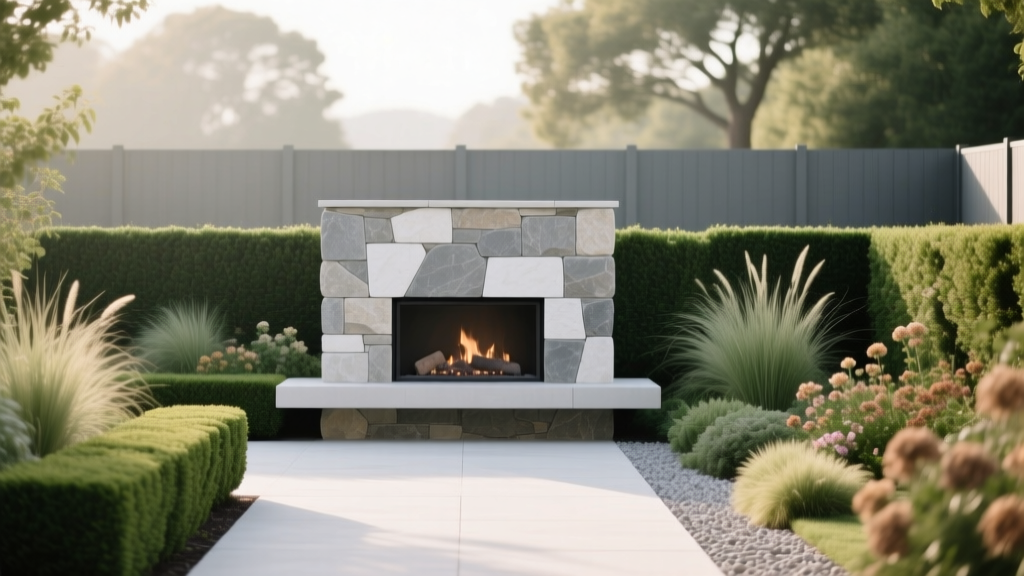
Patio Outdoor Fireplace Garden Border
The first time you light an outdoor fireplace on a chilly evening, the patio feels instantly bigger—until you notice what the firelight also reveals: a harsh edge where pavers meet bare soil, a tangle of hoses, or a muddy strip that turns into a slipper hazard every time it rains. The fireplace becomes the star, but the border around it can make the whole scene feel unfinished. The good news is that a well-designed garden border can solve multiple problems at once: soften hard lines, guide traffic, reduce mess, and frame the fire so it feels intentional rather than “placed.”
Below is a designer-style walkthrough to create a patio outdoor fireplace garden border that fits real spaces, real budgets, and real maintenance schedules—especially for homeowners and renters who want maximum impact without building an entire new landscape.
Start with the fireplace “comfort ring” (layout before plants)
Before picking a single plant, map how people will use the area. Fireplaces create a gravitational pull; your border should support that, not pinch it. A practical rule is to design a “comfort ring” around the fireplace: a clear, non-plant zone for seating, foot traffic, and heat safety.
Recommended clearances and dimensions
Exact requirements depend on your fireplace model and local code, so check the manufacturer’s instructions. For planning a typical patio setup, these dimensions keep things comfortable:
- Seating clearance: place chairs about 48–72 inches from the fireplace opening for comfortable warmth without roasting.
- Main walkway width: keep at least 36 inches clear for a primary path; 42–48 inches is better if people will pass behind seated guests.
- Border planting depth: aim for 18–36 inches from patio edge to the back of the planting bed. Under 18 inches looks skimpy; over 36 inches can crowd smaller patios.
- Mulch or gravel strip near hardscape: include a 6–12 inch buffer to reduce soil splash onto pavers.
If you’re working with a small patio, your border doesn’t have to be deep to feel lush. A layered design using a few structural plants plus lower fillers can read as abundant even in a narrow strip.
Design principles that make a fireplace border feel intentional
1) Frame the fire like a focal feature (not a standalone object)
A fireplace is visual weight. Give it balance by “anchoring” the border at two points—think of a photo frame: two stronger shapes near the ends of the fireplace wall or seating area, and softer plantings between. This can be two matching containers, two compact evergreens, or repeated clumps of ornamental grass.
Keep the tallest plants off the immediate corners where people stand up and turn. A good working height progression is:
- Back of bed (farthest from patio): 24–48 inches tall
- Middle layer: 12–24 inches tall
- Front edge (nearest pavers): 4–12 inches tall
2) Use repetition to calm the scene
Firelight flickers; furniture moves; people gather. A border that’s too “collection-y” can look busy. Repetition—three to five repeated plant groups—creates calm. If you love variety, vary textures inside a repeated structure (for example: repeat lavender drifts, then swap in a different silver-leaf accent plant once).
3) Design for heat, smoke, and dry soil pockets
Outdoor fireplaces create microclimates: radiant heat, reflected heat from masonry, and often drier soil near the patio edge. Choose plants that tolerate heat and occasional drought, and keep flammable plants back from the hottest zones.
The National Fire Protection Association (NFPA) emphasizes that outdoor fire features should be used with attention to clearance and safe operation (NFPA 1 Fire Code, 2024). Your planting design can support that safety by avoiding twiggy, resinous shrubs right next to the fire area and keeping a tidy, irrigated buffer zone.
“The best planting designs near hardscape anticipate stress—heat, reflected glare, and compacted soil—then choose plants that thrive under those exact conditions.” — Thomas Rainer & Claudia West, Planting in a Post-Wild World (2015)
4) Make maintenance invisible with edging and access points
A crisp edge is what makes a border look designed. Install a physical edge so mulch stays put and weeds don’t creep onto pavers. Also, include at least one hidden “access notch” (a 12–18 inch opening) where you can step into the bed for pruning without stepping on plants.
Three layout strategies that work in real patio spaces
Strategy A: The “wraparound ribbon” for small patios
This is a narrow bed (18–24 inches deep) that hugs the patio edge and curves around the fireplace area. It’s ideal for townhomes, rentals, or any patio under about 200 sq ft.
Key moves: keep plants low, use two or three hero plants, and rely on repetition. Add one slim trellis or wall-mounted planter to gain vertical interest without stealing floor space.
Strategy B: The “two-bay border” for family patios
Split the border into two planting bays separated by a short stepping-stone access point. This layout fits medium patios (200–400 sq ft) where you need a path for kids, pets, or grill access.
Key moves: place the strongest plants at the ends of each bay (visual bookends), and keep the center plantings softer so the fireplace remains the focal point.
Strategy C: The “screen and glow” for overlooked patios
If your patio faces a neighbor’s windows or a street, combine a border with a light screen. Use tall grasses, clumping bamboo alternatives, or narrow evergreens set farther back, then fill the front with pollinator perennials that glow in firelight.
Key moves: keep screening plants at least 3 feet from the patio edge so the space doesn’t feel walled in, and maintain a 36-inch walkway clearance.
Plant selection: specific varieties that look great by firelight (and why)
When choosing plants for a fireplace border, think in three buckets: structure (evergreen or architectural), glow (plants that catch light), and fragrance (pleasant when seated). Also consider sun exposure; most patios get anywhere from 4–8 hours of sun depending on trees and buildings.
Sunny patio borders (6+ hours of sun)
- Lavandula angustifolia ‘Hidcote’ (English lavender): compact, fragrant, and reflective foliage that looks silver in firelight. Space plants 18–24 inches apart for airflow.
- Salvia nemorosa ‘Caradonna’: upright purple spikes that read beautifully at dusk; drought-tolerant once established. Space 18 inches apart.
- Pennisetum alopecuroides ‘Hameln’ (dwarf fountain grass): soft, moving texture; seedheads glow. Space 24–30 inches apart.
- Nepeta x faassenii ‘Walker’s Low’ (catmint): long bloom, aromatic leaves, and a relaxed edge that softens pavers. Space 24 inches apart (it will fill in).
- Hylotelephium (Sedum) ‘Autumn Joy’: sturdy, drought-tolerant, and beautiful in fall when outdoor fires are most used. Space 18–24 inches apart.
Part-sun patio borders (4–6 hours of sun)
- Hydrangea paniculata ‘Bobo’: compact hydrangea with big impact; blooms catch firelight. Space 3 feet apart.
- Heuchera ‘Caramel’ or ‘Obsidian’ (coral bells): foliage color holds all season; great at the front edge. Space 12–16 inches apart.
- Hakonechloa macra ‘Aureola’ (Japanese forest grass): flowing texture that looks like a soft border “skirt.” Space 18–24 inches apart.
- Geranium ‘Rozanne’: long-blooming, reliable filler. Space 24 inches apart.
Fragrance and “sit-close” plants (best near seating)
- Thymus vulgaris (culinary thyme): low, tidy edging that releases scent when brushed. Space 10–12 inches apart.
- Heliotropium arborescens (heliotrope) in pots: sweet scent; use as seasonal containers you can move away from heat. One 12–16 inch pot makes an impact.
- Rosa ‘The Fairy’ (polyantha rose): small, romantic blooms; best set back slightly so thorns don’t snag. Space 3 feet apart.
For plant hardiness and placement, the USDA Plant Hardiness Zone Map is the standard reference for U.S. gardeners (USDA, 2023). Match your perennial choices to your zone so the border returns year after year with minimal replacement.
Material choices: edging, mulch, and the “clean patio” details
The border isn’t just plants. The most professional-looking patios are the ones where soil stays put and the edge stays crisp.
| Border Material | Best Use | Typical Cost (U.S.) | DIY Difficulty | Notes Near Fireplaces |
|---|---|---|---|---|
| Steel edging (4–6 in tall) | Crisp modern lines, holds curves | $2–$5 per linear foot | Moderate | Non-combustible, great for keeping mulch contained |
| Natural stone set-on-edge | Cottage/natural look | $6–$15 per linear foot | High | Very durable; avoid wobbly stones near foot traffic |
| Paver soldier course | Matches patio materials | $5–$12 per linear foot | Moderate | Clean look; helps prevent soil washing onto pavers |
| Gravel band (6–12 in wide) | Budget-friendly buffer strip | $4–$8 per sq ft installed | Low | Excellent non-combustible transition next to heat |
For mulch, keep it simple: shredded hardwood mulch stays put better than nuggets. If you’re close to embers or you’re cautious about fire safety, consider a 6–12 inch gravel band near the patio edge and put mulch farther back in the bed.
Step-by-step setup: build the border like a designer (but doable)
- Measure and sketch. Mark the patio edge and fireplace position. Draw your border shape with a garden hose. Aim for a planting depth of 24 inches if possible.
- Confirm traffic lanes. Walk the space. Make sure you maintain at least 36 inches for your main path and 48 inches behind seating if it’s a high-traffic area.
- Cut the edge. Use a flat spade to cut a clean bed line. If installing steel edging, trench to the required depth (usually 4–6 inches) so the top sits just above grade.
- Improve the soil. In compacted patio-adjacent soil, mix in 2–3 inches of compost across the bed and loosen soil to 8–10 inches deep.
- Dry-fit plants in pots. Set plants (still in nursery pots) in place. Repeat in drifts of 3 or 5 for a calmer look.
- Set spacing correctly. Don’t be tempted to cram. If a plant’s mature width is 24 inches, give it that room. This reduces pruning and improves airflow.
- Plant and water in. Plant at the same depth as the nursery pot. Water deeply right away—about 1–2 gallons per perennial and 3–5 gallons per shrub.
- Add drip irrigation (optional but worth it). A simple drip line kit often costs $30–$80 and can save you hours. Run it under mulch.
- Mulch or gravel. Apply 2–3 inches of mulch (not piled against crowns). Keep a small gravel buffer near the patio if desired.
- Light it thoughtfully. Add two to four low-voltage uplights or path lights to make the border readable at night. Even $15–$40 solar lights can help if wiring isn’t possible.
Budget planning and renter-friendly options
A fireplace border can be scaled to your wallet. Here are realistic ballparks for a 20 linear foot border that’s 2 feet deep (about 40 sq ft):
- DIY budget build ($150–$350): gravel band + a few 1-gallon perennials (6–10 plants), plus two larger containers as anchors.
- Mid-range DIY ($400–$900): steel edging, 12–18 perennials, 2–3 small shrubs, mulch, and a basic drip kit.
- Installed ($1,200–$2,500+): professional bed shaping, soil improvement, plants, edging, irrigation, and lighting.
Renters: treat the border as a modular “container border.” Use 18–24 inch wide trough planters or grouped pots to create the same layered look without digging. For the edge, lay a 6–12 inch gravel strip on top of landscape fabric—easy to remove later.
Real-world scenarios: three designs that solve common patio problems
Scenario 1: A narrow patio where every inch matters
Space: 10 ft x 12 ft patio with a compact outdoor fireplace against a fence. Challenge: the patio feels squeezed when plants are too bulky.
Design move: install a 18-inch deep ribbon bed along the fence line, stopping 4 feet short of the seating zone to preserve circulation. Use vertical interest (a trellis with star jasmine in warm climates, or clematis in cooler zones) and keep the rest low: ‘Hidcote’ lavender, catmint, and thyme at the edge.
Why it works: the eye reads “green wall” plus soft base planting, but the floor space stays open.
Scenario 2: A family patio with muddy splash and trampled edges
Space: 16 ft x 18 ft patio, fireplace centered, kids cutting across corners. Challenge: mulch ends up on pavers; plants get stepped on.
Design move: create a two-bay border with a 36-inch stepping path between bays for access. Add a 12-inch gravel band at the patio edge to catch debris. Choose resilient plants: dwarf fountain grass (‘Hameln’), salvia ‘Caradonna’, sedum ‘Autumn Joy’, and a compact shrub anchor like Hydrangea paniculata ‘Bobo’ set back.
Why it works: the gravel band and access path absorb “kid traffic” without sacrificing a finished look.
Scenario 3: A windy, overlooked patio that needs privacy without feeling boxed in
Space: condo patio facing neighboring windows. Challenge: you want screening, but you don’t want to lose the open feel around the fire.
Design move: place three narrow evergreens (for example, Ilex crenata ‘Sky Pencil’ in appropriate climates) or tall grasses like switchgrass (Panicum virgatum ‘Northwind’) in a line 36 inches behind the patio edge. In front, mass heucheras and Japanese forest grass for a softer, glowing understory. Add two warm path lights aimed toward the grasses so they shimmer behind the seating area.
Why it works: the screen sits “back,” so the patio still breathes, and the fireplace remains the social center.
Maintenance expectations: keep it sharp with minimal weekly time
A fireplace border should be easy enough that you don’t resent it. Plan for 20–40 minutes per week in the growing season for weeding, quick deadheading, and checking irrigation. The first year is the most hands-on; by year two, a dense planting will shade out many weeds.
Seasonal task list
- Spring (1–2 hours total): cut back ornamental grasses before new growth; edge the border; top up mulch to 2 inches where it has thinned.
- Summer (10 minutes weekly): deadhead salvias to extend bloom; deep water during heat spells (aim for the equivalent of 1 inch of water per week including rain).
- Fall (30–60 minutes): leave sedum and grasses for winter interest if you like, but remove heavy leaf buildup that can smother crowns. This is prime fireplace season—tidy the front edge so the patio looks clean under low light.
- Winter (as needed): brush snow off evergreens gently; avoid piling de-icing salts into the bed, which can damage roots and soil structure.
If you want the border to stay “designer crisp,” refresh the edge line twice a year (spring and mid-summer). It’s a small task that makes the whole patio look maintained.
When the border is doing its job, you’ll feel it before you even notice it: guests naturally drift toward the warmth, chairs slide back without snagging on shrubs, and the patio edge looks finished in daylight and at night. The fireplace provides the glow; your garden border provides the comfort, the framing, and the sense that the whole outdoor room was planned—not patched together.
Sources: National Fire Protection Association, NFPA 1 Fire Code (2024); USDA Agricultural Research Service, USDA Plant Hardiness Zone Map (2023); Rainer, T. & West, C., Planting in a Post-Wild World (2015).