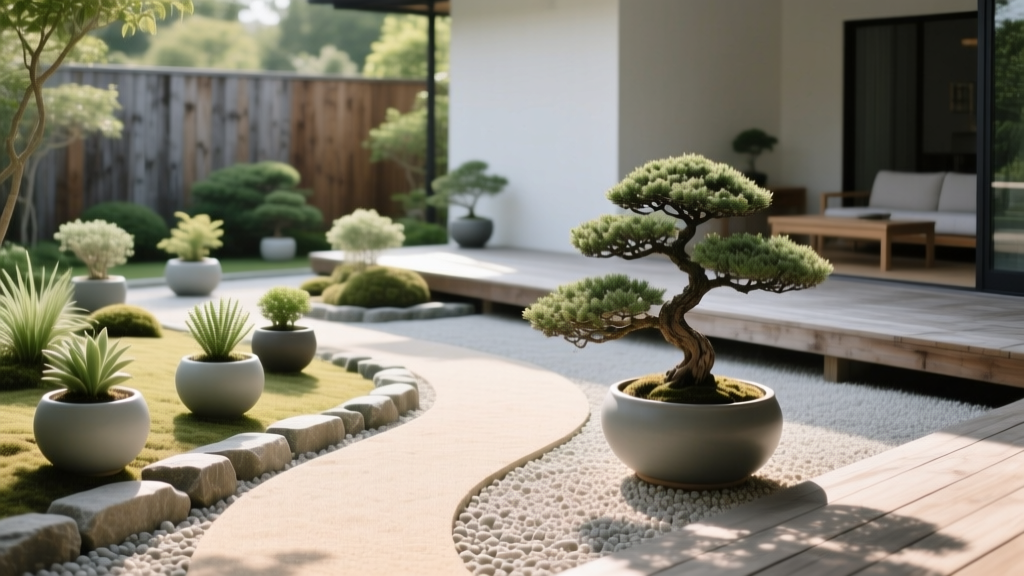
Patio Zen Garden with Mini Plants
You step outside with a mug of tea, hoping for five quiet minutes—then your eyes land on the patio corner you’ve been ignoring. A sad stack of empty pots, a leaning broom, and that one cracked paver that always catches your toe. The space isn’t “bad,” exactly. It’s just unresolved. The trick with a patio Zen garden is that it doesn’t ask for more square footage; it asks for better intent. With a few mini plants, a calm layout, and materials that feel good under hand and foot, that messy corner becomes a small outdoor room you’ll actually use.
This design is built for homeowners and renters alike: modular, container-based, and sized to fit everything from a 4 ft x 6 ft balcony to a generous 10 ft x 12 ft patio. I’ll walk you through layout choices, plant picks that behave in tight quarters, and practical construction steps—with real dimensions, spacing, and costs so you can plan confidently.
Start with the “quiet rectangle”: the layout that makes everything else easier
Zen gardens read as calm because they’re edited. Before you buy a single plant, choose a primary shape that will anchor the composition—usually a rectangle, square, or circle. On patios, rectangles win because they align with pavers and railings, and they’re easy to measure.
Recommended base sizes (pick one)
Choose a footprint that leaves comfortable circulation. For most patios, the sweet spot is to dedicate 20–30% of the floor area to the Zen vignette.
- Small balcony: 24 in x 48 in (2 ft x 4 ft) tray garden on feet.
- Typical patio corner: 36 in x 72 in (3 ft x 6 ft) framed gravel bed with 3–5 containers.
- Roomier patio: 48 in x 96 in (4 ft x 8 ft) gravel field with a bench edge.
Clearance rule: keep at least 36 inches of walking path beside the garden (tight but workable), and ideally 42 inches if it’s a main route.
Design principles that actually show up in small spaces
1) Borrowed scenery: make the background do work
A Zen composition needs a quiet “wall.” On a patio, that can be a fence panel, balcony railing, or even a plain outdoor curtain. If your background is visually busy (lattice, stored tools), you’ll fight the design forever. A simple fix: hang a 6 ft x 3 ft reed screen or outdoor fabric panel behind the garden to soften the scene. Budget: $25–$70 depending on material.
2) Odd numbers and intentional asymmetry
Instead of lining up identical pots, use three main elements: a “mountain” (tall), a “foothill” (medium), and a “ground plane” (low). This reads natural without looking messy. Keep the tallest element offset—roughly at the one-third mark of your rectangle, not centered.
3) Scale control: repeat a small set of materials
Small patios feel chaotic when every pot and stone is different. Limit yourself to:
- 1 gravel color (light gray or buff works in most climates)
- 1 wood tone (cedar, teak, or painted black)
- 1 pot finish (matte charcoal, clay, or glazed white)
For gravel, aim for 1/4-inch angular gravel (or poultry grit) that rakes clean lines without rolling underfoot.
4) A place to pause: micro-seating or a standing “viewpoint”
Even if you won’t add a bench, design a viewing spot. A single step-stool, a narrow folding chair, or a standing mark (one paver set aside) creates ritual. If you can fit seating, a 18-inch-deep bench is comfortable without stealing too much floor.
“The experience of a garden is shaped as much by where you stand as by what you see.” — Thomas Rainer, landscape designer and author (Rainer & West, 2015)
Three patio Zen layouts you can copy (and adapt)
Scenario A: The renter’s balcony (4 ft x 6 ft) with weight limits
If you’re renting, avoid heavy stone loads and anything that could stain decking. Build a raised tray Zen garden: a watertight mixing tub or wooden box lined with pond liner, sitting on rubber feet.
- Footprint: 24 in x 48 in tray
- Depth: 3–4 inches gravel over landscape fabric
- Plants: 3 small pots clustered at one end (so you can rake the rest)
Weight check: gravel is heavy. A 2 ft x 4 ft tray with 3 inches of gravel can weigh roughly 80–120 lb depending on gravel type and moisture. If your balcony has strict limits, use lightweight pumice or “horticultural grit” in a thin layer, or replace part of the bed with a raked sand-textured mat (DIY-friendly and much lighter).
Scenario B: The sunny townhouse patio (8 ft x 10 ft) that bakes in summer
This is where mini succulents shine. Use a 3 ft x 6 ft framed gravel rectangle with a tall container “anchor” and a shallow bowl planter for low texture.
- Sun: 6–8 hours is perfect for compact succulents and dwarf grasses
- Hardscape: 3 ft x 6 ft cedar frame, 2 inches gravel, 1 stepping stone
Heat tip: light gravel reflects glare. If the patio is already bright, choose a warmer buff gravel or mix 20% darker pea gravel for a calmer visual tone.
Scenario C: The shaded apartment patio (covered, 3–4 hours of light)
Low light doesn’t block Zen design—it just shifts the plant palette toward mossy textures and shade-tolerant minis. Keep the gravel area smaller and lean into containers with ferns and dwarf mondo grass.
- Sun: 2–4 hours (or bright shade)
- Strategy: fewer succulents, more greens; use charcoal pots to sharpen silhouettes
Step-by-step: build a 3 ft x 6 ft patio Zen garden (weekend-friendly)
This method is modular: you can lift it later, and it won’t require digging.
- Mark your rectangle: tape out a 36 in x 72 in area. Stand in your viewing spot and confirm sightlines.
- Add a protective layer: place a rubber mat or outdoor rug under the footprint to protect pavers/decking (especially for renters). Budget: $15–$40.
- Build or place the frame: use a simple cedar 1x4 frame (actual width ~3.5 in). Pre-cut kits often run $40–$90, or DIY with screws and corner braces.
- Lay landscape fabric: cut to size and staple to the inside of the frame. This keeps gravel from grinding into your patio cracks.
- Add gravel: pour 2 inches depth of 1/4-inch gravel. For a 3 ft x 6 ft bed at 2 inches deep, you’ll need about 3 cubic feet. Cost: roughly $18–$45 depending on bagged vs. bulk.
- Place “stones” (optional): use 3 feature stones in a loose triangle. Keep them partially buried so they feel grounded.
- Set containers: group 3–5 mini plants at one end/side. Leave at least 18 inches of open raking space for visual calm.
- Rake patterns: start with parallel lines, then add a gentle curve around stones. Use a small hand rake or a DIY bamboo rake. Budget: $8–$20.
- Add a finishing detail: a small lantern, a single piece of driftwood, or a water bowl (even without a pump) to catch sky reflections.
Plant selection: mini varieties that behave on patios
Mini plants work in Zen gardens because they hold their shape and don’t demand constant pruning. The key is choosing plants that stay compact, tolerate containers, and match your sunlight reality.
Sunlight targets (so your plants don’t sulk)
- Full sun: 6+ hours (succulents, dwarf grasses, compact herbs)
- Part sun: 4–6 hours (some sedums, dwarf conifers, small flowering perennials)
- Bright shade: 2–4 hours (ferns, dwarf mondo grass, moss accents in humid climates)
Mini plants for a Zen look (specific picks)
1) Dwarf mondo grass (Ophiopogon japonicus ‘Nana’)
A tidy, tufted “ground plane” that reads like a miniature hillside. Great for shade to part sun. Plant in a shallow bowl with a top-dressing of fine gravel for a cohesive look. Space clumps 6–8 inches apart if you’re filling a wider planter.
2) Blue star juniper (Juniperus squamata ‘Blue Star’)
A classic mini “mountain” form with a naturally mounded silhouette. Best in sun (5–8 hours). Use one as the anchor in a sturdy pot. Keep it slightly off-center to avoid a bullseye layout.
3) Japanese forest grass (Hakonechloa macra ‘Aureola’)
For shaded patios, this adds movement without chaos. It softens hard edges and looks especially good against gray gravel. Give it a pot at least 10–12 inches wide.
4) Hens-and-chicks (Sempervivum tectorum, compact cultivars)
Low, sculptural rosettes that thrive in sun and handle heat. Choose two varieties (one green, one burgundy) and repeat them for rhythm. Space rosettes 4–6 inches apart in a shallow trough.
5) Stonecrop sedum (Sedum rupestre ‘Angelina’ or Sedum spurium ‘Dragon’s Blood’)
These spread politely in containers, drape over edges, and echo the flowing lines of raked gravel. Ideal for bright patios. Trim once a year to keep edges crisp.
6) Mini hosta (Hosta ‘Blue Mouse Ears’)
In shade, this is a reliable “foothill” plant: rounded, calm, and container-friendly. Protect from slugs if your patio is damp.
7) Irish moss (Sagina subulata)
Not a true moss, but it creates a soft carpet effect in cool, moist conditions. Use it as an accent in a small pot or between stepping stones if your patio joints allow. Avoid baking hot patios.
Spacing and container sizing (practical rules)
- Anchor shrub (juniper/dwarf conifer): 12–16 inch pot diameter minimum.
- Tufted grasses (mոջdo/hakonechloa): 10–12 inch pot diameter.
- Mini succulents: 6–10 inch bowls; keep crowns above soil line to prevent rot.
- Top-dressing: 1/2 inch of matching gravel over potting mix for a unified “garden” look.
Planting media and water: keep it Zen, not soggy
Container Zen gardens fail most often from poor drainage. Use a fast-draining mix and make watering predictable.
Succulent mix: 50% potting mix + 50% pumice/perlite/grit. This mirrors guidance from the Royal Horticultural Society on ensuring drainage for container plants (RHS, 2023).
Shade plant mix: quality potting mix with 10–20% added pine bark fines for structure.
Water expectations: in summer heat, succulents may need water every 7–14 days (depending on pot size and sun), while shade containers may need a light check 2 times per week. Aim to water deeply, then let mixes dry appropriately—especially for sempervivums and sedums.
A comparison table: mini plant options by patio conditions
| Plant (Variety) | Best Light | Container Size | Zen Role | Notes |
|---|---|---|---|---|
| Juniperus ‘Blue Star’ | Full sun (6+ hrs) | 12–16 in pot | “Mountain” anchor | Slow-growing; avoid soggy soil |
| Ophiopogon ‘Nana’ | Part sun to shade (2–5 hrs) | 10–12 in pot | Ground plane | Clean tufts; great for calm texture |
| Sempervivum cultivars | Full sun (6–8 hrs) | 6–10 in bowl | Low sculptural accent | Hardy; excellent for hot patios |
| Hakonechloa ‘Aureola’ | Bright shade/part sun (3–5 hrs) | 10–12 in pot | Soft movement | More water than succulents; hates drying out |
| Hosta ‘Blue Mouse Ears’ | Shade (2–4 hrs) | 10–12 in pot | Foothill mound | Watch for slugs; keep evenly moist |
Budget planning: what this typically costs (and where to save)
A patio Zen garden can be surprisingly affordable because it relies on restraint. Here’s a realistic budget range for a 3 ft x 6 ft build:
- Frame + fabric: $55–$130
- Gravel (3 cu ft): $18–$45
- 3–5 mini plants in containers: $45–$180 (depending on plant choice and pot quality)
- Rake + small accessories: $15–$60
- Total typical range: $133–$415
DIY alternatives that still look polished
- Use thrifted bowls: drill drainage holes with a masonry bit (or keep as cachepots with a hidden nursery pot inside).
- Swap feature stones for wood: one weathered branch or driftwood can replace expensive boulders.
- Choose bagged pea gravel sparingly: if cost is high, fill the bottom 1 inch with inexpensive crushed rock and top with 1 inch of nicer raking gravel.
Maintenance: what “easy” really means (minutes per week)
Zen gardens look effortless, but only when you keep edges crisp. Expect 20–30 minutes per week in peak season, and 10 minutes in cooler months.
Weekly (10–30 minutes)
- Rake gravel lines back into place (5–10 minutes).
- Check soil moisture in pots; water as needed (5–10 minutes).
- Pinch dead foliage and rotate pots a quarter turn for even growth (5 minutes).
Seasonal tasks (30–60 minutes per season)
- Spring: top-dress pots with fresh gravel; refresh any compacted soil; fertilize lightly if using conifers.
- Summer: watch heat stress on dark pots; move a plant 6–12 inches into shade if it’s scorching.
- Fall: remove leaf litter from gravel (it stains); trim sedums; check drainage holes.
- Winter: for freeze-prone climates, group pots near the building wall for warmth; avoid waterlogging.
Small design moves that make it feel “finished”
Edge discipline: A crisp border is half the Zen effect. If your frame shifts, add L-brackets or corner stakes. Keep gravel 1/2 inch below the top edge so it doesn’t spill every time you rake.
Repeat one plant: Choose a signature mini (like Sempervivum or dwarf mondo) and use it twice. Repetition is calming and makes the design look intentional.
Use negative space: It’s tempting to add “just one more” pot. Don’t. Leave at least 40% of the gravel area open for raking patterns and visual rest.
Notes on authenticity and responsible sourcing
If you’re aiming for a Japanese-inspired feel, keep it respectful: focus on restraint, proportion, and natural materials instead of themed décor. Choose stone and wood locally when possible. For plant choices, prioritize non-invasive selections suitable for your region, and purchase from reputable nurseries.
For container gardening best practices (especially drainage and appropriate potting media), guidance from the Royal Horticultural Society is a solid reference point (RHS, 2023). And for planting design that emphasizes structure and season-long readability—even at small scales—Rainer and West’s work is widely cited in modern landscape design (Rainer & West, 2015).
Three finishing touches, depending on how you use your patio
If this is your morning coffee spot: add a narrow shelf (around 6 inches deep) on the wall behind the garden for one cup, one book, and nothing else. Keeping surfaces clear is part of keeping your mind clear.
If you entertain: place the Zen rectangle along the patio edge and leave the center open. The garden becomes a backdrop, not an obstacle. Use one lantern for warm light instead of multiple bright fixtures.
If you’re doing this for stress relief: keep a small container of extra gravel nearby. Once a month, skim the top layer and refresh the raking surface. That simple reset is surprisingly satisfying.
Once your patio Zen garden is in place, you’ll notice something subtle: the corner stops asking for attention. The gravel lines hold the day’s last light, the mini plants stay in scale, and the whole setup quietly guides you to slow down—right where you already live.
Sources: Royal Horticultural Society (RHS), container gardening and compost/drainage guidance (2023). Thomas Rainer & Claudia West, Planting in a Post-Wild World (2015).